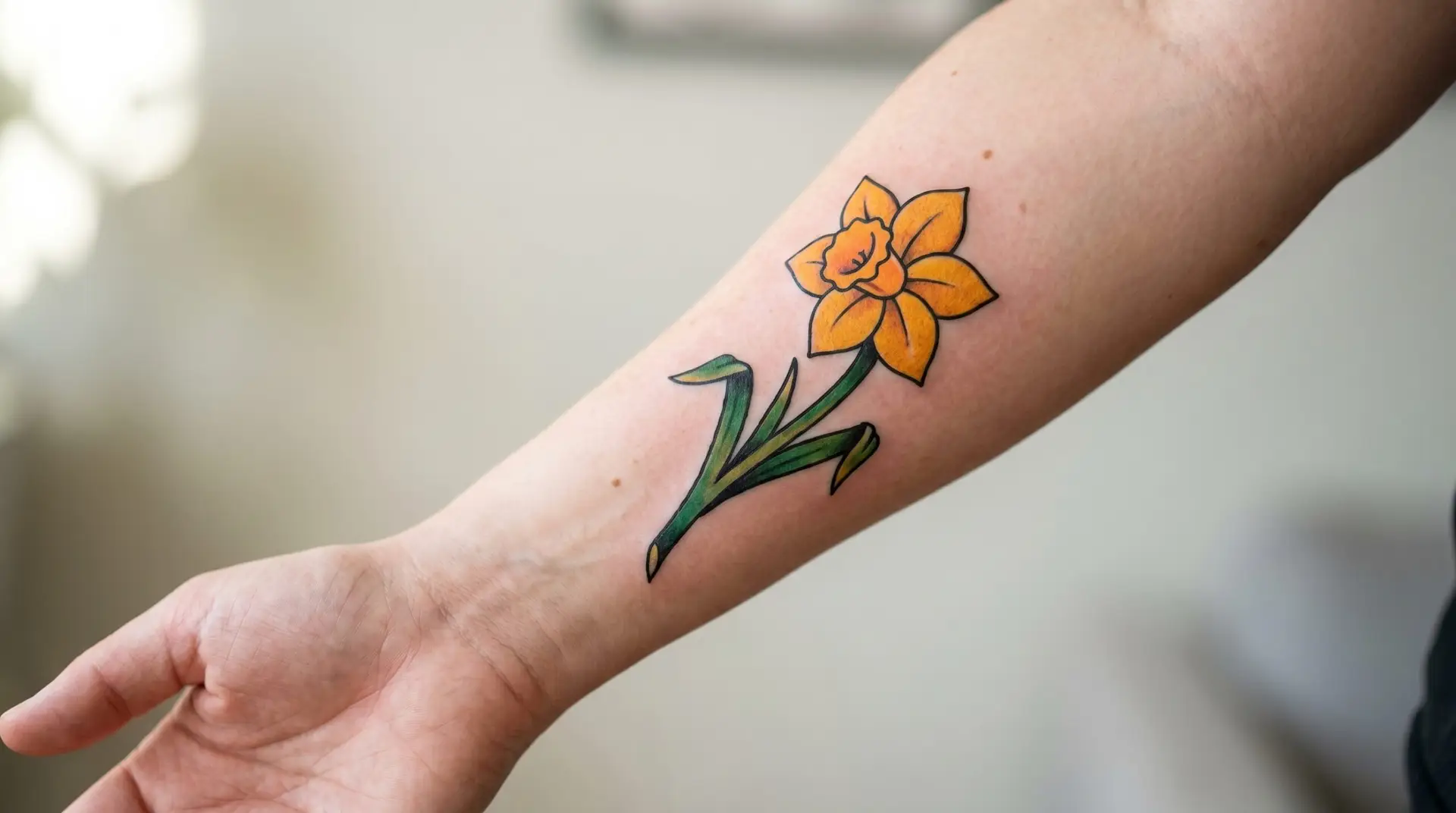
Daffodil is March’s primary birth flower, and its bold trumpet-corona shape makes it one of the more visually distinctive tattoo subjects in the birth flower family. The flower symbolizes rebirth, new beginnings, hope, and the arrival of spring in basic Western reading, with additional layers from Welsh national symbolism (the St David’s Day emblem) and English Romantic poetry (Wordsworth’s “I Wandered Lonely as a Cloud”). The classic six-tepal-plus-central-trumpet anatomy gives daffodil a recognizable silhouette that reads correctly at medium scale (2 to 4 inches) and supports a wide range of stylistic interpretations from fine-line minimalism to bold traditional saturated color.
The visual logic of daffodil sits between violet (which thrives at small scale) and rose (which needs medium-to-large scale for detail). A daffodil tattoo works best at 2 to 4 inches, large enough to show the trumpet-corona structure clearly without becoming a full-sleeve commitment. March birthday readers who want a recognizable spring-rebirth tattoo find daffodil a natural choice, particularly when paired with the Welsh or Wordsworth reference layers for additional cultural depth.
In this guide
Why daffodil works as a tattoo subject
The daffodil silhouette is among the most recognizable flower shapes in Western visual culture. The six-tepal arrangement around a central trumpet-corona reads correctly at medium scale and remains identifiable even when stylized heavily. This recognizability matters in tattoo design because the symbolic reading depends on the viewer identifying the flower; a generic-looking flower tattoo loses the birth flower meaning that motivates the choice.
The bold yellow color of the classic daffodil supports saturated traditional tattoo styles particularly well. Yellow and other light inks generally fade faster than dark inks, so plan for periodic touch-ups; protected placements (inner upper arm, ribs, shoulder blade) tend to hold color longer than sun-exposed ones. Black-and-grey daffodil tattoos avoid the yellow-fade question entirely and work well for readers who prefer monochromatic tattoo aesthetics.
Daffodil scales well across size ranges in ways that some birth flowers do not. A single 2-inch daffodil works as a small wrist or behind-ear tattoo. A 4-inch daffodil on the forearm shows the trumpet detail beautifully. A cluster of three to five daffodils on the upper arm or back creates a fuller arrangement that draws on the Wordsworth “host of golden daffodils” image. The flexibility supports both minimalist and elaborate tattoo intentions.
Style options for daffodil tattoos
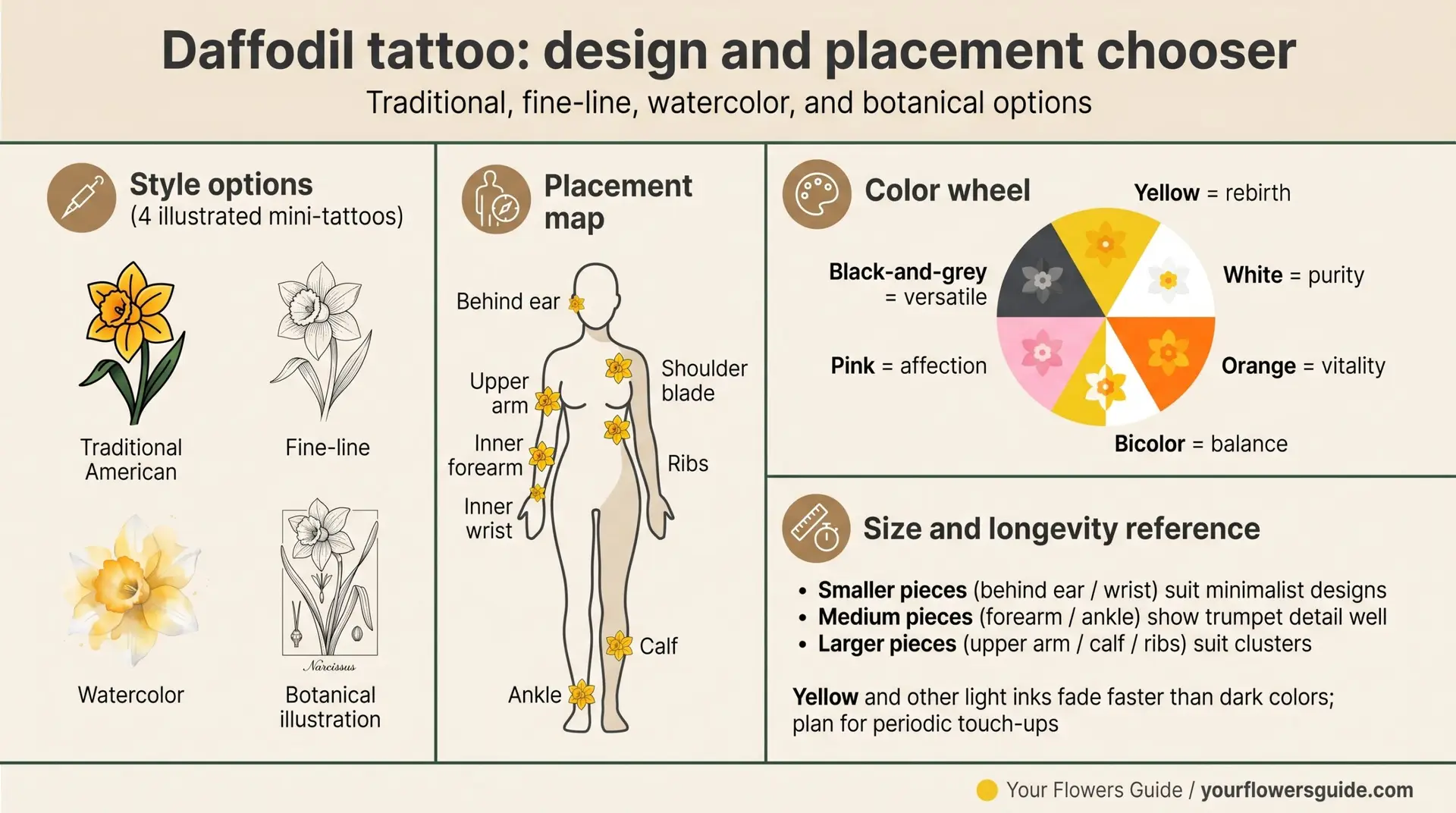
Style choice shapes longevity, placement options, and visual register. The main daffodil tattoo styles in modern practice include:
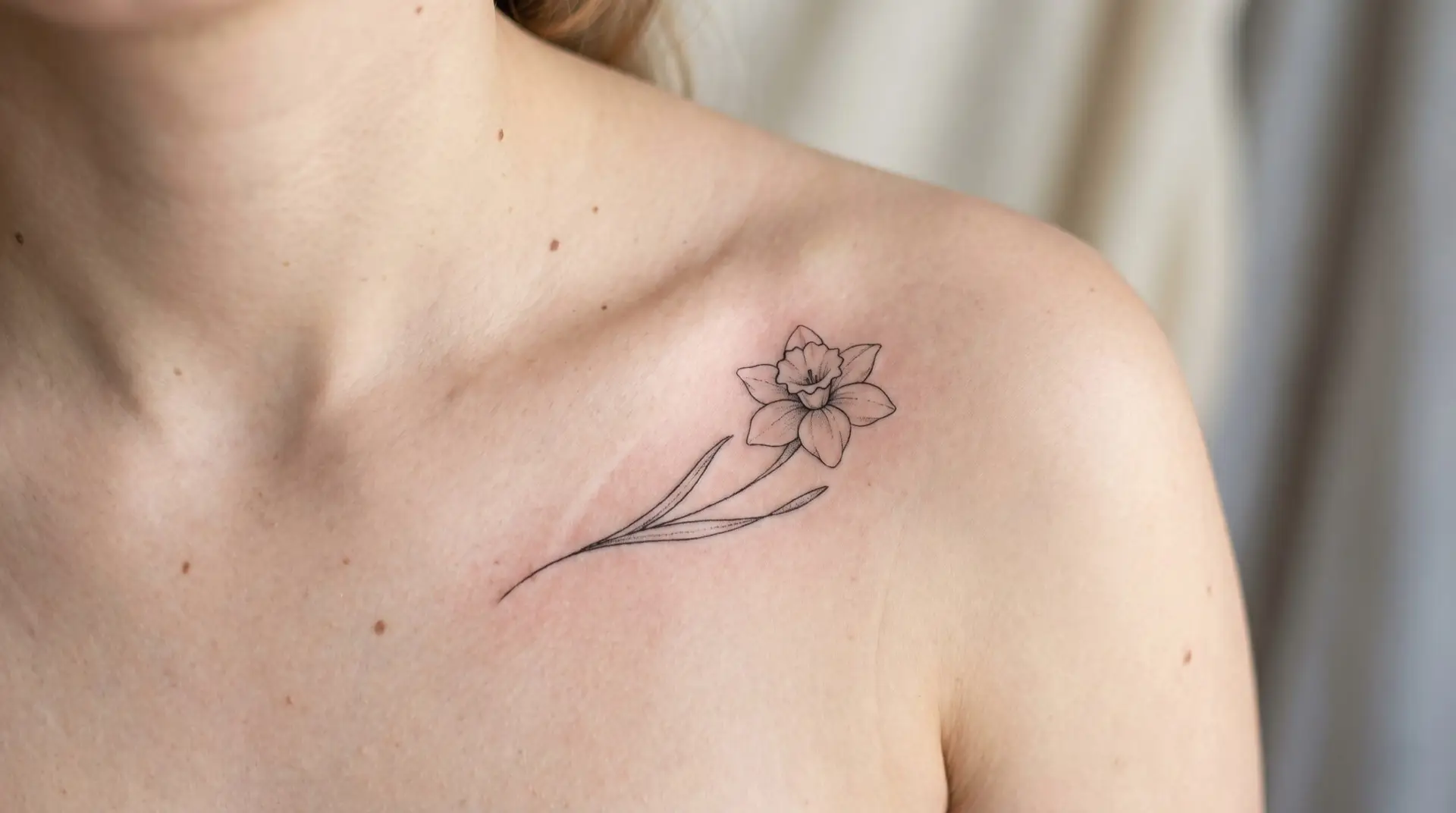
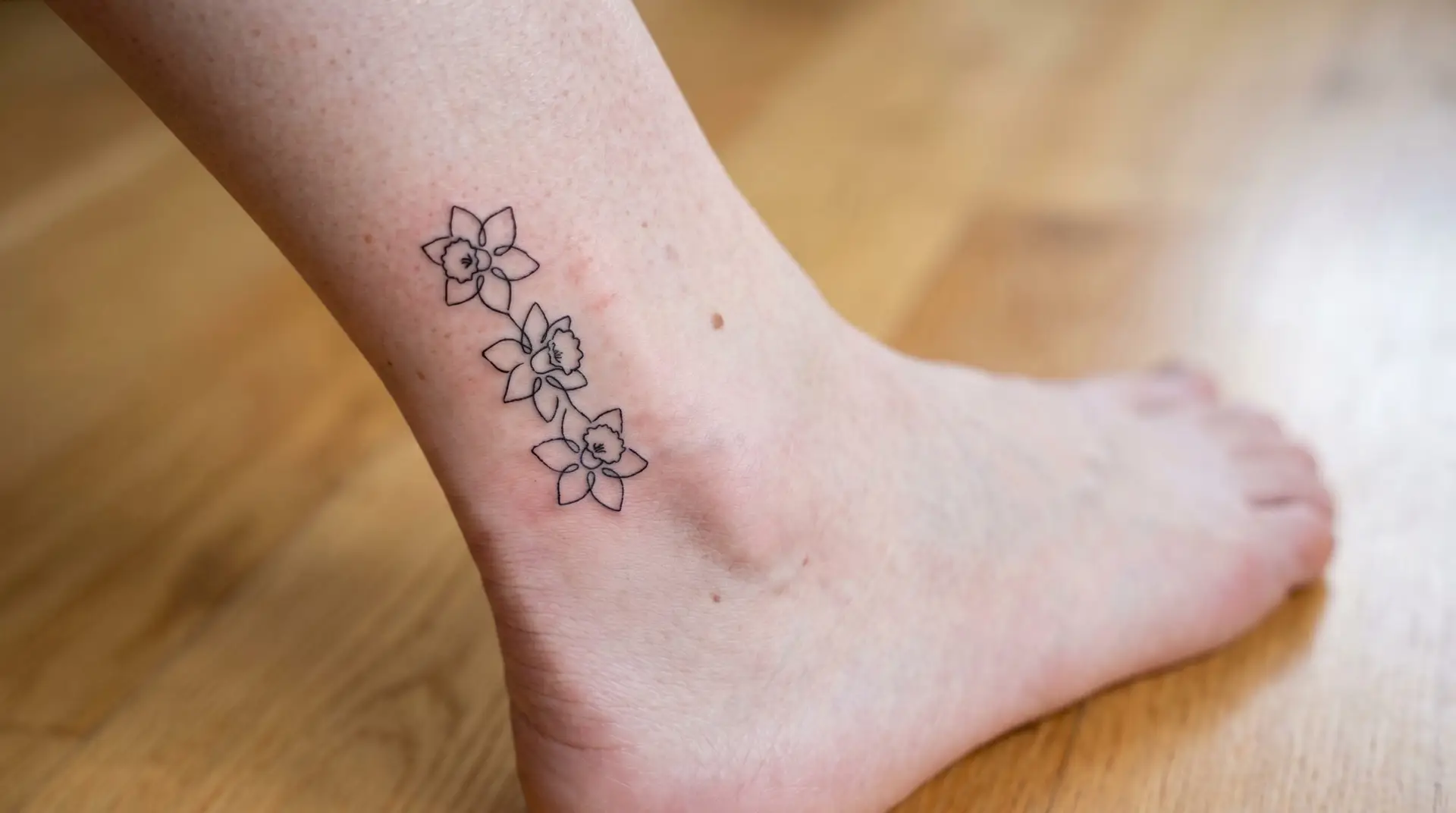
Fine-line single-needle. Delicate line work that emphasizes the trumpet-corona structure without bold fill. Works at small to medium scale (1.5 to 3 inches) and suits wrist, ankle, and collarbone placements. Touch-ups every 5 to 10 years are standard.
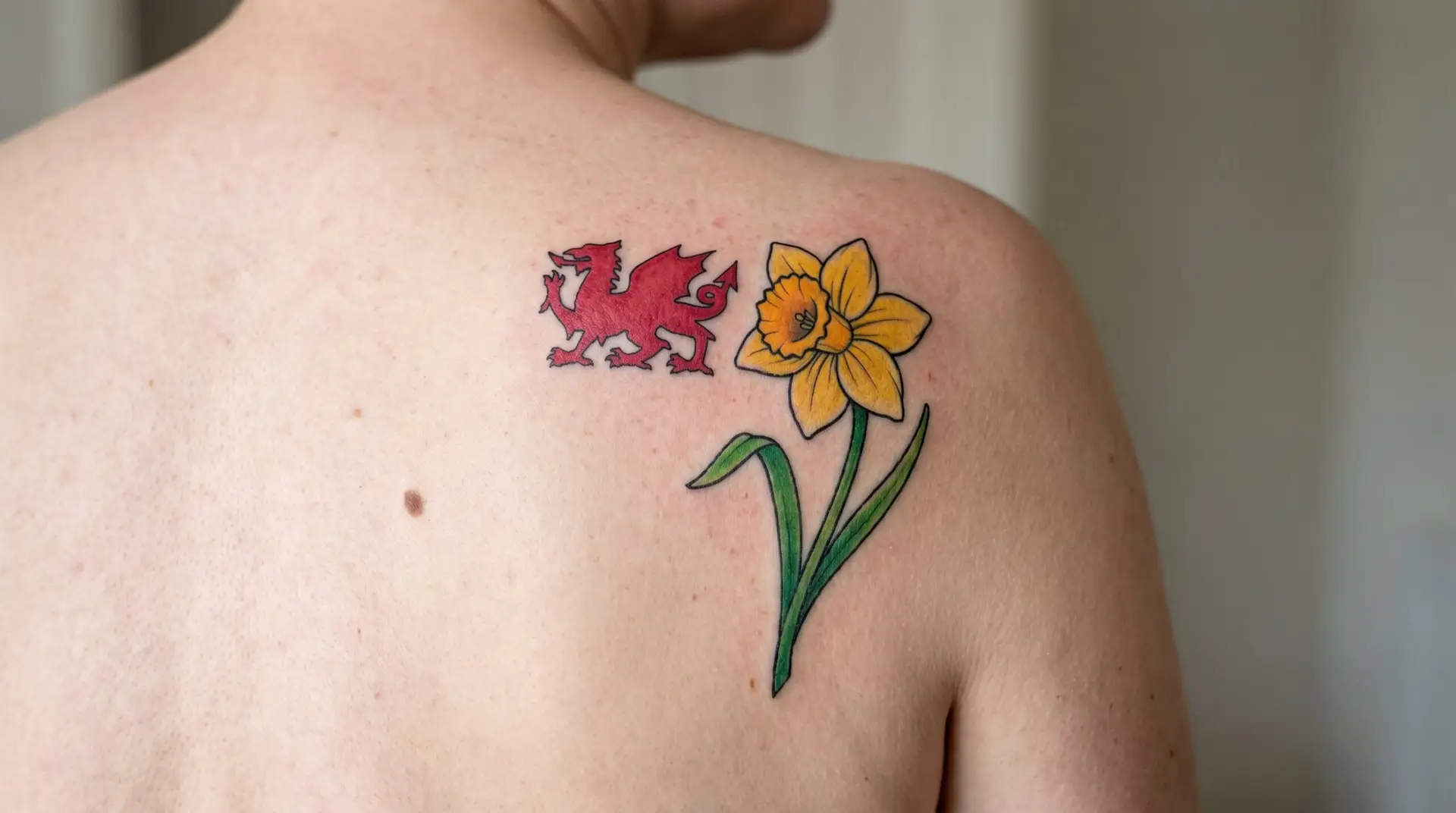
Traditional American. Bold outline, saturated yellow corona, classic American tattoo aesthetic. Works at medium to large scale (3 to 5 inches) and ages well on forearm, calf, and chest placements. The bold line work holds its structure longest, though the yellow color will need periodic touch-ups.
Watercolor. Soft yellow bleeding outward from the central daffodil outline, mimicking watercolor painting on skin. Suits ribs, upper arm, and shoulder blade placements. Needs touch-ups sooner than traditional or fine-line work due to faster ink fade in watercolor.
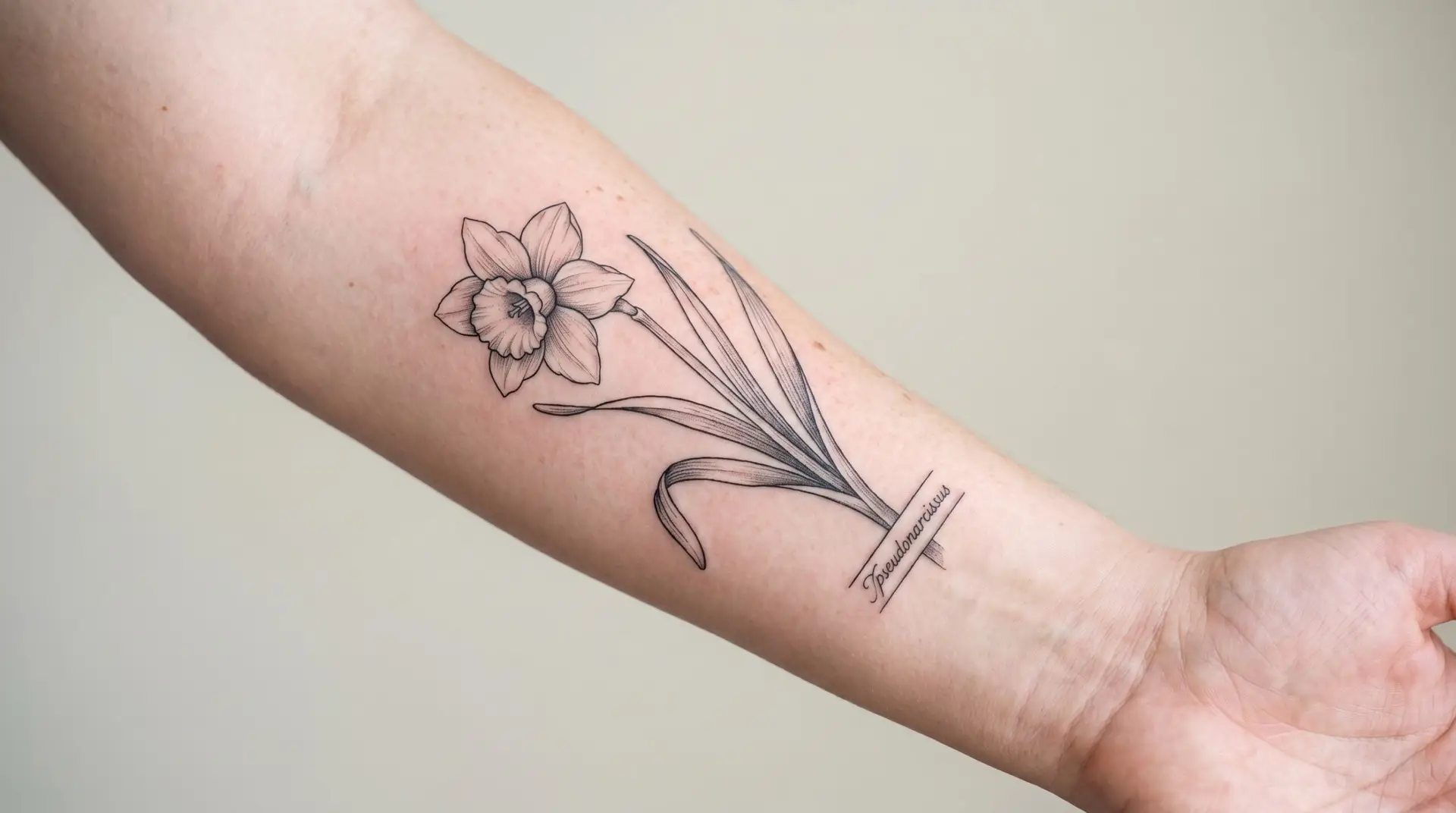
Botanical illustration. Vintage scientific drawing aesthetic with stem, leaves, and optional Latin label (“Narcissus pseudonarcissus” or “Narcissus jonquilla”) integrated below the bloom. Works at medium to large scale (3 to 5 inches) and suits forearm, ribs, and back placements.
Minimalist outline. Simple six-tepal-and-trumpet outline with no fill or shading. Often appears as a single continuous line drawing. Works at very small to small scale (1 to 2 inches) and ages exceptionally well due to minimal ink saturation.
Dotwork. Texture built from small dots rather than solid lines or fills. Creates a soft fuzzy texture that suits the daffodil’s slightly textured petal quality. Works at medium scale (2 to 3 inches).
Geometric. Daffodil stylized into geometric patterns, often with mandala integration or sacred-geometry framing. Suits readers who want symbolism with strong graphic design appeal.
Cultural and literary references
Two reference layers add depth to daffodil tattoo design beyond the basic birth flower meaning. Readers who care about historical or literary integration often find these layers useful for justifying the tattoo choice and for explaining it to others who ask.
Welsh St David’s Day. Daffodil is one of two national symbols of Wales (alongside the leek), and Welsh people traditionally wear daffodils on St David’s Day (March 1). For tattoo integration, the Welsh layer adds a national-civic dimension to the basic rebirth-and-hope symbolism. Common design choices that draw on this layer include daffodil paired with the small Welsh dragon silhouette, daffodil with a thin red ribbon (the color of the Welsh flag’s dragon), or daffodil integrated into a larger Welsh-heritage tattoo with castle silhouettes or “Dewi Sant” script. Welsh diaspora readers in North America, Australia, and elsewhere often choose this reference layer to honor family heritage.
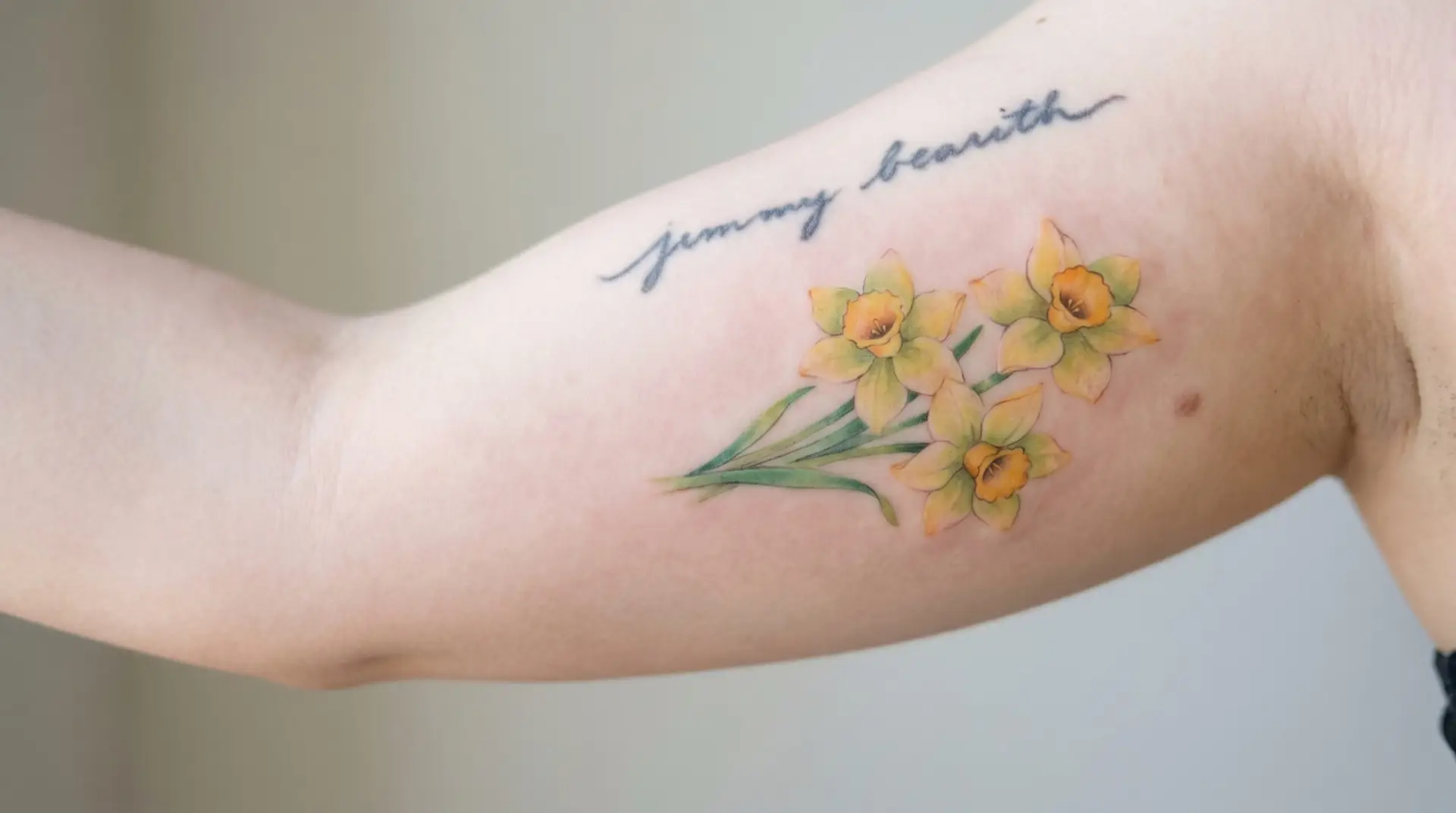
Wordsworth’s “I Wandered Lonely as a Cloud.” The most-quoted nature poem in the English language describes wild daffodils blooming along Ullswater in the English Lake District in April 1802. For tattoo integration, the Wordsworth layer adds literary depth that suits bookish readers and English-major aesthetics. Common design choices include a small cluster of daffodils representing the “host of golden daffodils” image, daffodil paired with a short Wordsworth quote in script (often “ten thousand saw I at a glance” or “they flash upon that inward eye”), or daffodil integrated into a Lake District landscape silhouette tattoo with bare branches and water.
Color choices and symbolism
Color shifts the symbolic reading of the tattoo within the broader daffodil meaning of rebirth and new beginnings:
Yellow daffodil tattoo: the most traditional choice. Rebirth, joy, sunshine, and the arrival of spring. The default reading for daffodil as a birth flower tattoo.
White daffodil tattoo: purity, respect, and contemplative joy. The Poeticus narcissus form (white tepals with small red-edged cup) suits memorial tattoo intentions specifically.
Orange daffodil tattoo: vitality, warmth, and bold optimism. Less common than yellow but appeals to readers wanting a more visually striking color.
Bicolor daffodil tattoo (white tepals with yellow or orange corona): balanced renewal, the meeting of purity and energy. Often chosen for its visual interest at medium scale.
Pink daffodil tattoo: affection, gentle joy, and feminine renewal. A twentieth-century cultivar color; the pink appears in the corona rather than the tepals.
Black-and-grey daffodil tattoo: versatile, ages well, and pairs with almost any other black-and-grey tattoo work. Suits readers who prefer monochromatic tattoo aesthetics.
Placement options
Placement choice depends on size, visibility, and pain tolerance. Common daffodil tattoo placements:
Inner forearm: the most popular daffodil placement. Medium scale (2 to 3 inches) fits perfectly, pain is low, and the area heals quickly. The visible-to-self orientation suits readers who want their tattoo as personal art.
Upper arm: suits larger scale designs (3 to 5 inches) and bicep wrap-around composition. Low to moderate pain.
Inner wrist: small daffodil at 1 to 1.5 inches. Moderate pain. Easy to show or cover with a watch.
Shoulder blade: larger scale (3 to 5 inches), low to moderate pain, low daily visibility (the wearer can choose when to show it).
Calf: medium to large scale (3 to 5 inches) on the outer calf. Low pain, suits readers who like leg tattoos as visible art when wearing shorts or skirts.
Behind ear: very small minimalist daffodil at 0.5 to 1 inch. Moderate pain due to thin skin over bone. Best for first tattoos because of the discretion factor.
Ankle: small to medium scale (1.5 to 3 inches) on the outer ankle. Low to moderate pain.
Ribs: medium scale (3 to 4 inches) along the rib line. High pain due to thin skin over bone and continuous breath movement during tattooing. Heals slowly but the placement suits long-form botanical illustration style.
Design pairings
Common daffodil tattoo pairings:
Daffodil plus name: script-integrated name flowing around or beneath the bloom. The most popular pairing for memorial and family tattoos.
Daffodil plus date: birth date, anniversary date, or memorial date in Roman or modern numerals.
Multi-daffodil cluster: the Wordsworth “host of golden daffodils” reference, often a small group of 3 to 7 blooms.
Daffodil plus Welsh dragon: the St David’s Day reference for Welsh heritage tattoos.
Daffodil plus Wordsworth quote: literary reference for bookish readers.
Daffodil plus aquamarine: the March birthstone in contrasting-color design.
Daffodil plus zodiac sign: Pisces (February 19 to March 20) or Aries (March 21 to April 19).
Daffodil plus stem and leaves botanical: vintage botanical illustration style.
Aftercare for daffodil tattoos
Standard tattoo aftercare applies: keep the tattoo clean and moisturized for the first two weeks, avoid direct sunlight and chlorinated water during initial healing, and follow your tattoo artist’s specific recommendations. Full healing takes 4 to 6 weeks for the surface and up to 6 months for the deeper layers. The American Academy of Dermatology aftercare guide covers the general protocol.
Daffodil-specific considerations include the following. Yellow and other light inks generally fade faster than dark inks due to lower pigment density per area, so plan for periodic touch-ups; readers who want their yellow daffodil to hold saturation longest should request the deepest yellow shade during design consultation. Watercolor daffodil tattoos fade visibly faster than traditional or fine-line work due to the soft edges and lower ink saturation, and need touch-ups sooner.
UV protection matters more for yellow tattoos than for black-and-grey or saturated dark-color work. Use mineral sunscreen daily on tattooed areas during the first summer after the tattoo, and consider continuing daily SPF on visible-area daffodil tattoos for long-term color preservation.
At a glance
Questions
Questions
Frequently asked
What does a daffodil tattoo mean?
Rebirth, new beginnings, hope, and the arrival of spring in basic Western reading. Additional layers include Welsh national symbolism (St David’s Day emblem) and English Romantic poetry (Wordsworth’s poem). The flower also serves as the March birth flower in standard birth flower lists.
What does the yellow daffodil tattoo symbolize?
Yellow is the most traditional daffodil color and has the standard symbolic reading: rebirth, joy, sunshine, and the arrival of spring. For most readers choosing their first daffodil tattoo, yellow is the default color that does not require additional explanation.
Are daffodils and narcissus the same in tattoo art?
Yes botanically. All daffodils are Narcissus species. Tattoo artists may use either name; the visual reference is the same large-trumpet flower form. Some readers specifically request “narcissus tattoo” to invoke the Greek mythology layer (the Narcissus self-reflection myth), while others use “daffodil tattoo” for the more general English-language reference.
Can I get a daffodil tattoo for St David’s Day?
Yes. Welsh heritage tattoos commonly feature daffodil alongside the Welsh dragon, the Welsh flag colors (red and green), or St David’s name (“Dewi Sant”) in Welsh script. Many Welsh diaspora readers choose this reference layer to honor family connections to Wales.
What size should a daffodil tattoo be?
Medium scale is recommended. A 2 to 4 inch tattoo shows the trumpet-corona structure clearly without overwhelming the placement. Smaller tattoos (1 to 1.5 inches) lose the corona detail and may read as generic flower rather than specifically daffodil.
Does yellow daffodil ink fade?
Yes. Yellow and other light inks generally fade faster than dark inks, so plan for periodic touch-ups. Visible placements with regular UV exposure fade sooner; protected placements (ribs, inner upper arm) hold yellow color longer. Black-and-grey daffodil tattoos avoid the yellow-fade question entirely.
What does the Wordsworth daffodil tattoo reference mean?
The reference draws on “I Wandered Lonely as a Cloud,” the most-quoted nature poem in the English language. A daffodil tattoo with Wordsworth integration (a quote, the “host of golden daffodils” cluster image, or a Lake District landscape silhouette) signals literary appreciation and English Romantic poetry interest. The reference is popular with English-literature graduates and bookish readers more generally.
Are daffodil tattoos good for memorial tattoos?
Yes. The rebirth-and-renewal symbolism suits memorial tattoo intentions, particularly for losses associated with springtime or for memorializing someone whose birthday fell in March. White daffodil (Poeticus narcissus) is the traditional memorial color choice within the daffodil family.
Sources
Keep reading
March birth flower: daffodil, jonquil, and what they mean
March birth flowers by day: the Korean 365-day tradition
Jonquil flower meaning: botany, Spanish heritage, and fragrance
Birth flower by month: all 12 monthly flowers
Enjoying our flower guides? Add YourFlowersGuide as a preferred source on Google. It helps more readers find us.
Add to Preferred Sources