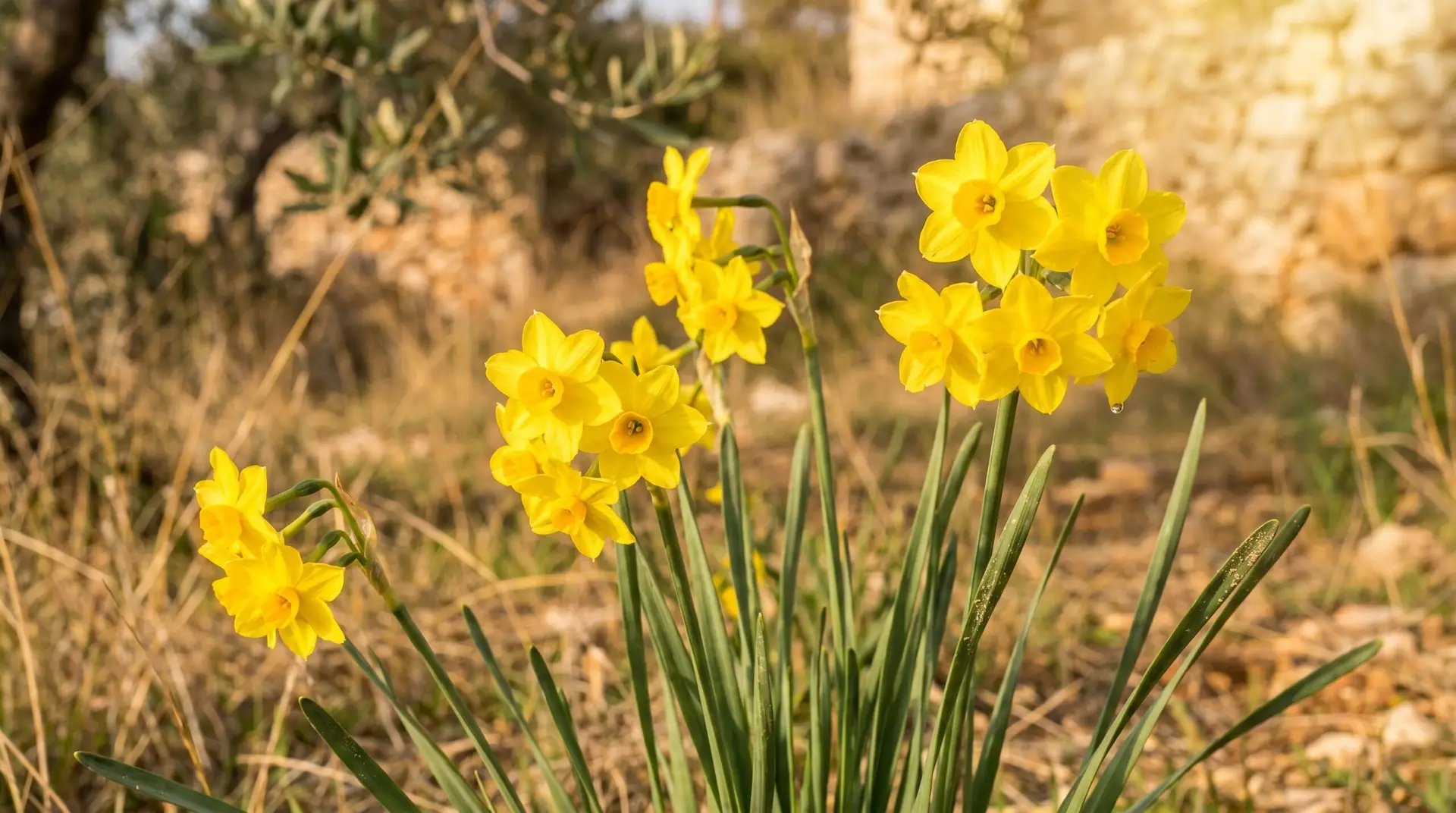
Jonquil is March’s secondary birth flower in Western tradition. Where daffodil stands for rebirth, new beginnings, and the broad symbolism of spring, jonquil stands for affection returned, sympathy, and desire. The flower is Narcissus jonquilla in standard botanical naming, a Mediterranean species native to Spain, Portugal, and southern France that has been cultivated since at least the sixteenth century for its distinctive fragrance.
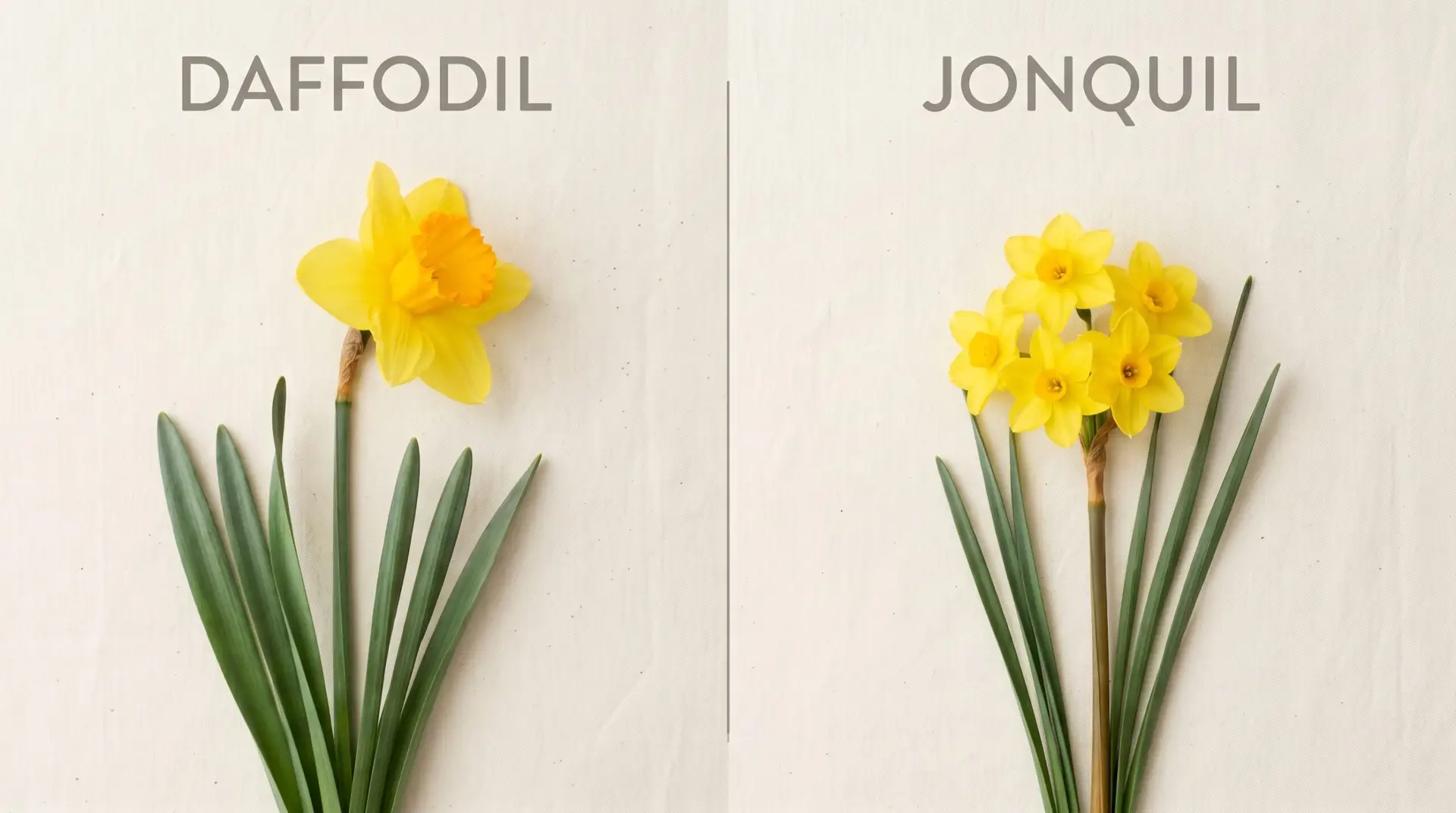
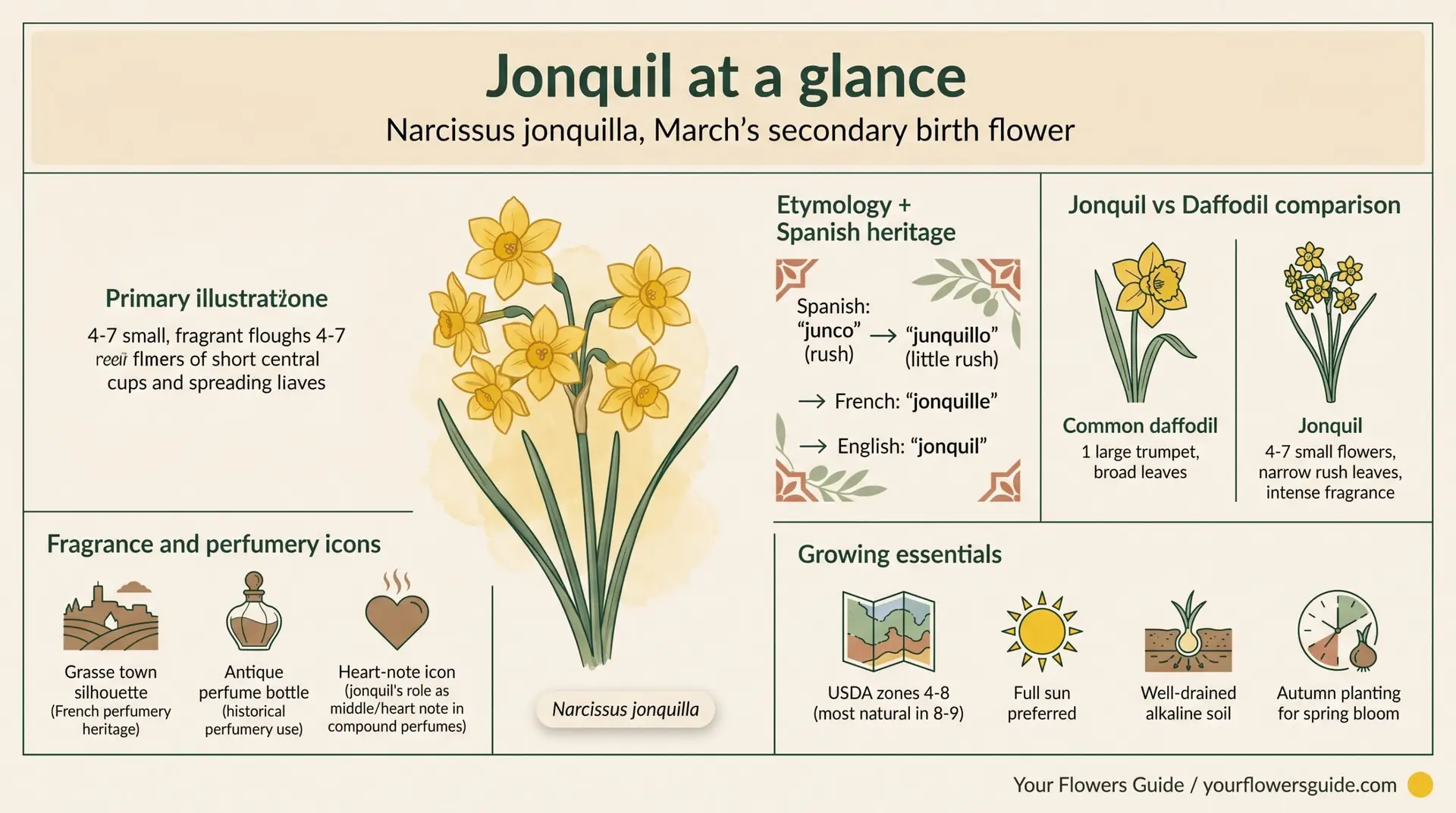
Jonquil belongs to the same genus as the common garden daffodil (Narcissus pseudonarcissus), and the two plants are botanically close relatives. The differences come from species-level characteristics: flower size, flower count per stem, leaf shape, and fragrance intensity. Jonquil flowers are smaller and clustered (typically 4 to 7 flowers per stem) rather than the single large flower of common daffodil. Jonquil leaves are narrow and rush-like rather than broad and strap-like. Jonquil fragrance is intense and sweet, unusually strong even for the Narcissus genus, which has supported continued commercial use in perfumery. These differences distinguish jonquil from other Narcissus species clearly enough to justify its independent treatment in the Western birth flower tradition.
In this guide 7 sections
Jonquil botany: Narcissus jonquilla
Narcissus jonquilla belongs to the genus Narcissus in the family Amaryllidaceae. The species is native to Spain, Portugal, and southern France, with naturalized populations extending into adjacent regions of southern Europe. The plant prefers calcareous (limestone-derived) soils on sunny hillsides and meadow edges in its native Mediterranean habitat.
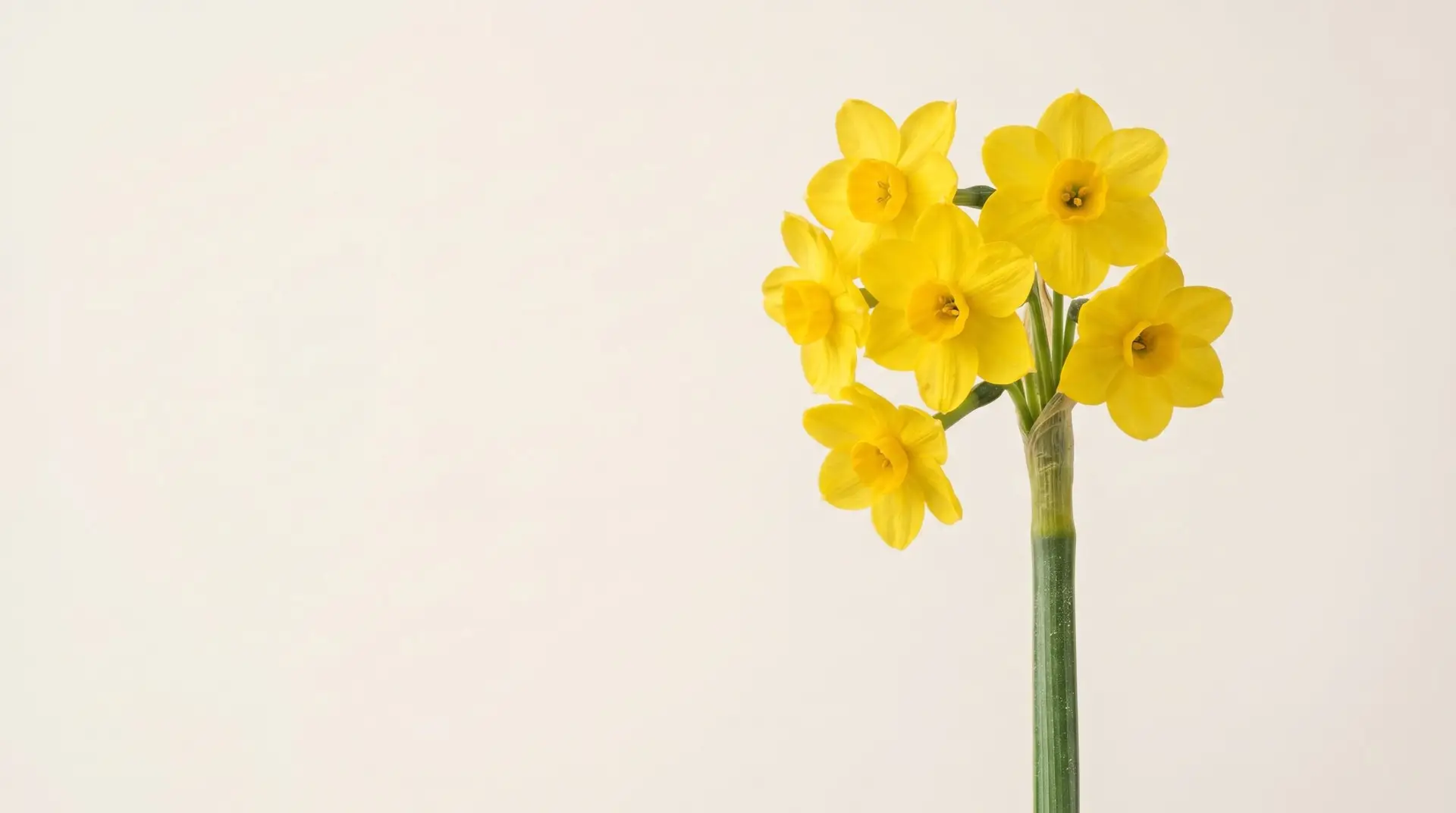
The plant grows from an underground bulb similar to other Narcissus species. The bulb produces a tuft of narrow rush-like green leaves in late winter, followed by a flower stalk that emerges in March or April in temperate climates. Each stalk typically bears 4 to 7 small fragrant flowers in a loose cluster at the top.
The individual jonquil flower is small (about 1 to 1.5 inches across) with six yellow tepals (the petal-like outer structures) arranged flat behind a short bell-shaped corona in the center. The overall form is distinctly daffodil-like but at a smaller scale and with multiple flowers per stem. The fragrance comes from the corona and the inner tepal bases; concentrated cultivation in regions like Grasse (France) and certain Spanish growing regions allowed historical commercial production of jonquil-derived perfumery ingredients.
Several jonquil-related cultivated hybrids appear in modern garden trade alongside the wild species. “Jonquilla and Apodanthus” is the Division 7 of the Royal Horticultural Society Daffodil Classification System, which covers garden cultivars derived from N. jonquilla and related small-flowered species. Popular Division 7 cultivars include ‘Baby Moon’ (pure yellow, intensely fragrant), ‘Pipit’ (white-and-yellow bicolor), ‘Sun Disc’ (rounded golden-yellow), and ‘Quail’ (clear yellow with multiple flowers per stem). These cultivars maintain the small-flower cluster characteristic that distinguishes jonquil from the larger-trumpet daffodils.
The plant is hardy in USDA zones 4 through 8, with the warmer end of the range being the species’ natural preference. In USDA zones 8 and 9, jonquils naturalize readily in sunny garden corners and require no winter protection. In zones 4 through 7, jonquils typically perform well in well-drained sunny positions but may bloom slightly later than common daffodils due to the cooler spring temperatures.
Etymology and Spanish heritage
The English name “jonquil” comes from the Spanish “junquillo,” a diminutive form of “junco” meaning rush or reed. The Spanish naming reflects the plant’s narrow rush-like leaf shape, which distinguishes jonquil from the broader-leaved common daffodil. The Spanish name passed through French (“jonquille”) into English in the seventeenth century and has been the standard English botanical name ever since.
The plant’s cultural history runs through Spain and Portugal as its main heritage regions. Spanish and Portuguese gardeners cultivated jonquils for ornamental and fragrance purposes from at least the sixteenth century, with documented commercial production of jonquil-derived perfumery ingredients in the Andalusian region of southern Spain through the seventeenth and eighteenth centuries. The Portuguese contribution included naturalized colonies in monastery gardens that survive in some form to the present day.
The French perfumery tradition adopted jonquil cultivation through the Mediterranean coastal region of southern France. The town of Grasse, the historic capital of French perfumery, included jonquil among its raw materials for traditional fragrance production through the nineteenth and twentieth centuries. Modern Grasse perfumers still occasionally use jonquil-derived ingredients in specialty fragrances, though the species is less commercially important than rose, jasmine, and lavender in the modern French perfumery industry.
The Latin botanical name “Narcissus jonquilla” combines the genus name (from the Greek myth of Narcissus, the youth who fell in love with his own reflection) with a Latinized form of the Spanish common name. The naming gives jonquil its dual cultural register: the broader Narcissus mythology of self-reflection and beauty, plus the specifically Spanish-Mediterranean heritage of fragrance cultivation.
Jonquil vs daffodil: how to tell them apart
Casual usage sometimes treats “jonquil” and “daffodil” as interchangeable terms. They are not. Both belong to the genus Narcissus, but they are distinct species with visible differences. Knowing the differences helps with both garden plant identification and proper symbolic reading.
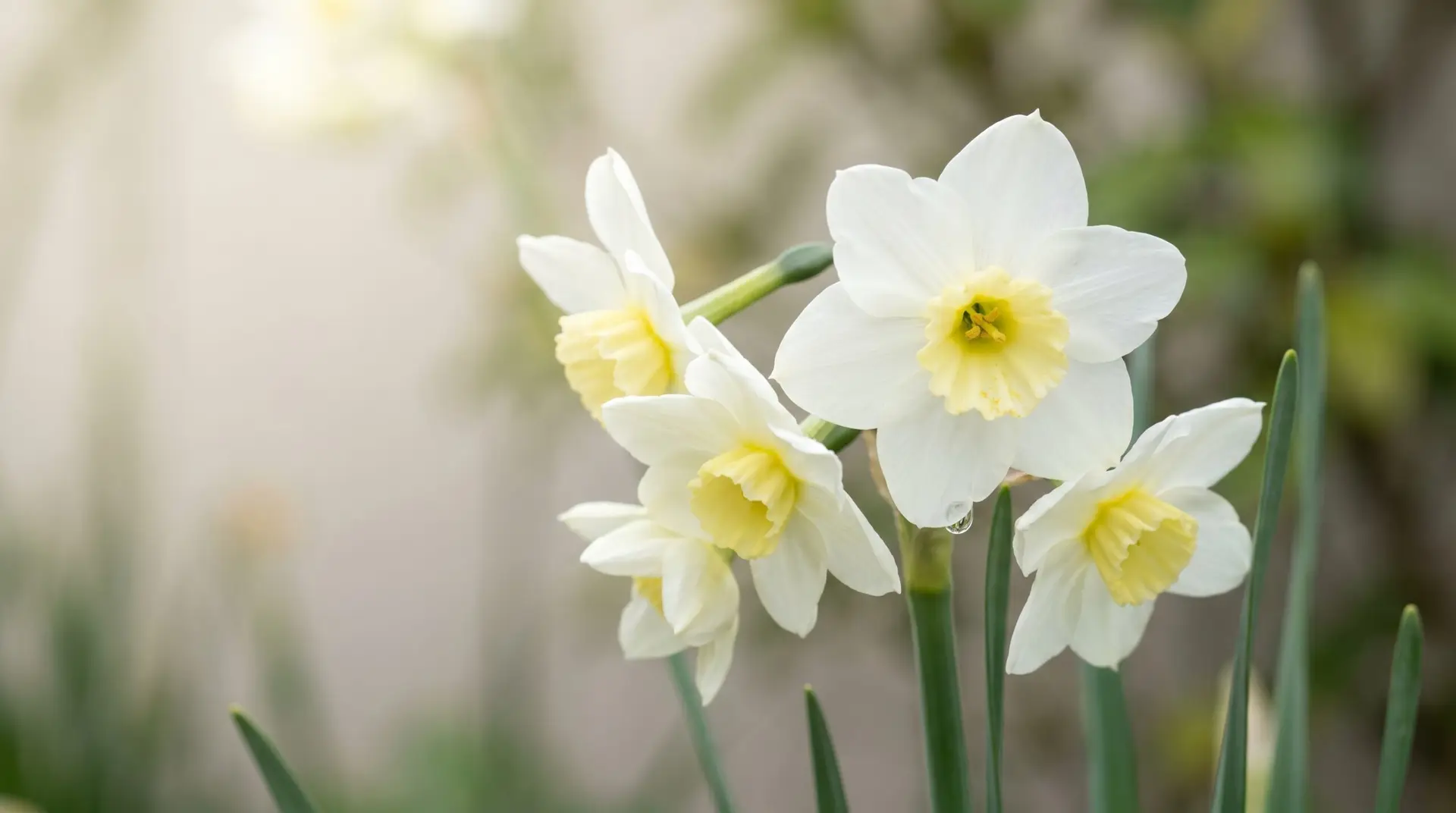
Common daffodil (Narcissus pseudonarcissus) features the classic large trumpet flower form, with one flower per stem typically 2.5 to 3.5 inches across. The corona (trumpet) extends as long as or longer than the surrounding tepals. The leaves are broad and strap-like, about 0.5 inch wide. Fragrance ranges from mild to moderate depending on cultivar. The plant blooms in late February through April depending on cultivar and climate.
Jonquil (Narcissus jonquilla) features small clustered flowers (4 to 7 per stem) with each individual flower about 1 to 1.5 inches across. The corona is short and bell-shaped rather than long-trumpet. The leaves are narrow and rush-like (cross-section nearly cylindrical), distinctly different from the flat strap-like leaves of common daffodil. Fragrance is intense and sweet, much stronger than common daffodil. The plant blooms in March or April depending on climate.
Tazetta narcissus (Narcissus tazetta) is sometimes also called “jonquil” in casual usage, but botanically belongs to a different species group. Tazetta narcissi have multiple small flowers per stem (similar to jonquil in count) but with a longer corona and a distinctly stronger paperwhite-style fragrance. Common paperwhites used for indoor forcing during winter holidays are tazettas (typically Narcissus papyraceus, a tazetta variety).
For practical purposes: if the flower has one large trumpet per stem with broad leaves, it’s a common daffodil. If the flower has 4 to 7 small clustered flowers per stem with narrow rush-like leaves and intense fragrance, it’s a jonquil. If the flower has multiple medium-sized white flowers per stem with paperwhite-strong fragrance, it’s probably a tazetta narcissus rather than a true jonquil.
Fragrance and perfumery uses
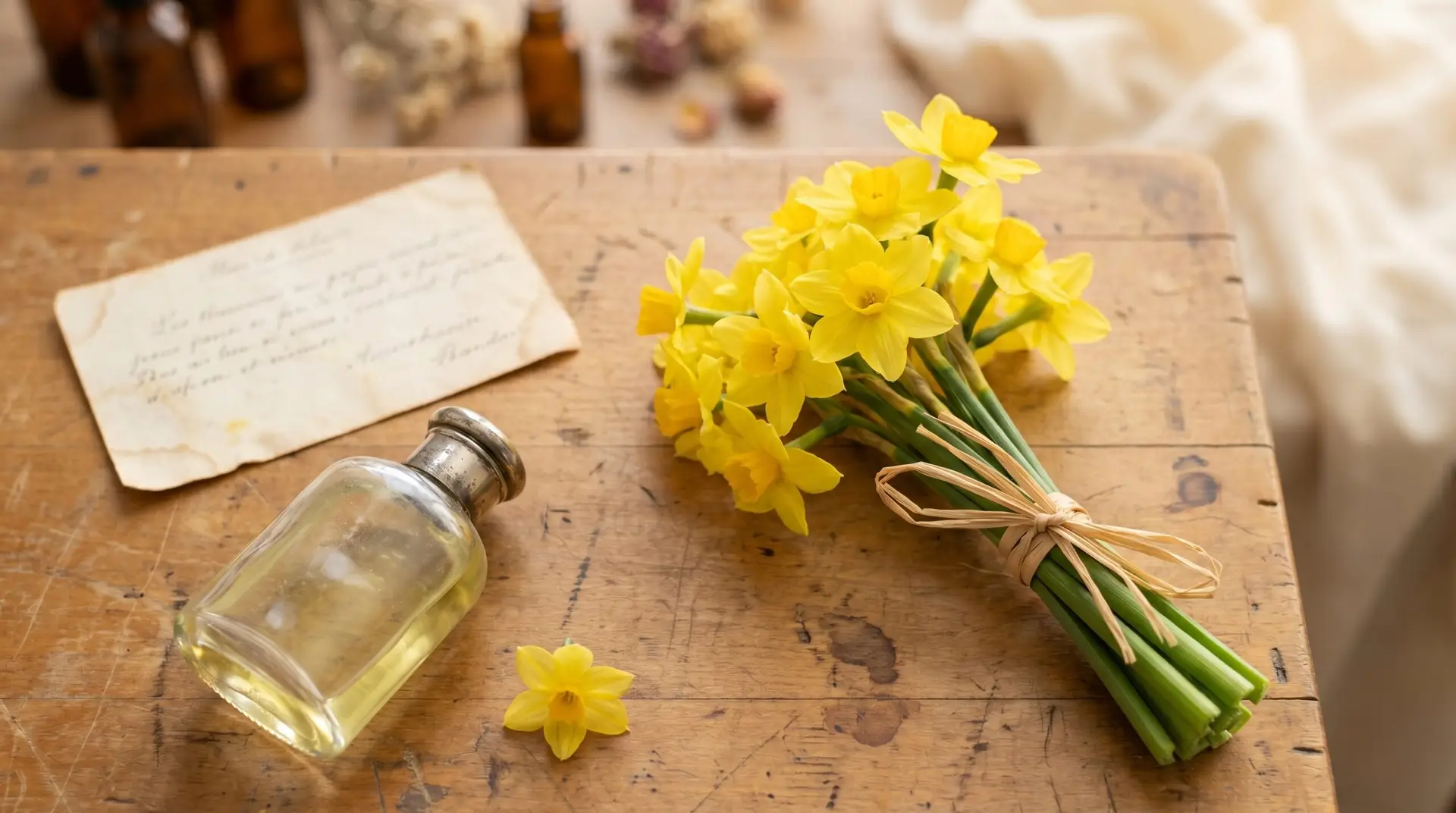
Jonquil fragrance is unusually intense within the Narcissus genus. The scent is sweet, rich, and slightly heavy, with notes that perfumers typically describe as combining narcissus, hay, jasmine, and orange blossom. The fragrance comes from the corona and the inner tepal bases and reaches peak intensity in the cool morning hours; warm afternoon temperatures sometimes suppress the scent through the same scent fatigue mechanism that affects sweet violet and other intensely fragrant species.
Historical commercial perfumery used jonquil as a raw material from at least the eighteenth century. The town of Grasse in southern France, the historic capital of European perfumery, included jonquil cultivation in its surrounding agricultural land alongside the more famous rose, jasmine, and orange blossom production. Jonquil absolute (a concentrated extract produced through solvent extraction) was used as a heart note in compound perfumes, particularly those aiming for a rich floral character.
Modern perfumery use of jonquil has declined relative to the historical peak. Synthetic substitutes provide cheaper alternatives to true jonquil absolute, and changing fashion has reduced consumer demand for the heavier floral compositions that historically used jonquil prominently. Specialty perfumers and niche fragrance houses still occasionally feature true jonquil ingredients; perfumes by Frédéric Malle, Serge Lutens, and Hermès have included jonquil notes in releases over the past two decades.
The cut-flower fragrance contribution remains relevant even without commercial perfumery use. A vase of fresh jonquils brought indoors fills a small room with intense sweet fragrance, which is part of why the species has remained popular as a March cut flower in markets where supply allows. Florists in southern Spain, Portugal, and parts of southern France stock fresh jonquils during the late winter and early spring bloom window, often selling them at premium prices relative to common daffodils due to the limited supply and intense fragrance.
Symbolism within the Narcissus genus
Jonquil’s symbolic reading sits distinctly within the broader Narcissus genus symbolism. Standard Western readings include:
Affection returned. The most distinctive jonquil reading. A jonquil gift symbolizes the wish for reciprocated affection, particularly in romantic contexts where the giver hopes for an answering signal from the recipient. This reading distinguishes jonquil from the broader daffodil “rebirth” symbolism by introducing the relational dimension.
Sympathy and desire. Jonquil also reads as sympathetic understanding and gentle desire. The combination suits gift contexts where the giver wants to acknowledge difficult circumstances while expressing continuing affection.
Spanish heritage. For readers with Spanish, Portuguese, or southern French family connections, jonquil reads as a cultural-heritage flower drawing on the Mediterranean origin and Spanish naming. A jonquil gift for a recipient with these family connections adds a heritage dimension to the basic symbolic reading.
The broader Narcissus genus symbolism, including the Greek Narcissus myth (the youth who fell in love with his reflection), applies to jonquil indirectly. The myth has shaped the Western reading of all Narcissus species to include themes of self-reflection, beauty, and the dangers of self-absorption. The “Narcissist” English-language term for self-absorbed personality types derives from this myth. Modern readers giving or receiving jonquil rarely emphasize the self-reflection symbolism explicitly, but the cultural overlay is present in the background of the genus.
Growing jonquils
Jonquils do best in sunny well-drained positions with calcareous soil in their native Mediterranean preference. The cultivation requirements follow the species’ natural habitat: sunny meadows and hillsides in southern Spain and Portugal.
USDA zones 4 through 8 cover the temperate climate range where jonquil performs well. Zones 8 and 9 are the most natural fit for the species; jonquils naturalize readily in these warmer climates and require no winter protection. Zones 4 through 7 require more careful site selection, with well-drained sunny positions on south-facing slopes performing best. Zones 3 and colder are typically too cold for reliable jonquil performance; common daffodils tolerate colder climates better.
Sun exposure should be full sun to light dappled shade. Direct sunlight throughout the day suits jonquils’ natural preference; deep shade significantly reduces bloom performance.
Soil should be well-drained, slightly alkaline to neutral, and not too rich in organic matter. Heavy clay soils that hold water in winter cause bulb rot. Sandy or loamy soils on south-facing slopes mimic the species’ natural Mediterranean habitat best.
Planting time is autumn (October through early December in temperate northern hemisphere) for spring bloom. Plant bulbs about 4 inches deep and 4 inches apart for naturalizing displays. Avoid disturbing established clumps; jonquils prefer to remain undisturbed for several years and produce better bloom displays when allowed to settle.
Pests and diseases are minimal. Slugs occasionally damage emerging leaves but rarely cause serious problems. Bulb rot from waterlogged soil is the main threat; site selection eliminates this problem in most cases.
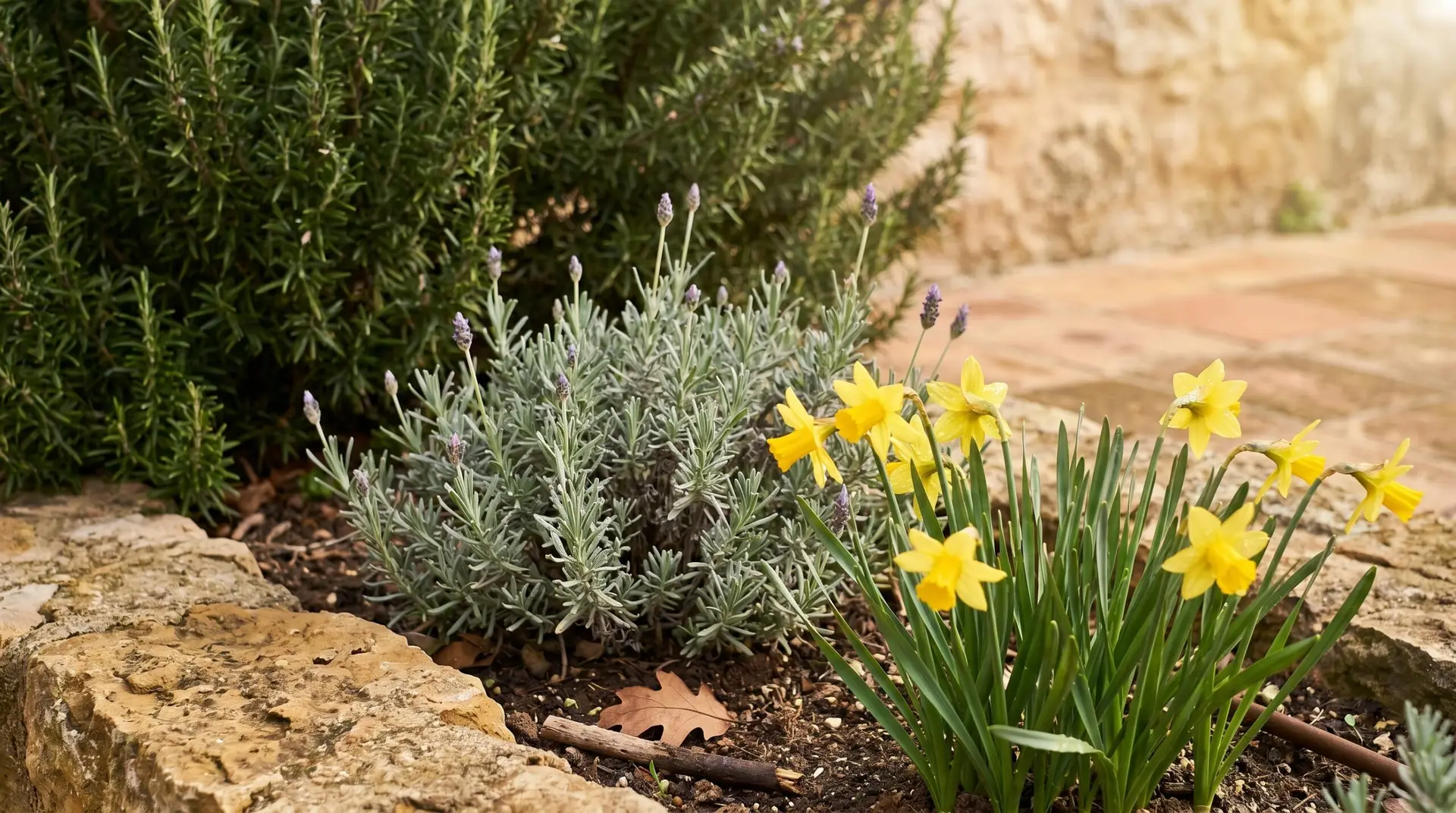
Companion planting with rosemary, lavender, and other Mediterranean herbs creates a coherent cultural and visual grouping that suits the jonquil’s Spanish heritage. The combination works particularly well in coastal Mediterranean climate gardens and in well-drained sunny corners of temperate gardens.
At a glance
Questions
Frequently asked
What does the jonquil flower symbolize?
Affection returned, sympathy, and desire in modern Western floriography. The reading distinguishes jonquil from the broader daffodil “rebirth” symbolism by introducing the relational dimension of returned affection. Spanish-heritage families sometimes also use jonquil as a cultural-heritage flower drawing on the species’ Mediterranean origin.
Are jonquils the same as daffodils?
Both belong to the genus Narcissus, but they are distinct species. Common daffodil (Narcissus pseudonarcissus) has one large trumpet flower per stem with broad strap-like leaves. Jonquil (Narcissus jonquilla) has 4 to 7 small clustered flowers per stem with narrow rush-like leaves and much stronger fragrance.
Why is jonquil called jonquil?
The English name comes from the Spanish “junquillo,” a diminutive of “junco” meaning rush or reed, reflecting the plant’s narrow rush-like leaf shape. The name passed through French (“jonquille”) into English in the seventeenth century.
Where do jonquils come from?
Jonquils are native to Spain, Portugal, and southern France, with naturalized populations in adjacent Mediterranean regions. The plant has been cultivated for fragrance and ornamental use since at least the sixteenth century.
Are jonquils used in perfumery?
Yes, historically jonquil absolute was used as a heart note in compound perfumes, particularly in the French perfumery tradition centered on Grasse. Modern perfumery use has declined relative to the historical peak, but specialty and niche perfumers still occasionally feature true jonquil ingredients.
How do jonquils smell?
The fragrance is sweet, rich, and intense, with notes that perfumers describe as combining narcissus, hay, jasmine, and orange blossom. The scent reaches peak intensity in cool morning hours; warm afternoon temperatures sometimes suppress it.
How do you grow jonquils?
Plant in full sun with well-drained slightly alkaline soil, in USDA zones 4 through 8 (with zones 8 and 9 being the most natural fit). Plant bulbs in autumn for spring bloom, about 4 inches deep and 4 inches apart. Avoid disturbing established clumps; jonquils prefer to settle for several years.
Are jonquils poisonous?
Yes, like all Narcissus species, jonquil bulbs contain alkaloids toxic if eaten. Jonquil poisoning causes nausea, vomiting, and digestive upset in humans, and the bulbs can be dangerous to dogs and cats. Handle bulbs with washed hands and keep them away from edible plant storage.
What’s the difference between jonquil and paperwhite?
Paperwhites are typically Narcissus papyraceus, a tazetta-group species used for indoor forcing during winter holidays. Both have multiple small flowers per stem (similar in count to jonquil), but paperwhites are white with a stronger paperwhite-style fragrance, while jonquils are yellow with the distinctive sweet jonquil fragrance.
Sources
- Daffodil (Narcissus, including jonquilla) · Encyclopedia Britannica
- Daffodil growing guide · Royal Horticultural Society
- International Daffodil Register (Division 7 jonquilla) · Royal Horticultural Society
Keep reading
March birth flower: daffodil, jonquil, and what they mean
March birth flowers by day: the Korean 365-day tradition
Daffodil tattoo: designs, color symbolism, and placement
Birth flower by month: all 12 monthly flowers
Enjoying our flower guides? Add YourFlowersGuide as a preferred source on Google. It helps more readers find us.
Add to Preferred Sources