
Cosmos is October’s secondary birth flower in Western tradition. Where marigold signals warm protective remembrance, cosmos signals peace, balance, and harmony through the Greek “kosmos” etymology meaning ordered universe. The flower refers primarily to the genus Cosmos in the family Asteraceae (the daisy family), with the genus containing approximately 35 species native to Mexico, South America, and parts of southern North America.
The cosmos holds an unusually elegant cultural register that combines botanical simplicity with profound symbolic depth. The simple daisy-like flower form (single or semi-double daisy with central yellow disc and 8 wide ray petals) belies the unique symbolic anchor in Greek philosophical tradition through the “kosmos” name meaning ordered harmony. The species includes one of the most distinctive specialty flowers in horticultural tradition (chocolate cosmos, Cosmos atrosanguineus, with its distinct chocolate scent and near-extinction in the wild) and the bright Japanese akizakura tradition where cosmos has become the iconic autumn flower of Japanese gardens and meadows.
In this guide 7 sections
Cosmos botany: species and relatives
The most culturally and horticulturally significant cosmos species are the following.
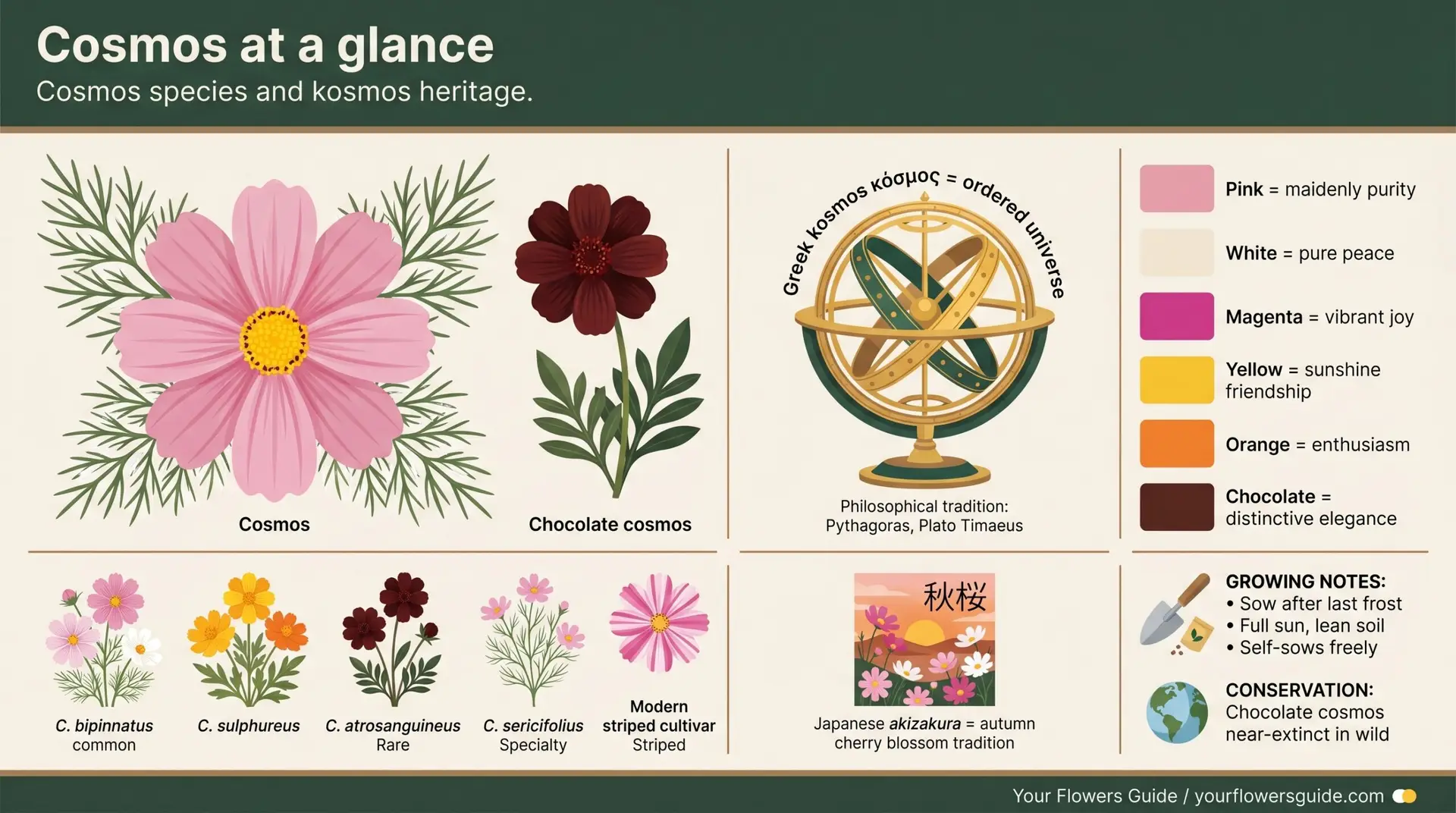
Cosmos bipinnatus (common garden cosmos, Mexican aster). The standard cosmos of European and American gardens. Native to Mexico and southern North America. Single daisy-like flowers reaching 2 to 4 inches across in pink, white, magenta, or purple colors with central yellow disc. Tall airy plant reaching 3 to 6 feet with ferny pinnately-divided foliage on slender wiry stems. Annual in most climates; warm-season grower from spring planting to autumn frost.
Cosmos sulphureus (sulphur cosmos, yellow cosmos). Native to Mexico. Distinguished from C. bipinnatus by bright yellow to orange flower color (rather than pink/white/magenta) and slightly smaller more compact plant form (typically 2 to 4 feet). Otherwise similar growth habit and flowering pattern. Some popular cultivars include “Cosmic Orange” and “Cosmic Yellow.”
Cosmos atrosanguineus (chocolate cosmos). Native to Mexico but nearly extinct in the wild (last documented wild populations recorded in Mexico in the early twentieth century). All currently cultivated plants are descended from a single clone collected before the wild extinction. Deep chocolate-red flowers approximately 2 inches across with a distinct chocolate scent that becomes most noticeable in warm afternoon sun. Tender perennial requiring overwintering protection in cold climates; cultivated from tuberous roots.
Cosmos sericifolius (silk-leaf cosmos). A relatively rare species with silvery silky foliage and pink flowers. Native to Mexico and Central America. Available occasionally from specialty seed suppliers but not commonly cultivated in Western gardens.
Cosmos peucedanifolius and other less common species. Various specialty cosmos species available occasionally from rare seed suppliers and botanical garden collections.
The visual character across all common cosmos species centers on the simple single or semi-double daisy form, the airy ferny pinnately-divided foliage, the slender wiry stems, and the abundant sequential flowering across the late summer through autumn season. Each individual flower lasts approximately 3 to 5 days in suitable conditions; a healthy plant produces dozens of sequential blooms over the flowering period.
The genus name and the species names reflect the cosmos’s relatively late introduction to Western horticulture compared to many other garden flower genera. Spanish missionary priests in Mexico first encountered cosmos and gave the plant its Greek “kosmos” name (meaning ordered universe or harmony) in admiration of the orderly symmetry of the flower form. The plant was introduced to European cultivation in the late eighteenth century and rapidly spread through European and American gardens during the nineteenth century.

The Greek kosmos etymology and harmony tradition
The Greek “kosmos” (κόσμος) is one of the most philosophically loaded names ever given to a flower. The Greek word means ordered universe or harmony, in contrast to “chaos” (χάος) meaning disorder or formlessness. The kosmos concept emerged in Pre-Socratic Greek philosophy through thinkers like Pythagoras (approximately 570-495 BC) and Heraclitus (approximately 535-475 BC), who used kosmos to describe the harmonious order underlying the natural world.
The kosmos concept developed further through later Greek philosophy. Plato used kosmos extensively in his philosophical works, particularly in the Timaeus (approximately 360 BC) where he discusses the universe as an ordered cosmos created from chaos by the divine craftsman (Demiurge). Aristotle and Stoic philosophers continued the kosmos tradition, using the term to discuss both physical order in the universe and moral order in human society.
The application of “kosmos” to the cosmos plant by Spanish missionary priests in Mexico in the late eighteenth century reflects the European Renaissance and Enlightenment recovery of classical Greek philosophical concepts. The missionaries (probably Spanish Jesuit priests, though specific historical attribution is uncertain) admired the orderly symmetry of the cosmos flower form and chose the Greek philosophical term as the most appropriate scientific name. The choice was unusually thoughtful: most plant names in scientific Latin reference physical characteristics or geographic origin, but “Cosmos” references a philosophical and aesthetic concept that elevates the plant beyond simple description.
The “cosmos” word in modern English (meaning the universe as ordered whole) and the “cosmos” plant share the same Greek root. The plant name actually predates the modern English use of “cosmos” to mean the universe, with the plant entering European cultivation under the name “Cosmos” in the 1790s and the English “cosmos” for universe becoming common only later in the nineteenth century. The two words have always shared meaning, with the plant providing a botanical reference for the philosophical concept.
Modern symbolic reading of cosmos draws on the Greek philosophical heritage. The flower signals peace (the inner state achieved through alignment with natural order), balance (the harmony between competing elements that produces stability), and harmony (the broader integration of parts into a beautiful ordered whole). The Victorian floriographic tradition extended these readings to include “modesty” and “joy in simple things,” reflecting the plant’s unpretentious garden character combined with the elevated philosophical name.
The connection between the cosmos plant and the cosmos universe provides natural symbolic depth for wearers and gift recipients interested in astronomical, philosophical, or spiritual traditions. A cosmos gift or tattoo can invoke both the simple garden flower and the broader universal harmony tradition, offering layered symbolic register beyond the literal floral content.

Color symbolism across cosmos varieties
Cosmos color shifts the symbolic reading within the broader theme of peace and harmony:
Pink cosmos (Cosmos bipinnatus pink): the most traditional and most common. Maidenly purity, gentle affection, sweet feminine warmth. The classic Victorian color reading and the dominant cosmos color in garden tradition.
White cosmos (Cosmos bipinnatus white): pure peace, innocence, formal harmony. The white provides the most formally appropriate register for wedding contexts (paired with autumn season themes) and for memorial arrangements.
Magenta or deep pink cosmos: vibrant joy, passionate harmony, celebratory peace. The brighter color suits cheerful contexts while maintaining the harmony symbolism.
Yellow cosmos (Cosmos sulphureus): sunshine, friendship, warm joy. The yellow color shifts the symbolic register toward warmer relational warmth and friendship themes.
Orange cosmos (Cosmos sulphureus orange): enthusiasm, creative energy, warm celebration. The bright orange color suits cheerful bold floral statements and works particularly well alongside marigold in October bouquets.
Chocolate cosmos (Cosmos atrosanguineus): distinctive elegance, mystery, the contemplative depth of unusual beauty. The deep chocolate-red color and the distinctive chocolate scent give the variety unique symbolic register.
Bicolor or striped cosmos (various modern cultivars): layered harmony, complex peace, the natural variation of authentic order. Modern cultivars with striped or picotee patterns provide additional symbolic registers.
Florist usage treats cosmos as the elegant alternative to bolder autumn flowers (sunflowers, dahlias, marigolds) for arrangements emphasizing subtle beauty and balance rather than dramatic warmth. The airy stem structure and simple flower form give cosmos arrangements a refined character suitable for sophisticated gift contexts.

Chocolate cosmos: a near-extinct species
Chocolate cosmos (Cosmos atrosanguineus) holds a distinctive place in horticultural history through its near-extinction in the wild and its unique chocolate scent. The species deserves separate detailed coverage given its conservation significance and its unusual sensory characteristics.
The species is native to Mexico, with historical documentation of wild populations in central Mexican states. The last confirmed wild population was recorded in the early twentieth century before the species apparently disappeared from its native range. The exact reasons for the wild extinction are uncertain but probably include habitat loss, climate change in the species’s native range, and limited natural reproductive success.
All currently cultivated chocolate cosmos plants are descended from a single clone collected before the wild extinction. The species reproduces sexually with difficulty and has been propagated almost exclusively through vegetative reproduction (tuberous root division) for over a century. The genetic uniformity of cultivated chocolate cosmos creates ongoing conservation concerns: the species has essentially no genetic diversity, making it vulnerable to any single plant disease or environmental challenge that could affect the entire cultivated population simultaneously.
Recent botanical research has produced some hope for the species’s broader conservation. The Royal Botanic Garden Kew (UK) and various other botanical garden conservation programs have been working on seed propagation techniques and on potential reintroduction to Mexican native habitat areas. Some success in producing viable seed from chocolate cosmos has been documented in recent years, opening the possibility of genetic diversification through new generations of seed-grown plants.
The distinctive chocolate scent of the species is the result of specific volatile organic compounds released from the flowers, particularly in warm afternoon sun. The scent becomes most noticeable when the flowers are warmed and is most apparent at close range; the entire garden does not become noticeably chocolate-scented even with multiple chocolate cosmos plants. The scent quality has been variously described as chocolate, vanilla-chocolate, or chocolate-coffee depending on individual perception and atmospheric conditions.
Chocolate cosmos cultivation requires more attention than common garden cosmos. The species is a tender perennial requiring overwintering protection in cold climates (USDA zones 6 and colder). Gardeners typically dig the tuberous roots in autumn after the foliage has died back to frost, store the tubers in cool dry conditions over winter (similar to dahlia tuber storage), and replant in spring after the last frost. In USDA zone 7 and warmer, the species can sometimes overwinter outdoors with adequate mulch protection.
The species is available from specialty perennial nurseries and rare plant specialists but is not commonly carried by general garden centers. Prices typically run from twenty to fifty dollars per plant. The conservation significance and the unusual scent make the species particularly meaningful for botanical garden enthusiasts and for gardeners interested in rare or distinctive plant species.

Growing cosmos in the garden
Common garden cosmos (Cosmos bipinnatus, Cosmos sulphureus) is among the easiest annual flowers to grow in most temperate climate gardens.
Sow seeds directly outdoors after the last frost date (typically late spring) when soil has warmed sufficiently for reliable germination. Cosmos seeds germinate readily in 5 to 10 days in suitable soil temperatures (65-75°F / 18-24°C). Plant seeds 1/4 inch deep with 9 to 12 inches between plants in suitable garden locations. Cosmos can also be started indoors 4 to 6 weeks before the last frost date and transplanted outdoors after danger of frost has passed, though direct sowing typically produces better results.
The plants require full sun (6 or more hours daily) for best flowering and tolerate poor soil conditions (in fact, rich fertile soils produce excessive foliage growth at the expense of flowering, so cosmos benefits from lean rather than amended soil). Adequate water during the establishment period supports vine development; established plants tolerate drought reasonably well.
Pinching young plants when they reach 8 to 12 inches tall encourages branching and produces bushier plants with more flower production. Deadheading spent flowers throughout the season prolongs bloom and prevents premature self-seeding. The plants self-sow readily in suitable climates, with volunteer plants appearing the following year from any seeds allowed to mature on the plant.
Bloom timing runs from midsummer through autumn frost in temperate climates, with peak abundance in late summer and early autumn (perfect timing for the October birth flower position). Each individual flower lasts approximately 3 to 5 days; the plant produces dozens of sequential blooms throughout the flowering period.
Companion planting works well with cosmos in mixed borders, cutting gardens, and prairie or meadow-style plantings. The airy growth habit complements more substantial flowers (sunflowers, dahlias, zinnias) and provides visual lightness in plantings dominated by heavier flower forms. Cosmos attracts numerous pollinators including bees, butterflies, and other beneficial insects.
Pests and diseases for cosmos include aphids on new growth, slug damage on seedlings, and occasional fungal leaf spot diseases in humid conditions. The plants are typically pest-resistant overall and do not require regular pest management interventions.
Cosmos works particularly well as cut flowers. The simple flower form and airy stem structure suit casual loose bouquets and informal flower arrangements. Cut cosmos lasts 5 to 7 days in the vase with regular water changes.
Japanese cosmos (akizakura) culture
Cosmos has developed distinctive Japanese cultural significance through the akizakura (秋桜, literally “autumn cherry blossom”) tradition. The species was introduced to Japan from the West in the late nineteenth century during the Meiji Restoration period and rapidly became established as one of Japan’s iconic autumn flowers, with the akizakura name reflecting the cultural reception of cosmos as the autumn equivalent of the springtime cherry blossom.
Japanese cosmos meadows have become major tourist attractions across Japan during the autumn cosmos bloom period (typically September through early November). Major cosmos viewing destinations include the Showa Memorial Park (昭和記念公園) in Tokyo, the Akeno Cosmos Festival (明野コスモス祭り) in Yamanashi Prefecture, and numerous other commercial and public garden cosmos plantings across Japan. Visitors come specifically for the autumn cosmos viewing experience, similar to the springtime hanami (cherry blossom viewing) tradition.
The cosmos has entered Japanese poetry and song extensively. The “Akizakura” by Sada Masashi (released 1977) is one of the most famous Japanese songs featuring cosmos, with the song using cosmos as the central image for autumn melancholy and lost love. Numerous other Japanese poems, songs, and visual artworks feature cosmos as the iconic autumn flower symbolizing brief beauty, seasonal transition, and reflective awareness.
The cultural significance of cosmos in Japan has expanded the international perception of the flower beyond its Mexican botanical origin. Many readers outside Japan first encounter cosmos through Japanese cultural references (literature, anime, music) and may primarily associate the flower with Japanese rather than Mexican cultural context. This dual cultural heritage (Mexican botanical origin combined with Japanese aesthetic adoption) gives cosmos unusually rich cross-cultural symbolic register.
For October-born readers with interest in Japanese culture or for those drawn to the akizakura aesthetic tradition, the cosmos birth flower assignment connects directly to Japanese cultural heritage in ways that the Mexican botanical origin alone does not capture.

At a glance
Questions
Frequently asked
What does the cosmos flower symbolize?
Peace, balance, and harmony. The Greek “kosmos” etymology (meaning ordered universe) provides the foundational symbolic anchor connecting the flower to themes of natural order, balance, and the harmony of well-ordered systems. The Victorian floriographic tradition extended the readings to include “modesty” and “joy in simple things.” Japanese cultural reading (akizakura) emphasizes brief autumn beauty and reflective awareness.
Why is the cosmos called “cosmos”?
The name is usually traced to Spanish missionaries in Mexico in the late eighteenth century, who are said to have applied the Greek “kosmos” (meaning ordered universe or harmony) in admiration of the orderly symmetry of the flower form, though the specific historical attribution is uncertain. The name references a philosophical and aesthetic concept rather than purely physical characteristics. The Greek “kosmos” is also the root of the modern English “cosmos” (the universe), and the plant name predates that modern English sense.
What is chocolate cosmos?
Chocolate cosmos (Cosmos atrosanguineus) is a rare specialty cosmos species with deep chocolate-red flowers that produce a distinct chocolate scent in warm sun. The species is nearly extinct in the wild, with all currently cultivated plants descended from a single clone collected before the wild extinction. Available from specialty perennial nurseries.
Are cosmos easy to grow?
Yes, common garden cosmos (Cosmos bipinnatus, Cosmos sulphureus) is among the easiest annual flowers to grow in most temperate climate gardens. Direct-sow seeds after the last frost date, provide full sun and average to poor soil (rich fertile soils actually reduce flowering), and the plants establish themselves with minimal care. Chocolate cosmos requires more attention as a tender perennial requiring overwintering protection.
When do cosmos bloom?
Cosmos blooms from midsummer through autumn frost in temperate climates, with peak abundance in late summer and early autumn (perfect timing for the October birth flower position). Each individual flower lasts approximately 3 to 5 days; the plant produces dozens of sequential blooms throughout the flowering period.
What is Japanese akizakura?
Akizakura (秋桜, literally “autumn cherry blossom”) is the Japanese name for cosmos, reflecting the cultural reception of the species as Japan’s iconic autumn flower equivalent to the springtime cherry blossom. Cosmos was introduced to Japan from the West in the late nineteenth century and rapidly became culturally significant, with major autumn cosmos viewing destinations across Japan and extensive cosmos representation in Japanese poetry, song, and visual art.
Why is chocolate cosmos nearly extinct?
The exact reasons are uncertain but probably include habitat loss in the species’s native Mexican range, climate change, and limited natural reproductive success. The last confirmed wild population was recorded in the early twentieth century. All currently cultivated plants are descended from a single clone, creating ongoing conservation concerns about genetic uniformity making the species vulnerable to disease or environmental challenge.
Can I grow chocolate cosmos in my garden?
Yes, chocolate cosmos is available from specialty perennial nurseries at prices typically running from twenty to fifty dollars per plant. The species requires more attention than common cosmos: tender perennial requiring overwintering protection in cold climates (USDA zones 6 and colder, dig tubers in autumn and store indoors). In USDA zone 7 and warmer, the species can sometimes overwinter outdoors with adequate mulch protection.
How long do cut cosmos last in the vase?
Cut cosmos lasts approximately 5 to 7 days in the vase with regular water changes. The simple flower form and airy stem structure suit casual loose bouquets and informal flower arrangements. Cosmos works particularly well as cut flowers because the long slender stems and abundant flower production provide multiple cuts from each plant over the season.
What’s the difference between cosmos and Mexican aster?
Cosmos (genus Cosmos) and Mexican aster (a common name sometimes applied to Cosmos bipinnatus) refer to the same plant. “Mexican aster” reflects the species’s native Mexican origin and the visual similarity to true aster (genus Aster/Symphyotrichum, family Asteraceae). The two genera are different but related within the daisy family.
Sources
- Cosmos (Cosmos) · Encyclopedia Britannica
- Cosmos growing guide · Royal Horticultural Society
Keep reading

October birth flower: marigold, cosmos, and what they mean

October birth flowers by day: the Korean 365-day tradition

Marigold tattoo: meaning, designs, and Day of the Dead heritage

Birth flower by month: all 12 monthly flowers
Enjoying our flower guides? Add YourFlowersGuide as a preferred source on Google. It helps more readers find us.
Add to Preferred Sources