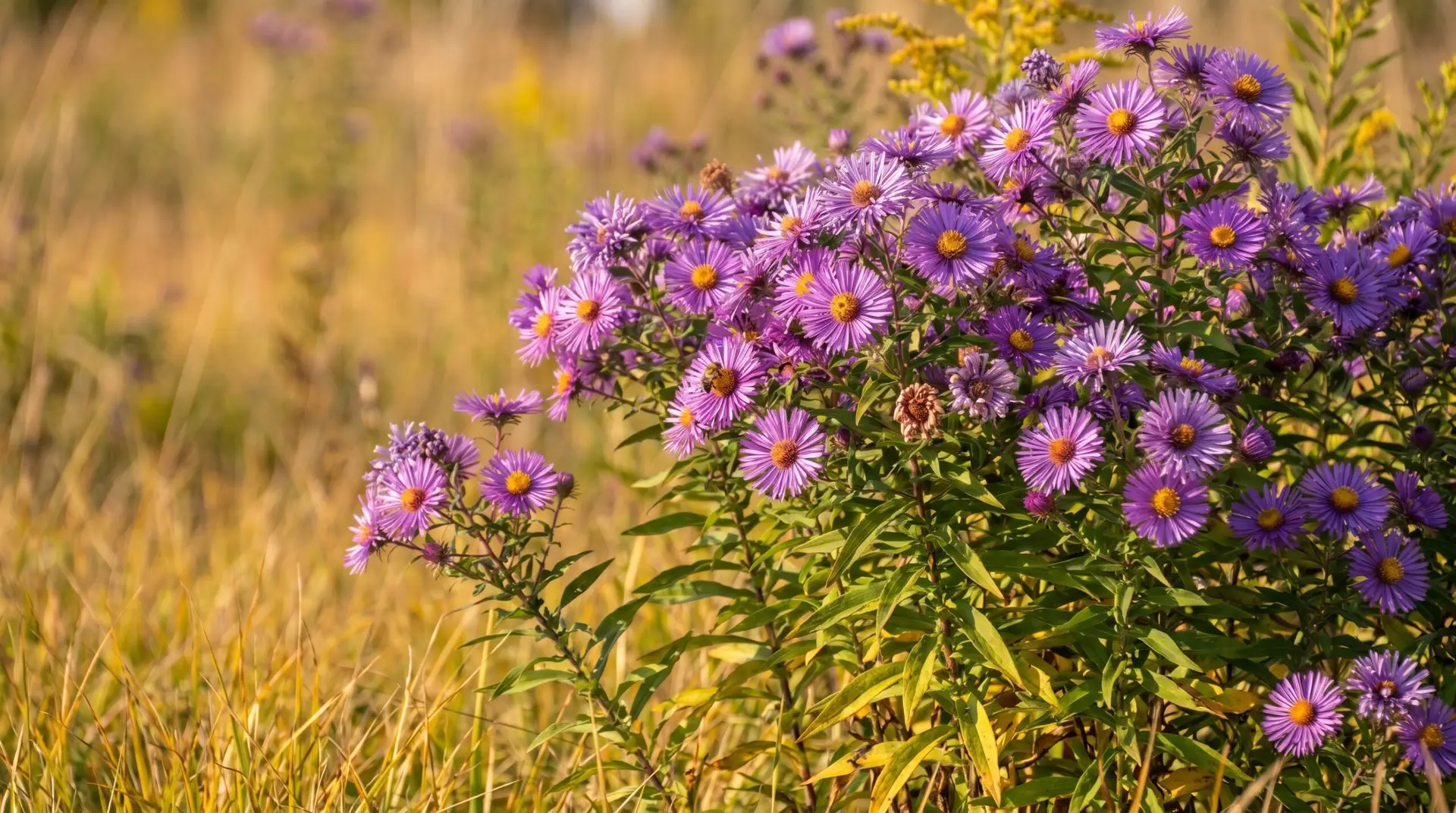
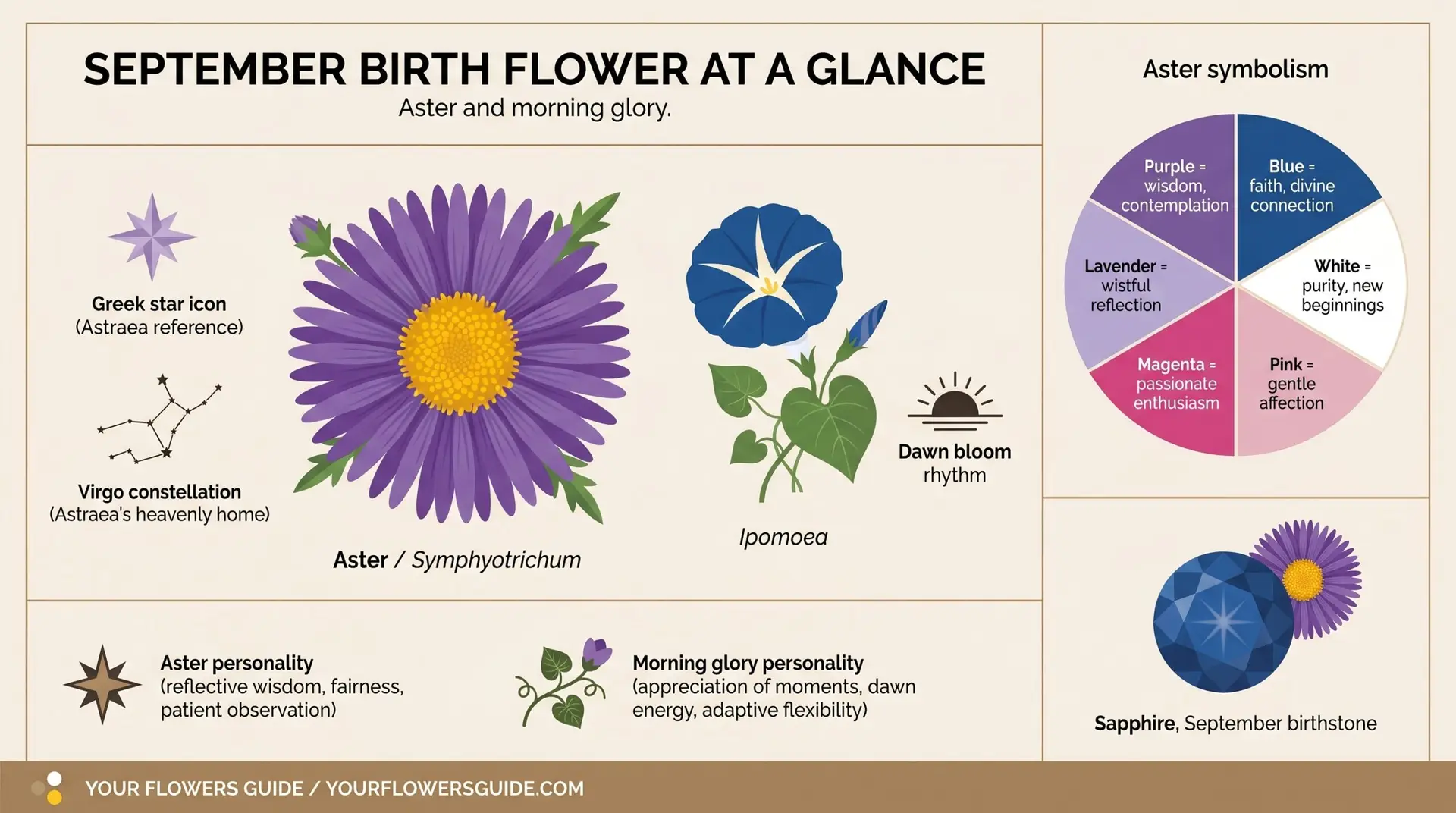
September has two birth flowers in Western tradition: aster (genus Aster and related Symphyotrichum) as the primary, and morning glory (Ipomoea) as the secondary. Aster signals wisdom, faith, and valor through its Greek mythological connection to starlight (the Greek “aster” literally meaning “star”). Morning glory signals affection, mortality, and the resilience of one-day bloom across the daily cycle.
The two flowers share a thematic register of brief brilliant moments that suit September’s seasonal position at the threshold between summer and autumn. Aster flowers cover open hillsides and meadows in late summer and early autumn with dense displays of small star-shaped blooms in white, pink, blue, and purple. Morning glory climbs garden trellises and fences with bright trumpet-shaped flowers that open at dawn and close by midday, completing their entire visible flowering arc in a few hours. The deeper cultural weight of September comes from the Greek mythological framing: aster as the goddess Astraea’s tears falling to earth as flowers, and morning glory’s symbolic register of fleeting beauty as a meditation on time and impermanence.
In this guide 7 sections
Aster, the main September birth flower
Aster belongs to the family Asteraceae (the daisy family, the largest plant family in the world with approximately 32,000 species). The traditional genus Aster has been substantially revised by modern botanical taxonomy, with most North American “asters” now reclassified into the genus Symphyotrichum and related genera; the original genus Aster now contains primarily Old World species native to Europe and Asia. The Aster of garden tradition includes both the classical European species (Aster amellus, Aster alpinus) and the popular New England aster (now Symphyotrichum novae-angliae) and New York aster (Symphyotrichum novi-belgii).
The plant is herbaceous perennial in most cases (some species are annual), growing on upright stems from 12 inches (alpine species) to 6 feet (tall garden hybrids). The leaves are typically linear to lanceolate (long and narrow), arranged alternately along the stems. The flowers are the diagnostic feature: small daisy-like composite blooms with a central disc of small yellow or gold disc flowers surrounded by 8 to 60 narrow ray petals (technically ligules, the technical botanical term for what looks like a single petal in composite flowers like daisies and asters). The “star” appearance from which the genus name derives comes from this radial ray petal arrangement around the central disc.
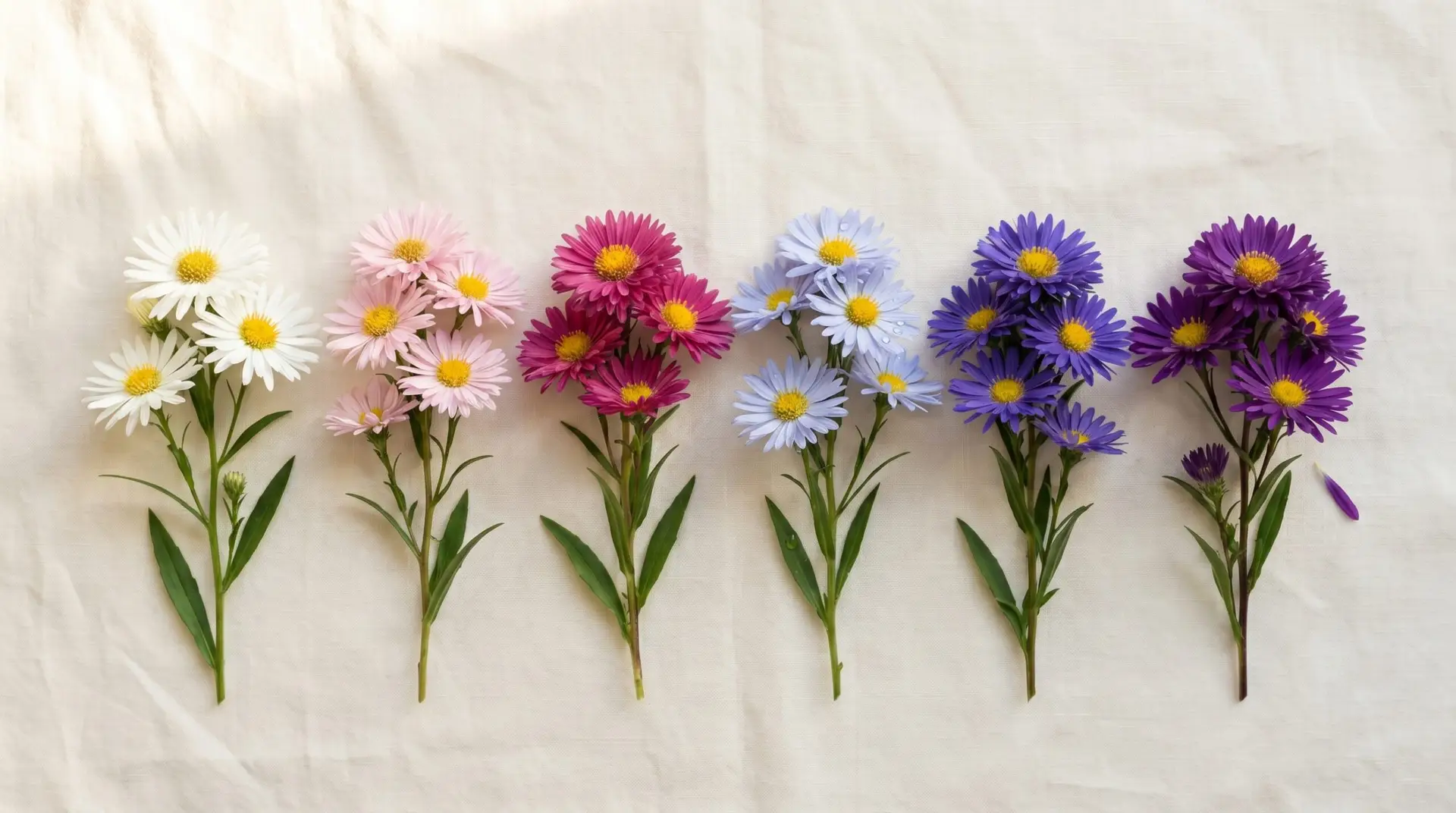
Modern aster cultivation includes an extraordinary range of color and form. Color choices include white, pale pink, deep pink, lavender, pale blue, deep blue-purple, magenta, and bicolor combinations. Flower size varies from small refined alpine aster blooms (less than 1 inch) to large garden hybrid blooms (3+ inches). Specialist growers and horticultural societies maintain extensive cultivar registers documenting hundreds of named varieties.
Bloom timing runs from late summer through autumn in temperate climates, with peak abundance in September and early October. The September position in the Western birth flower tradition reflects this peak autumn bloom timing combined with the flower’s classical Greek symbolic anchor. Victorian flower writers chose aster for September because it was both the most visually iconic autumn meadow flower and the species with the strongest classical mythological symbolism through its Greek star etymology and the associated Astraea goddess tradition.
Aster supports late-season pollinator populations in significant ways. As one of the last major nectar sources in temperate climates before winter dormancy, asters provide critical food for honey bees building winter stores, native solitary bees completing their final brood, monarch butterflies and other migrating species building fat reserves for migration, and many other late-season pollinators. The ecological importance of asters as autumn pollinator support gives the plant additional symbolic weight as a flower of sustenance and continuity through transitional seasons.
Morning glory, the secondary September birth flower
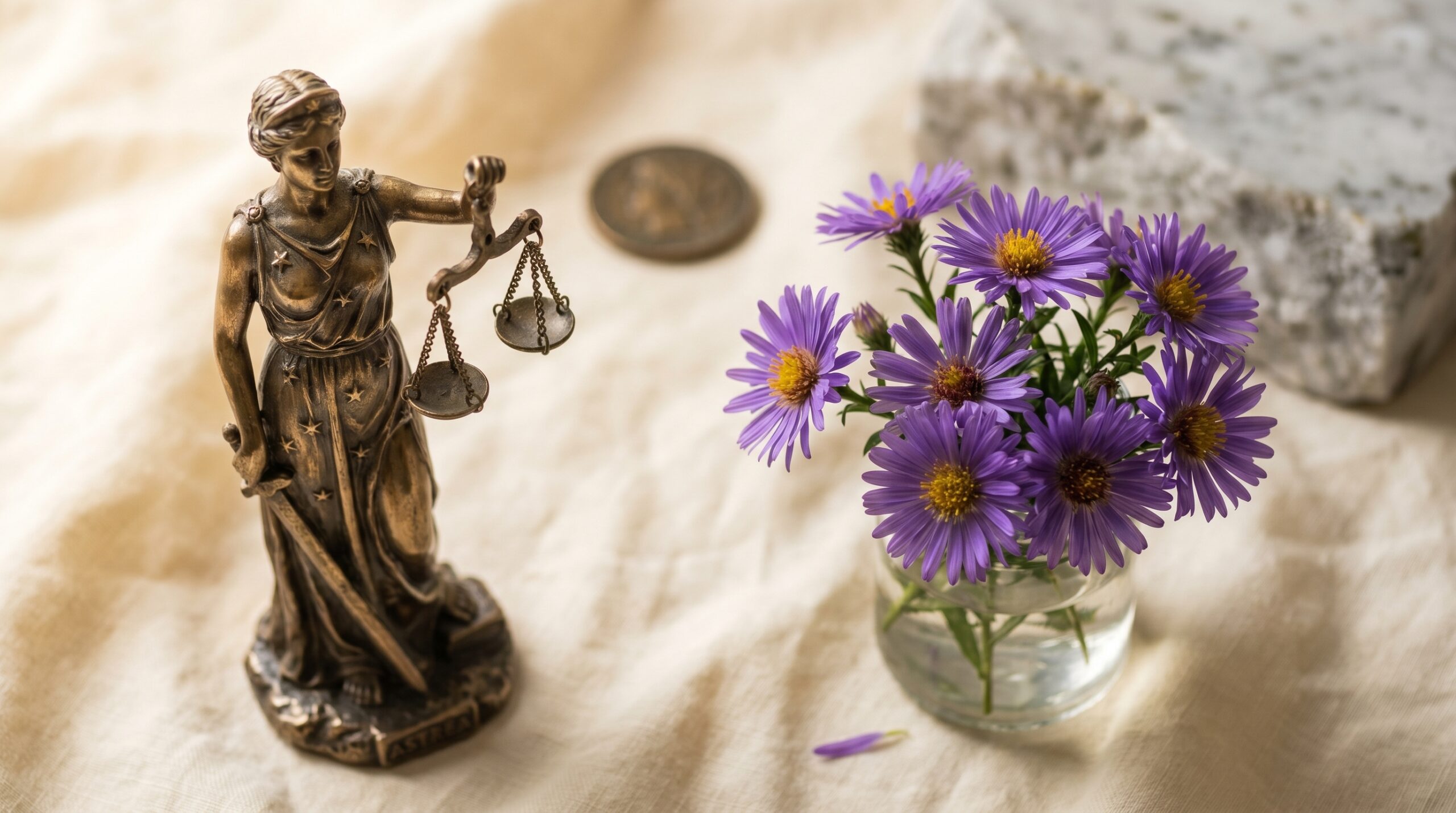
Morning glory belongs primarily to the genus Ipomoea in the family Convolvulaceae, with several other related genera (Convolvulus, Calystegia, Pharbitis) sometimes included under the broader “morning glory” common name. The genus Ipomoea contains approximately 600 species native to temperate and tropical regions across every inhabited continent. The species most associated with garden tradition include Ipomoea purpurea (common morning glory, native to Central and South America), Ipomoea tricolor (the brilliant blue morning glory including the famous “Heavenly Blue” cultivar), and Ipomoea nil (Japanese morning glory, asagao, with extensive Japanese cultural significance).
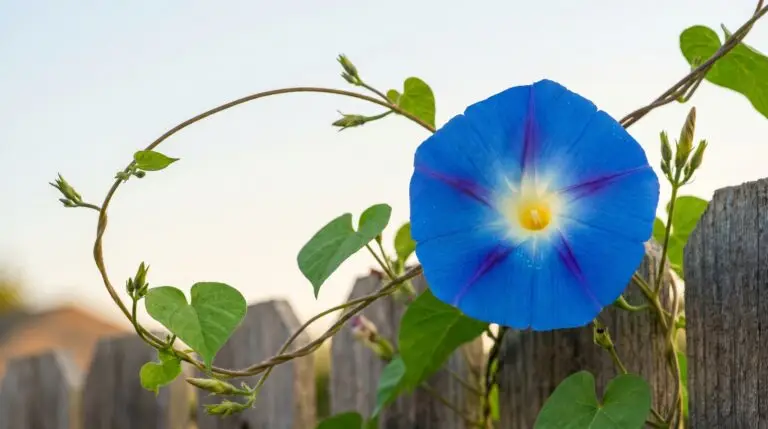
The plant is a vigorous twining vine that climbs supports through stem twisting rather than tendrils or aerial roots. Mature plants reach 10 to 30 feet of vine growth in a single season in suitable climates. The leaves are typically heart-shaped (cordate) to deeply three-lobed depending on species. The flowers are large funnel-shaped trumpets reaching 2 to 5 inches across, opening at dawn with brilliant color (blue, purple, pink, red, white, or bicolor depending on species) and closing by midday as the petals fade. Each individual flower lives only one morning before withering. A healthy plant produces dozens of sequential blooms through the summer and autumn flowering period.
Bloom timing extends from midsummer through autumn in temperate climates, with peak abundance in late summer and early autumn. The September birth flower position reflects this peak autumn morning glory season and the plant’s symbolic association with the transitional themes of fleeting beauty and dawn renewal.
Morning glory symbolism in Victorian floriography includes “affection,” “love returned,” “departed friends,” and “mortality” (the latter from the one-day flower life). The Japanese cultural reading is more developed than the Western, with morning glory (asagao) holding extensive symbolic register in Japanese poetry, garden tradition, and seasonal awareness. Modern morning glory cultivation in Japan has produced extraordinary cultivar diversity not found in Western horticulture, with some specialized Japanese cultivars showing unusual flower shapes, color combinations, and growth patterns developed through centuries of dedicated Japanese hobbyist breeding.
Toxicity is important to note. Morning glory seeds (particularly Ipomoea violacea and Ipomoea tricolor) contain ergoline alkaloids similar to those found in ergot fungus, with potential psychoactive and toxic effects if consumed in significant quantities. Most morning glory seeds sold for ornamental garden use are treated with toxic anti-germination chemicals to prevent recreational use; these treated seeds should never be eaten. Untreated heritage morning glory seeds for gardening purposes should also not be consumed.
For deeper coverage of morning glory varieties, Japanese cultural significance, color symbolism, and growing notes, see the morning glory deep dive article.
The Greek myth of asters and starlight
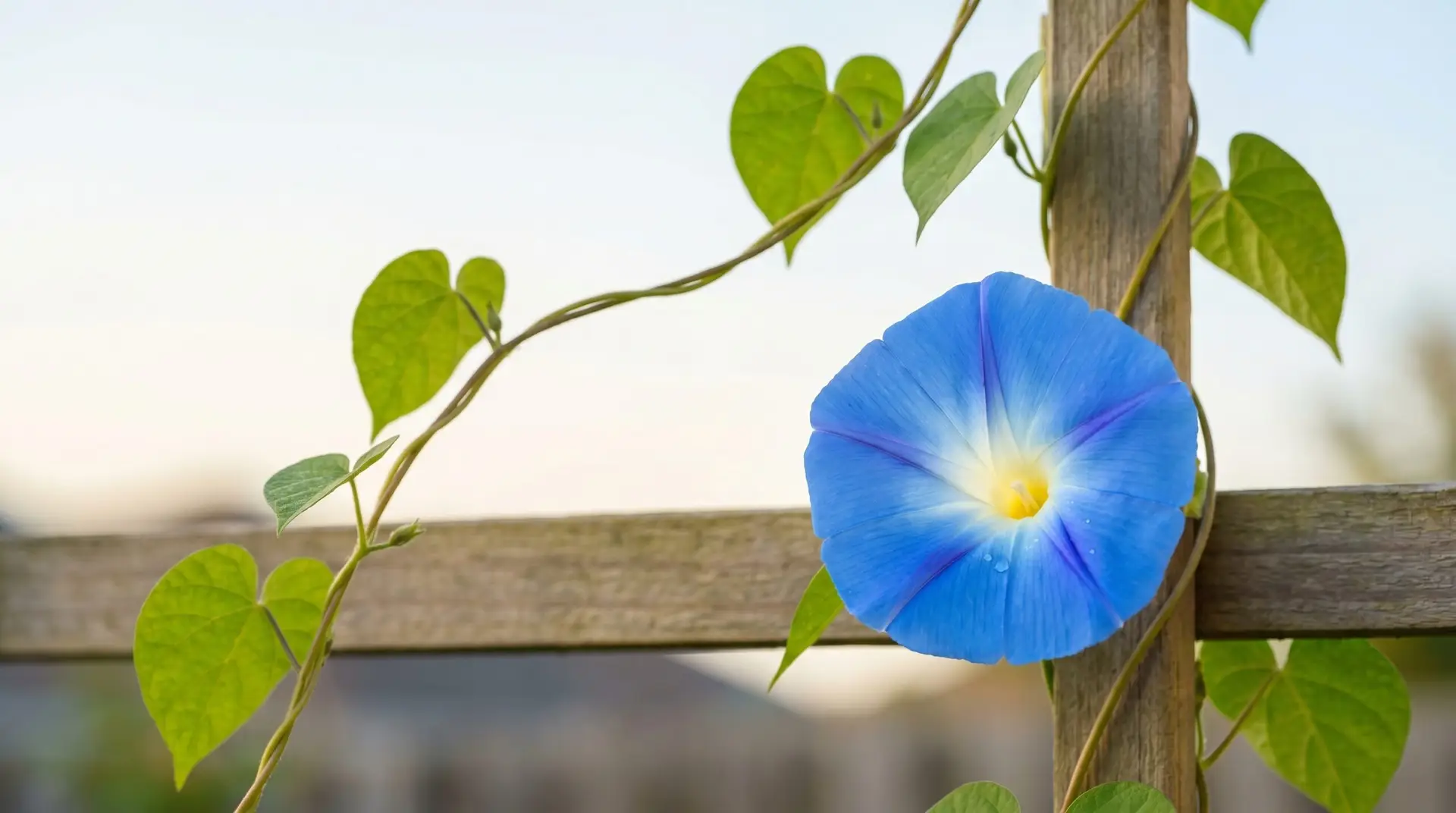
The Greek mythological tradition gives aster its strongest classical symbolic anchor through the goddess Astraea, the personification of justice, innocence, and starlight in Greek tradition. The connection appears in the Greek name “aster” (literally “star”) and in the traditional story explaining the origin of aster flowers as Astraea’s tears falling from heaven to earth.
The Astraea story belongs to the classical tales of the Iron Age decline. In Greek and Roman tradition, Astraea was the daughter of the titan Astraeus (star-god) and Eos (dawn-goddess). She lived on earth among humans during the Golden Age, when justice was naturally honored and the world was harmonious. As human society declined through the Silver, Bronze, and Iron Ages, becoming progressively more violent and unjust, Astraea was the last of the gods to leave earth, finally departing to the heavens where she became the constellation Virgo. Her departure marked the final separation between divine justice and human society.
A later floral legend, popularized by nineteenth-century flower writers rather than the ancient texts, connects the bloom to Astraea in two ways. One version holds that when Astraea looked down at the violence of the Iron Age she wept, and her tears became asters wherever they touched the soil, so the flowers signal sorrow at human imperfection and the persistence of beauty in fallen times. Another version holds that she scattered asters across the autumn fields as reminders of the celestial origin of justice. The ancient sources do not record either flower origin, so both are best read as Victorian-era storytelling built on the older Astraea myth.
The star symbolism resonates beyond the specific Astraea myth. The Greek “aster” appears in many classical references connecting earthly flowers to celestial bodies, suggesting a broader Greek understanding of asters as flowers that mediate between earth and sky. The autumn position of aster bloom (when night skies become clearer and more visible after summer atmospheric haze) reinforces the celestial association. The Victorian flower writers who codified the modern birth flower system drew on this layered Greek heritage to assign aster to September as the flower of wisdom (Astraea’s divine justice), faith (the connection between earthly beauty and heavenly origin), and valor (Astraea’s courage in remaining on earth as long as she could against the decline of human virtue).
The name “aster” remains a standard botanical term in modern scientific Latin, preserving the Greek star imagery in contemporary plant taxonomy.
What aster colors mean
Aster color shifts the symbolic reading within the broader theme of wisdom and starlight:
Purple aster: the most traditional and iconic. Wisdom, royalty, contemplative depth. The classic Victorian color reading and the dominant visual identity of garden aster across most cultivated species.
Blue aster: faith, divine connection, celestial register. The cool blue suggests the night sky and the Astraea constellation Virgo connection.
White aster: purity, innocence, new beginnings. Often used in wedding bouquets and memorial arrangements for the symbolic register and the visual lightness against darker aster colors.
Pink aster: gentle affection, sensitivity, sweet thoughts. The pink color shifts the symbolic register toward warmer relational warmth.
Lavender aster: wistful reflection, peaceful awareness. The lavender color reads more contemplatively than the bolder purple or pink.
Magenta or deep pink aster: passionate enthusiasm, intense affection. The brighter color suits cheerful bold floral statements.
Multi-color or mixed aster arrangements: layered symbolism. Modern florist arrangements often combine several aster colors to suggest the natural variation of late-summer meadow bloom and to provide multi-symbolic register options.
Florist usage treats aster as the late-summer transitional flower across temperate climate florist trade. Aster works well for September weddings (the seasonal alignment provides natural availability), autumn-themed birthday celebrations, memorial services emphasizing wisdom and faith themes, and back-to-school or graduation contexts where the wisdom symbolism aligns with academic seasonal rhythms.
September personalities by flower symbolism
Reading personality from a birth flower is closer to a horoscope than to psychology. Take it as a useful lens, not as evidence. The two September flowers offer contrasting readings that combine into a distinctive personality profile.
The aster side of September reads as wisdom and reflective depth. People in the aster profile have natural awareness of patterns and connections that escape less attentive observers (the star-flower as visible reminder of celestial order), commitment to fairness and justice in their relationships (the Astraea heritage of divine justice on earth), and the kind of quiet wisdom that develops through patient observation rather than through quick decisive action. The autumn bloom timing of asters connects to mature consideration: aster-profile people often demonstrate their best qualities in autumn-of-life seasons or in extended thoughtful engagement rather than in youthful first responses.
The morning glory side reads as appreciation of brief brilliance and dawn renewal. People in the morning glory profile have heightened awareness of the value of momentary beauty (the one-morning flower life providing the natural metaphor), morning energy and dawn productivity patterns (matching the flower’s dawn-blooming habit), and the kind of practical wisdom about time and impermanence that comes from valuing each day’s gift rather than postponing engagement to later moments. The vine-climbing growth habit suggests adaptive flexibility and reaching upward toward new opportunities.
The combination describes a September personality that pairs reflective wisdom (aster) with appreciation of momentary beauty (morning glory). September-born readers who describe themselves as both contemplatively patient and energetically attentive to daily opportunity will recognize the fit.
Gift ideas for September birthdays
September birthdays fall in peak autumn bloom across most of the northern hemisphere, which makes both birth flowers seasonally available. Gift logic varies by recipient preference and occasion register.
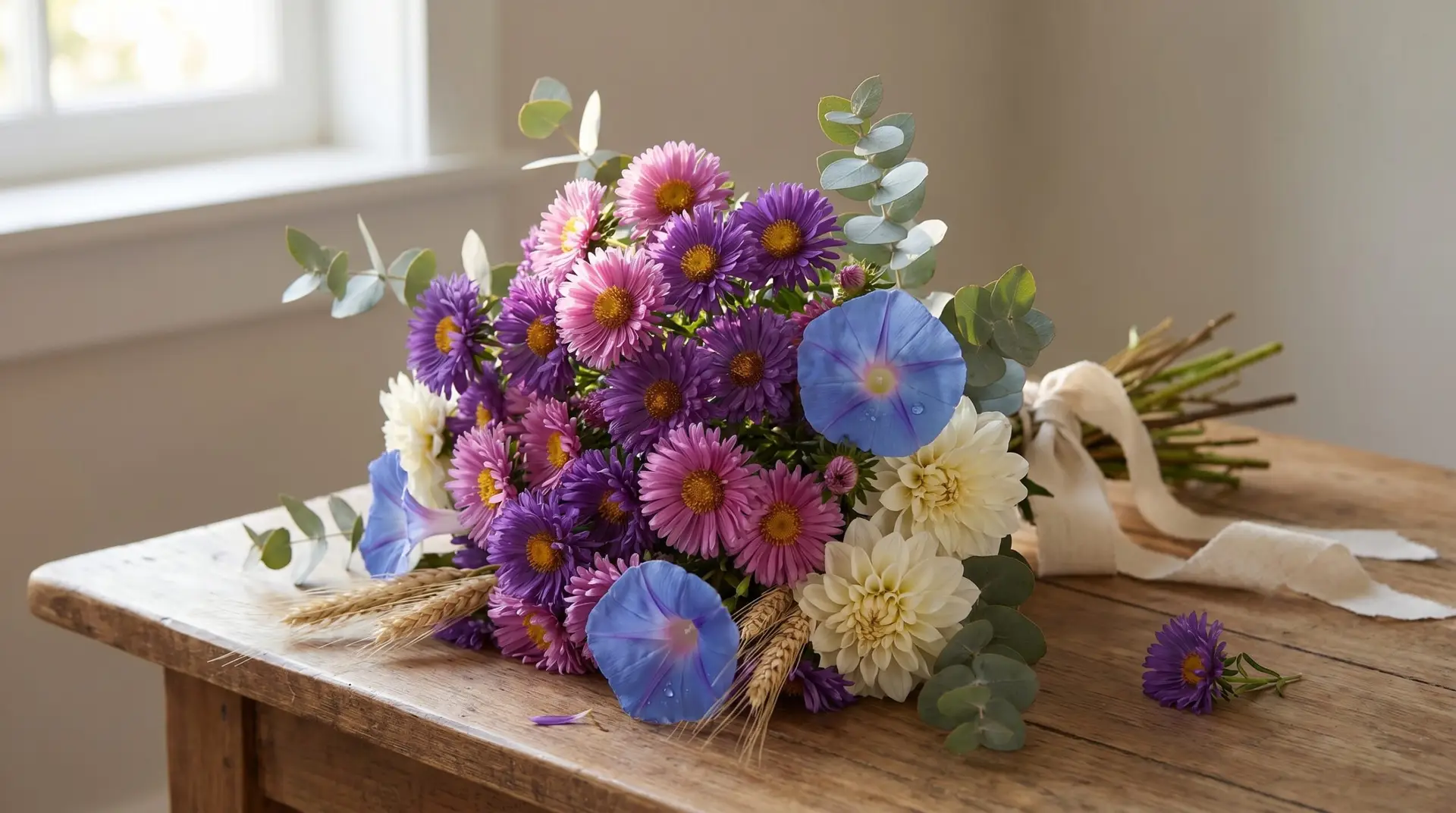
Aster as a cut flower is widely available in late summer and early autumn florist trade. A bouquet of mixed-color asters (purple, pink, white, blue) makes a meaningful September gift, with the late-summer color palette suiting both transitional-season decor and birthday celebration. Florist prices typically run from forty to one hundred dollars for an aster-featured bouquet. Asters combine well in bouquets with sunflowers (matching autumn season), dahlias, chrysanthemums, and ornamental grasses.
A living aster plant for the recipient’s garden provides a long-term gift that returns each autumn. Specialty perennial suppliers offer named aster varieties at prices typically from fifteen to forty dollars per plant. The recipient plants the aster in autumn or early spring for late summer and autumn bloom in subsequent years. The plant is easy to grow in most temperate climate gardens and tolerates a wide range of soil conditions.
Morning glory as a cut flower is rare because the brief flower life (one morning) makes the species impractical for florist trade. The accessible morning glory gift category is seeds for the recipient’s own garden. A packet of mixed Ipomoea seeds for spring sowing costs from five to fifteen dollars and provides summer to autumn vine bloom. The seed gift suits gardener recipients who appreciate the climbing vine aesthetic and the morning bloom rhythm.
A bouquet combining asters as the autumn statement with sunflowers, dahlias, and ornamental wheat or grasses creates a meaningful September birthday gift. The combination uses the September birth flowers as the symbolic anchor and adds seasonal late-summer flowers for visual abundance.
For recipients with interest in Greek classical culture or astronomy, an aster bouquet paired with a small book on Greek mythology or a star chart of the Virgo constellation (where Astraea was said to dwell after leaving earth) makes a culturally layered gift. The combination uses the flowers as the primary symbolic element and the educational supplement as the explanatory layer.
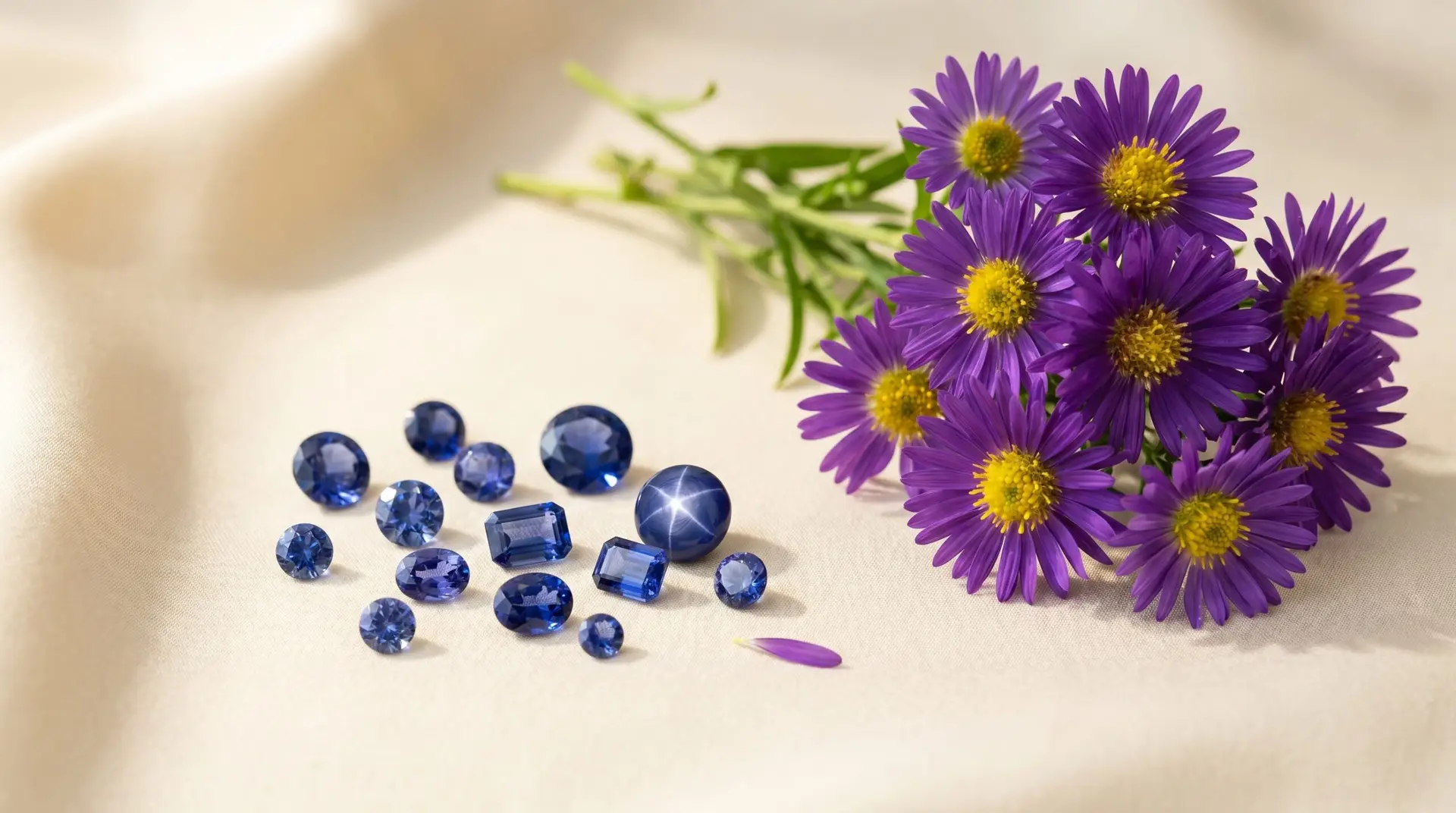
A jewelry piece combining aster or star-themed motif work with sapphire (the September birthstone) creates a coherent color and cultural pairing. Sapphire’s deep blue provides natural contrast with the brighter aster colors and reinforces the celestial connection through the gem’s star-sapphire variants that show six-pointed star light reflections (asterism). Price tiers range from about fifty dollars for simple sapphire studs to several thousand dollars for fine pieces with floral motif work.
At a glance
Questions
Frequently asked
What is September’s birth flower?
Aster as the primary and morning glory as the secondary. Aster refers to the genus Aster and related Symphyotrichum genera in the family Asteraceae. Morning glory refers primarily to the genus Ipomoea in the family Convolvulaceae.
Why is aster September’s birth flower?
Aster has peak bloom in September and early October across temperate climates, providing the seasonal availability. The flower also has the strongest Greek classical mythological anchor through the goddess Astraea (the personification of justice and starlight) and the traditional story of aster origin as Astraea’s tears falling from heaven. Victorian flower writers chose aster for September because of both seasonal availability and this Greek heritage.
What does the aster flower symbolize?
Wisdom, faith, and valor. The Greek mythological connection to Astraea provides the foundational symbolic anchor. The autumn bloom timing reinforces the wisdom symbolism through associations with mature consideration and seasonal transition.
What does morning glory symbolize?
Affection, love returned, and mortality. The Victorian readings included “affection,” “love returned,” “departed friends,” and “mortality” (the latter from the one-day flower life). Japanese cultural reading is more developed, with morning glory (asagao) holding extensive symbolic register in Japanese poetry and garden tradition.
What is the Greek myth of asters?
Classical tradition connects asters to Astraea, the goddess of justice who withdrew from the earth as human conduct declined and became the constellation Virgo. A later floral legend, from nineteenth-century flower writers rather than the ancient texts, holds that asters sprang from her tears where they fell, so the flower came to signal sorrow at human imperfection and the persistence of beauty in fallen times.
Why is the aster flower called the “star flower”?
The Greek word “aster” literally means “star.” The flower’s radial petal arrangement around a central disc creates a visible star pattern that gave the genus its Greek name. The classical mythological connection to Astraea (whose name shares the same Greek root meaning “starry”) reinforces the star symbolism.
Are asters easy to grow?
Yes, asters are among the easier perennial flowers to grow in most temperate climate gardens. They tolerate a wide range of soil conditions, do not require special care, and return reliably each year from established plants. Most aster species prefer full sun to partial shade and average garden soil with adequate drainage.
What birthstone goes with September’s birth flower?
Sapphire. The deep blue of sapphire creates dramatic contrast with most aster colors (purple, pink, white) and reinforces the celestial connection through the gem’s star-sapphire variants. Sapphire was traditionally associated with September through both Western birthstone tradition (formalized 1912) and older Persian and medieval European associations.
Are morning glory seeds dangerous?
Yes, morning glory seeds (particularly Ipomoea violacea and Ipomoea tricolor) contain ergoline alkaloids with potential psychoactive and toxic effects if consumed in significant quantities. Most morning glory seeds sold for ornamental garden use are treated with toxic anti-germination chemicals to prevent recreational use. Do not eat morning glory seeds; keep them away from children and pets.
Why do morning glory flowers only last one day?
Each morning glory flower opens at dawn with full color and beauty, then closes and withers by midday as the petals fade. The brief flower life is the species’s reproductive strategy: each plant produces dozens of sequential blooms over the season, with each individual flower lasting just long enough for the morning’s pollinator activity. The brief beauty has become a powerful symbolic register for fleeting moments and dawn renewal.
Sources
- Aster (Aster plant) · Encyclopedia Britannica
- Aster growing guide · Royal Horticultural Society
- Morning glory (Ipomoea) · Encyclopedia Britannica
Keep reading
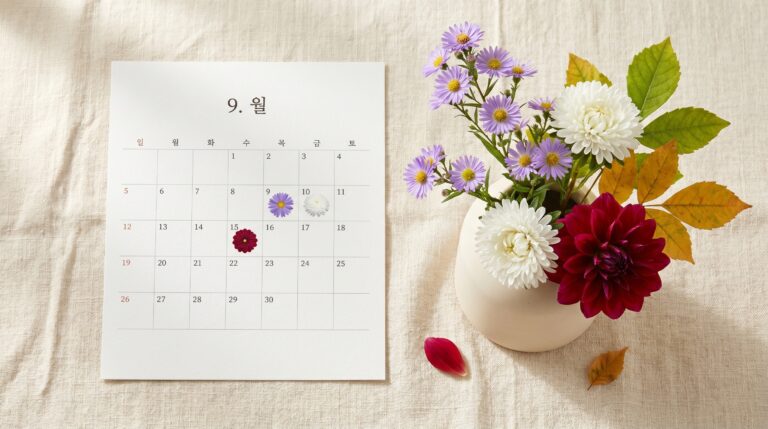
September birth flowers by day: the Korean 365-day tradition
Morning glory flower meaning: Japanese culture, color, and growing

Aster tattoo: meaning, designs, and star-flower symbolism
Birth flower by month: all 12 monthly flowers
Enjoying our flower guides? Add YourFlowersGuide as a preferred source on Google. It helps more readers find us.
Add to Preferred Sources