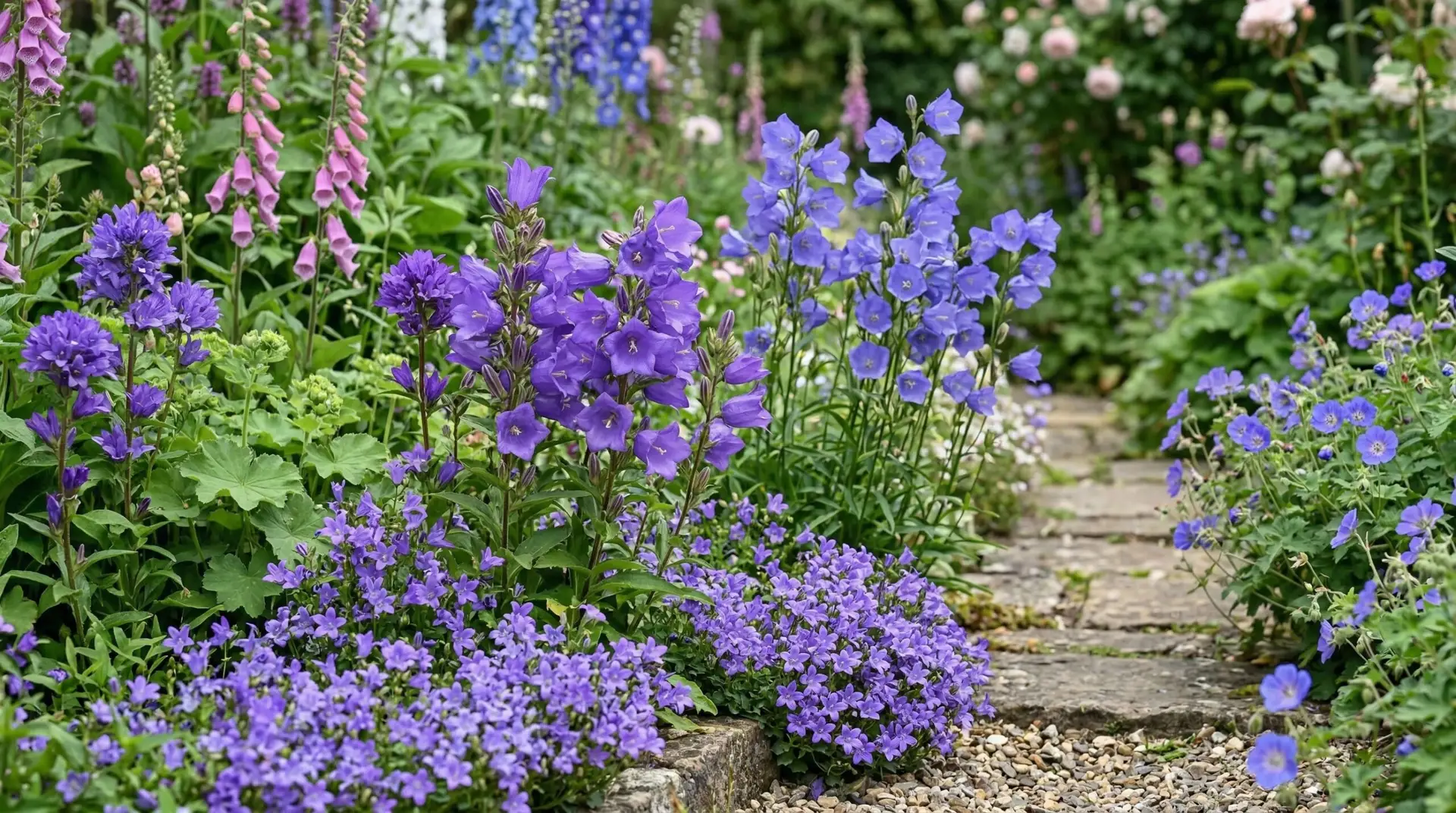
Long before the modern nursery trade began shipping plants in plastic pots across the country, seeds traveled in the deep pockets of woolen coats and the carefully packed trunks of immigrants. The peach-leaved bellflower made this ocean crossing early in the history of American gardens. Known to botanists as Campanula persicifolia, this European native had already spent centuries softening the stone walls of monastery enclosures and filling the narrow borders of English thatched cottages. The plant earns its common name from its narrow, glossy basal leaves that closely resemble the foliage of a peach tree. When spring warms the soil, these neat evergreen rosettes begin to stretch and wake up from the winter freeze. The gardener watches as the flat mats of green push upward, preparing to send their wiry stems into the warming air. It is a quiet beginning for a plant that will soon define the early summer border with its distinct architectural grace. The history of the cottage garden is written in these small, persistent rosettes that survive harsh winters and return without fail.
Contents 4 sections
Rising above the heavy blooms
By late May, the transformation from a ground-hugging rosette to a tall, slender wand is complete. The stems of the peach-leaved bellflower rise two to three feet high, carrying tightly folded buds that wait for the exact right combination of sun and day length. This vertical habit makes it an essential companion in the classic cottage garden, where it threads its way through heavier, denser plants. While peonies weigh down their stems with massive, layered blossoms that often nod toward the earth, the campanula stands entirely upright. Its thin stems are remarkably strong, swaying in the wind without snapping or requiring the heavy wooden stakes that other perennials demand. The flowers open from the bottom of the stem upward, creating a ladder of outward-facing cups that seem to float independent of their foliage. This light, airy texture provides necessary relief in a garden bed that might otherwise feel weighed down by the dense heads of summer classics. The gardener relies on these vertical accents to draw the eye upward and keep the border feeling open and wild.
The legacy of blue and white
The flowers themselves are wide, shallow cups rather than the deep, tubular bells found on many other types of bellflower. In its wild form, the color is a soft, shifting lilac blue that changes character depending on the angle of the sun and the time of day. Morning light washes the petals in a cool, silvery tone, while the late afternoon sun deepens the blue to a rich violet. For generations, gardeners have also cultivated the pure white form, Campanula persicifolia alba, which glows with an almost spectral light during the twilight hours. In the early twentieth century, a specific blue selection called ‘Telham Beauty’ emerged from a garden in England, offering larger flowers on taller, more robust stems. This particular variety became a standard in borders around the world, proving that a simple cottage plant could hold its own in grand estate gardens. Whether growing the historic blues or the luminous whites, the plants create a sense of rhythm when planted in drifts. They lean gently over the rounded forms of a shrub rose, contrasting their simple, five-petaled cups against the complex, tightly packed petals of the larger shrubs.
The migration of seeds
As the intense heat of July arrives, the lowest flowers on the stems begin to fade and drop, leaving behind small, papery capsules. If the gardener leaves these stems standing rather than cutting them back, the capsules eventually dry and open small pores near their tops. The autumn winds shake the stiff stems like salt shakers, scattering thousands of tiny, dust-like seeds across the soil. This self-sowing habit is how the peach-leaved bellflower manages to survive and move through a garden over the years. Individual plants are relatively short-lived perennials, often exhausting themselves after three or four years of heavy blooming. The seeds ensure the colony continues, finding empty pockets of soil near the edges of pathways or tucked against the base of a stone wall. A gardener quickly learns to recognize the tiny new rosettes that appear in early spring, deciding which ones to leave and which ones to lift and transplant to a better location. This ongoing negotiation between the wandering nature of the plant and the design of the gardener keeps the cottage border feeling dynamic and alive.
A quiet return to the soil
When winter finally strips the garden of its tall summer growth, the original rosettes of the peach-leaved bellflower remain visible against the bare earth. They sit flat against the cold ground, their narrow green leaves holding tight through frost and snow. The dead stems from the previous summer eventually break and fold into the mulch, returning their carbon to the soil that supported them. Walking through the dormant garden, you can spot these green patches and know exactly where the blue and white wands will rise again next year. There is a deep comfort in this predictable cycle, in knowing that the seeds scattered in autumn are already waiting for the soil to warm. The plant asks for very little beyond a patch of well-drained earth and a bit of sunlight to continue its generations. You realize that you are not just growing a flower, but participating in a long tradition of gardeners who have watched these same thin stems reach for the June sun.
More About Campanula
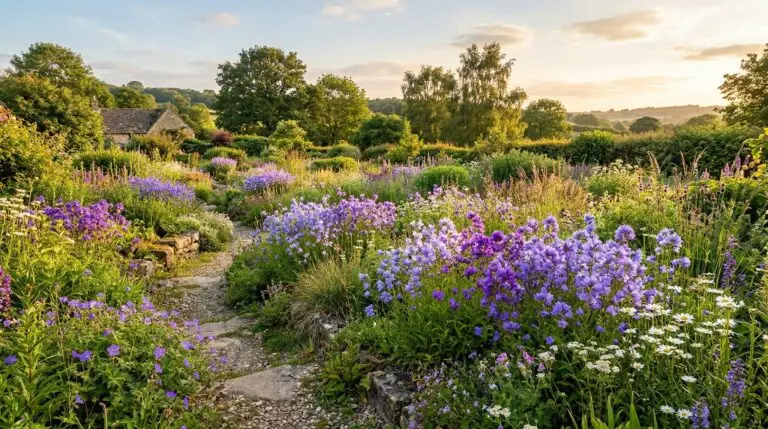
Campanula in European wildflower meadows and how to recreate the look at home
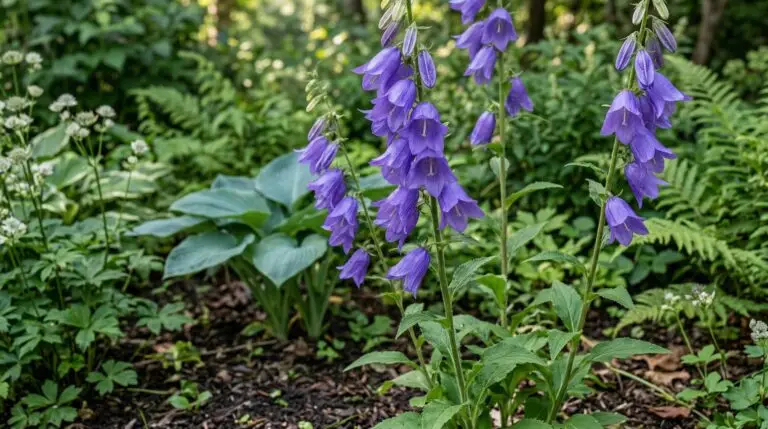
Campanula for shady garden spots where color is hard to find
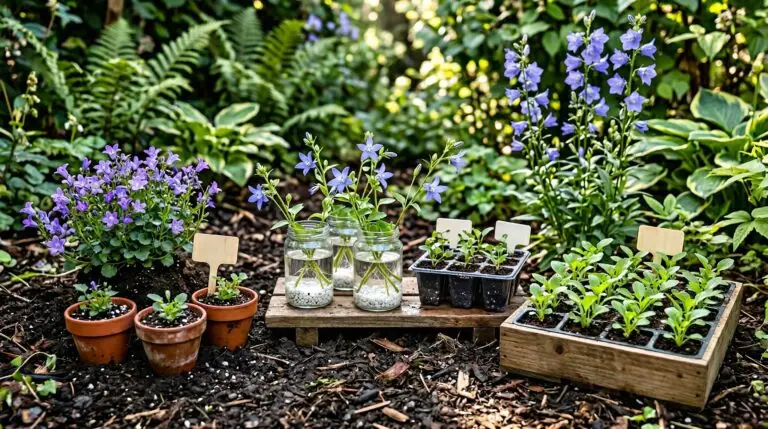
How to propagate campanula from stem cuttings root division and seed
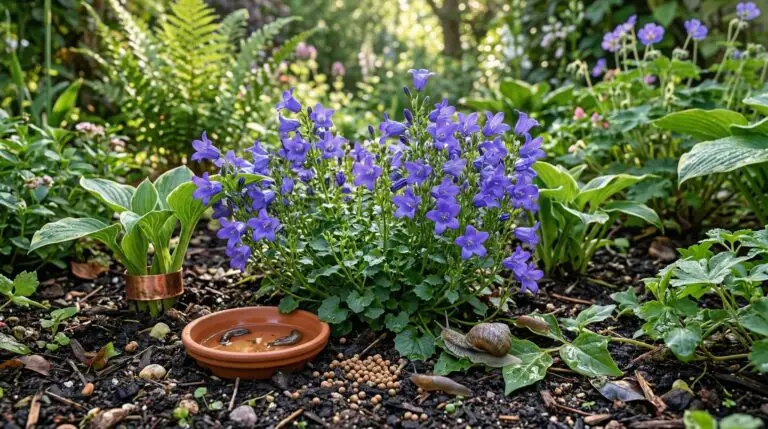
Campanula pests including slugs and rust and organic prevention methods
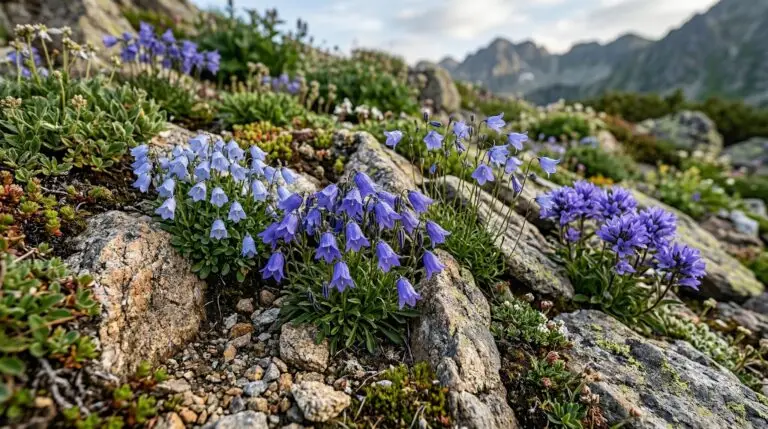
How campanula adapts to different growing conditions from mountains to meadows
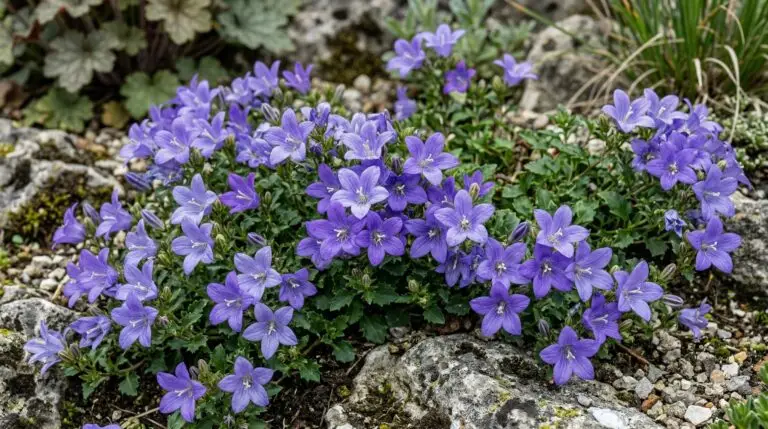
A guide to campanula species for rock gardens alpine troughs and stone walls
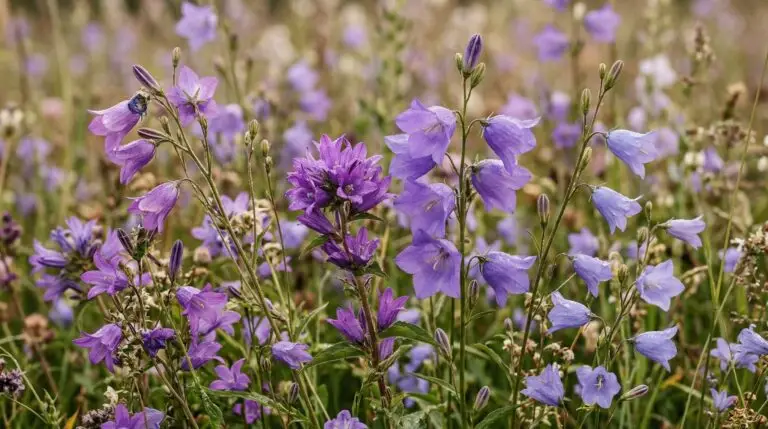
The botanical diversity of campanula with over 500 species across the world
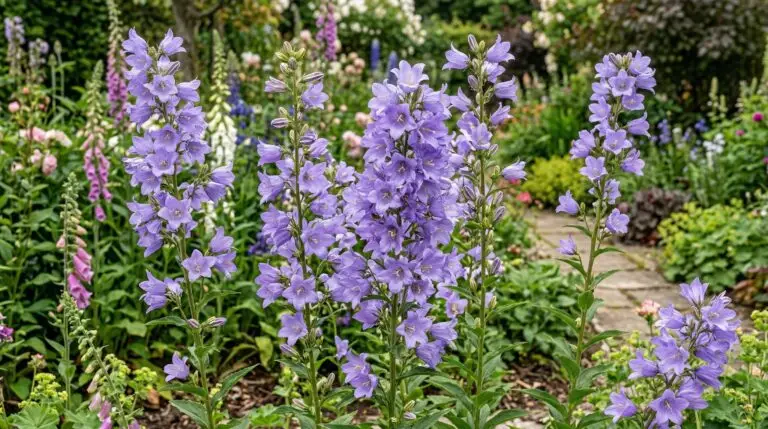
Campanula lactiflora and the tall milky bellflowers for the back of the border
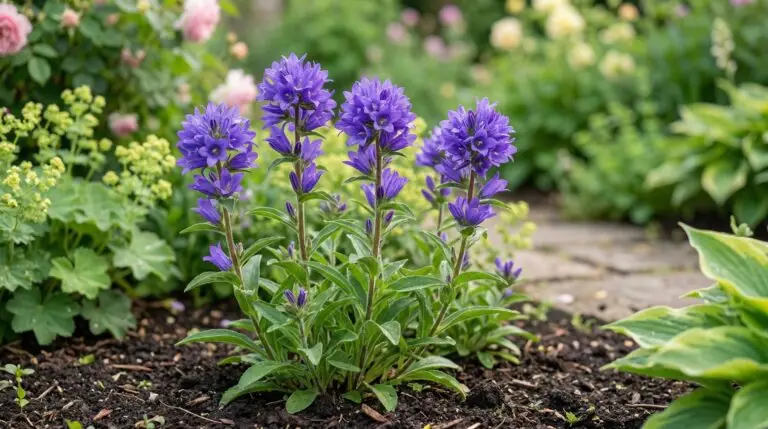
Growing campanula glomerata for intense purple clusters in summer borders
Enjoying our flower guides? Add YourFlowersGuide as a preferred source on Google. It helps more readers find us.
Add to Preferred Sources