
When designing a low water garden, finding the right anchor plant determines the success of the entire composition. Catmint provides a reliable, voluminous presence that grounds a drought perennial border with soft geometry. The plant forms a wide, billowy mound of gray-green foliage topped with clouds of soft violet-blue flowers that persist for months. In a border design, this mounding habit acts as visual glue, connecting upright architectural plants with lower ground covers. By repeating generous drifts of catmint throughout a planting bed, a designer establishes a steady rhythm that guides the eye naturally down the path. Its sprawling edges soften hardscaping, blurring the line between the built environment and the planted space. This structural reliability makes catmint an ideal foundation for a water-wise garden that requires minimal irrigation while maintaining high visual impact.
Contents 5 sections
Building a foundation of cool colors and fine textures
The color palette of a dry garden often relies on the silver, gray, and blue-green foliage adaptations that help plants conserve moisture. Catmint leans heavily into this cool spectrum, offering flowers in varying shades of periwinkle, lavender, and deep violet. To build on this cool foundation, you can plant Russian sage directly behind your catmint mounds. The upright, rigid stems of the sage provide a sharp structural contrast to the relaxed, spilling nature of the catmint below. Their colors harmonize perfectly, creating an unbroken wash of cool tones that recedes visually, making small garden spaces feel larger. The fine, dissected foliage of both plants catches the light and creates a hazy, soft-focus effect in the mid-ground of the border. This combination requires almost identical growing conditions, thriving in lean soil with excellent drainage and full sun exposure.
Designing with contrasting forms and warm accents
A border composed entirely of cool colors and fine textures quickly becomes monotonous without intentional contrast. Introducing warm colors and flat or daisy-like flower forms breaks up the visual field and gives the eye specific places to rest. Planting yarrow alongside catmint introduces horizontal landing pads of mustard yellow, terracotta, or paprika red. The flat umbels of the yarrow hover above the soft mounds of the catmint, creating a distinct geometric contrast that strengthens the overall composition. For a finer texture with similar warmth, adding coreopsis brings cheerful, star-like yellow blooms that pop against the cool violet background. The complementary color relationship between the yellow and purple creates immediate visual excitement without requiring extra water or fertilizer. These warm additions pull the viewer’s attention forward, balancing the receding nature of the cool blues and silvers.
Balancing mass and void in drought-tolerant borders
Designing a dry garden requires a different approach to plant spacing than a traditional English cottage garden. In a low water garden, leaving negative space between plant groupings allows the eye to appreciate the individual form of each specimen. Catmint acts as the perfect massing plant to define these edges, creating solid blocks of color that contrast with the open voids of gravel or mulch. When you cluster several catmint plants together, they merge into a single, continuous drift that visually anchors the planting bed. This technique prevents the disconnected look that often plagues amateur xeriscape designs, where single plants are placed randomly with too much empty space between them. By using catmint to create deliberate, sweeping masses, you dictate exactly where the viewer should look. The open spaces left between these masses then become intentional pathways for the eye, guiding attention toward your chosen focal points or structural accents.
Orchestrating seasonal interest and winter structure
A successful catmint border design must account for the months when the primary flush of spring and early summer blooms has faded. Catmint responds well to a hard shearing after its first bloom, producing a fresh mound of clean gray-green foliage and a secondary wave of late-season flowers. To ensure the border remains interesting during this transition, incorporate late-blooming succulents like upright sedums. The thick, fleshy leaves of the sedum offer a heavy, coarse texture that contrasts beautifully with the delicate leaves of the catmint. As autumn approaches, the sedum flower heads turn deep rust or burgundy, providing a rich seasonal shift while the catmint foliage remains quietly supportive. Ornamental grasses like switchgrass or little bluestem add necessary height and kinetic movement to the autumn garden. When winter arrives, the bleached stems of the grasses and the dried, chocolate-colored seed heads of the sedum hold the garden’s structure long after the catmint has gone dormant.
Managing scale and placement along pathways
Proper placement of catmint depends entirely on understanding its mature scale and its relationship to the viewer. Standard varieties can easily spread three feet across, meaning they need adequate space to express their natural form without smothering their neighbors. Placing catmint at the front edge of a border allows it to spill outward, softening the harsh lines of concrete walkways or gravel paths. While lavender is often used for similar edge-softening purposes, catmint generally offers a looser, more forgiving habit that requires less precise pruning to maintain a pleasing shape. Behind these sprawling front-row mounds, step up the height gradually with medium-sized perennials before reaching the tall grasses or shrubs at the back of the bed. This tiered approach ensures every plant receives adequate sunlight and air circulation, which prevents the rot issues common in dry gardens. The final composition relies on a simple design principle: use repetition of a strong, reliable shape to unify diverse textures. By planting catmint in recurring clusters of three or five down the length of your border, you create a cohesive, low-water garden that feels intentional and highly structured.
More About Catmint
Catmint versus lavender and which fragrant purple perennial works better in your garden
Catmint as the ultimate deer-resistant and drought-tolerant perennial for easy gardens

How to shear back catmint for a second flush of blooms and a tidy appearance
How to propagate catmint from stem cuttings and division in spring

How to use catmint as a flowering ground cover that chokes out weeds
Catmint versus catnip and why they are different plants with different garden uses
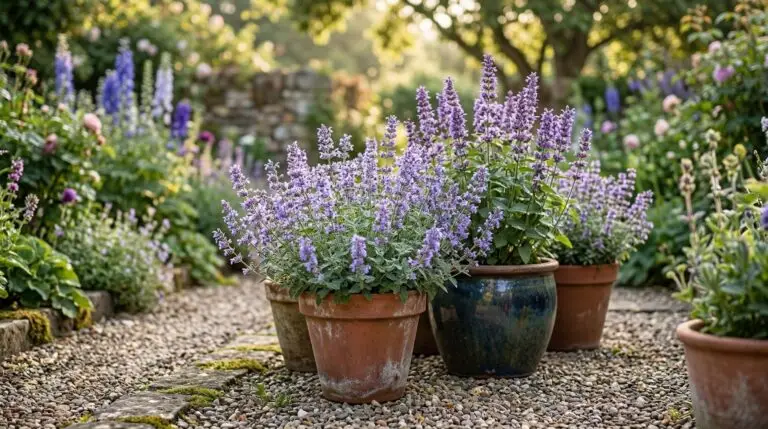
Growing catmint in containers for a fragrant pollinator-friendly balcony
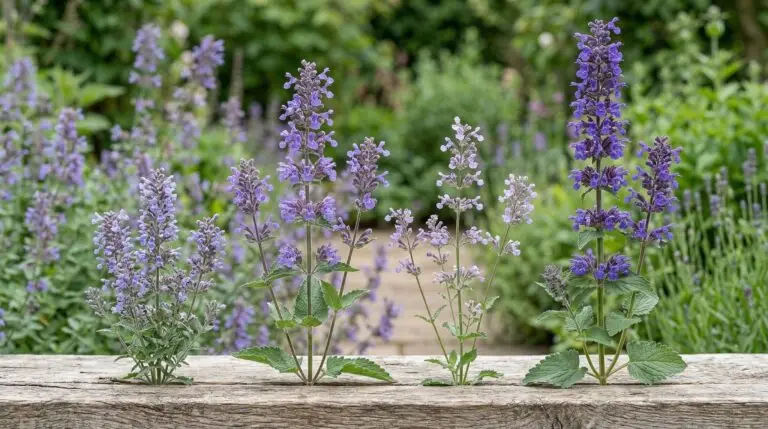
Best catmint varieties from compact Walker’s Low to towering Six Hills Giant

Catmint and roses planted together for the classic English garden combination
Enjoying our flower guides? Add YourFlowersGuide as a preferred source on Google. It helps more readers find us.
Add to Preferred Sources