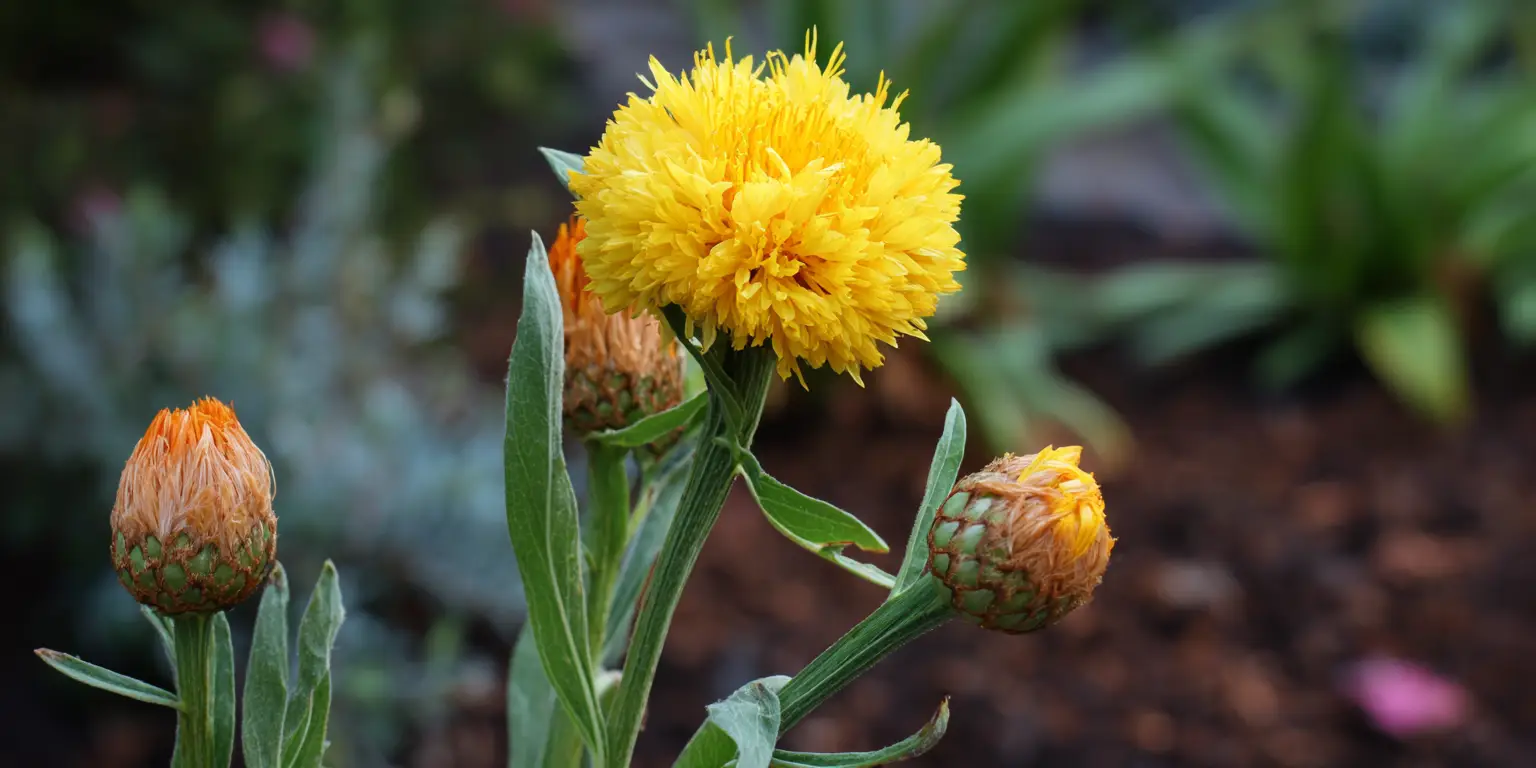
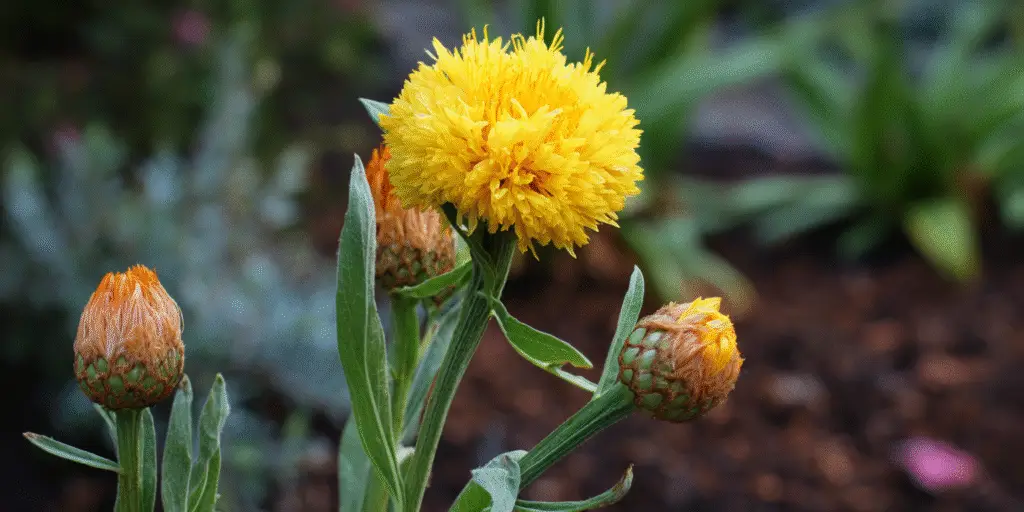
Bighead knapweed, Centaurea macrocephala (often listed as Psephellus macrocephalus), is a bold perennial for sunny borders. It stands out with large yellow, thistle‑like heads in mid to late summer. Plants form sturdy, upright clumps that handle cold winters. This species is long‑lived in well‑drained soils and offers strong vertical accents for mixed plantings.
At‑a‑glance
Group/Class: Perennial cornflower
Height × spread: 3 to 4 ft (0.9 to 1.2 m) × 1 to 2 ft (30 to 60 cm)
Bloom window: mid to late summer
Color & flower form: golden yellow heads from papery brown buds
Fragrance: 0 none
USDA hardiness: zones 3 to 8
Breeder / Year / Origin: unknown
Cut‑flower notes: sturdy stems; valued by growers as a perennial cut flower
Pet safety: unknown
How it differs
Summer‑blooming yellow heads instead of spring blue flowers
Taller and more architectural than most cornflowers
Very sturdy stems suitable for cutting
Deep‑rooted, drought‑tolerant habit once established
Strengths
Cold‑hardy and long‑lived
Low maintenance in average soils
Excellent mid‑season color
Good support for pollinators
Care in one minute
Full sun and well‑drained soil are essential.
Water to establish; then water deeply but infrequently.
Avoid rich feeding; excess nitrogen leads to soft growth.
Deadhead to control self‑sowing; divide clumps if they crowd.
Check regional invasive‑plant guidance where applicable.
Watch‑outs
Self‑seeds; remove spent heads if spread is a concern
Can be locally listed or watched; verify status before planting
May need staking in windy, exposed sites
Best uses (tags)
borders, cutting, pollinators, cottage, late season
Provenance note
Native to northeastern Türkiye through northwestern Iran; long in cultivation and widely listed by botanic gardens.
Written by: Your Flowers Guide editorial team We are a small independent group of flower lovers who research and review each guide using trusted horticultural and educational sources. Learn more about us