returns in
243
days
Bloom calendar
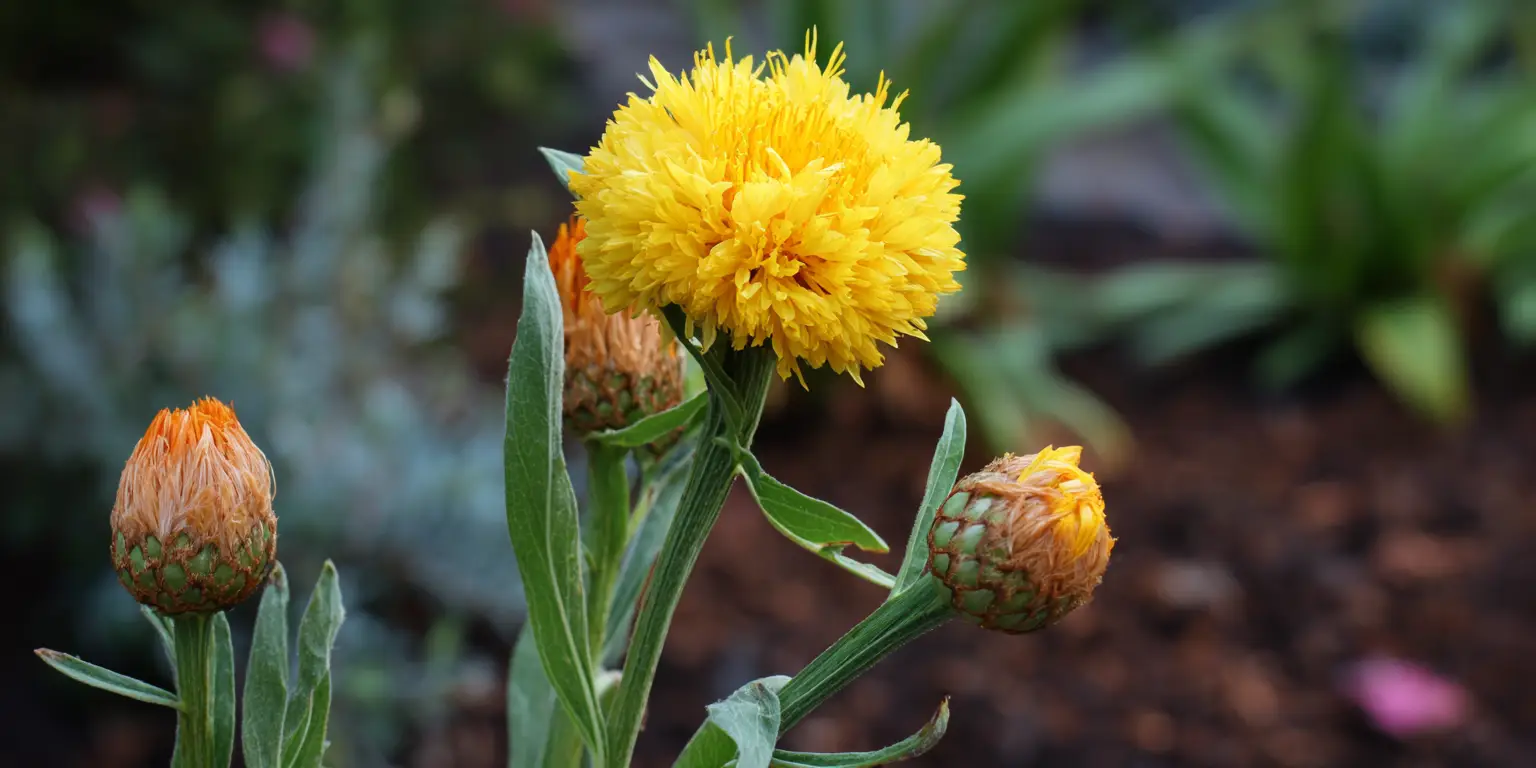
Centaurea macrocephala
Perennial cornflower
At‑a‑glance
- Group/Class: Perennial cornflower
- Height × spread: 3 to 4 ft (0.9 to 1.2 m) × 1 to 2 ft (30 to 60 cm)
- Bloom window: mid to late summer
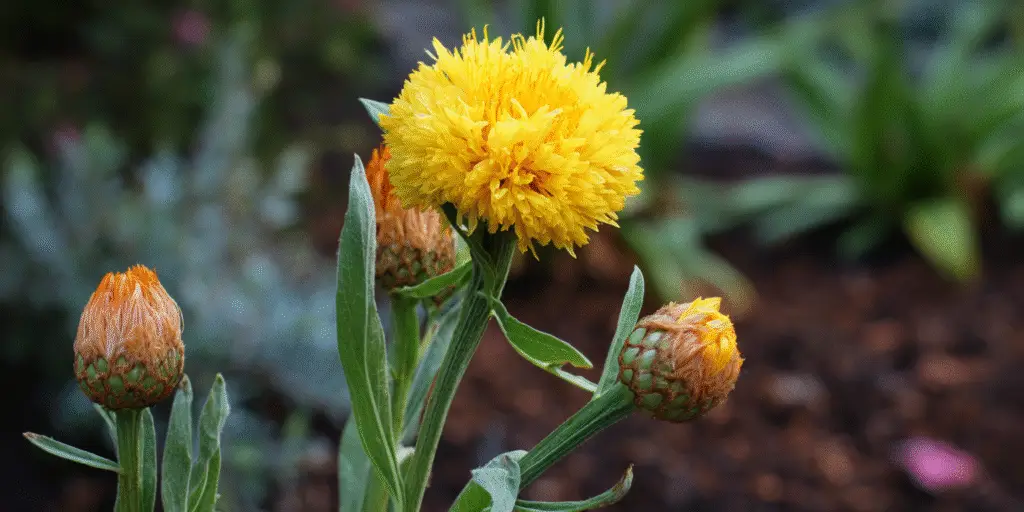
- Color & flower form: golden yellow heads from papery brown buds
- Fragrance: 0 none
- USDA hardiness: zones 3 to 8
- Breeder / Year / Origin: unknown
- Cut‑flower notes: sturdy stems; valued by growers as a perennial cut flower
- Pet safety: unknown
How it differs
- Summer‑blooming yellow heads instead of spring blue flowers
- Taller and more architectural than most cornflowers
- Very sturdy stems suitable for cutting
- Deep‑rooted, drought‑tolerant habit once established
Strengths
- Cold‑hardy and long‑lived
- Low maintenance in average soils
- Excellent mid‑season color
- Good support for pollinators
Care in one minute
Full sun and well‑drained soil are essential.
Water to establish; then water deeply but infrequently.
Avoid rich feeding; excess nitrogen leads to soft growth.
Deadhead to control self‑sowing; divide clumps if they crowd.
Check regional invasive‑plant guidance where applicable.
Watch‑outs
- Self‑seeds; remove spent heads if spread is a concern
- Can be locally listed or watched; verify status before planting
- May need staking in windy, exposed sites
Best uses (tags)
Provenance note
Native to northeastern Türkiye through northwestern Iran; long in cultivation and widely listed by botanic gardens.
References
- RHS – Centaurea macrocephala details
- Kew Plants of the World Online – Centaurea macrocephala
- Invasive Plant Atlas – Bighead knapweed
Similar Flowers
Enjoying our flower guides? Add YourFlowersGuide as a preferred source on Google. It helps more readers find us.
Add to Preferred Sources