returns in
243
days
Bloom calendar
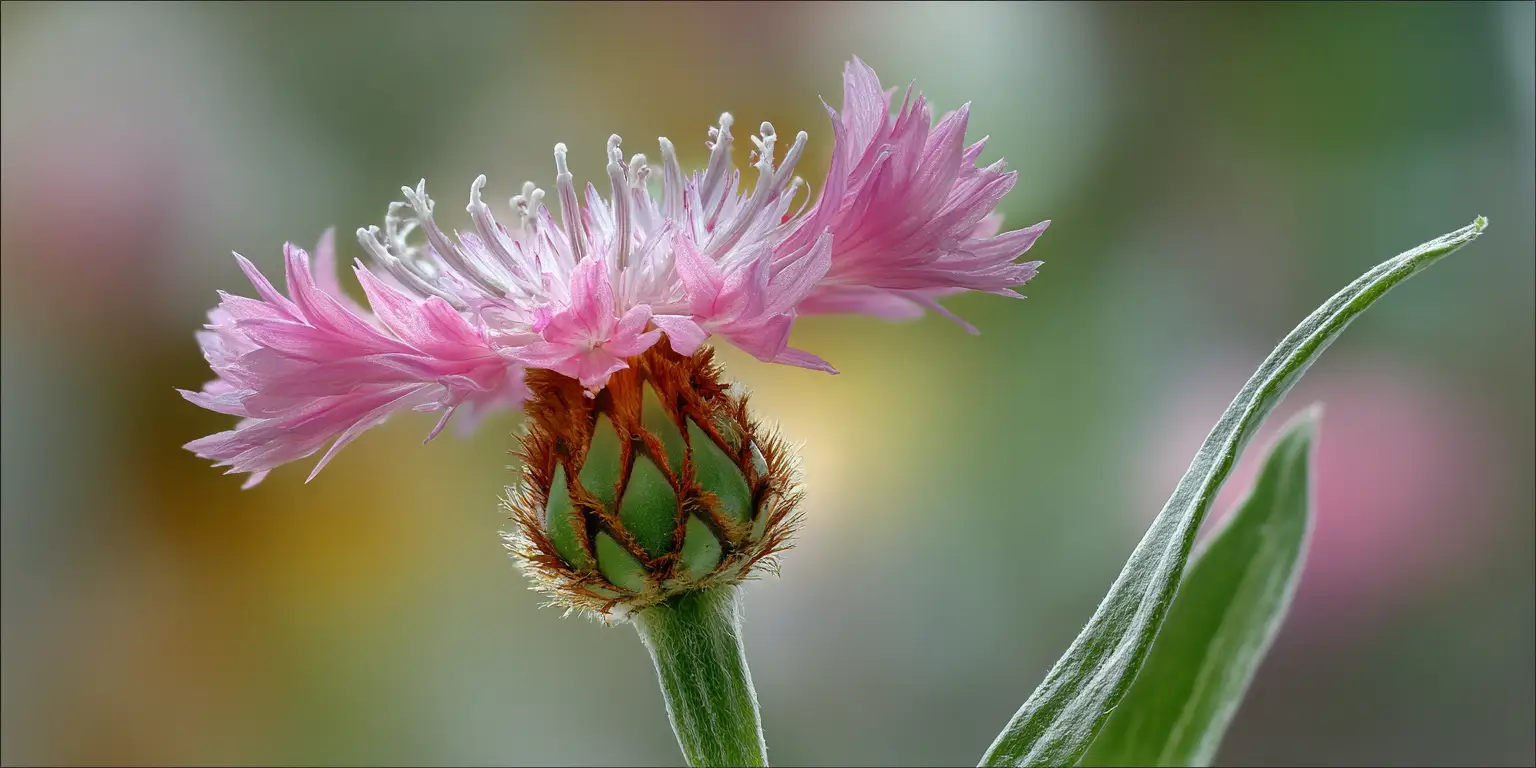
Centaurea dealbata
Perennial cornflower
At‑a‑glance
- Group/Class: Perennial cornflower
- Height × spread: 24 to 30 in (60 to 75 cm) × 18 to 24 in (45 to 60 cm)
- Bloom window: late spring to early summer
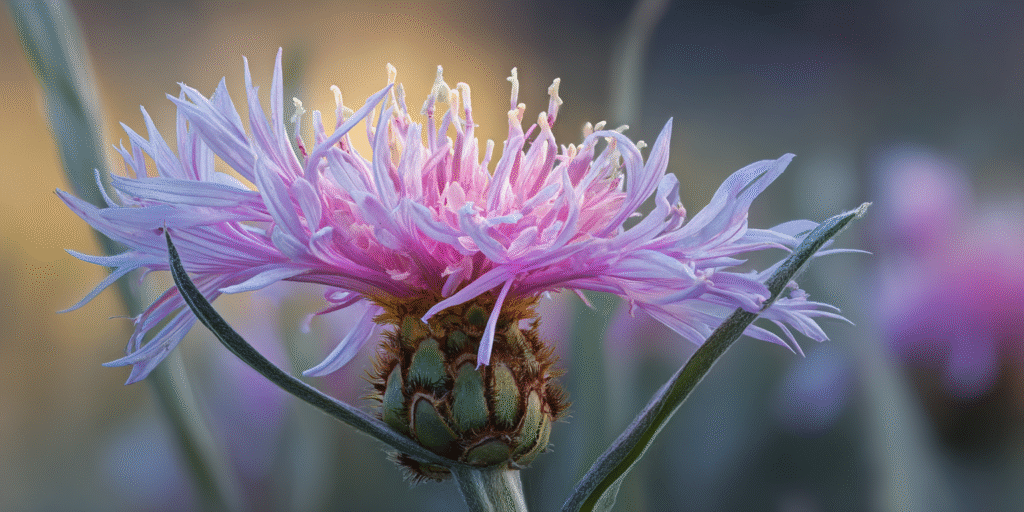
- Color & flower form: rosy pink, deeply fringed heads with paler centers
- Fragrance: 0 none
- USDA hardiness: zones 3 to 8
- Breeder / Year / Origin: unknown
- Cut‑flower notes: listed among dependable perennial cut flowers
- Pet safety: unknown
How it differs
- Pink palette rather than the typical blue of cornflowers
- Silvery leaf undersides add contrast
- Prefers cooler summers; may flag in hot humid regions
- Forms tidy clumps rather than running
Strengths
- Cold‑hardy and long‑lived in well‑drained soils
- Useful for cutting and pollinators
- Tolerates dryish soils once established
Care in one minute
Full sun with free‑draining soil; neutral to slightly alkaline is fine.
Water to establish; then water when the top inch dries.
Do not over‑fertilize; rich soil increases flop.
Deadhead to prolong display; cut back after bloom.
In warm zones, provide afternoon shade and excellent drainage.
Watch‑outs
- Can flop on tall stems; staking may help
- Avoid wet soils, especially in winter
- May self‑seed lightly
Best uses (tags)
Provenance note
Native to Iran and the Caucasus; some authorities place it in Psephellus based on morphology.
References
- Missouri Botanical Garden Plant Finder – Centaurea dealbata
- RHS – Centaurea dealbata details
- Kew Plants of the World Online – Psephellus dealbatus
- Cornell Cooperative Extension – Guide for Beginning Specialty Cut Growers (perennials list)
Similar Flowers
Enjoying our flower guides? Add YourFlowersGuide as a preferred source on Google. It helps more readers find us.
Add to Preferred Sources