How to Grow and Care for Lupine
Contents
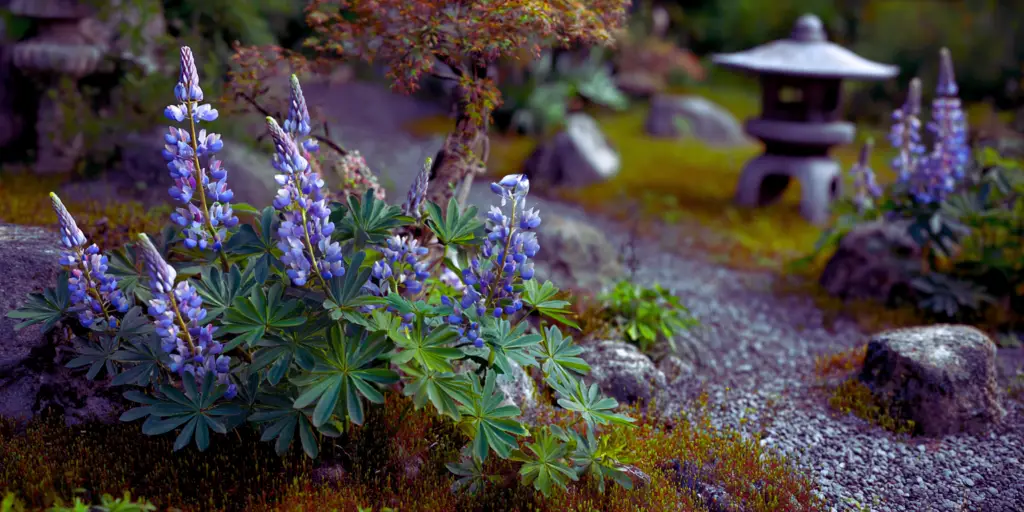
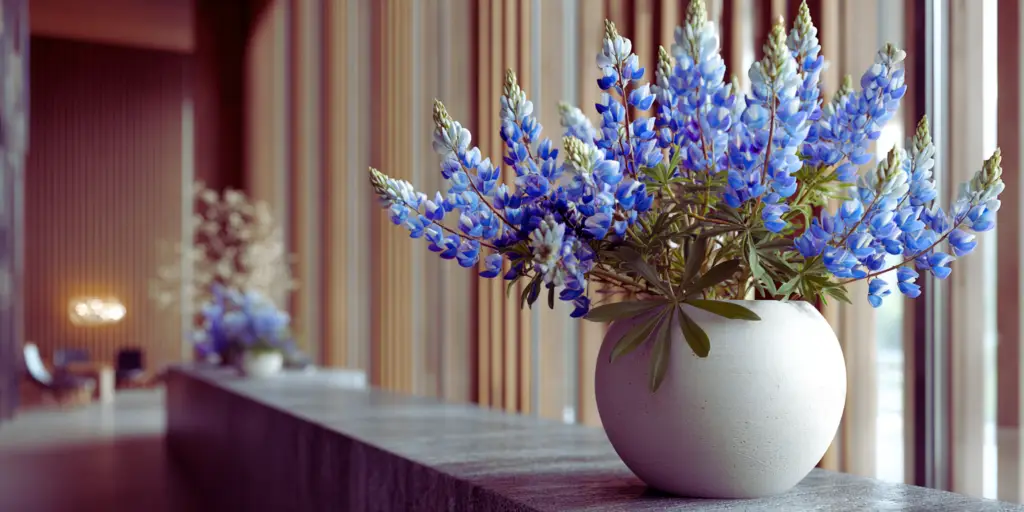
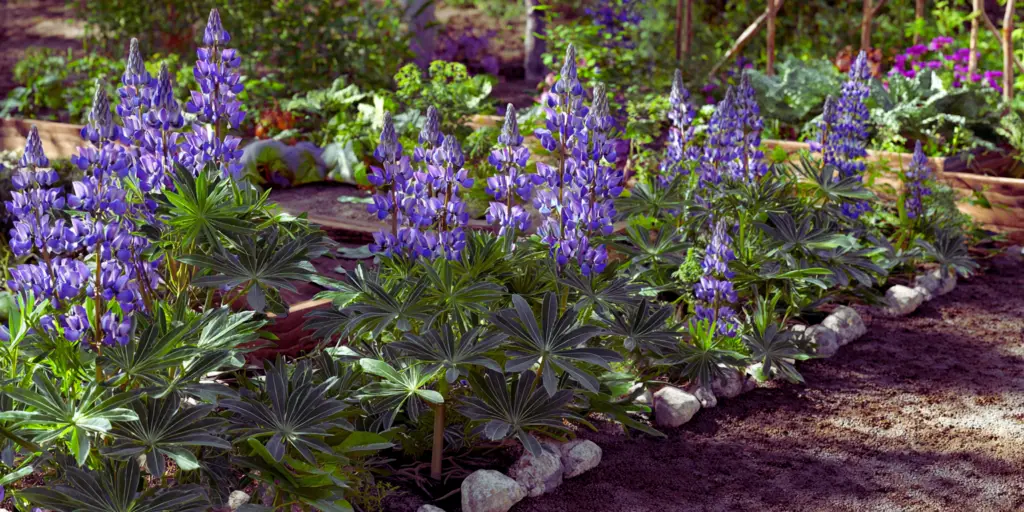
Lupine is a dramatic, cool‑season perennial or annual grown for tall spires of pea‑shaped blooms in saturated blues, purples, pinks, reds, and whites. In American gardens the most common garden types are hybrids derived from bigleaf lupine Lupinus polyphyllus. You may also see them sold as Russell hybrids or as Lupinus × hybrida. In the South and Southwest, native annual “bluebonnets” such as Lupinus texensis are beloved roadside wildflowers and are grown as winter annuals rather than as perennials. Throughout this guide, “Lupine” and “lupines” refer to the genus Lupinus with a focus on garden hybrids unless noted.
Lupine thrives where summers are cool and nights are mild. For long‑lived plants, think USDA Zones 4 to 8 with best staying power in the North and at elevation. Expect the strongest flowering in full sun in cool regions and in morning sun with light afternoon shade where summers are hot. Lupine is a legume with a deep taproot, which means it dislikes disturbance after planting and insists on soil that drains well. If you provide sun, drainage, and modest fertility, Lupine rewards you with vertical color that slots neatly into the blue and purple flowers palette and mixes easily with white and yellow flowers in borders and meadows. Pick a sunny site with fast drainage and slightly acidic to neutral soil. Plant seeds or young transplants where they can stay put. Water consistently during establishment, then water deeply but not often. Keep mulch thin at the crown, deadhead promptly after the first bloom run, and feed lightly if a soil test says you should. With these steps, Lupine care becomes a straightforward seasonal routine that delivers tall spears in late spring to early summer.
Soil & Bed Preparation
Lupine prospers in soils that are well drained, moderately fertile, and on the acidic side through neutral. Sandy or loamy beds are ideal. Heavy clay can be made usable if you improve internal drainage and structure before planting. Aim for a soil reaction near 6.0 to 6.8, which favors root health and flowering while limiting nutrient lockout. Because Lupine forms a stout taproot, take time now to create a deep, friable rooting zone. Work the top 12 inches of soil and break up compaction to 18 inches where possible. Blend in two to three inches of fine textured compost across the bed to increase water infiltration and to support soil biology without overfeeding nitrogen. Avoid fresh manure or high nitrogen amendments, which push leafy growth at the expense of flowers. To confirm drainage, dig a hole 12 inches deep and fill it with water. Allow it to drain, then refill. A healthy bed drains the second filling within one to three hours. If water lingers longer, improve drainage by raising the bed 6 to 8 inches, by incorporating coarse mineral material such as expanded shale or coarse sand in dense soils, and by loosening subsoil layers that impede percolation. Check pH with a home kit or a lab soil test. If your pH is high due to alkaline soil or irrigation water, add elemental sulfur as directed by a soil test and water with collected rainwater when practical. If soil is too acidic below 5.5, apply pelletized limestone per soil test rates. Retest in six months to one year, since pH shifts take time.
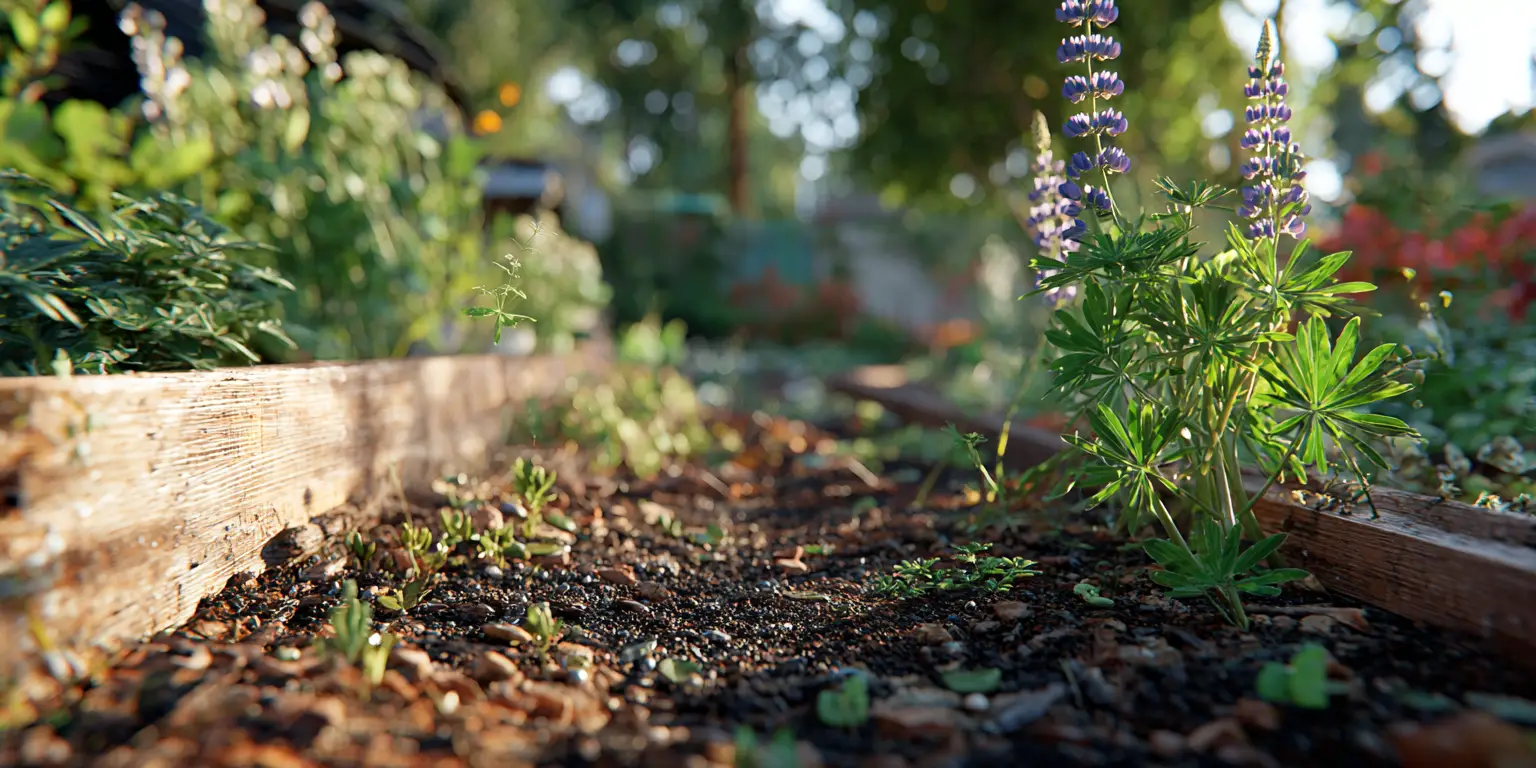
Raised beds help where winters are wet or where clay dominates. A simple raised border 6 to 10 inches tall with a loamy, bark‑based fill keeps crowns just high enough to avoid waterlogging. In coastal sites with reflective heat, use deeper organic mulch between plants to cool roots but maintain a thin mulch around the crown. For in‑ground beds, emphasize structure: resist the temptation to over‑amend a single planting hole, which can create a bathtub effect. Instead, amend the entire planting area so roots can explore evenly and drain freely.
Planting Calendar by USDA Zone
In cold‑winter climates Lupine behaves as a hardy perennial. In regions with long, hot summers it is best treated as a cool‑season performer or a reseeding winter annual. Time your planting so roots establish in cool weather.
Zones 3 to 4: Sow seed outdoors from late spring as soon as soil is workable through early summer, or sow in fall once temperatures cool to encourage natural winter stratification. Transplant small container plants after the last hard frost when daytime highs sit in the 50 to 60°F range (10 to 16°C). In these zones, fall planting can also succeed if done 4 to 6 weeks before ground freeze so roots anchor before winter. Provide a light winter mulch after the ground freezes to reduce heaving.
Zones 5 to 6: For perennials, the widest window runs from mid spring through early summer for transplants, and early spring or fall for direct seeding. Many gardeners sow in fall so seed experiences cold, then germinates strongly in spring. Where summers are moderate, full sun yields the best spikes. In southern parts of these zones with brief heat waves, plan for light afternoon shade and a bit more mulch to keep the crown cool and the soil evenly moist.
Zones 7 to 8: In much of the South and lower elevations of the West, plant Lupine like a cool‑season crop. Direct‑sow or set transplants in fall through early winter so roots run during cool months and blooms follow in spring. In these zones the classic bigleaf hybrids often act as short‑lived perennials or biennials. Morning sun and dappled afternoon shade improve longevity. In arid Zone 8, favor fall planting and provide wind protection so spikes do not desiccate as they form.
Zones 9 to warm coastal 10: For garden Lupine, choose the mildest microclimates or high elevations and plant into fall for spring bloom, knowing plants may behave as winter annuals. In much of Zone 9 the native and adapted annual bluebonnets fit better than bigleaf hybrids. Sow those from early fall through mid fall so they root through winter and flower in spring. In the desert Southwest, avoid late spring planting and place beds where reflected heat is minimal.
Planting: Depth & Spacing
Lupine grows best from seed sown where the plant will mature. Scarify hard seed coats by rubbing lightly with sandpaper or by a brief soak in warm water, then plant at a depth close to twice the seed’s diameter, usually about 0.25 inch deep (6 millimeters). Maintain even moisture until germination, which typically occurs in 10 to 20 days in cool weather. Direct sow in fall in Zones 5 to 8 to let winter cold break dormancy and to encourage sturdy spring growth. If you must start indoors, use deep cell trays, air‑pruning containers, or fiber pots to protect the taproot, and transplant promptly once roots fill the container. Space seedlings 12 to 18 inches apart for dwarfs and 18 to 24 inches for tall Russell‑type hybrids. Wider spacing improves airflow and reduces powdery mildew risk. Lupine forms a dominant taproot with limited lateral roots, so division is not a reliable method. Some specialty nurseries ship very small bare‑root seedlings or plugs with the taproot intact. If you plant such stock, handle roots gently, set the crown at soil level, and firm soil carefully to eliminate air pockets. Water deeply immediately after planting to settle soil around the root. Avoid dividing mature clumps since cutting the taproot often leads to failure. If a plant must be moved, do it early in the season while cool weather persists, take as large a root ball as possible, and expect a pause in growth while the plant reestablishes. Choose compact plants in tall containers rather than oversized, pot‑bound specimens. Plant with the crown level to the surrounding soil and keep the top of the root ball just visible rather than burying it deeply. Backfill with the same soil used to prepare the bed, not a different mix, to prevent perched water at the interface. Space 18 to 24 inches for tall strains for good airflow. To minimize transplant shock, harden off for 7 to 10 days, shade with a sheet or temporary lattice for two bright afternoons after planting, and keep soil evenly moist for the first two weeks. A thin mulch layer helps conserve moisture, but keep it pulled back an inch from the crown to avoid rot.
Watering & Mulching
Watering for Lupine is about rhythm and depth. Newly sown or newly set plants need steady moisture while roots explore. During the first six weeks, keep the top few inches of soil evenly moist without staying soggy. Once established, a deep weekly soak that delivers about 1 inch of water to the root zone works well for in‑ground plants, adjusted for heat, wind, and rainfall. In sandy soils you may split that inch into two half‑inch irrigations spaced a few days apart, while in heavier loams a single deep soak helps drive roots down. Use a rain gauge and finger test rather than guessing. In heat spikes above 90°F (32°C), water earlier in the day and consider a midday shade cloth to reduce stress on tall spikes.
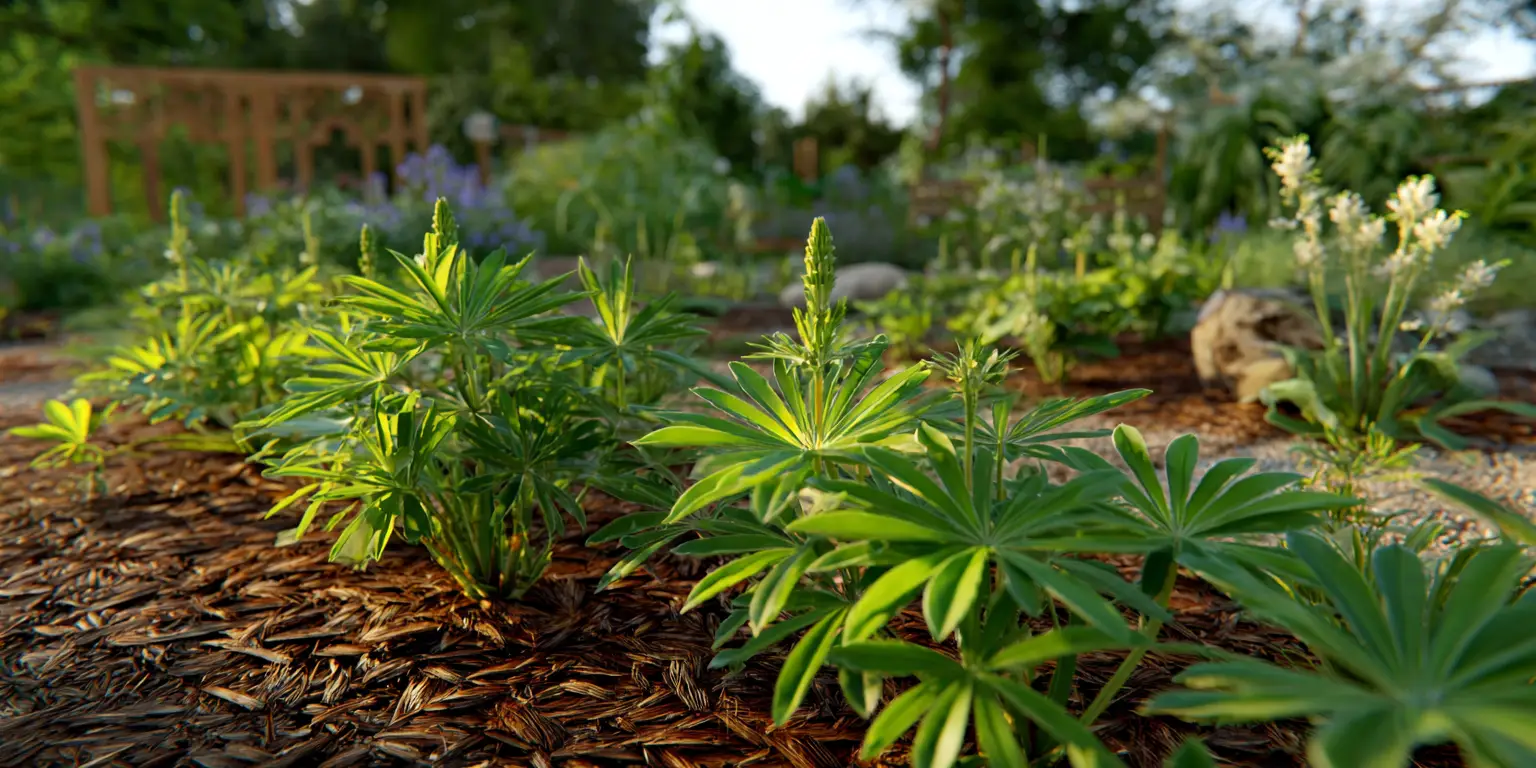
Mulch helps conserve moisture and moderates soil temperature, but Lupine crowns resent constant wetness. Apply a 2 to 3 inch layer of shredded leaves, pine needles, or fine bark around plants, keeping mulch pulled back about 1 inch from the crown. In humid climates a coarser mulch encourages airflow, and in slug‑prone gardens skip heavy straw against the stems. In arid regions a light gravel mulch between plants cools soil while discouraging weeds. Where irrigation water is alkaline, monitor for yellowing between veins. If chlorosis appears and your soil test shows high pH, water occasionally with collected rainwater and address soil pH during the next cool season. Avoid overhead watering late in the day, which can favor powdery mildew on foliage.
Feeding
Lupine is a legume that can fix atmospheric nitrogen once inoculated and established. In well prepared garden soils many clumps need little to no fertilizer. Start with a soil test before feeding. If the test shows low phosphorus and potassium or plants look weak despite good light and moisture, apply a light, slow release fertilizer where the first number is equal to or lower than the second and third. Ratios in the range of 3‑5‑5 to 5‑10‑10 work well for flowering perennials. In early spring as new shoots emerge, scratch a modest amount into the soil surface around but not against the crown, then water it in. One light application per year is usually enough.
Organic matter supports soil life and makes nutrients available over time without pushing lush, floppy growth. Maintain two annual topdressings of compost across the bed in thin layers rather than burying large quantities at planting. If your soil test indicates adequate phosphorus and potassium, skip blended fertilizers and rely on compost or a small amount of nitrogen only. Overfeeding nitrogen produces leaves at the expense of spikes and can increase lodging. Retest soil every two to three years to track pH and nutrient trends and adjust your plan.
Pruning & Support
Deadheading keeps plants clean and can extend color. After the first flush fades, cut each spent spike back to the top set of healthy leaves. Many plants push a shorter second round of blooms from side shoots when deadheaded promptly. At the end of the season, remove spent stems and reduce foliage to a tidy mound, but retain some green leaves so the crown can feed itself until frost. In spring, shear away winter‑burned foliage to expose new growth at the base. Always use clean, sharp pruners, and disinfect blades between plants if you are managing any foliar disease. Wiping with 70 percent isopropyl alcohol is convenient for hand tools used plant to plant.
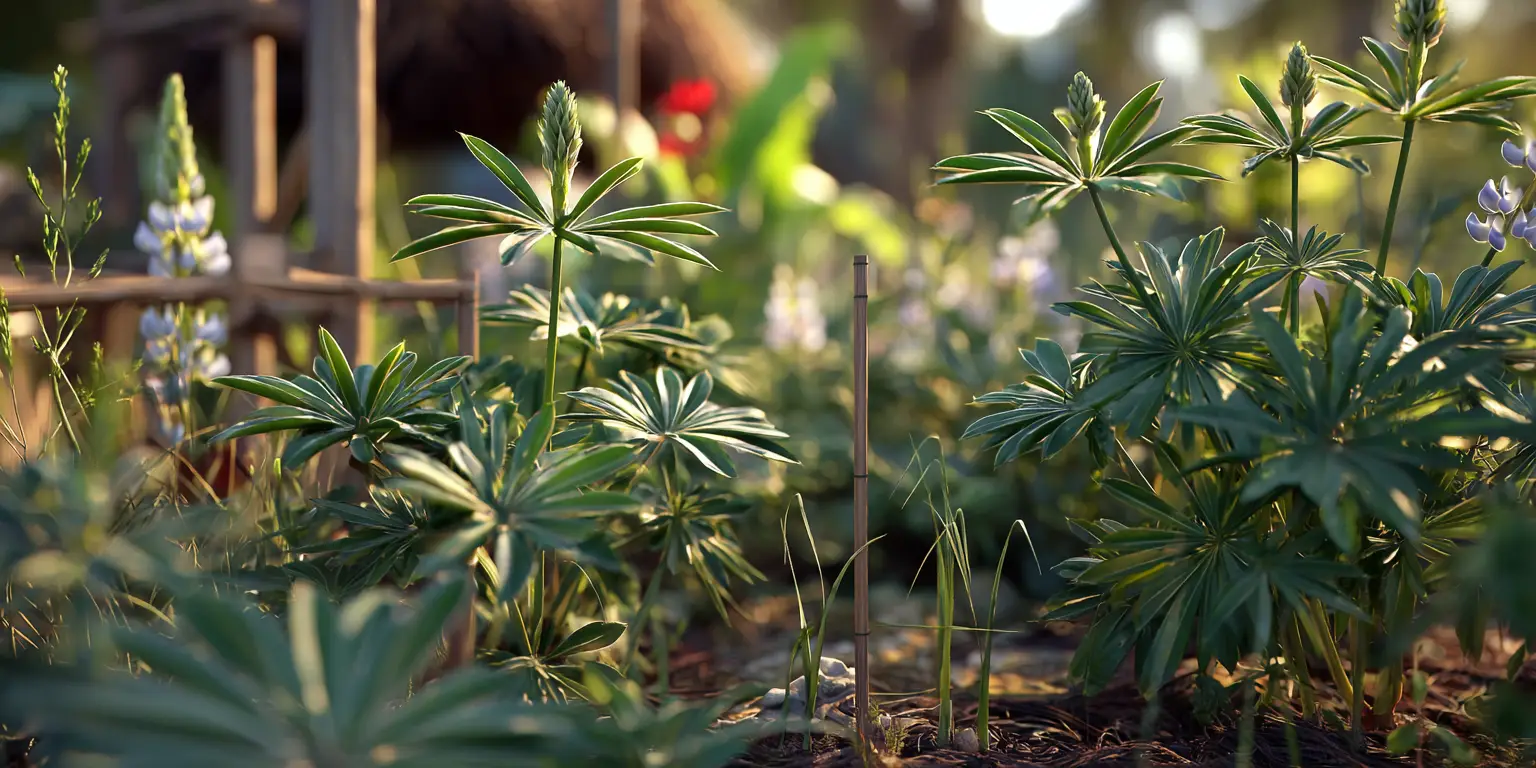
Tall Lupine can be top heavy in wind. Invisible support is simple if installed early. Place slender stakes behind taller clumps and loop soft ties loosely around the upper third of the stem. In mixed plantings, neighbors can act as living supports if you set Lupine among sturdy perennials and ornamental grasses. Good air spacing, even watering, and a site out of harsh prevailing winds reduce the need for stakes. Avoid tying stems so tightly that they crease or hold moisture.
Overwintering
In cold climates the chief winter risk is freeze–thaw heaving that lifts crowns. Once the ground has frozen, apply 2 to 4 inches of shredded leaf mulch over the bed to smooth temperature swings. Pull mulch back in early spring as soon as consistent thaw arrives and growth begins. If a late cold snap threatens, push mulch temporarily around crowns and cover with a breathable fabric overnight, then remove covers again the following morning. In windswept sites, a low baffle of evergreen boughs traps snow across the bed, which insulates crowns naturally.
In Zones 7 to 8, a lighter winter mulch and the right exposure keep plants vigorous. Avoid waterlogging during winter rains by maintaining beds with excellent drainage. Where voles and other rodents browse crowns, use mesh protectors during winter and keep mulch thin right at the crown. For Lupine in containers, move pots against a north facing wall to avoid midday sun on cold days and bundle containers together so they share warmth. Water container plants lightly during mild winter spells so the root ball does not desiccate, and resume a normal schedule as spring growth resumes.
Growing Environments
Lupine can be grown in containers if you plan for the taproot. Choose deep pots with excellent drainage. For dwarf strains, use at least a 12 inch deep container holding roughly 5 gallons of mix. For tall types, a 14 to 16 inch deep container holding 7 to 10 gallons provides better stability. Use a coarse, soilless potting mix with ingredients like composted bark and perlite that drains quickly yet holds some moisture. Avoid heavy garden soil in pots. Set containers where they receive full morning sun and high, bright shade in the afternoon in hot summer regions.
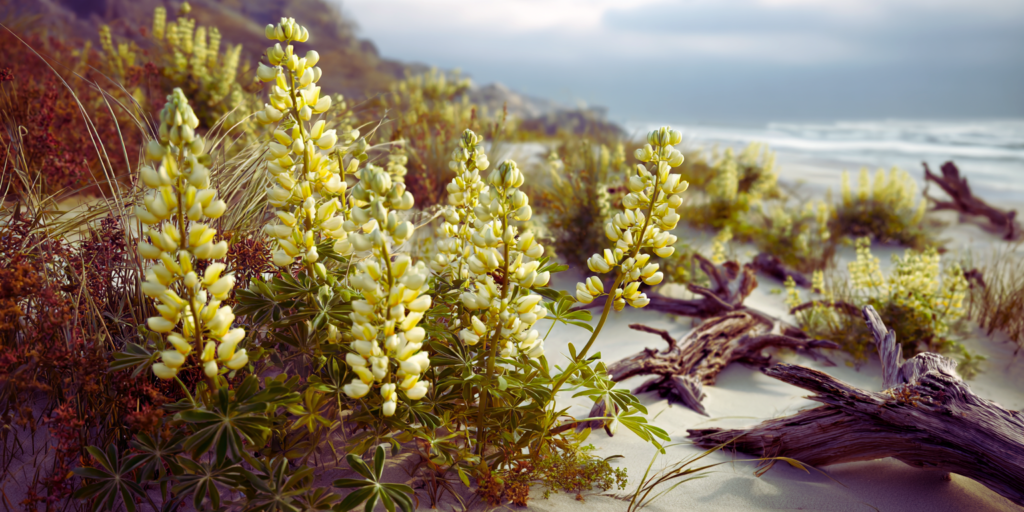
Microclimates matter. In the North and at elevation, full sun produces the densest spikes. In the South, filtered shade during the hottest hours extends bloom and improves plant longevity. Shelter tall spikes from strong prevailing winds, especially at the edge of patios or driveways where reflected heat can stress plants. On coastal sites, salt spray and constant wind can reduce bloom length. Tuck Lupine behind a windbreak of shrubs or grasses, and choose colors that link with neighboring perennials such as lavender and daffodils for a calm, extended display. Remember that Lupine dislikes being moved, so place containers and in‑ground plants where they can remain for several seasons.
Companion Planting & Design
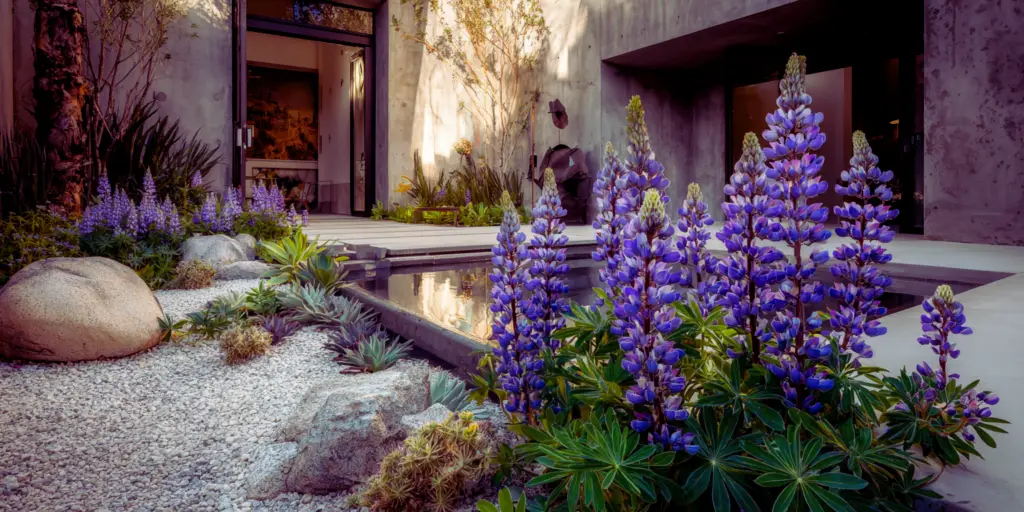
Lupine’s strong vertical lines make it a natural partner in mixed borders, cottage gardens, and prairie‑style plantings. After the first bloom, Lupine foliage can look bare at the base, so pair it with companions that fill the foreground and hide die‑back gracefully. Catmint, hardy geraniums, Shasta daisy, columbine, foxglove, alliums, and low mounding grasses knit around the base to keep the composition full. In early summer, peonies and bearded iris offer broad blooms that contrast with Lupine’s spires. Later, daylilies and coneflowers take the baton for a long season of interest. This rotation is a classic move in the types of flowers gardener’s playbook.
For color design, use the cool spectrum to your advantage. Blue and purple Lupine spikes cool down borders that include bold yellow flowers, while white and bicolor spikes tie together mixed plantings of white flowers and pastels. In small spaces, repeat one or two colors in clusters of three plants for a unified look rather than scattering singles. In wildlife gardens, Lupine’s nectar supports bees and hummingbirds when it blooms. Combine with a sequence of pollinator plants that bracket Lupine’s timing so there is food before and after. Keep spacing generous to promote airflow and reduce foliar disease, and thin volunteer seedlings if they pop up too close to neighbors.
References
- North Carolina State University Extension Gardener Plant Toolbox. “Lupinus (Lupine).”
- Missouri Botanical Garden PlantFinder. “Lupinus × hybrida.”
- Missouri Botanical Garden PlantFinder. “Lupinus ‘The Governor’.”
- Royal Horticultural Society. “How to grow lupins.”
- Royal Horticultural Society. “Lupinus polyphyllus.”
- South Dakota State University Extension. “Lupines for Northern Gardens.”
- University of New Hampshire Extension. “Differences between native wild lupine and bigleaf lupine.”
- Lady Bird Johnson Wildflower Center. “Lupinus perennis (Sundial lupine).”
- University of Minnesota Extension. “Clean and disinfect gardening tools and containers.”
- University of Illinois Extension. “Planting and Care | Flowers.”
Written by: Your Flowers Guide editorial team
We are a small independent group of flower lovers who research and review each guide using trusted horticultural and educational sources. Learn more about us