
Most common today
Today a marigold most often means warmth, creativity, and the sun, with a strong thread of remembrance running underneath. It is a cheerful, low-drama gift of brightness rather than a romantic flower.
The Victorian reading
In the Victorian language of flowers the marigold stood for grief, jealousy, and cruelty, with the set phrase “pain and grief of the heart.” That reading is genuine and documented but is effectively a dead code today; almost no one reads the flower that way now.
What to write on the card
For remembrance: “Lighting the way back to us.” (For warmth instead, “a little sunshine for you” works just as well.)
Cross a border with a marigold and its meaning changes under your hands. In Mexico it is the flower of celebration and the returning dead, its scent and fiery colour laid down to guide souls home each November. In India it is auspicious, strung by the yard into wedding and temple garlands. Then you open a Victorian flower dictionary and find the same bloom standing for grief, jealousy, and cruelty, “pain and grief of the heart.” Both of those marigolds are real. Today the warm one wins by a wide margin: a marigold most often means warmth, creativity, and the sun, with a strong thread of remembrance running underneath. The darker meaning has not vanished so much as gone quiet, kept alive mostly in old books, and below you will find where each reading came from and which one to trust when you give the flower now.
That geographic split is the whole reason marigold is worth a careful page rather than a quick chart. A rose means love almost everywhere you look. A marigold asks which century and which country you are standing in. Get the context right and it is one of the most generous, sunlit gifts you can give. Get it wrong, by handing a stack of Victorian symbolism to a modern friend, and you would be the only person in the room who thought you said anything cruel.
What a marigold means
The everyday meaning of a marigold today is warmth. It is the flower of the sun, of creative energy and cheerful resilience, the bloom that keeps flowering from summer straight through to the first frost without much fuss. That sense of steady, low-drama brightness is most of what people now read into it, and it suits the plant, since marigolds are famously easy annuals that just keep going. Running alongside the warmth is a quieter and older note of remembrance, which is the thread that ties the modern flower to its biggest cultural job. So the honest short version is that a marigold means warmth, creativity, and the sun, with remembrance close behind.
What it does not mean, for almost anyone you are likely to meet, is the thing the old books say. In the Victorian language of flowers the marigold was a flower of grief, jealousy, and cruelty, and one of its set phrases was “pain and grief of the heart.” That reading is genuine and it is documented, but it belongs to a particular nineteenth-century vocabulary that very few people speak anymore. Treat it as history worth knowing rather than a warning that should stop you from giving the flower. The gap between the sunny modern marigold and the mournful Victorian one is the single most interesting thing about this flower, and the rest of this guide walks through how the meaning got pulled in two directions and stayed there.
Giving a marigold, and what it says between friends
Marigold is not a romantic flower, and that is a feature rather than a flaw. It does not declare passion the way a courtship bloom does; it says something warmer and broader instead: I am glad you exist, I am thinking of you, this is a bright spot. That makes it a natural gift for a friend, a creative person, a new neighbor, or anyone you want to cheer without any hint of courtship. Its creative streak gives it a small extra meaning for makers and artists, a nod to inspiration and the energy to keep going, which fits a flower that simply refuses to stop blooming.
The one place marigold carries real emotional weight is remembrance. Because of its deep ties to honoring the dead, a marigold can say what a brighter, lighter flower cannot, that you are holding someone in memory and that the memory is warm rather than only sad. That is a rare and useful thing in a flower, and it is why marigolds belong at a memorial table as comfortably as at a celebration. If you are choosing a flower for a feeling rather than a person, our guide to what flowers mean by feeling sets marigold next to its neighbors in warmth, gratitude, and grief, so you can see where it sits among the alternatives. And if you have fallen for the plant itself and want to grow your own cheerful supply, our full guide to how to grow marigolds walks through the easy, frost-to-frost care the flower asks for.
The Mexican and Indian roots of the warm marigold
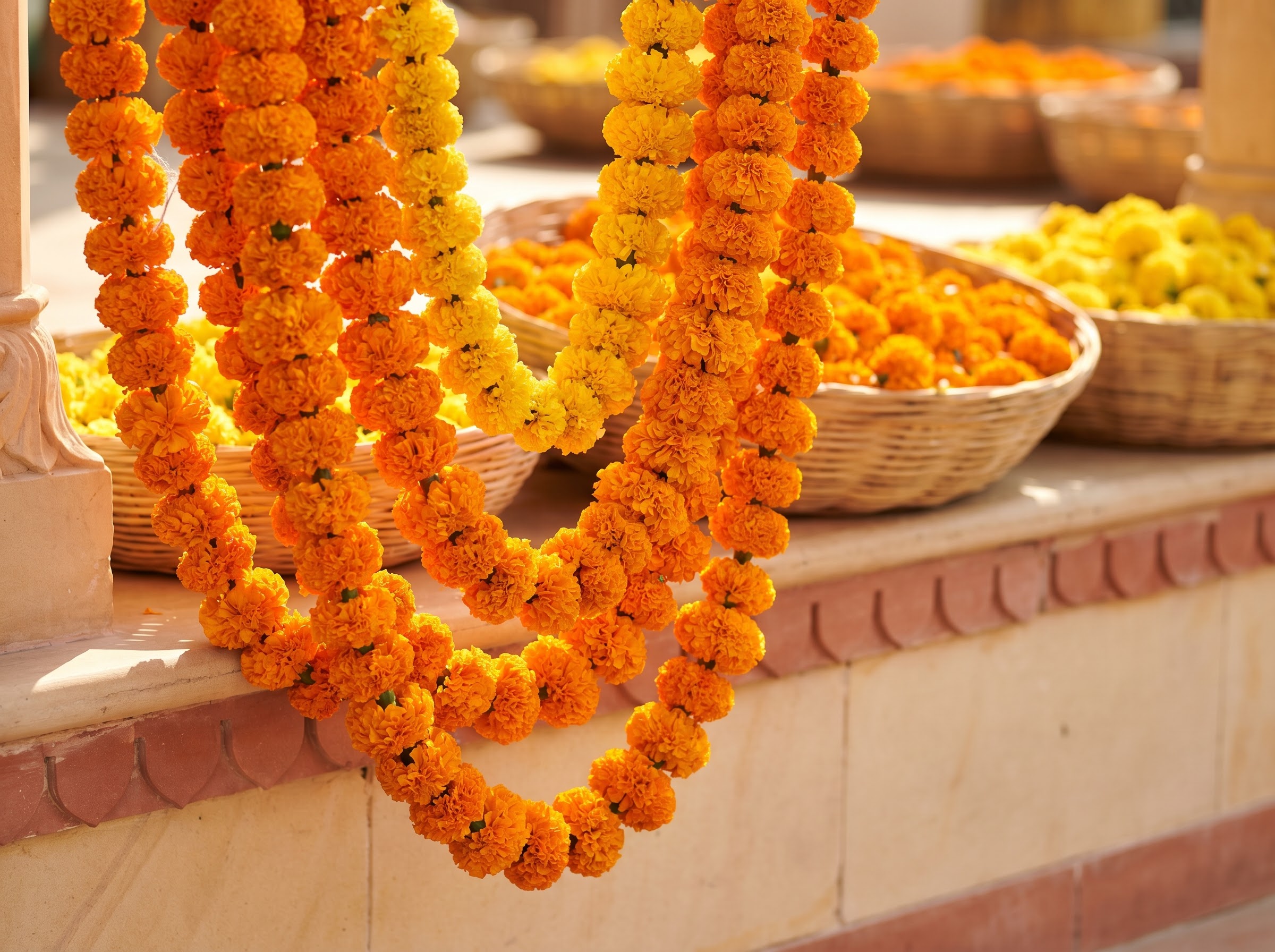
The marigold’s strongest meanings are not really European at all, which is part of why the Victorian reading feels so off to modern eyes. In Mexico the marigold, the cempasuchil, is the central flower of Dia de los Muertos, the Day of the Dead. Families lay paths and altars of its petals because the flower’s intense scent and burning orange colour are believed to guide the spirits of the dead back home for the holiday. That single role gives the marigold its remembrance meaning and a celebratory one at the same time, since the Day of the Dead is a warm, festive honoring rather than a mournful one. In India the marigold is auspicious and everywhere, strung into long garlands for weddings, festivals, and temple offerings, a flower of blessing and good fortune. Between those two cultures the marigold is overwhelmingly a flower of light, life, and welcome.
The flower’s name carries a gentler old story too. By a long-standing traditional account the word marigold is said to come from “Mary’s gold,” linking the golden bloom to the Virgin Mary in medieval Christian Europe, a reading that leans warm and devotional rather than dark. That account is widely repeated as folk etymology rather than settled fact, so it is best held as pleasant lore. The wider flower language that gave the marigold its grim side is younger than any of this. Cornell University’s history of floriography traces the practice of sending messages with flowers back to China, Egypt, and Assyria, but the polished parlour version most English speakers picture was assembled later, largely in France, and only then crossed the Channel into a craze. The marigold’s mournful meaning is a product of that particular European list-making, not of the flower’s much older life in Mexican and Indian tradition.
How the parlor dictionaries turned it cruel
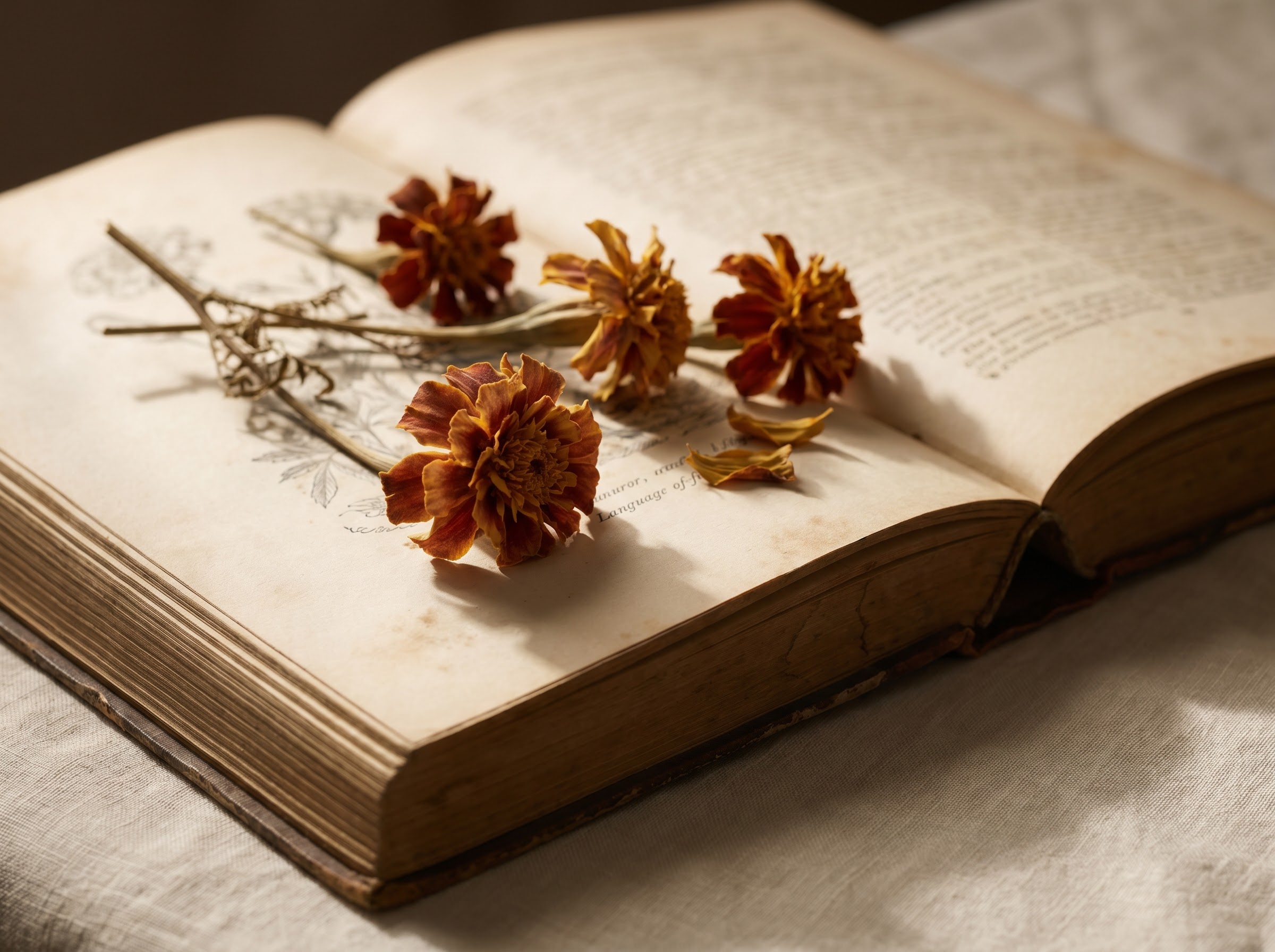
So how did a flower of festival garlands and guiding light end up meaning cruelty in a parlor flower dictionary? The Victorian language of flowers was its own closed system, and it often assigned meanings that had little to do with how a flower was treasured elsewhere. In that vocabulary the marigold’s bright, slightly bitter, almost aggressive colour and its strong scent seem to have been read as harsh rather than cheerful, and it was filed under grief, jealousy, and cruelty, complete with the set phrase “pain and grief of the heart.” A bouquet built in that code could use a marigold to send a pointed, unkind message, the floral equivalent of a cold remark.
Then the parlor code itself fell out of use, and the meaning simply lost its audience. As the Victorian flower dictionaries faded as a living social language, the marigold’s far older and far larger cultural meanings, the Mexican and Indian ones, kept right on going and eventually became what most of the world associates with the bloom. The grief reading did not so much get corrected as get out-voted, drowned out by two living traditions that dwarf the parlor dictionaries in reach and number. Today almost no one hands you a marigold meaning to wound you, and the only people who would even register the old reading are those steeped in nineteenth-century symbolism, which is to say hardly anyone. None of which makes the meaning fake, only out of date: it was real for the people who used it, and it lost out to readings that more people kept choosing to use.
Two opposite readings, both real
The marigold puts the soft spots in flower symbolism on full display, so it is worth being frank about them. No official dictionary of flower meanings has ever existed to settle the question. Iowa State University Extension says as much in its own list of flowers and their meanings, noting that several sources carry this kind of information and that one flower can hold more than one meaning at a time. For most flowers that just means a little fuzziness around the edges. For the marigold it means two nearly opposite readings sitting side by side, celebration and the sun on one side, grief and jealousy on the other, both genuinely documented, both real in their own time and place. It has a close companion in this, the chrysanthemum, another bloom that reads as joy in one country and as a funeral flower in another, where the border you cross matters as much as the flower you carry.
The useful way to hold that is by tier and by context rather than searching for a single right answer that does not exist. The modern, dominant reading is warmth, creativity, the sun, and remembrance, and that is the one to act on unless you have a specific reason not to. The Victorian reading of grief and cruelty is real history but a dead letter in practice. The cultural meanings in Mexico and India are alive, specific, and powerful, and they are the ones to honor if you are giving or using marigolds in those settings. Here is the same flower laid out by era and culture, with a plain note on how much weight to give each reading today, because with the marigold the weight is the whole story.
| Setting or era | What the marigold means there | How much to trust it today |
|---|---|---|
| Modern everyday | Warmth, creativity, the sun, and remembrance | The default. Act on this unless the context below clearly applies. |
| Mexico, Day of the Dead | Guiding and honoring the returning dead; a warm, festive remembrance | Strong and living. The flower’s most powerful real-world meaning. |
| India | Auspicious; blessing and good fortune for weddings, festivals, and temples | Strong and living. Treat marigolds as celebratory and lucky here. |
| Victorian flower language | Grief, jealousy, and cruelty; “pain and grief of the heart” | Real history, but a dead code. Almost no one reads it this way now. |
| “Mary’s gold” naming tradition | A golden flower linked to the Virgin Mary | A traditional etymology, warm in tone. Pleasant lore, not a hard fact. |
A quick note for anyone searching, since one quirk muddies the results. Marigold doubles as a given name and, in Britain, as the long-standing brand of a household rubber glove, so a stray hit about either has nothing to do with what the flower means. Set those aside and you are back with the warm, sun-coloured remembrance bloom described above. For the bigger picture of how cultures read the same flower so differently, our guide to flower meanings around the world puts the marigold’s Mexican and Indian readings beside other flowers that change character as they cross borders.
Choosing marigolds and the card to send
Give marigolds when you want to send warmth without romance, which covers a lot of life: a creative friend starting something new, a housewarming, a get-well wish, a festival, or any moment that calls for cheerful, unfussy brightness. They are at their most meaningful as a gift of remembrance, where their colour and history let them honor someone with warmth rather than only sorrow, and they are a fitting choice for the Day of the Dead or any memorial that leans toward celebrating a life. Because they bloom from summer to frost and are common and inexpensive, they are also one of the easiest meaningful flowers to actually get hold of for most of the year.
For the card, match the words to the reading you intend. For warmth and friendship, something as simple as “a little sunshine for you” or “thinking of you, and glad you exist” lands the modern meaning cleanly. For creative encouragement, “keep shining” or “for your bright ideas” leans on the flower’s energy. And for remembrance, the line that fits the marigold best is the one its cultural history almost writes for you: “Lighting the way back to us.” None of these require the recipient to know a word of flower symbolism, because the marigold’s warm colour does most of the talking on its own, which is exactly why the sunny meaning won. If you want to understand why a single bloom can carry such opposite readings, and how to weigh any flower’s meaning honestly, our hub on the meaning of flowers lays out the whole picture.
Sources
- Cornell University, Written in Petals: The Language of Flowers, on the history of floriography.
- Iowa State University Extension, Flowers and Their Meanings, on why sources disagree.
More flower meanings
 LilyAt its core a lily means purity, devotion, and renewal, with the colour tuning the message; the…
 PoppyA poppy means remembrance and consolation, and the red poppy in particular is the flower worn…
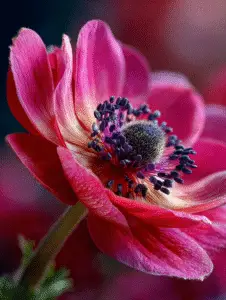 AnemoneIn modern use the anemone stands for anticipation and protection against ill will, a hopeful…
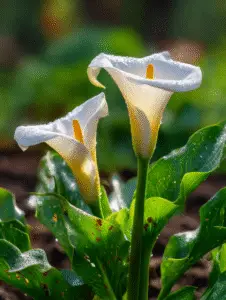 Calla lilyA calla lily means magnificent beauty, purity, and overwhelming, give-yourself-completely…
More meaning guides
More About Marigolds
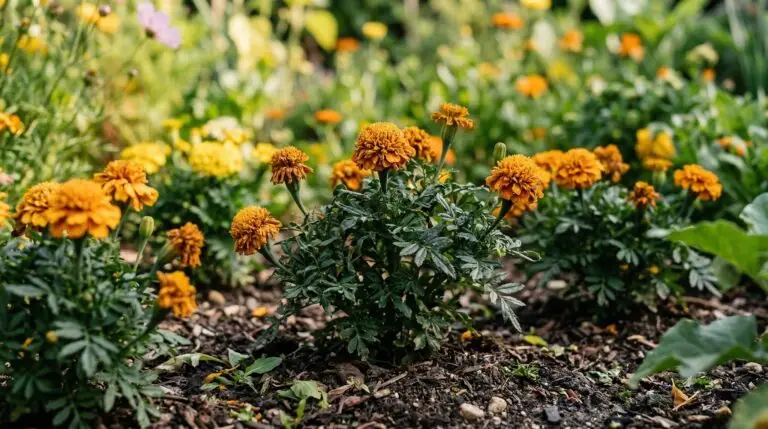 Why marigolds stop blooming in midsummer heat and how to get them flowering again
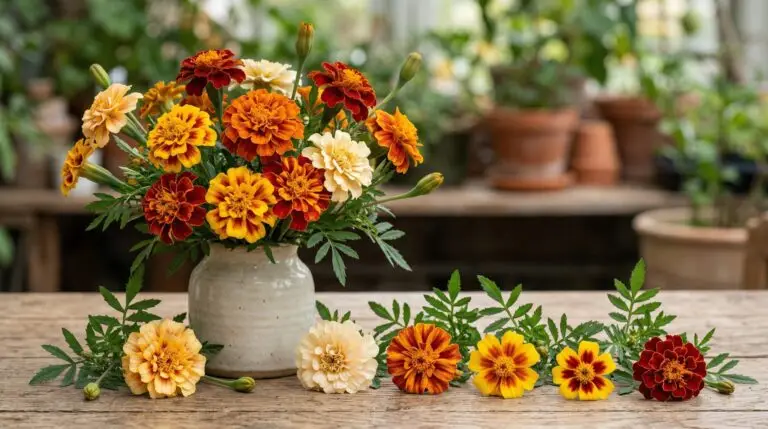 Best marigold varieties from tiny French Bonanza to towering African Antigua
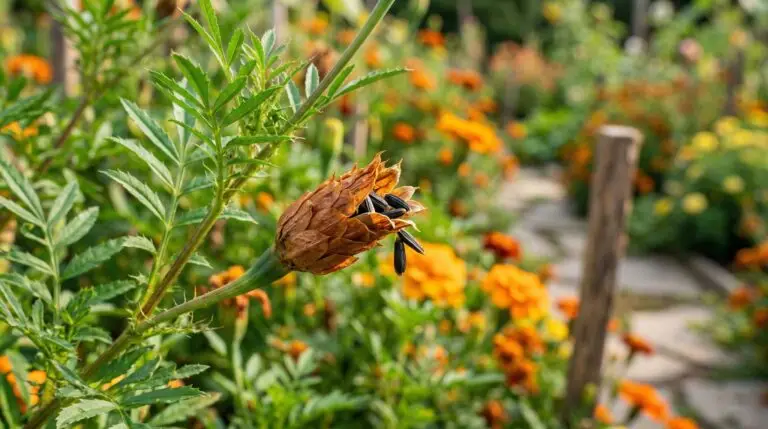 Growing marigolds from seed so easily that children can do it on their first try
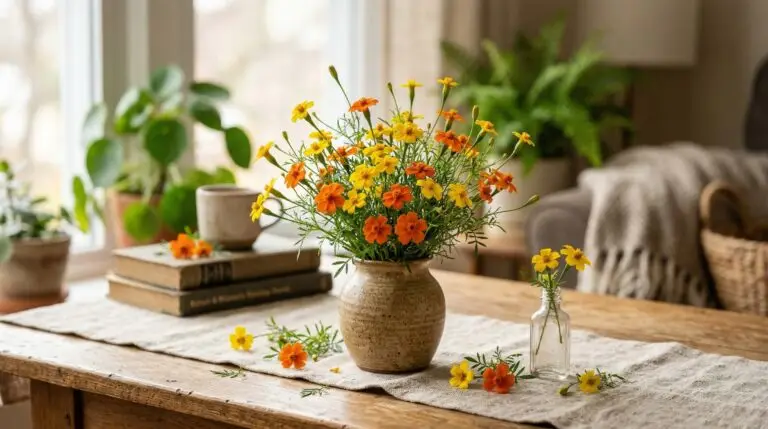 Signet marigolds for edible flowers that taste like citrus in salads and cocktails
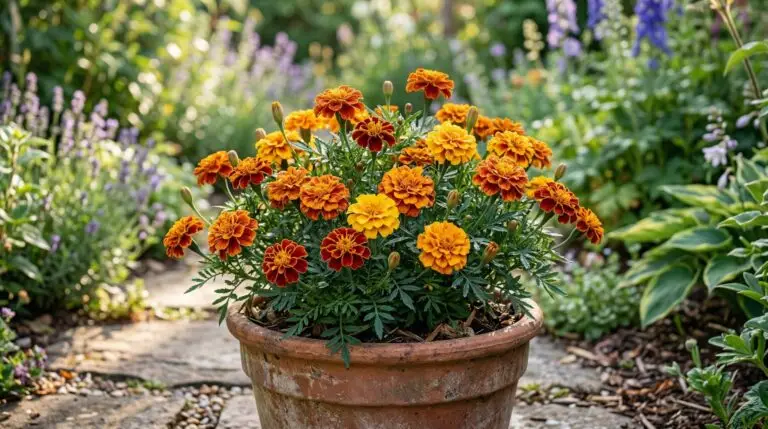 Marigolds in containers and window boxes for instant summer curb appeal
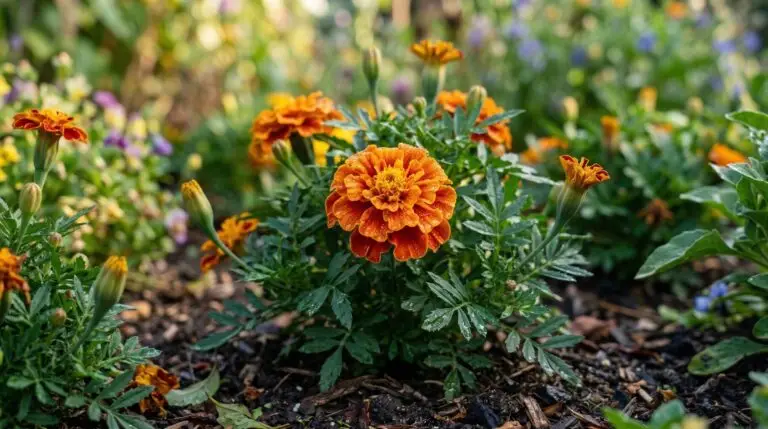 How to grow marigolds for bulletproof color from planting day to first frost
 Marigold companion plants: what works, and what’s folklore
 Marigolds in the vegetable garden and the pest-repelling companion planting tradition
Enjoying our flower guides? Add YourFlowersGuide as a preferred source on Google. It helps more readers find us.
Add to Preferred Sources