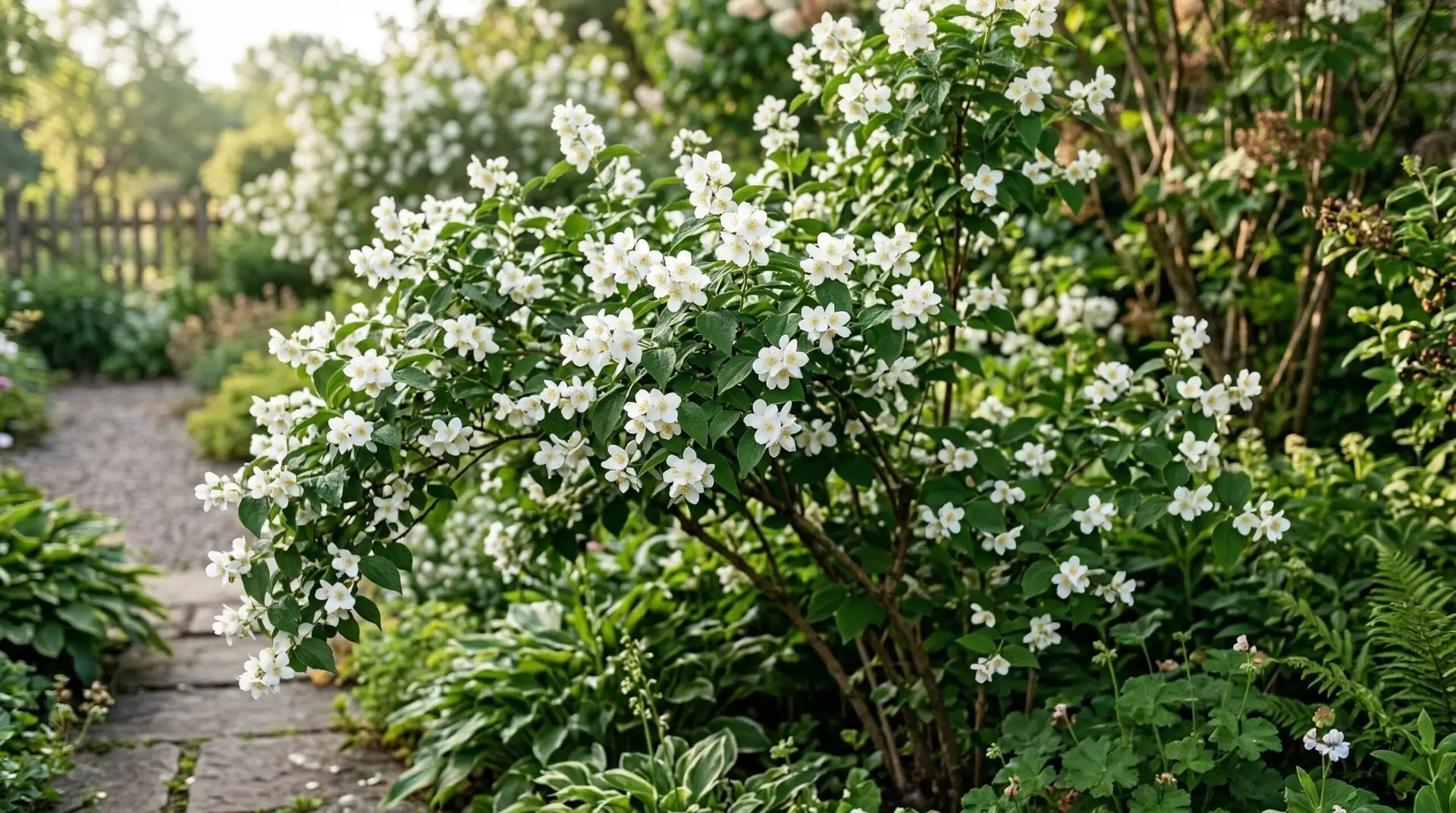
When you encounter a mock orange bush in full bloom on a warm June evening, the heavy, sweet scent of citrus blossoms will tell you exactly how this deciduous shrub earned its common name. I have grown various species of Philadelphus for over thirty years, and few plants match its reliable performance in the early summer garden. The pure white, four-petaled flowers appear just as the spring bloomers fade, bridging the gap between early season color and the heat of midsummer. Growing mock orange is a straightforward endeavor because the plant establishes quickly and forgives many common gardening mistakes. It is a vigorous grower that forms a multi-stemmed, arching silhouette, sometimes reaching ten to twelve feet tall and wide if left entirely to its own devices. You will often see it planted in older landscapes alongside reliable spring staples like classic garden lilacs, where it takes over the visual display just as those earlier shrubs begin to drop their spent panicles.
The botanical genus Philadelphus contains dozens of species native to North America, Central America, and parts of Asia, but the European mock orange, Philadelphus coronarius, is the historical standard for fragrance. Modern breeding has introduced many hybrids that offer varied growth habits, yet the fundamental needs of these shrubs remain remarkably consistent across the genus. They are tough plants that tolerate urban pollution, poor soils, and occasional neglect, making them excellent candidates for mixed borders or informal hedges. However, their visual appeal outside of the blooming window is quite plain, with simple, opposite green leaves and a somewhat coarse winter texture. For this reason, I always advise placing them where their spectacular early summer display can be appreciated, but where their quiet background presence in August will not leave a visual hole in your landscape design. Proper placement ensures you get the maximum benefit of their heavy scent without relying on them for year-round architectural interest.
Contents 4 sections
Site selection and soil preferences
To achieve the dense, heavy flower set that makes a mock orange bush worthwhile, you must provide it with adequate sunlight. Full sun, meaning at least six hours of direct light per day, encourages the strongest growth and the most prolific blooming. The shrub will certainly survive and even grow well in partial shade, but you will notice a marked decrease in flower production and a tendency for the stems to become leggy as they reach for the light. I have observed plants growing in the understory of large shade trees that produce only a handful of blooms each year, entirely missing the visual impact the species is known for. If you live in a region with intensely hot summers, providing afternoon shade can help prolong the life of the individual flowers, but morning sun remains essential for drying the foliage and preventing fungal issues.
When it comes to soil, Philadelphus care is refreshingly uncomplicated compared to many other flowering shrubs. The plant is highly adaptable to different soil textures, growing equally well in heavy clays and sandy loams, provided there is reasonable drainage. They prefer a soil pH ranging from 6.0 to 8.0, which means they are perfectly comfortable in slightly acidic to moderately alkaline conditions. You do not need to heavily amend the planting hole or rely on specialized acidifying fertilizers to keep them healthy. Standing water is one condition they will not tolerate, as chronically wet roots will quickly lead to rot and subsequent decline. If your garden has heavy, poorly draining clay, planting the shrub on a slight mound or berm will usually solve the problem and allow the root system to establish quickly.
Understanding growth habits and cultivars
One of the most frequent complications gardeners face with mock orange involves selecting the right cultivar for their specific space and expectations. There is an ongoing trade-off in the breeding of Philadelphus between flower form and fragrance intensity. Many of the older, single-flowered varieties like the straight species Philadelphus coronarius produce the most powerful, room-filling scent. Conversely, some popular double-flowered hybrids, such as ‘Minnesota Snowflake’ or ‘Virginal’, offer larger, more complex blooms that resemble miniature white roses, but they often sacrifice a significant portion of that classic citrus fragrance. I always recommend that growers smell a mock orange in bloom at a local nursery before purchasing it, as the scent profile can vary wildly even among plants labeled with the same cultivar name.
Size is another critical factor when choosing a variety, as the growth habit dictates how much maintenance the plant will require. Traditional varieties are large, sprawling shrubs that demand considerable space to look their best, often growing eight to ten feet in height and spread. If you have a smaller garden, you should look for dwarf or compact cultivars like ‘Miniature Snowflake’ or ‘Buckley’s Quill’, which typically top out around three to four feet. There are also varieties selected specifically for their foliage, such as ‘Aureus’, which emerges with bright chartreuse leaves in the spring that eventually fade to a standard green by midsummer. Mixing these different forms with early spring bloomers like bright yellow forsythia can create a succession of interest that carries a mixed border from April well into July.
Pruning and long term maintenance
Proper pruning is the single most critical aspect of long-term Philadelphus care, and it is where I see the most mistakes made in home landscapes. Mock orange blooms on old wood, specifically on the lateral branches that grew during the previous summer. If you prune the shrub heavily in late fall, winter, or early spring, you will remove all the flower buds and completely sacrifice the early summer display. The correct time to prune is immediately after the flowers drop in late June or early July, giving the plant ample time to push new growth that will set buds for the following year. This timing requires discipline, as the window for safe pruning closes quickly once the summer heat sets in and the plant shifts its energy into vegetative growth.
The method of pruning is just as important as the timing. Mock orange is a cane-producing shrub, meaning it continually sends up new shoots from the base, and these canes become woody and less productive as they age. I use a renewal pruning technique, which involves reaching deep into the center of the shrub and cutting out one-third of the oldest, thickest canes right down to the ground. This opens up the interior of the plant to sunlight and air circulation, encouraging vigorous new shoots to emerge from the crown. You can then lightly shape the remaining upper branches to maintain a natural, fountain-like habit. Avoid shearing the shrub into a tight geometric shape, as this destroys the graceful arching form and results in a dense outer shell of foliage with a dead, woody interior.
Water needs and temperature tolerances
During their first year in the ground, a new mock orange bush requires consistent moisture to develop a deep, resilient root system. You should water deeply once a week, ensuring the moisture penetrates the soil profile rather than just wetting the surface layer. Once established, however, these shrubs are surprisingly drought tolerant and rarely require supplemental irrigation except during prolonged dry spells. Overwatering an established plant is far more detrimental than underwatering, as it can encourage weak, sappy growth that is susceptible to aphid infestations. A two-inch layer of organic mulch applied over the root zone in early spring will help regulate soil moisture and temperature, reducing the need for active watering while slowly improving the soil structure as it breaks down.
Temperature hardiness is rarely an issue for most North American growers, as the majority of Philadelphus species and hybrids thrive in USDA hardiness zones 4 through 8. They require a period of winter dormancy to reset their blooming cycle, making them unsuitable for tropical or subtropical climates where winters are consistently warm. In the colder extremes of their range, you might see some tip dieback after a particularly brutal winter, but the plants recover quickly with a light spring trimming of the dead wood. As you plan your landscape, consider grouping your mock orange with other sturdy, reliable shrubs like many types of viburnum to build a resilient, low-maintenance foundation for your garden. If you commit to planting your mock orange in a sunny, well-drained spot and stick to a disciplined summer pruning schedule, you will be rewarded with decades of reliable growth and that unmistakable, sweet citrus fragrance every year.
More About Mock Orange
Mock orange flowers for homemade perfume and potpourri with an orange blossom scent

Companion plants for mock orange: what to grow and avoid

Mock orange as a fragrant hedge that fills the neighborhood with perfume in June
Mock orange flower meaning and why this shrub has fooled people into thinking it is an orange tree
Dwarf mock orange varieties for small gardens that still deliver incredible fragrance
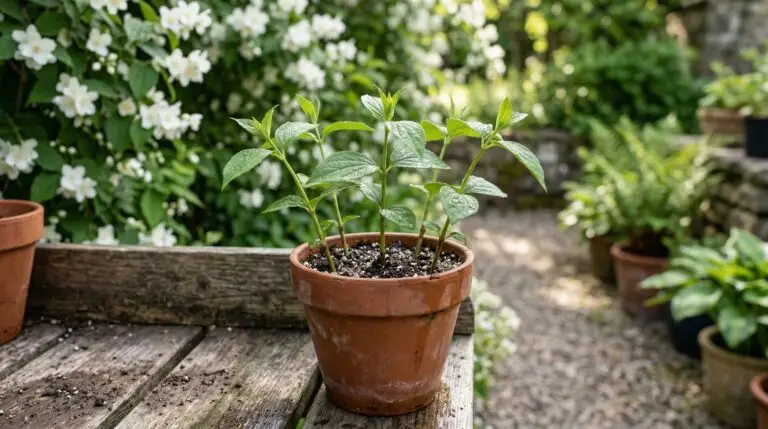
How to propagate mock orange from cuttings for free new shrubs from your favorite plant
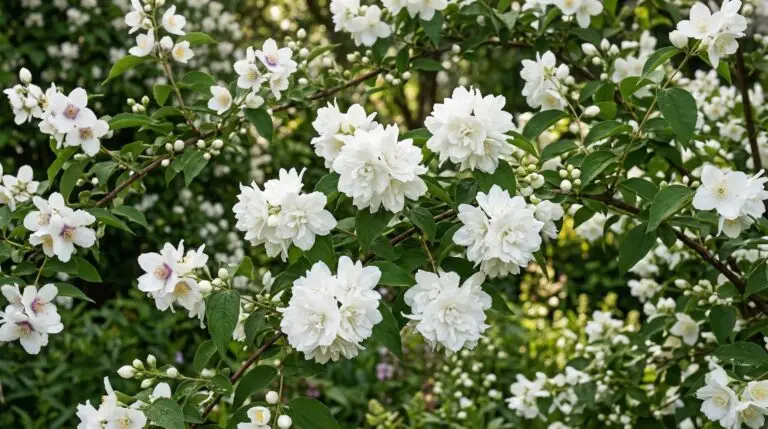
Best mock orange varieties from compact Snowbelle to the intensely fragrant Virginal
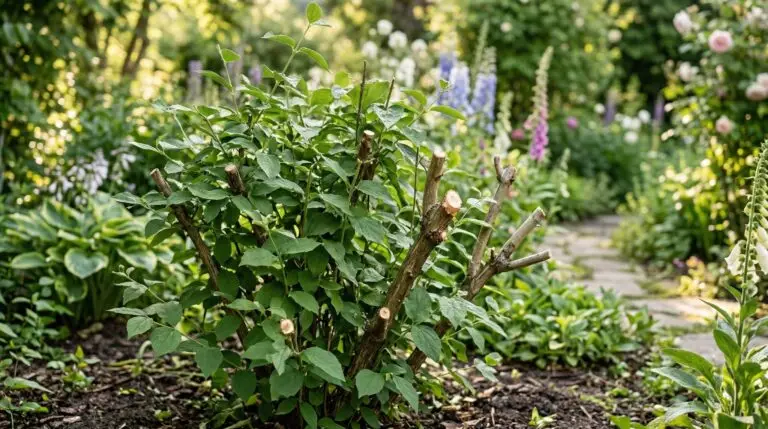
Why mock orange is not flowering and the common reasons this shrub refuses to bloom
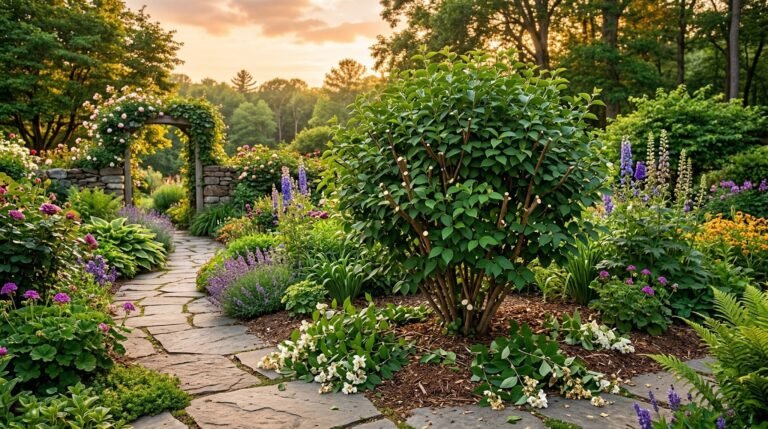
Pruning mock orange right after flowering to keep it shapely and blooming every year
Enjoying our flower guides? Add YourFlowersGuide as a preferred source on Google. It helps more readers find us.
Add to Preferred Sources