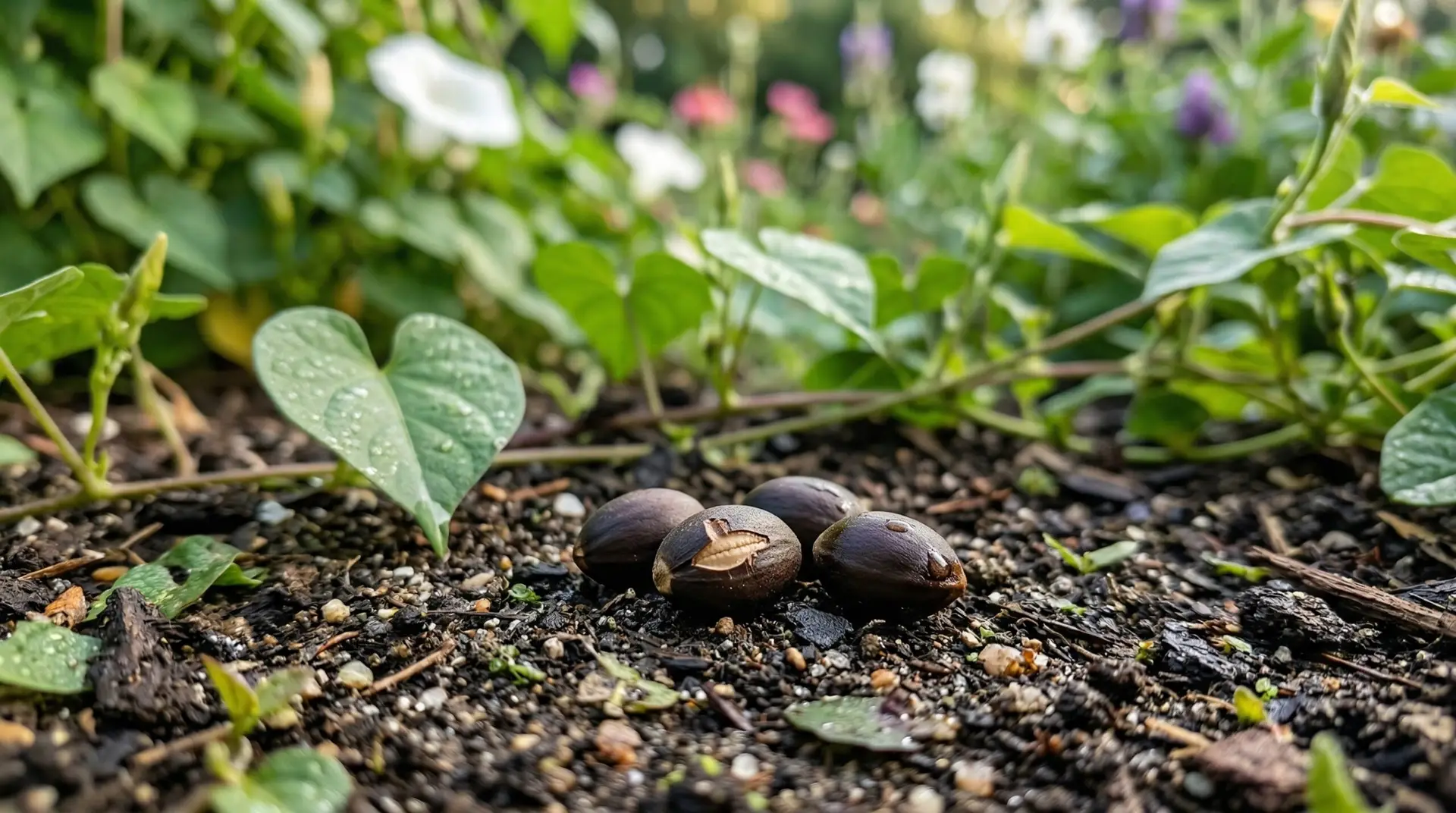
Watch a moonflower closely as the sun dips below the horizon, and you will witness one of the most dramatic mechanical movements in the botanical world. The tightly spiraled buds of Ipomoea alba do not open slowly over several days like a typical garden rose. Instead, a sudden shift in cellular turgor pressure forces the petals to unfurl in a matter of minutes, moving so quickly that the human eye can track the motion in real time. This rapid expansion creates a massive, pristine white disk that can measure up to six inches across, glowing luminous against the dimming light. As a plant scientist, I find this twilight performance endlessly fascinating because it is a highly specialized evolutionary strategy. The plant expends an enormous amount of metabolic energy to inflate these massive blooms just as the rest of the garden is shutting down for the night.
Understanding this nocturnal schedule requires looking at the plant’s family tree and its native habitat in the tropical Americas. Ipomoea alba belongs to the Convolvulaceae family, making it a close genetic relative to the familiar daytime Morning Glories that scramble over suburban fences. While its daytime cousins evolved to attract sun-loving bees and butterflies with blues and pinks, the moonflower took a completely different evolutionary path. It adapted to exploit the night shift, specifically targeting large, night-flying hawk moths of the Sphingidae family. Because color is useless in the dark, the moonflower relies on two specific traits to guide pollinators to its nectar. It produces large white petals that act as natural reflectors for ambient moonlight, and it releases an intensely sweet fragrance that carries far on the cool evening air.
Contents 4 sections
Seed anatomy and the science of scarification
Growing moonflowers successfully begins with understanding the formidable armor that protects their embryos. If you examine a moonflower seed, you will notice it is large, pale, and incredibly hard, resembling a small piece of polished gravel. This thick seed coat is an evolutionary adaptation designed to protect the genetic material inside from rotting in damp tropical soils or being destroyed in the digestive tracts of animals. In a natural environment, the seed coat slowly degrades over months of weathering, bacterial action, and physical abrasion before water can penetrate and trigger germination. Gardeners who simply push these seeds into cold spring soil usually experience complete germination failure because the water cannot breach the seed coat.
To bypass this natural dormancy mechanism, we use a mechanical process called scarification. By taking a metal file or a piece of coarse sandpaper and gently scraping away a small section of the hard outer shell, you create a microscopic channel for moisture. You only need to file until you see the slightly lighter colored tissue beneath the shell, being careful not to damage the actual embryo inside. Once you nick the seeds, soaking them in warm water for twelve to twenty-four hours causes them to swell to twice their original size as water rushes into the internal tissues. This sudden influx of hydration breaks the chemical dormancy and tells the embryo that conditions are right to begin pushing out its first root.
Growth mechanisms of a tropical vine
Once the seed sprouts, Ipomoea alba reveals its true identity as a vigorously aggressive tropical vine driven by heat and sunlight. The plant grows through a biological process called thigmotropism, where the growing tips actually sense physical contact with objects in their environment. When the tender green shoot brushes against a trellis, a fence, or a neighboring plant, the cells on the opposite side of the stem elongate rapidly, forcing the vine to coil tightly around the support. Unlike a Clematis that uses specialized leaf stalks to grab onto structures, the moonflower wraps its entire main stem around the support in a counterclockwise direction. This twining habit allows the plant to climb as high as fifteen feet in a single growing season, racing upward to reach the canopy before flowering begins.
Because this vine originated in regions near the equator, its metabolism is entirely dependent on warm temperatures. Moonflower vine care requires waiting until the soil has thoroughly warmed in late spring, as cold earth will stunt the roots and turn the heart-shaped leaves a sickly pale yellow. The plant demands full, direct sunlight during the day to generate the massive amounts of sugars needed to fuel its rapid vertical growth and subsequent flower production. If you plant Ipomoea alba in partial shade, the vine will produce abundant foliage but lack the stored energy reserves required to form its characteristic giant flower buds. You must give the root system plenty of space and rich, well-draining soil, keeping it consistently moist but never waterlogged to prevent root suffocation.
The chemistry of nocturnal fragrance
The fragrance of the moonflower is an entirely different biological phenomenon that warrants close attention from any gardener. Many plants produce volatile organic compounds, but Ipomoea alba times the release of its scent molecules with absolute precision. The flower produces heavy, sweet-smelling esters and alcohols that are highly volatile, meaning they evaporate easily into the surrounding air. During the heat of the day, a closed moonflower bud produces almost no scent, conserving its chemical resources when its specific pollinators are inactive. As the sun sets and the temperature drops, the opening flower suddenly begins releasing these compounds in massive waves.
This timing is a deliberate adaptation, as the cool, humid air of the evening actually helps hold the fragrance near the ground, creating a scented trail that moths can follow from miles away. The scent is often compared to a Jasmine blossom, but it has a distinctively heavier, almost clove-like undertone that is entirely unique to the Ipomoea genus. Moths use their highly sensitive antennae to detect these specific chemical signatures in the dark, flying upwind until they locate the source. As the night progresses and the flower is successfully pollinated, the production of these scent molecules begins to shut down. By morning, when the sunlight hits the petals and the flower begins to collapse, the fragrance is completely gone, having served its biological purpose.
The ephemeral nature of the bloom
Watching a moonflower complete its life cycle over the course of a single night offers a profound lesson in plant economics. The massive, six-inch white blossom requires a tremendous investment of water, sugars, and cellular material to construct. Yet, by mid-morning of the following day, the crisp white disk wilts, turning translucent and curling inward upon itself like melting wax. The plant discards the flower because maintaining such a large, delicate structure in the hot daytime sun would cause massive water loss through transpiration. Once the hawk moth has delivered pollen to the stigma under the cover of darkness, the petals become a biological liability rather than an asset.
After the flower collapses, the real work begins hidden within the swollen green base of the flower, known as the ovary. If pollination was successful, the plant redirects all the energy that went into the petals straight into developing the next generation of those hard, armor-plated seeds. The wilted flower drops away, and a teardrop-shaped seed pod begins to swell on the vine, eventually turning brown and papery by late autumn. Realizing that the moonflower builds its spectacular, fragrant bloom for a single night of glory changes exactly how you view the evening garden. You are looking at a highly engineered, temporary structure designed to execute a precise biological mission in the dark.
More About Moonflower
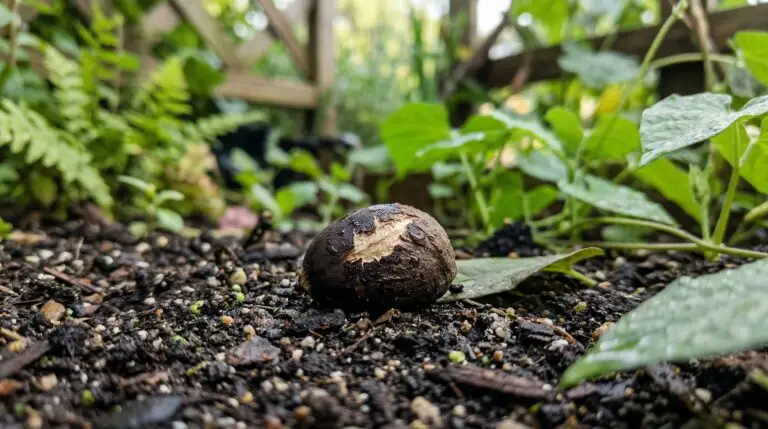
Growing moonflowers from seed and the nick-and-soak method for stubborn hard seeds

Creating a moonlight garden with moonflowers and other white flowers that glow after dark
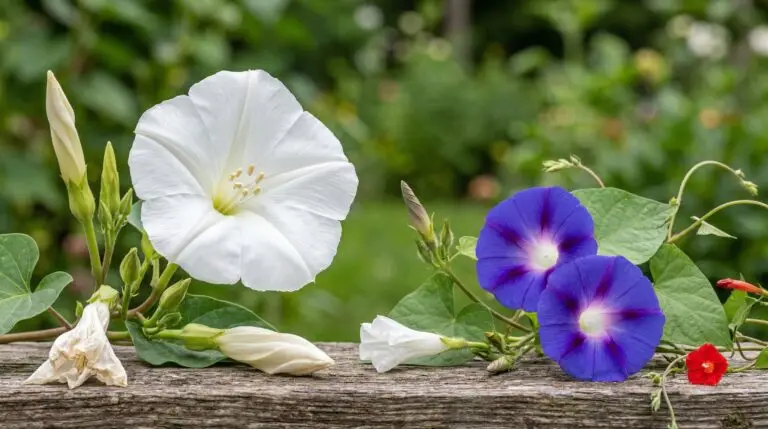
Moonflowers versus morning glories and growing both for day and night garden beauty
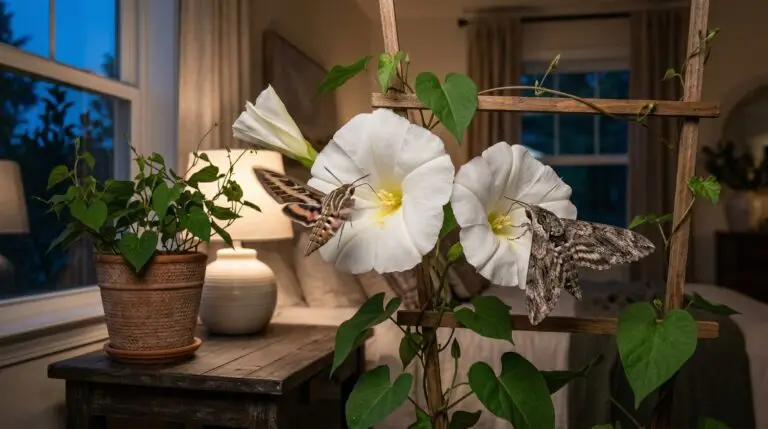
Moonflower pollinators and the fascinating world of hawk moths and night-flying creatures
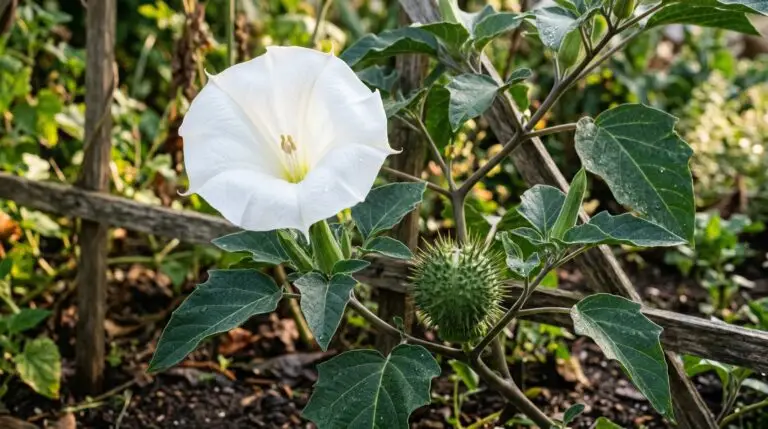
Why moonflowers are toxic and the important safety warnings for gardens with children and pets
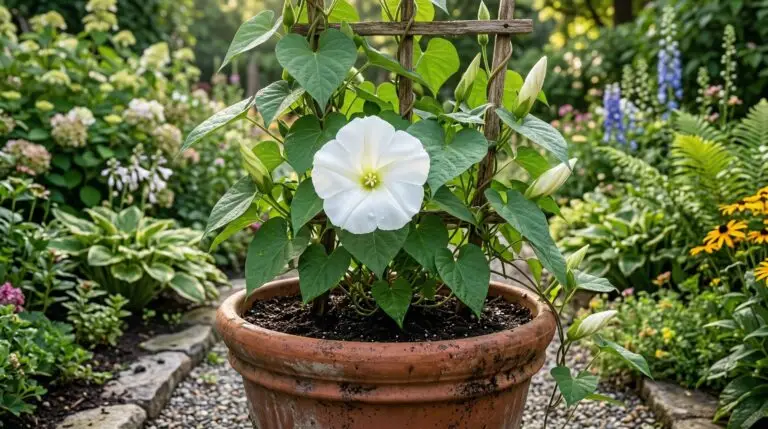
Moonflowers in containers for apartment balconies and small space evening gardens

Training moonflower vines on arbors and trellises for a dramatic nighttime garden feature
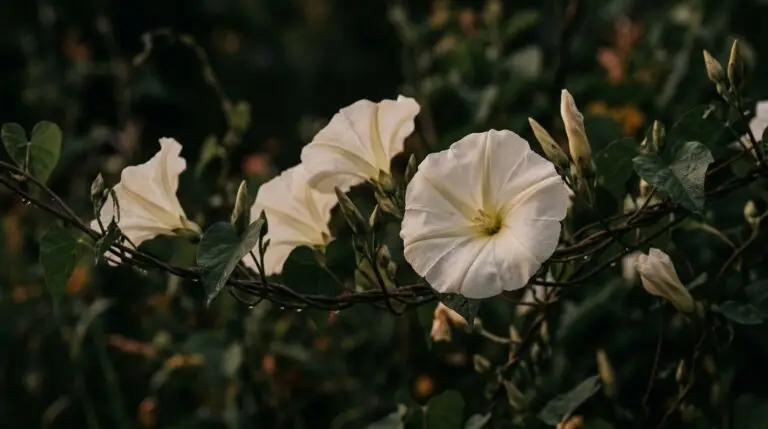
Moonflower flower meaning and the romance of night-blooming flowers in garden lore
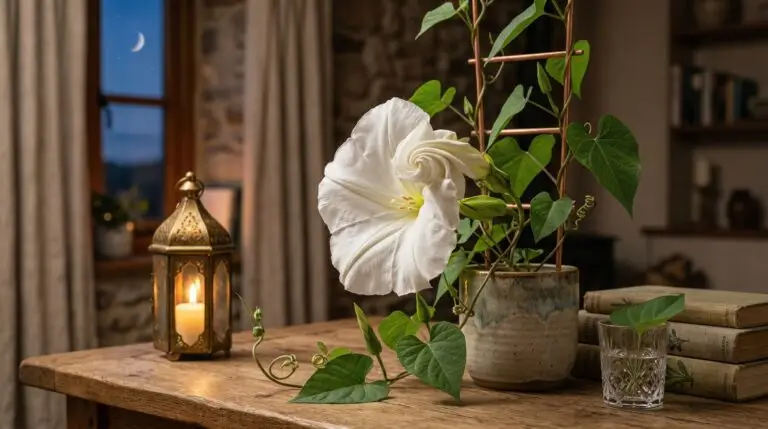
Watching moonflowers open at sunset and the garden ritual of evening flower watching
Enjoying our flower guides? Add YourFlowersGuide as a preferred source on Google. It helps more readers find us.
Add to Preferred Sources