The pairing · pick a flower
 Morning glory+
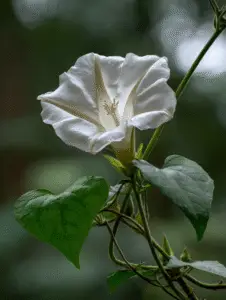 MoonflowerProven
Same genus, same twining habit, same full sun and drainage, and its white trumpets open at dusk right as morning glory closes, so the same trellis reads as flowering around the clock.
Morning glory+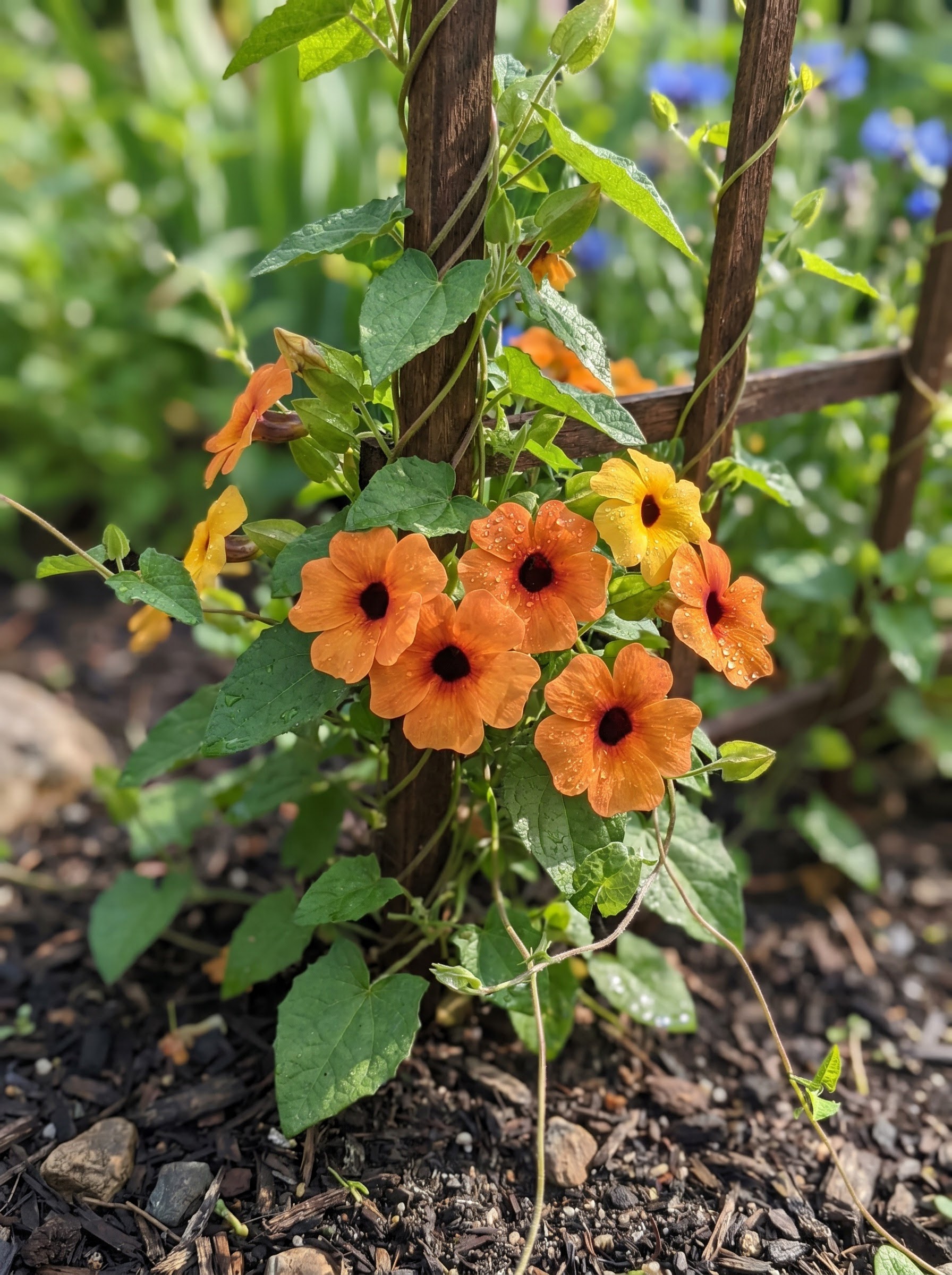 Black-eyed SusanProven
University of Wisconsin Extension names this exact pairing outright, grouping black-eyed Susan vine with morning glory as fellow aggressive twiners that share a trellis well and hold their own against it.
Morning glory+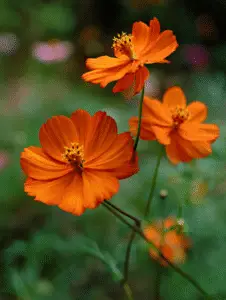 CosmosPartial
Confirmed full-sun, poor-soil, drought-tolerant conditions match morning glory's almost exactly, and its ferny foliage is the clearest textural foil for the vine's coarse heart-shaped leaves.
Morning glory+ ClematisPartial
Star or bell-shaped blooms break up morning glory's repeating trumpets on the same wire, and the permanent woody vine gives the bed a frame once the annual is cleared, though clematis wants its roots shaded and cool while morning glory prefers lean, sun-baked soil.
Morning glory+ SunflowerPartial
A sturdy stalk gives morning glory a natural climbing structure with no wire or netting, but the vine must be started later or the stalk given a head start, since a vine that outpaces its host can pull down a young stem or shade its leaves before it's strong enough to bear the weight.
Morning glory+ Climbing roseFolklore
Sown at the base of a climbing rose that flowers once, morning glory fills the same canes with color through the rest of summer after the rose's early flush ends, though roses generally want richer, moister soil than this lean-soil vine prefers.
Morning glory+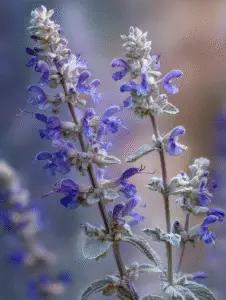 Russian sagePartial
Full sun and lean, well-drained soil match morning glory's own preferences closely, and the airy silver-gray spikes cool down the vine's hot magenta and purple blooms as a front-of-bed foil rather than a climbing companion.
Morning glory+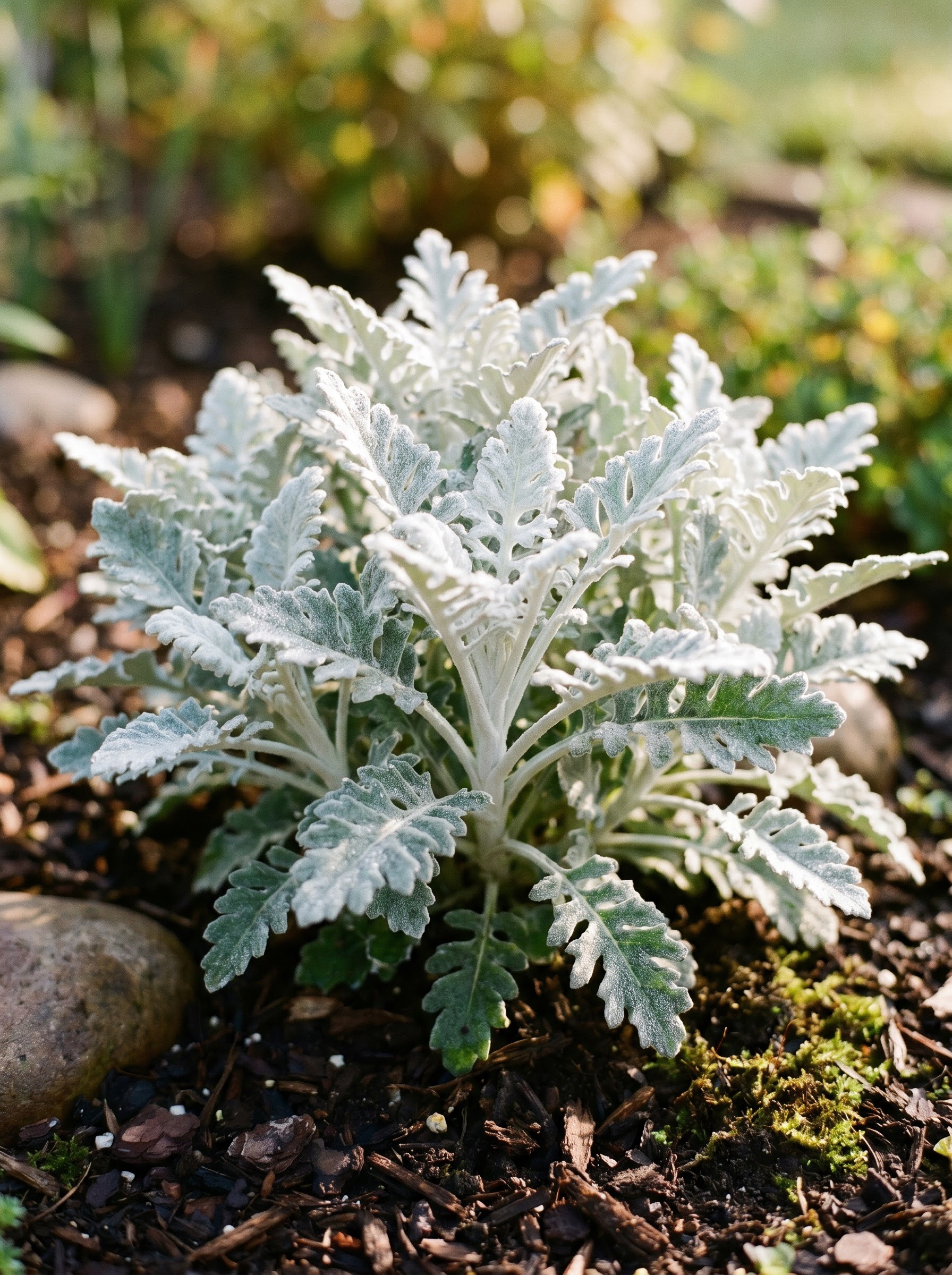 Dusty millerPartial
Drought-tolerant and happiest in poor, well-drained soil in full sun, its felted silver leaves make a calm, low foreground against the vine's dense green backdrop and hot bloom color.
All Morning glory companions
8 flower companions, best match first
What not to plant near Morning glory
Most bad neighbours are not evil, they just want the opposite light, water or root run. Here is what to keep away, and what to do instead.
Slow, short or delicate plants directly in its path (small shrubs, grape vines, young perennials)
Morning glory twines over and through anything slower or shorter than itself, wrapping neighboring stems and branches and cutting off their light; this is the one avoid mechanism that runs from morning glory to its neighbor, not the usual other way around.
Full-shade or part-shade perennials nearby
Morning glory itself performs poorly in shade, becoming weak and thin with a patchy cover, so pairing it with shade-loving perennials means neither plant gets the light it actually needs.
A too-young or too-slender living support (a freshly sown sunflower or corn stalk)
If morning glory is sown at the same time as its intended host, the vine's faster growth can pull down the young stalk or shade out its own leaves before the host is sturdy enough to bear the weight, and the combined dense canopy can trap humidity and invite mildew.
Slow-to-establish perennials planted in the same square footage of bed
A perennial that takes two or three years to fill in spends those years competing with a vigorous annual vine for root space, and then inherits volunteer morning glory seedlings from the vine's own self-sowing for years after.
Field bindweed (Convolvulus arvensis), mistaken for morning glory and left in a bed
Bindweed shares the trumpet flower and twining habit but is a perennial noxious weed that spreads by underground roots up to several feet deep, so it is not a companion at all, and leaving it in place because it 'looks like' morning glory lets a much harder weed establish.
The best companions for morning glory, explained
Morning glory is one of the least demanding flowers you can put in the ground, which is exactly why its companion question looks different from almost every other flower on this site. Most companion advice is about matching conditions: finding a plant that wants the same light, the same moisture, the same soil. Morning glory tolerates nearly any soil pH, shrugs off a dry week once it’s rooted, and asks for only one thing without compromise, six or more hours of direct sun. The real design decision is what to give it to climb and how much room to leave around it, because this is a fast, vigorous twining vine that will happily scramble over anything slower or shorter nearby. The strongest pairing on record is its own relative, moonflower, whose white trumpets open at dusk in the exact window morning glory’s own blooms are closing for the day, so the same length of fence reads as flowering morning to midnight. Black-eyed Susan vine earns a similarly solid rating for a rarer reason: a university extension source names this exact pairing outright, grouping the two as fellow aggressive twiners that hold their own on a shared trellis rather than one crowding out the other.
Below that top tier sit the pairings that work well but carry an honest caveat rather than a clean match. Cosmos, with its ferny, fine-cut foliage, is the standard fix for the bare lower stems morning glory leaves behind as it climbs, since the vine drops its lowest leaves the way most twining climbers do. Clematis on the same support breaks up the visual repetition of trumpet after trumpet with a completely different bloom shape, and its woody perennial structure gives the trellis a shape to hold once the annual vine is cleared out for winter, though clematis prefers its roots shaded and cool while morning glory is happiest in lean, sun-baked soil, a real if minor tension worth knowing about rather than ignoring. Silver-foliage front-border plants, Russian sage and dusty miller among them, share the vine’s taste for lean, well-drained soil and do genuine color-theory work, cooling down morning glory’s often hot magenta or purple blooms rather than competing with them for the vertical space. None of this changes the plant’s most distinctive companion behavior, which is less about what it likes and more about what it will do to a weaker neighbor if given the chance, covered honestly in the next section.
What not to plant near morning glory
The danger with morning glory runs in the opposite direction from most flowers on this site. Where a typical avoid list is about a companion’s conditions clashing with the host’s, here the risk is that morning glory itself overwhelms whatever grows near it. This is a genuinely vigorous twining vine, six to ten feet of growth in a single season is normal, and it climbs by wrapping its entire stem around anything thin enough to grip, wire, string, netting, or another plant’s own stems. Planted next to a slow-growing shrub, a young perennial, or a delicate vine, it will scramble through the neighboring branches and cut off their light before the gardener notices what’s happening, which is exactly why this site has a separate guide on training morning glories on fences, mailboxes, and trellises rather than treating the plant as a passive bed-mate. University of Missouri Extension is blunt about the plant’s other failure mode too: in shade it goes weak, grows slowly, and never provides a full, attractive cover, so a shady spot punishes both morning glory and any shade-loving perennial planted beside it, since neither one is getting what it actually needs there.
The living-trellis idea, letting morning glory climb a sunflower stalk instead of built hardware, is genuinely popular and genuinely workable, but it has a documented failure mode the casual version of this advice tends to skip. If the vine is sown at the same time as its intended host, its faster growth can pull down a young stalk or shade out the host’s own leaves before that stalk is structurally ready to bear the weight, and the combined dense foliage of both plants can trap humidity between them and invite powdery mildew. The fix is timing, not avoidance: start the sunflower two to three weeks ahead so it already has real height and a hardened stem before the vine begins its rapid climb. A second, quieter risk shows up over years rather than weeks. Morning glory self-sows readily, NC State Extension tags it both weedy and self-seeding, and in some states it is formally listed as a noxious weed, so a delicate perennial planted in the same patch of soil doesn’t just compete with this year’s vine, it inherits volunteer seedlings the following spring and the spring after that unless the spent seed pods are pulled before they crack open. Worth stating plainly since it’s easy to miss: none of this is chemical. Morning glory carries no meaningful allelopathy claim against its neighbors the way black walnut does; the entire risk is physical, light and space, which keeps this avoid list about spacing and timing rather than toxicity.
There’s one more honest complication specific to this flower, and it’s an identification problem rather than a companion one. Field bindweed, Convolvulus arvensis, gets called morning glory constantly because it shares the trumpet-shaped bloom and the twining habit, but it is a genuinely different plant, a perennial noxious weed that spreads through underground roots reaching several feet deep, and it is not something you plant on purpose or tolerate as a bed volunteer. Washington State University’s extension service draws the line clearly: annual morning glory has broader, heart-shaped leaves over two inches wide, while bindweed’s leaves are narrower and arrowhead-shaped, and morning glory dies back with the vine’s own annual cycle where bindweed simply keeps coming back from the root. If a gardener isn’t certain which one has shown up in a bed, that’s worth settling before deciding whether to keep it or pull it.
Do they like the same conditions?
State the ruler plainly, because it’s shorter and more forgiving than almost any other flower’s on this site. Morning glory wants full sun, six or more hours of direct light daily, and performs poorly without it. Water is genuinely flexible: moist soil helps it establish from seed, but once rooted it tolerates real dry spells and occasional wet stretches equally well, a wider band than most companion-brief flowers get. Soil pH is close to a non-issue, acid to alkaline, which means almost no companion on this list gets excluded on pH grounds the way they would for a fussier flower like hydrangea. The one place morning glory actually inverts the usual advice is soil richness: where most flowers reward a gardener for amending with compost, morning glory in rich soil tends to produce lush green growth and comparatively few blooms, so lean, sandy, well-drained ground is the better choice, not the compromise. USDA hardiness sits between zones 2a and 11b as an annual almost everywhere it’s grown from seed, so a companion’s own perennial hardiness rarely matters here the way it would with a true perennial host; this is functionally a same-season pairing question in the vast majority of American gardens.
That short, permissive ruler is what makes the honest tiering on this page possible. A plant like cosmos or dusty miller passes the ruler cleanly on every axis, sun, drainage, and lean soil, which is why they rate as strong matches even without a dedicated study naming the specific pairing. Clematis is the one true edge case among the top companions: it clears the sun requirement but wants cooler, shaded roots and slightly richer moisture retention than morning glory’s own lean preference, a real, minor gap rather than a disqualifying one, and it’s worth planting a low groundcover or a flat stone at the clematis crown to bridge that difference rather than pretending it doesn’t exist.
How to plant them together
Sequence matters more than spacing for this flower, because the biggest practical risk is timing, not proximity. If morning glory is climbing a fence, trellis, or arbor, sow it directly where it will grow, since it resents transplanting, and give any co-planted vine, moonflower or black-eyed Susan vine, its own section of wire or netting twelve to eighteen inches away so both twiners have something to grip without tangling into a single knot too early in the season. If the plan is a living support instead, a sunflower stalk, start it two to three weeks before sowing the morning glory seed at its base, so the stalk already has genuine height and a hardened stem before the vine’s rapid climb begins; this single timing adjustment resolves most of the stalk-snap and shading risk documented for this pairing. Base plantings like cosmos, Russian sage, or dusty miller go in as a low skirt roughly ten to eighteen inches from the support itself, close enough to visually anchor the vine’s bare climbing legs but clear of its actual twining reach, since none of these plants can out-structure a vine that’s determined to wrap around something.
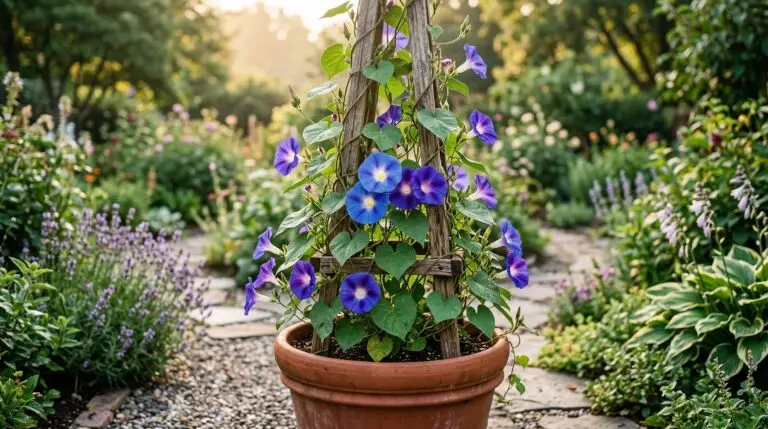
In containers, morning glory does well in a large pot with its own trellis insert, twelve inches or more across so the root system has room, and a trailing or mounding companion like dusty miller can share the same container as a front-of-pot skirt without competing for the vertical space at all. Whatever the setting, the single maintenance habit that prevents most companion problems down the line is deadheading or removing spent seed pods before they dry and split open, since that’s the step that keeps a self-seeding vine from turning a neighbor’s bed into next year’s weeding project.
Does companion planting actually work for morning glory?
Some of what’s claimed for this flower holds up and some of it doesn’t, and it’s worth being specific about which is which rather than treating every pairing as equally proven. The moonflower pairing is as close to settled as this kind of advice gets: it’s the same genus, it shares morning glory’s exact growing requirements, and the bloom-timing relationship, night flowers opening as day flowers close, is directly observable rather than a marketing claim. The black-eyed Susan vine pairing clears a genuinely higher bar than most companion advice on this site, since a university extension source names the combination specifically rather than the two plants merely happening to share a growing zone. The living-trellis technique with sunflower is real and widely used, but the version usually sold to gardeners omits the timing caveat that makes it work reliably, so calling it proven without that caveat would be dishonest; calling it a good technique with a documented failure mode to manage is the accurate version. The climbing-rose succession idea, letting morning glory take over a once-blooming rose’s canes after the rose’s early flush ends, is a charming and plausible technique repeated across gardening sources, but it hasn’t been tested or documented the way the moonflower and Thunbergia pairings have, so it stays labeled as an unproven, reasonable idea rather than an established fact. What’s genuinely settled, and arguably more useful than any single pairing, is the avoid logic: this vine’s danger to its neighbors is documented, mechanical, and university-sourced, not folklore, which is the opposite of how most companion-planting claims for other flowers hold up under scrutiny.
FAQ
What can I plant with morning glory on the same trellis?
Moonflower and black-eyed Susan vine both work well as fellow twiners on the same support, since all three grip wire or netting the same way and share morning glory’s full-sun, well-drained preference. Give each vine its own section of the structure rather than letting all three start in the exact same spot, so they don’t tangle into one dense mass before establishing.
What should you not plant near morning glory?
Avoid slow-growing shrubs, young perennials, or delicate vines planted directly in its path, since morning glory’s twining stems will climb through and shade them out before most gardeners notice. Shade-loving perennials are a mismatch too, since morning glory needs full sun and performs poorly without it.
Can morning glory climb a sunflower safely?
Yes, but only if the sunflower is started two to three weeks before the morning glory seed goes in at its base. Sown at the same time, the vine’s faster growth can pull down the young stalk or shade its leaves before the sunflower is sturdy enough to bear the added weight.
Is morning glory the same plant as bindweed?
No. They’re often confused because both have trumpet-shaped flowers and a twining habit, but morning glory is an annual with broad, heart-shaped leaves that dies back each year, while field bindweed is a perennial weed with narrower, arrowhead-shaped leaves and deep, persistent roots. Only one belongs in a flower bed on purpose.
Will morning glory come back and spread into my other flower beds?
It self-sows readily, and NC State Extension tags it as both weedy and self-seeding, so volunteer seedlings can turn up in nearby beds the following spring if seed pods are left to dry and crack open. Removing spent pods before that happens is the simplest way to keep it contained to where it was planted.
Sources
- Ipomoea purpurea (Common Morning Glory) – NC State Extension Gardener Plant Toolbox
- Ipomoea alba (Moonflower) – NC State Extension Gardener Plant Toolbox
- Cosmos bipinnatus – NC State Extension Gardener Plant Toolbox
- Morning Glory: Misunderstood and Under Appreciated – University of Missouri IPM
- Black-eyed Susan Vine, Thunbergia alata – Wisconsin Horticulture Extension
- Russian Sage, Perovskia atriplicifolia – Wisconsin Horticulture Extension
- Dusty Miller, Senecio cineraria – Wisconsin Horticulture Extension
- Clematis – Clemson HGIC
- Weeds: Field Bindweed (Wild Morningglory) – Washington State University Hortsense
- Growing annual morning glory – Oregon State University Extension
More About Morning Glories
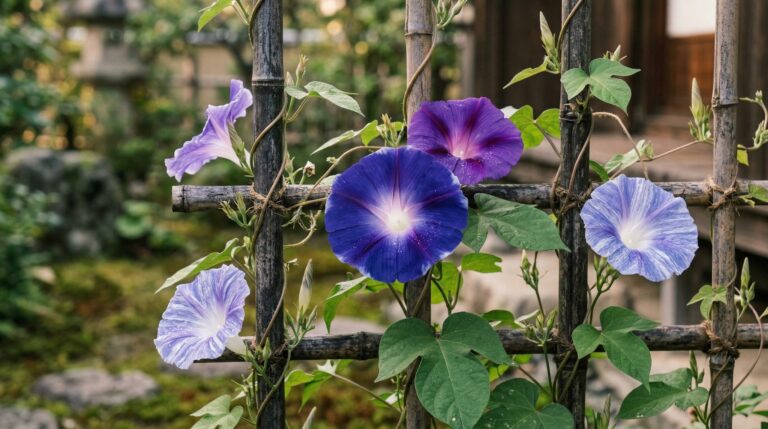
Morning glory flower meaning and the Japanese art of training these blooms to perfection
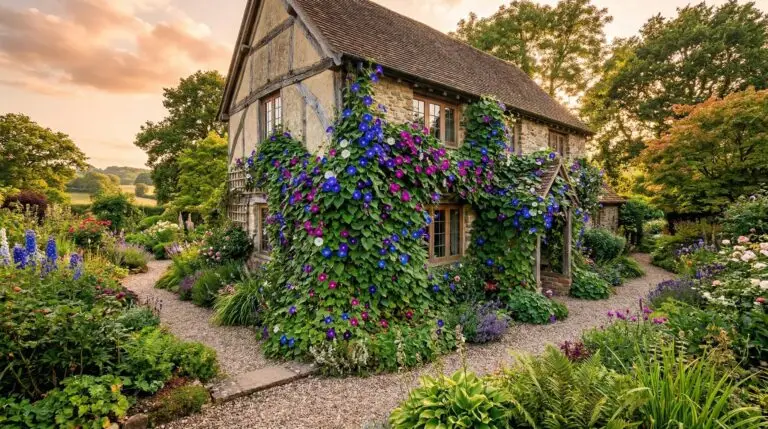
Morning glories as living sunshade screens for windows and south-facing walls
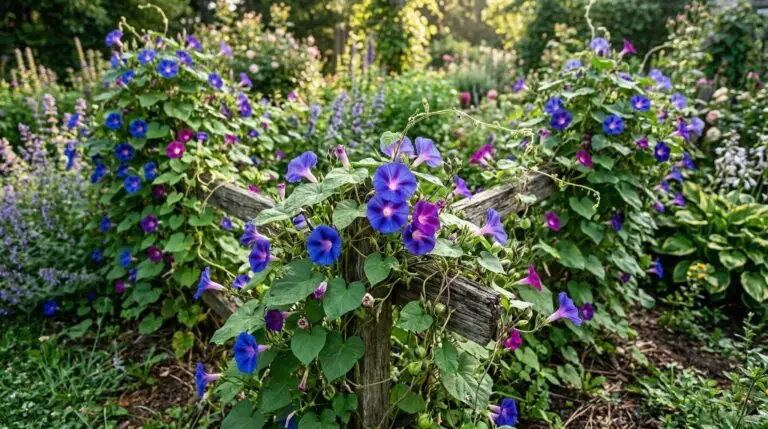
How to control invasive morning glory and stop it from taking over your garden
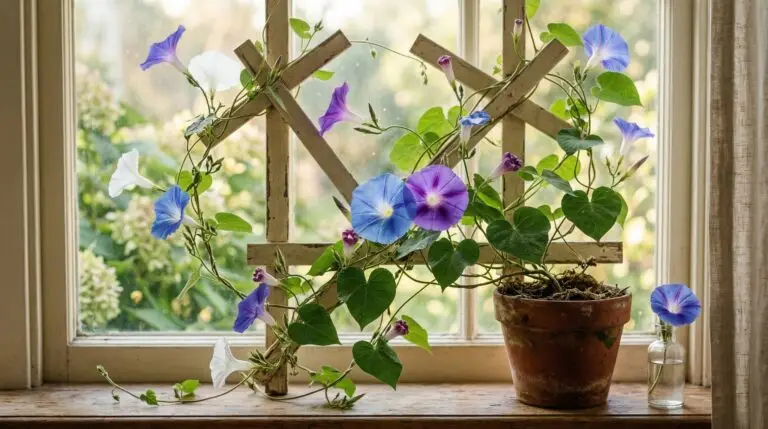
Why morning glory flowers only last one day and the daily renewal that makes them special
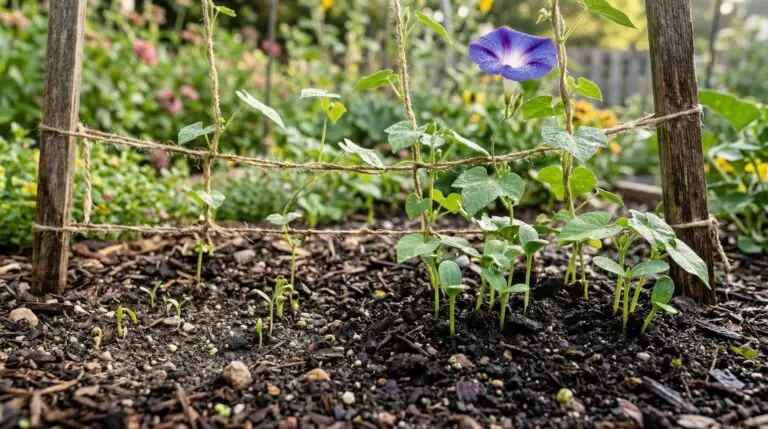
Growing morning glories from seed with the easy soak-and-plant method
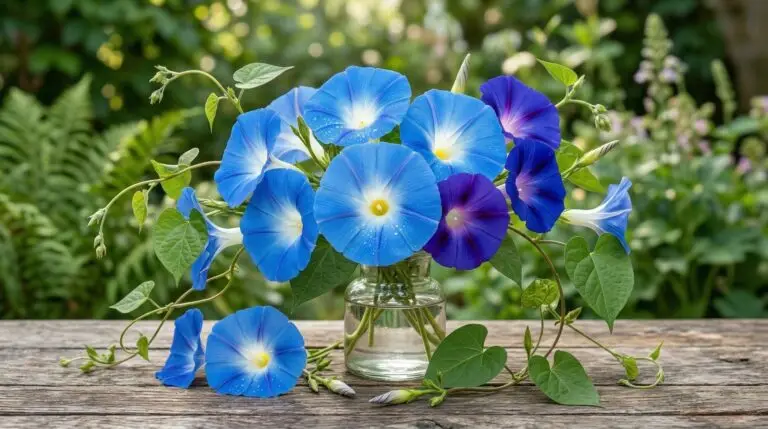
Best morning glory varieties from classic Heavenly Blue to rare chocolate Knowlian’s Black
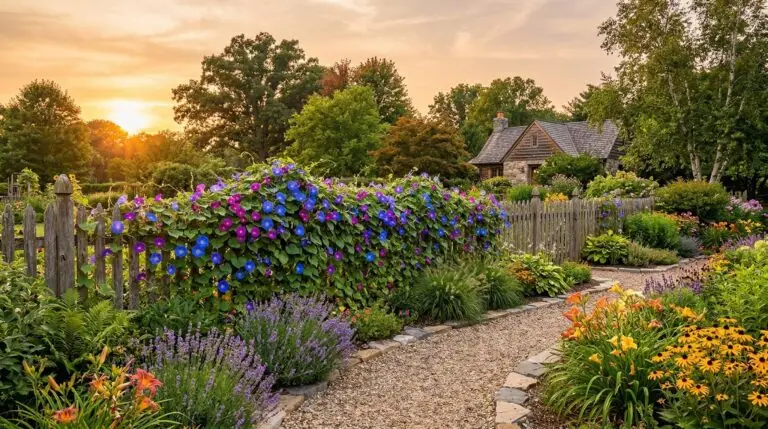
Training morning glories on fences mailboxes and trellises for vertical garden magic
Growing morning glories in containers for balcony vines that bloom all summer
How to grow morning glories for a cascade of trumpet flowers that greet the sunrise