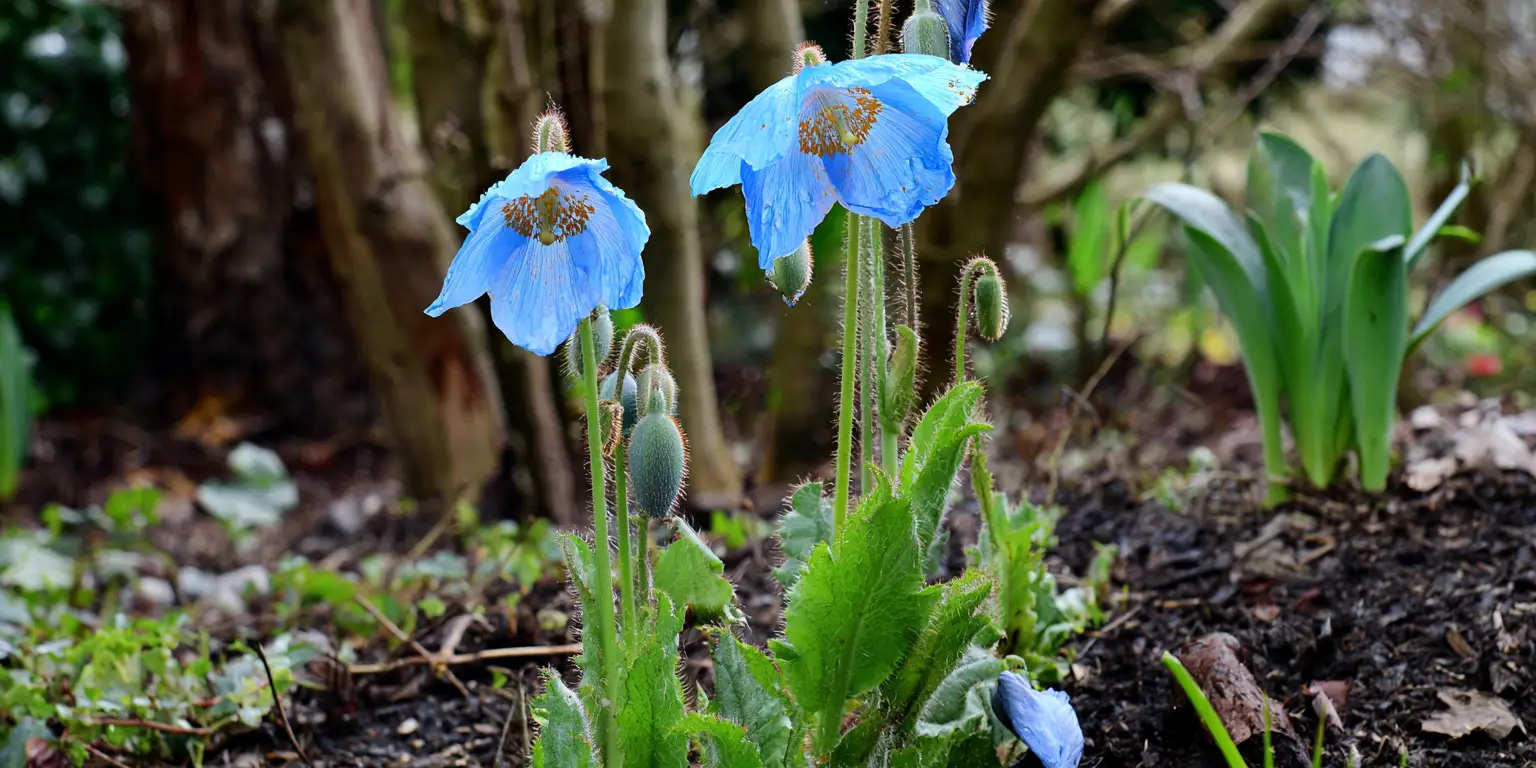
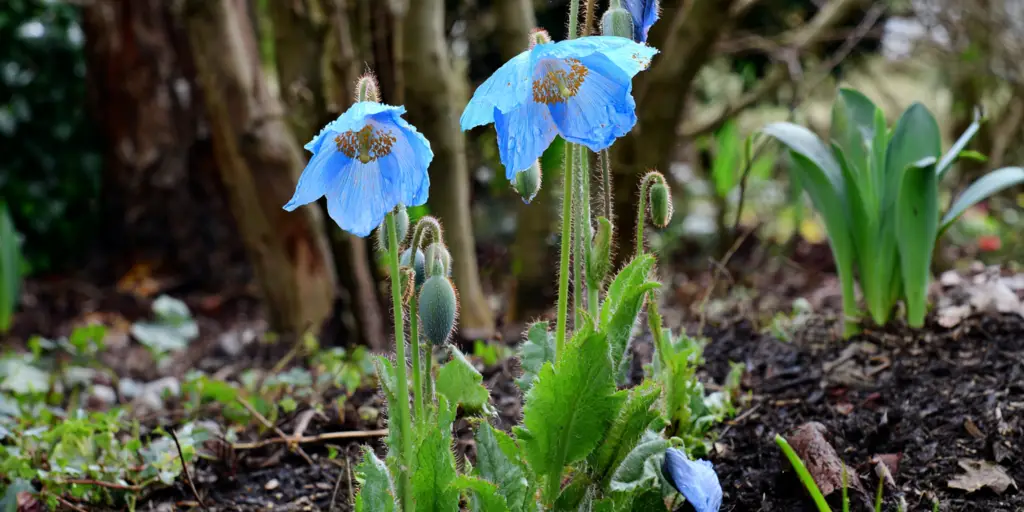
Himalayan blue poppy is a cool‑summer perennial prized for clear blue flowers. It needs part shade, evenly moist but sharply drained, humus‑rich soil, and an acidic reaction. Plants are challenging where summers are hot or dry. Best performance in the Pacific Northwest, coastal Alaska, and other cool, moist summer climates. In less suitable areas it is often short‑lived. Plant among ferns and woodland perennials that like similar conditions.
At‑a‑glance
Group/Class: Perennial (often short‑lived)
Height × spread: 36-48 in × 12-24 in (0.9-1.2 m × 30-60 cm)
Bloom window: Late spring to early summer
Color & flower form: Large, bowl‑shaped single flowers in clear blue with golden stamens
Fragrance: unknown
USDA hardiness: zones 5 to 7; best in cool‑summer climates
Breeder / Year / Origin: unknown; native to northwestern Yunnan, China
Pet safety: unknown
How it differs
Requires cool, moist summers unlike most garden poppies
Prefers acidic, humus‑rich woodland soils
Taller, with larger leaves and bold rosettes
Not a true Papaver but a related genus
Strengths
Unmatched blue flower color
Thrives in shaded, cool gardens
Combines well with ferns and primulas
Care in one minute
Site: part shade with shelter from afternoon sun and wind
Written by: Your Flowers Guide editorial team We are a small independent group of flower lovers who research and review each guide using trusted horticultural and educational sources. Learn more about us