returns in
273
days
Bloom calendar
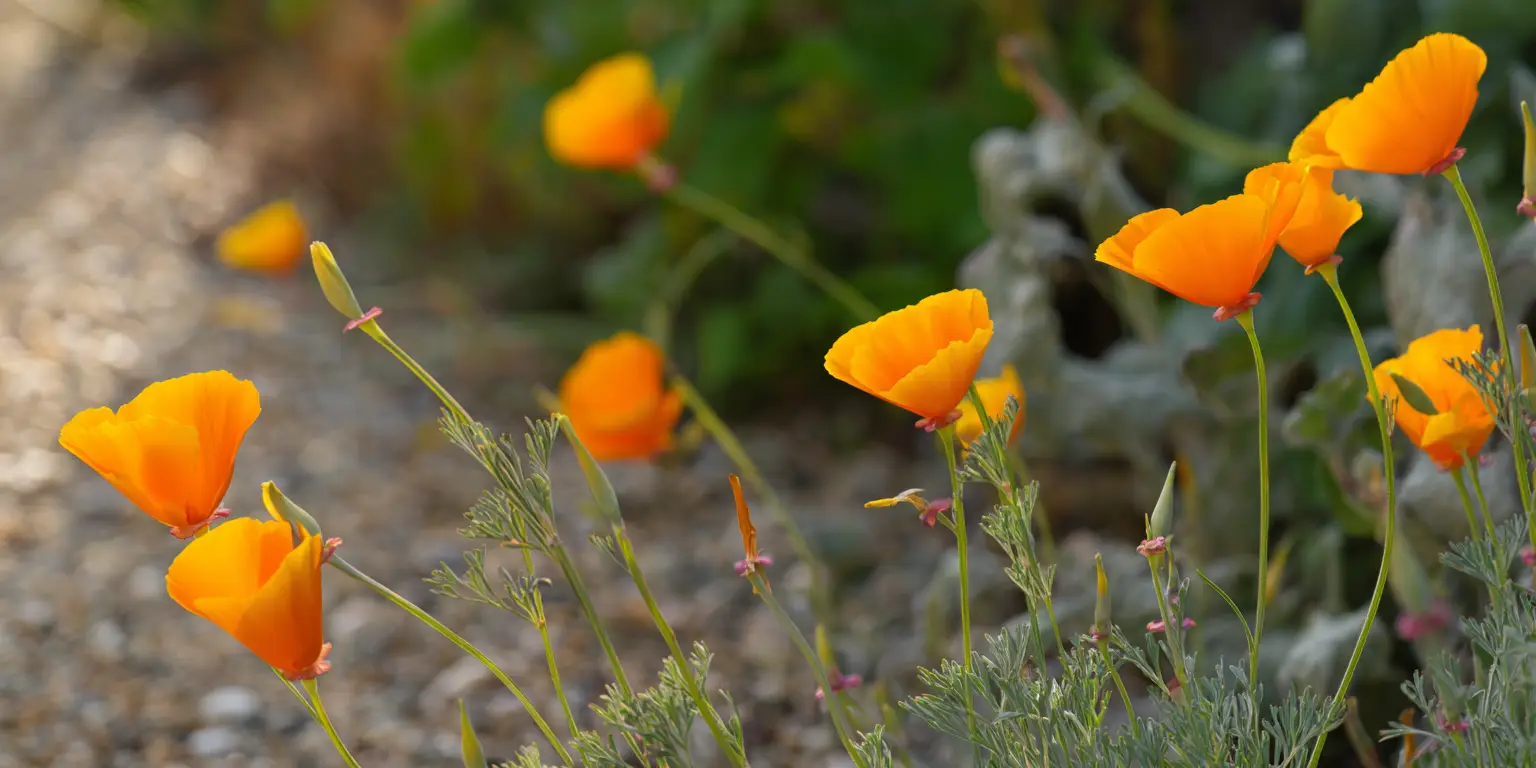
Eschscholzia californica
Annual or short‑lived perennial
At‑a‑glance
- Group/Class: Annual or short‑lived perennial
- Height × spread: 12-18 in × 12-18 in (30-45 cm × 30-45 cm)
- Bloom window: Spring to fall in mild climates; spring to summer elsewhere
- Color & flower form: Single, silky cup‑shaped blooms; typically orange but also yellow, white, and pink
- Fragrance: 1 trace
- USDA hardiness: zones 6 to 10; grown as annual in colder zones
- Breeder / Year / Origin: unknown; native to the western United States and northern Mexico
- Cut‑flower notes: Not ideal; flowers close without bright light and petals shatter quickly
- Pet safety: avoid
How it differs
- Most drought‑tolerant poppy for poor, sandy soils
- Longest bloom season in mild climates
- Flowers close at night which reduces use as a cut flower
- Readily self‑seeds in open ground
Strengths
- Low water needs once established
- Thrives in lean soil and full sun
- Supports pollinators in its native range
- Excellent for wildflower meadows and slopes
Care in one minute
Site: full sun and heat
Soil: lean to average, fast‑draining; avoid heavy clay unless amended
Water: minimal once established; water sparingly in summer
Feeding: not required; excess fertilizer reduces bloom
Deadhead: shear lightly to refresh bloom; allow some pods to ripen for reseeding
Watch‑outs
- Can self‑sow beyond intended area
- Plants may decline in rich or wet soils
- Closing blooms limit use in arrangements
Best uses (tags)
Provenance note
State flower of California; widespread in the West from Washington to New Mexico and into northern Mexico.
References
- Lady Bird Johnson Wildflower Center – Eschscholzia californica (notes on closure, caution)
- UC Berkeley Jepson eFlora – Eschscholzia californica (habit, range)
- Missouri Botanical Garden – Plant Finder: Eschscholzia californica (size, hardiness)
- Oregon State University Extension – California poppy and pollinators
Similar Flowers
Enjoying our flower guides? Add YourFlowersGuide as a preferred source on Google. It helps more readers find us.
Add to Preferred Sources