returns in
273
days
Bloom calendar
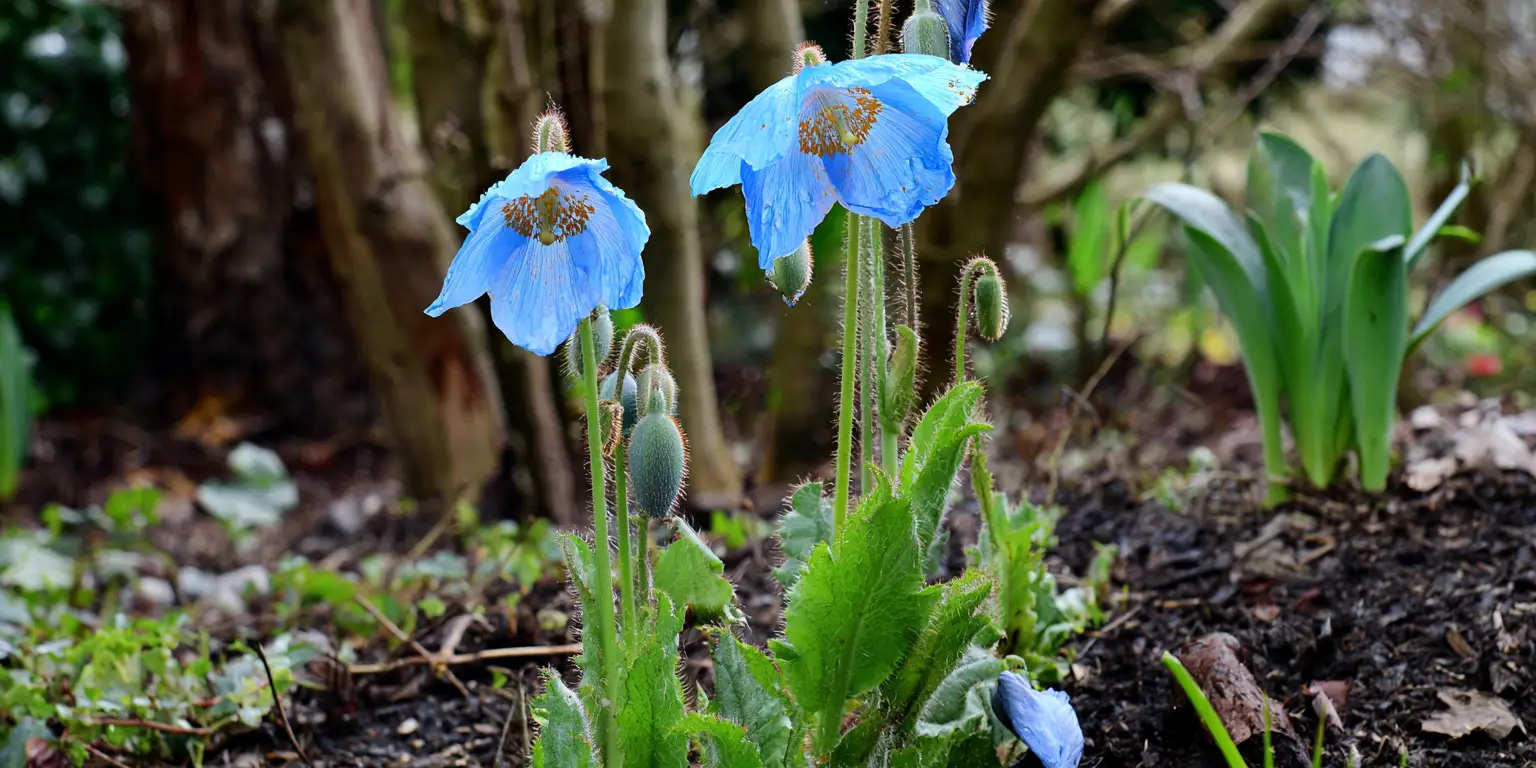
Meconopsis betonicifolia
Perennial (often short‑lived)
At‑a‑glance
- Group/Class: Perennial (often short‑lived)
- Height × spread: 36-48 in × 12-24 in (0.9-1.2 m × 30-60 cm)
- Bloom window: Late spring to early summer
- Color & flower form: Large, bowl‑shaped single flowers in clear blue with golden stamens
- Fragrance: unknown
- USDA hardiness: zones 5 to 7; best in cool‑summer climates
- Breeder / Year / Origin: unknown; native to northwestern Yunnan, China
- Pet safety: unknown
How it differs
- Requires cool, moist summers unlike most garden poppies
- Prefers acidic, humus‑rich woodland soils
- Taller, with larger leaves and bold rosettes
- Not a true Papaver but a related genus
Strengths
- Unmatched blue flower color
- Thrives in shaded, cool gardens
- Combines well with ferns and primulas
Care in one minute
Site: part shade with shelter from afternoon sun and wind
Soil: humus‑rich, evenly moist yet sharply drained; acidic to neutral pH
Water: never allow to dry in active growth; avoid winter waterlogging
Feeding: spring compost; light, balanced feed in cool climates
Mulch: organic mulch to keep roots cool; do not bury crowns
Watch‑outs
- Heat and drought sensitive
- Short‑lived outside ideal climates
- Needs consistent moisture with sharp drainage to avoid rot
Best uses (tags)
Provenance note
Often listed under the accepted name Meconopsis baileyi. Wild populations occur in northwestern Yunnan, China.
References
- Royal Horticultural Society – Meconopsis betonicifolia (description)
- Royal Botanic Garden Edinburgh – Practical guide to growing Meconopsis (climate needs)
- Missouri Botanical Garden – Plant Finder: Meconopsis ‘Lingholm’ (zones and culture guidance)
- Royal Botanic Gardens, Kew – POWO: Meconopsis betonicifolia (native range)
Similar Flowers
Enjoying our flower guides? Add YourFlowersGuide as a preferred source on Google. It helps more readers find us.
Add to Preferred Sources