
returns in
273
days
Bloom calendar
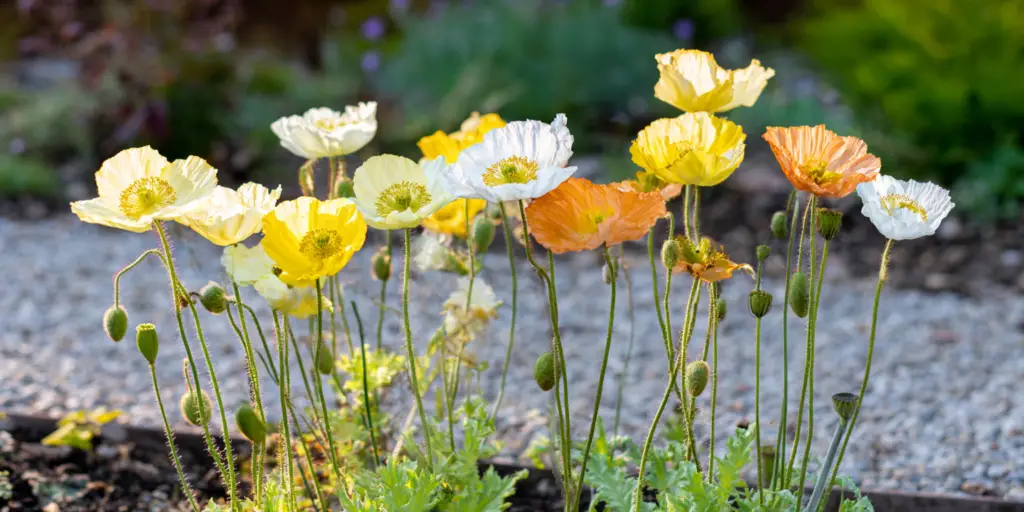
Papaver nudicaule
Short‑lived perennial, often grown as annual or biennial
At‑a‑glance
- Group/Class: Short‑lived perennial, often grown as annual or biennial
- Height × spread: 12-24 in × 9-12 in (30-60 cm × 23-30 cm)
- Bloom window: Spring to early summer
- Color & flower form: Large crinkled single blooms in white, yellow, orange, salmon, and pink
- Fragrance: 1 trace
- USDA hardiness: zones 2 to 7
- Breeder / Year / Origin: unknown; native to sub‑Arctic and mountainous regions of Eurasia
- Cut‑flower notes: Harvest at cracking bud; sear stems; typical vase life 5 to 7 days
- Pet safety: avoid
How it differs
- Best cut‑flower performance among poppies when harvested in bud
- Prefers cool summers more than many garden poppies
- Compact habit fits front of border and containers
- Fragrant blooms in some strains
Strengths
- Longer vase life than most poppies when handled properly
- Cold‑tolerant; suitable for fall or very early spring sowing
- Bright color range from seed
- Deer tolerant reports are common
Care in one minute
Site: full sun in cool climates; light afternoon shade where summers run warm
Soil: well‑drained, moderately fertile; avoid soggy sites
Water: steady moisture in spring; reduce in summer dormancy
Feeding: light spring feeding; avoid excess nitrogen
Harvest: for cuts, pick at soft‑crack bud and sear stems 7 to 10 seconds
Watch‑outs
- Declines in heat and humidity
- Short‑lived outside cool climates
- Stem exudate can foul water if not seared
Best uses (tags)
Provenance note
Species native to northern Eurasia; widely selected into garden mixes such as ‘Champagne Bubbles’ and ‘Temptress’.
References
- Missouri Botanical Garden – Plant Finder: Papaver nudicaule var. croceum (zones, culture, fragrance)
- American Floral Endowment / NC State – Optimizing Postharvest Life of Cut Iceland Poppy
- North Carolina Extension Gardener Plant Toolbox – Papaver (genus overview and alkaloids)
Similar Flowers
Enjoying our flower guides? Add YourFlowersGuide as a preferred source on Google. It helps more readers find us.
Add to Preferred Sources