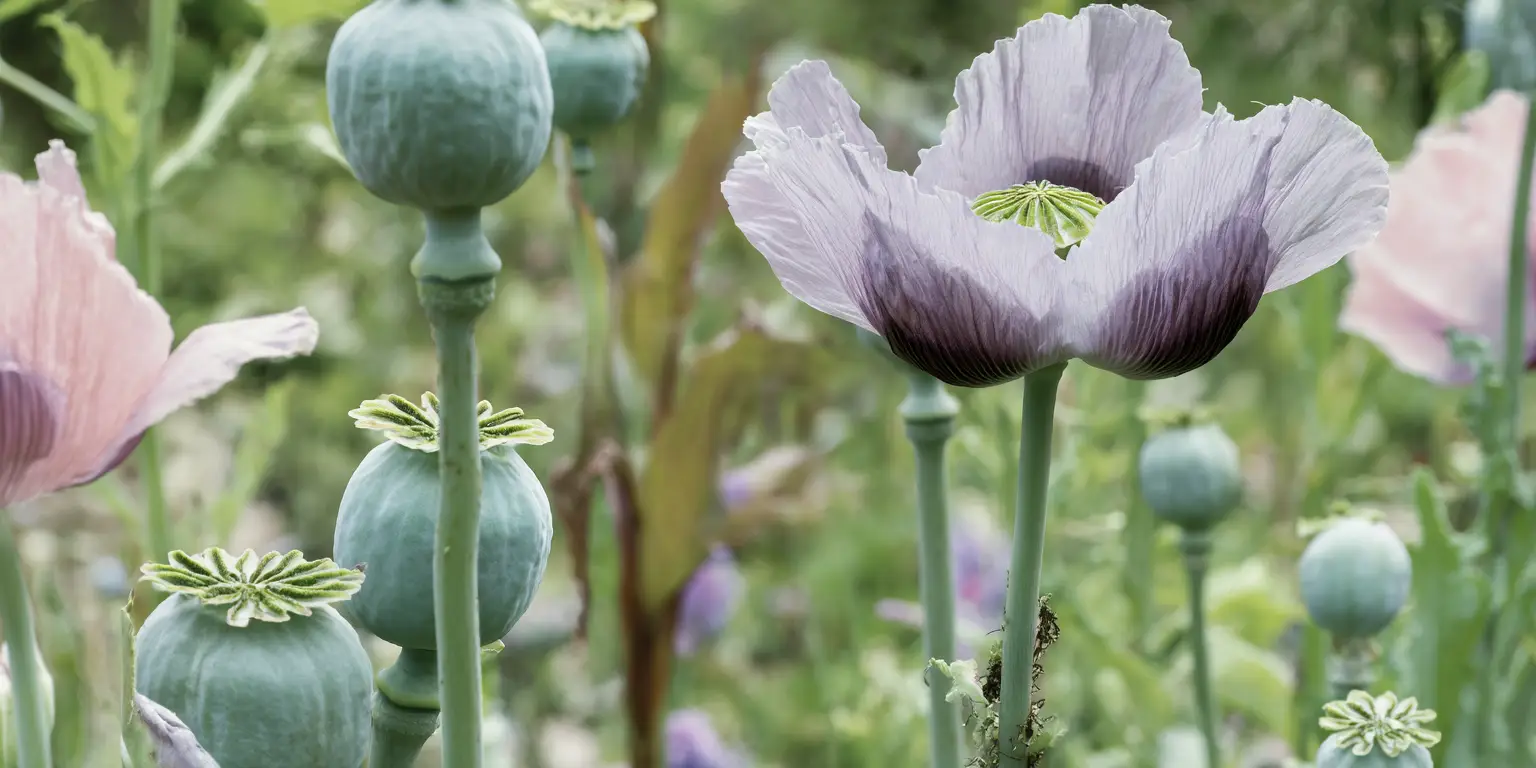
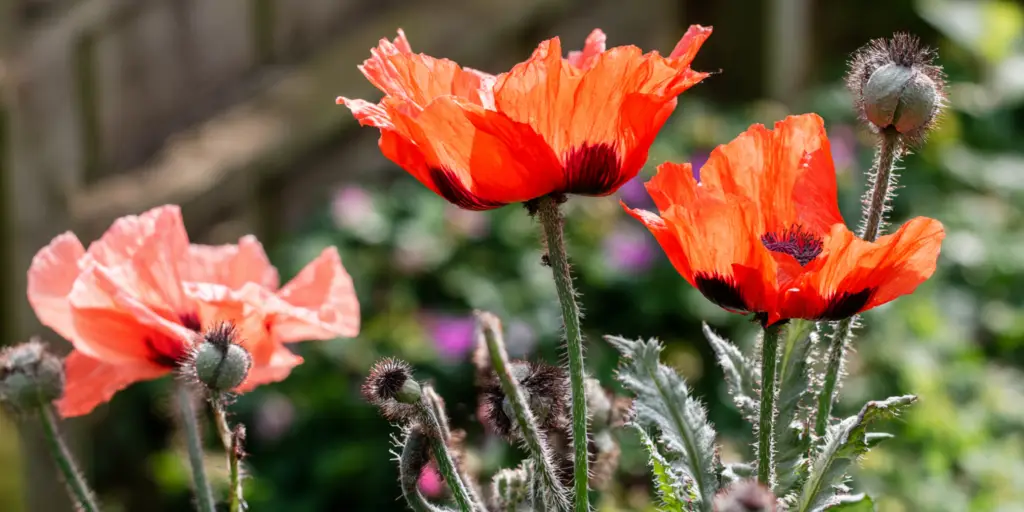
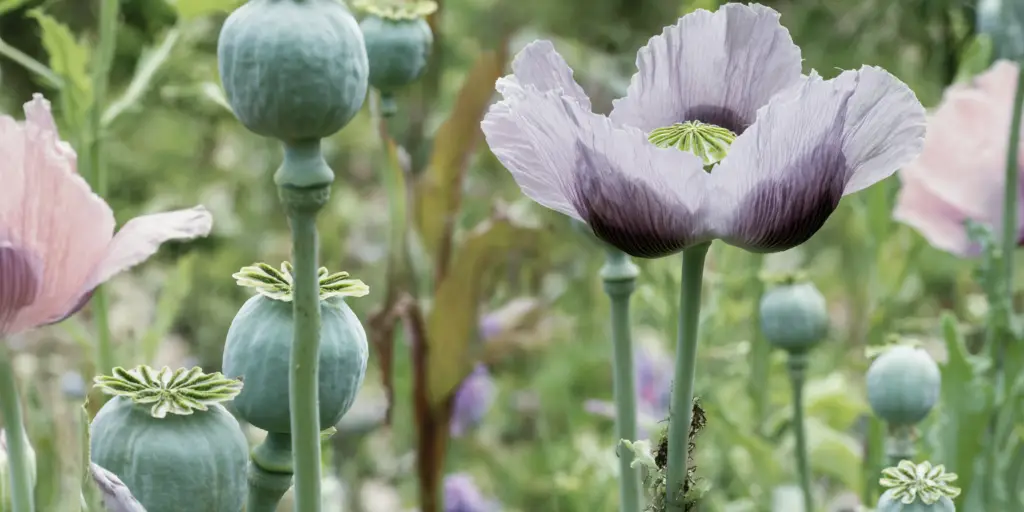
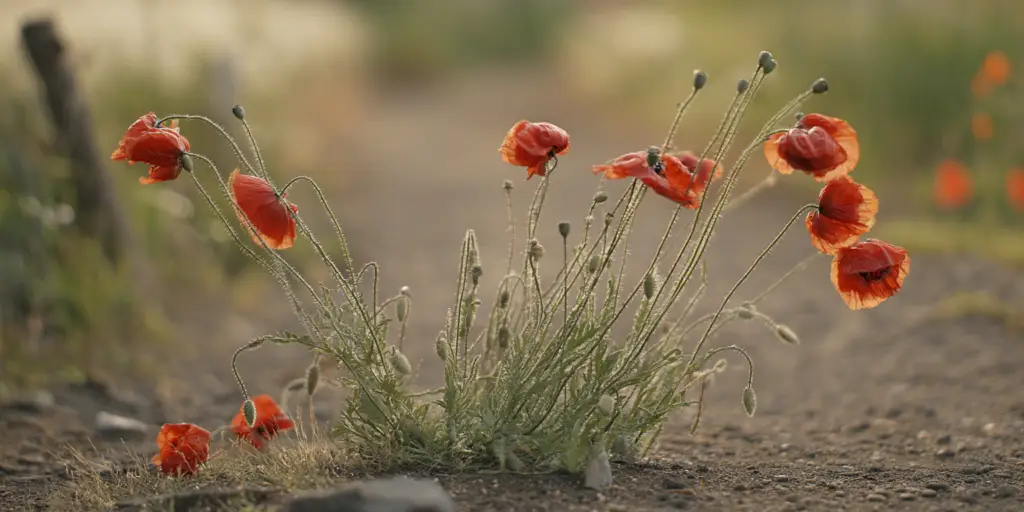
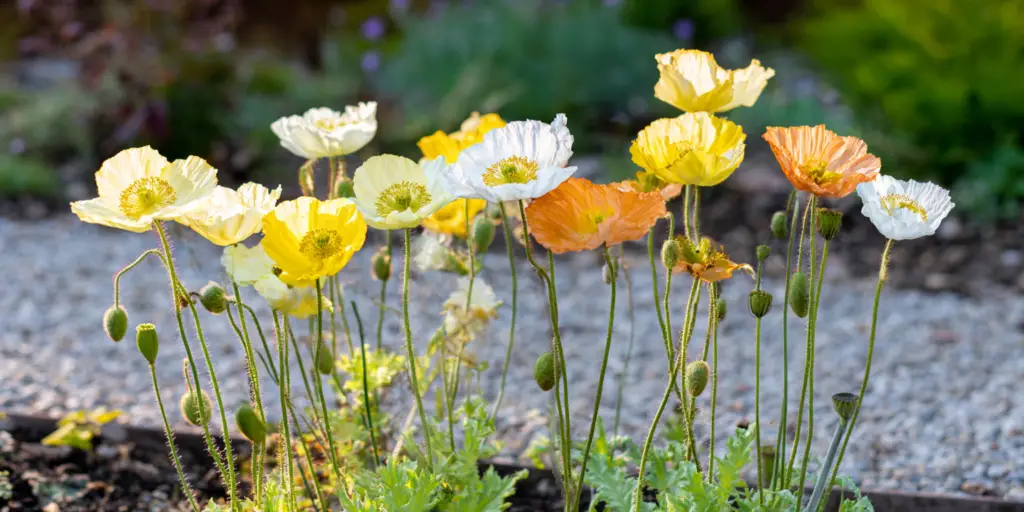
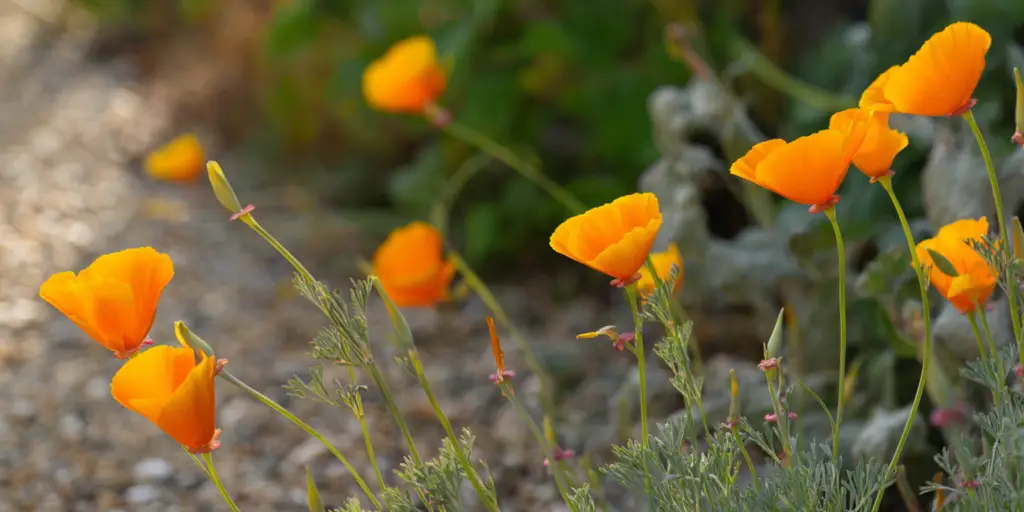
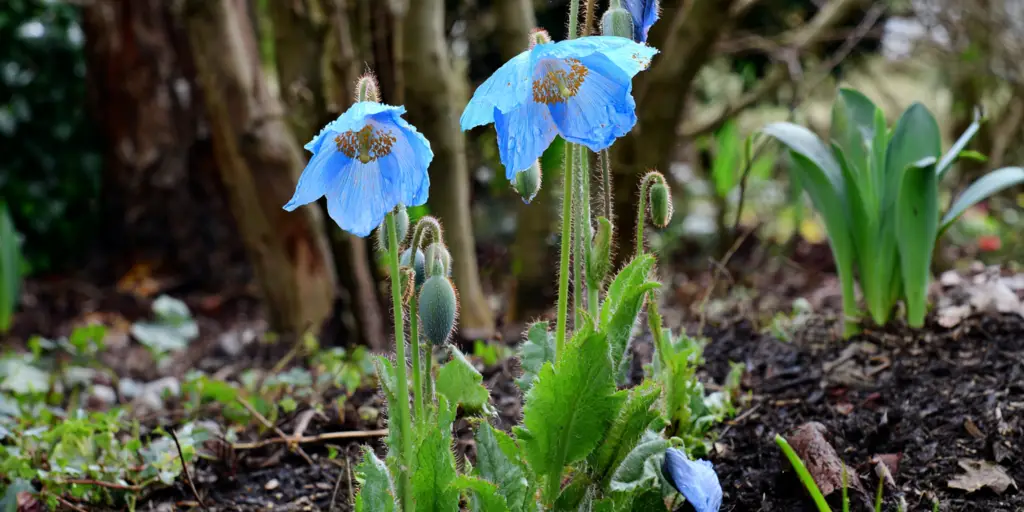
Breadseed poppy is a cool‑season annual grown for satiny flowers and ornamental seedpods. It performs best when direct‑sown in early spring or in fall where winters are mild. Plants prefer full sun and well‑drained soil and dislike root disturbance. Flowers range from single to peony‑type doubles in many colors. Pods mature into rounded pepper‑shaker capsules that dry well for arrangements. Cultivation and use are regulated in some jurisdictions; check local guidance.
At‑a‑glance
Group/Class: Annual (breadseed poppy)
Height × spread: 24-48 in × 12-18 in (60-120 cm × 30-45 cm)
Bloom window: Late spring to early summer
Color & flower form: Satiny single to fully double blooms in white, pink, red, purple; ornamental globose pods
Fragrance: unknown
USDA hardiness: grown as annual in all zones
Breeder / Year / Origin: unknown; native to the eastern Mediterranean
Cut‑flower notes: Latex can block uptake; sear stem ends; vase life generally short to moderate
Pet safety: avoid
How it differs
Annual life cycle with easy self‑sowing
Produces the largest and most ornamental seedpods among poppies
Flowers can be very double compared with typical poppies
Best display from direct sowing rather than transplants
Strengths
Wide color and form range
Good pods for dried work
Thrives in cool spring weather
Straightforward from seed in open ground
Care in one minute
Site: full sun with open airflow
Soil: well‑drained, average fertility; avoid rich nitrogen
Water: moderate; keep evenly moist until established, then allow surface to dry between waterings
Sowing: direct‑sow very thinly; thin to final spacing to reduce mildew
Support: stake tall stems in windy sites; deadhead or save seedpods
Watch‑outs
May be regulated; verify local rules before planting
Seedlings resent transplanting
Downy mildew and other diseases may flare in wet, cool spells
Written by: Your Flowers Guide editorial team We are a small independent group of flower lovers who research and review each guide using trusted horticultural and educational sources. Learn more about us