Contents
Russian Sage
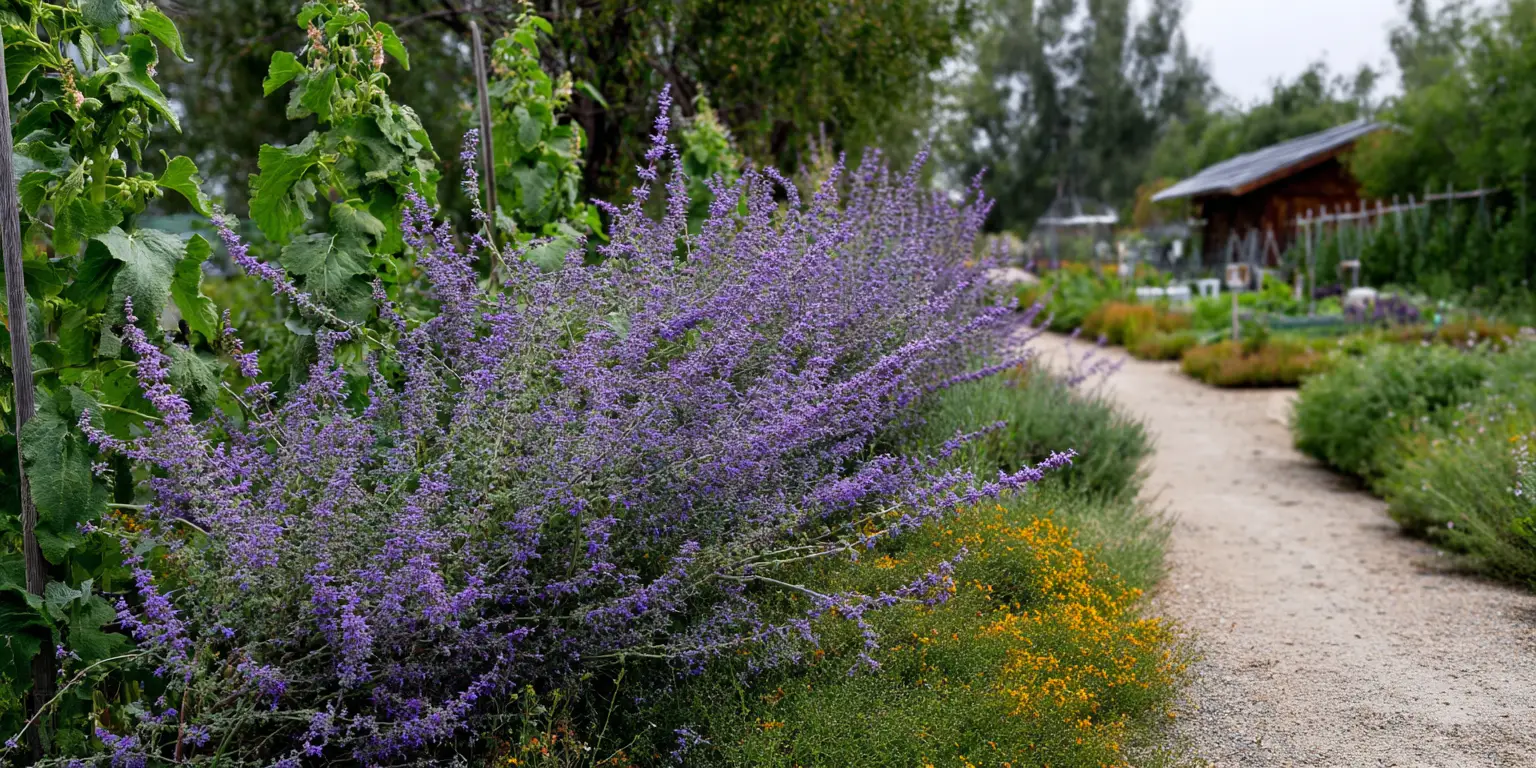
Russian sage is a woody perennial subshrub celebrated for its lavender-blue flower spikes and silvery green foliage. This hardy plant blooms for an exceptionally long time from mid-summer into fall, creating a mist-like cloud of color in the garden. Growing to a few feet in height with an airy, upright habit, it provides striking texture and movement in borders and cottage gardens. Equally important, Russian sage is very easy to grow. It thrives in hot, dry conditions where many other types of flowers struggle. Gardeners value its drought tolerance, pest resistance, and ability to attract pollinators such as bees and butterflies. Despite its common name, Russian sage is not a true sage used in cooking, nor is it exclusively from Russia. Instead, it is a member of the mint family known for ornamental appeal and low-maintenance nature, making it a popular choice for xeriscapes and perennial beds.
🌱 Taxonomy and origin
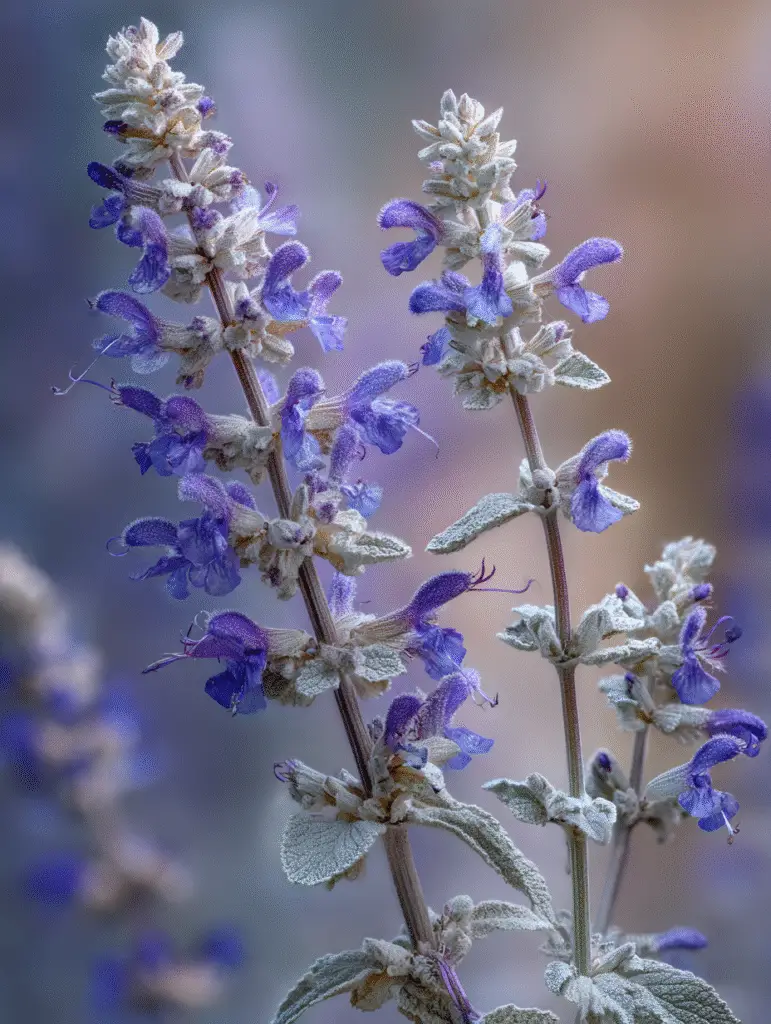
Botanically known as Salvia yangii, Russian sage was formerly classified as Perovskia atriplicifolia until modern DNA analysis placed it in the sage genus (Salvia). It belongs to the mint family (Lamiaceae), which it shares with many aromatic herbs and ornamental salvias. The genus name Perovskia honored a 19th-century Russian general, V. A. Perovski, which is how the plant earned its common name “Russian” sage. In reality, this species is native to the dry steppes and hills of Central Asia, including parts of Afghanistan, Iran, Pakistan, and Tibet, rather than Russia itself. It grows wild in high elevations and arid grasslands, adapting to poor soils and intense sun. Russian sage made its way into Western horticulture in the late 1800s and has since become a beloved garden plant worldwide. It was even named the Perennial Plant of the Year in 1995 for its exceptional performance. Today, Russian sage (sometimes still listed under Perovskia) is prized as a tough, beautiful ornamental that lends a blue flowers hue and soft texture to landscapes.
🌸 Bloom time
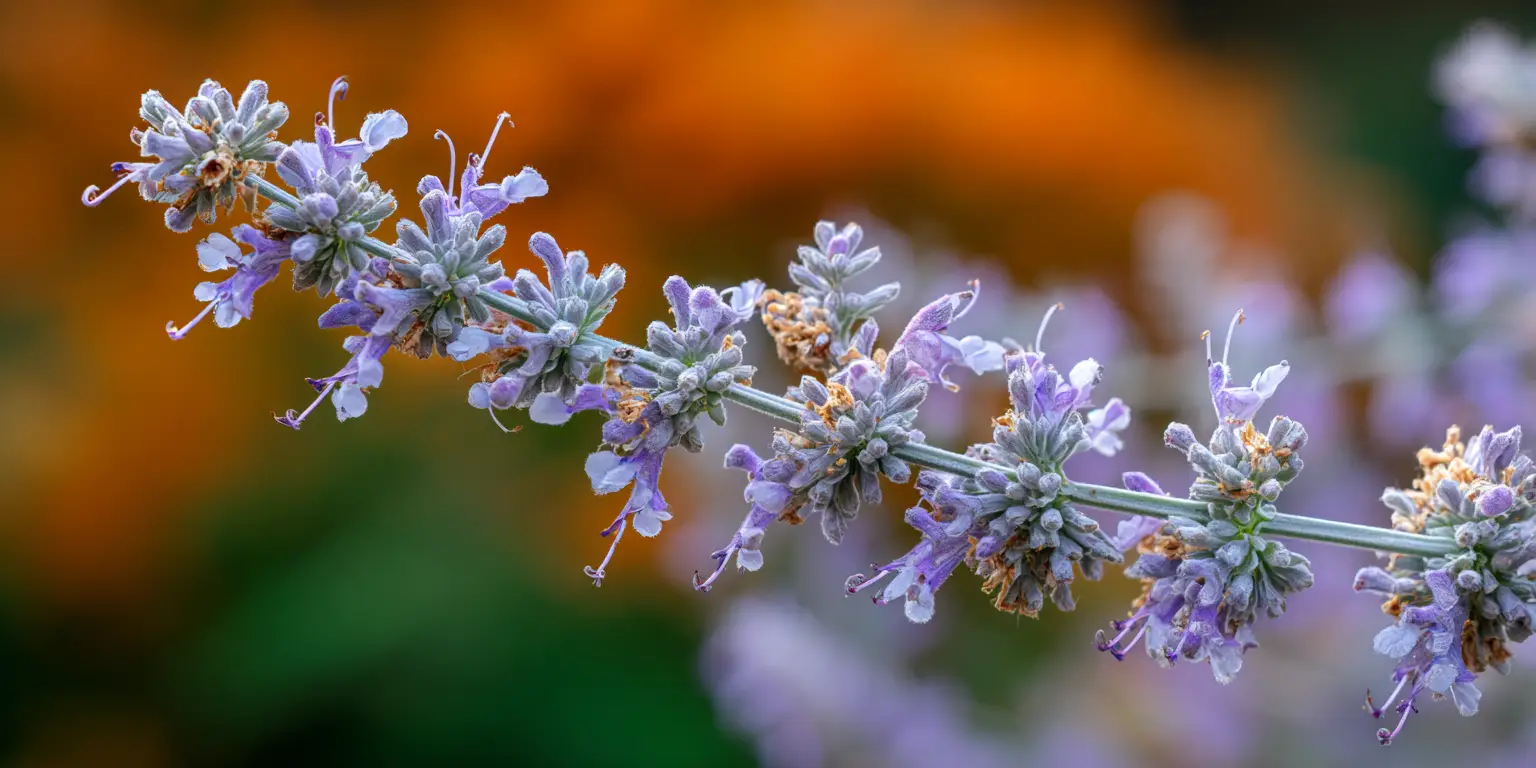
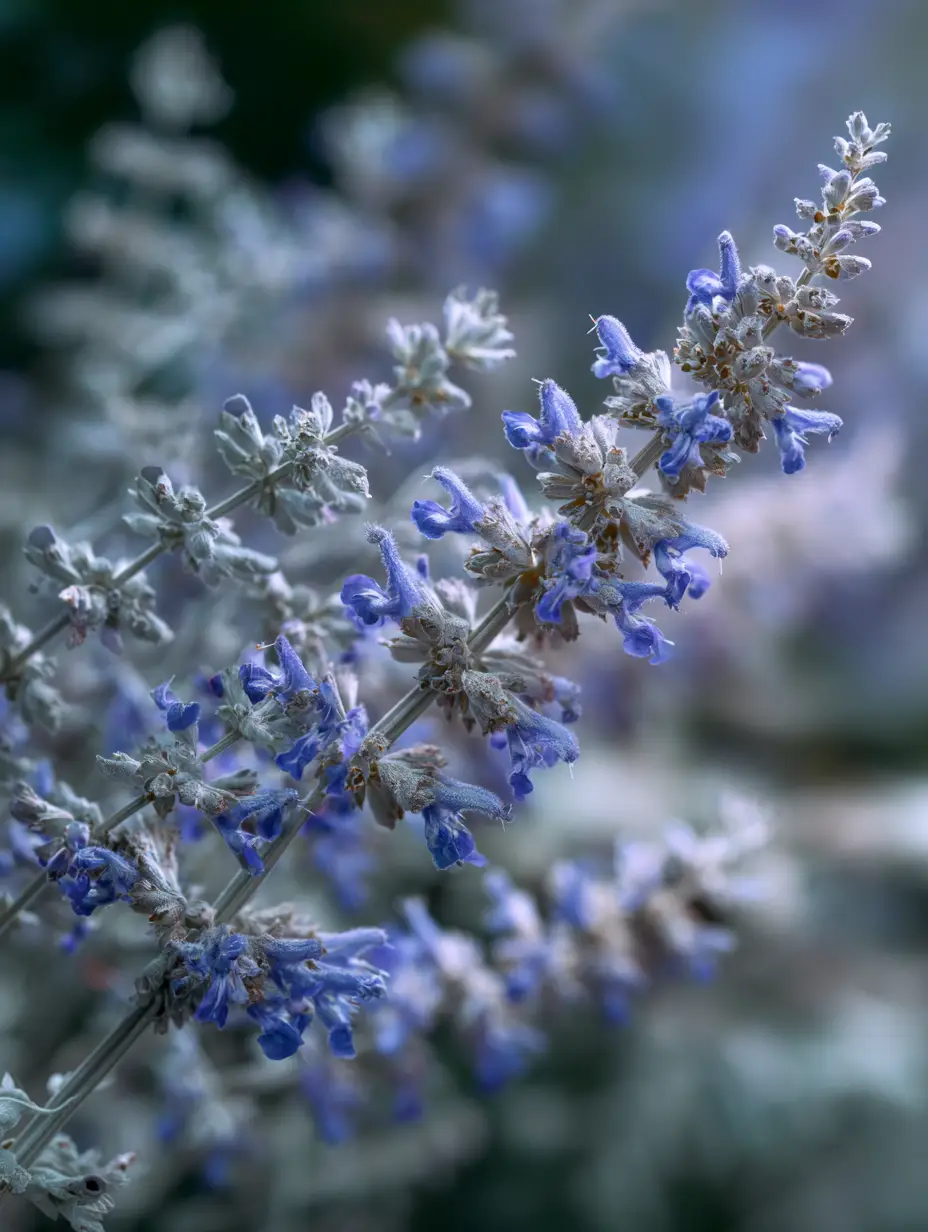
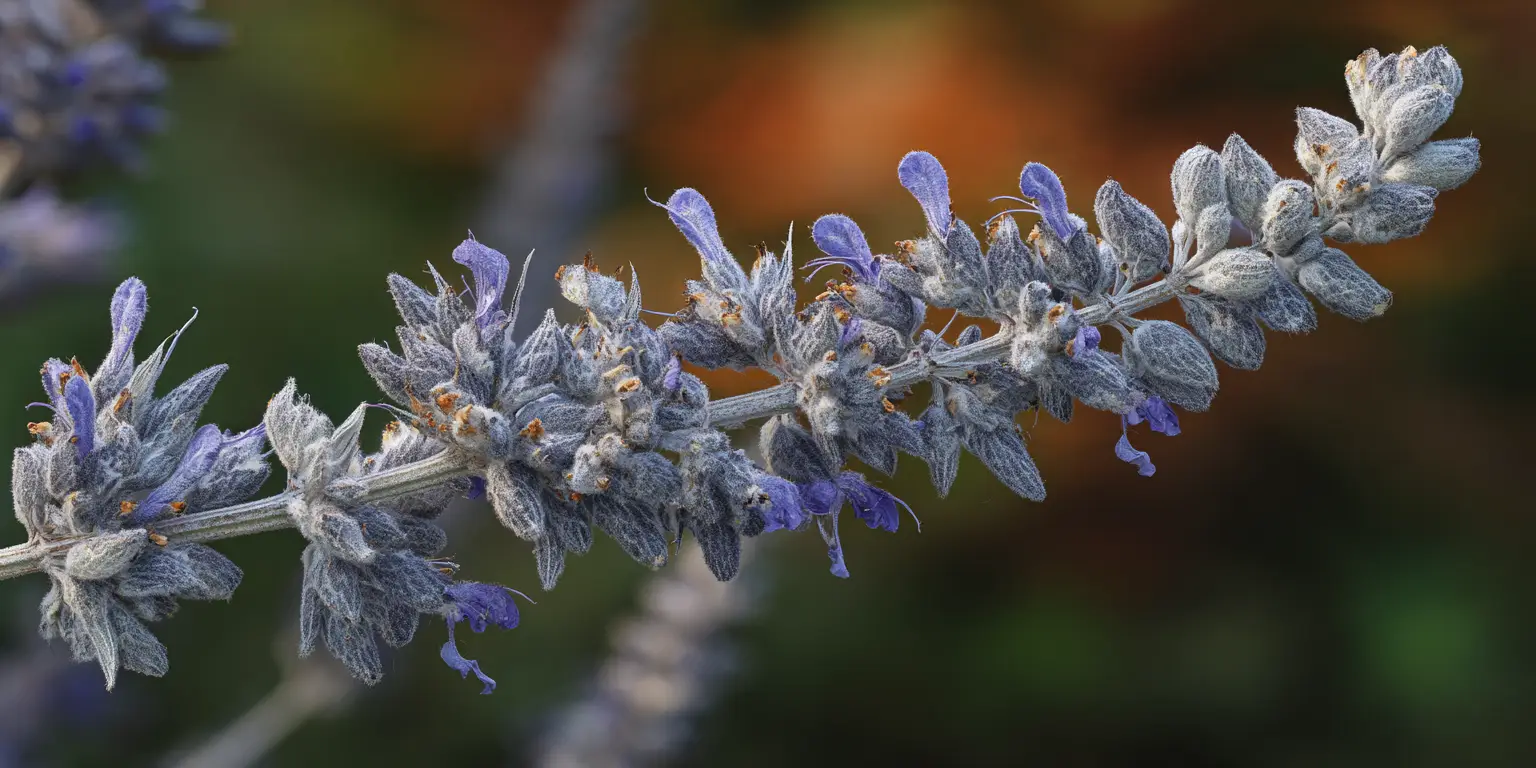
Russian sage blooms over a long stretch of the summer and fall, far longer than many perennials. Typically, spires of violet-blue flowers begin opening by mid to late summer (often in July) and continue well into autumn, sometimes until the first frost. Each stem produces whorls of small tubular blossoms that appear in succession, giving a hazy, continuous blooming effect for weeks on end. In a favorable climate, it’s not uncommon for Russian sage to flower for 10 or more weeks. Spent blooms remain attractive as the calyxes (flower cups) retain a purple tint even after peak flowering, so deadheading is usually unnecessary. The extended bloom period provides abundant nectar for pollinators late in the season when fewer plants like roses or lilacs are in flower. Gardeners appreciate how Russian sage keeps the garden colorful from summer through fall, bridging the gap between earlier blooms and autumn highlights.
📏 Height and spread
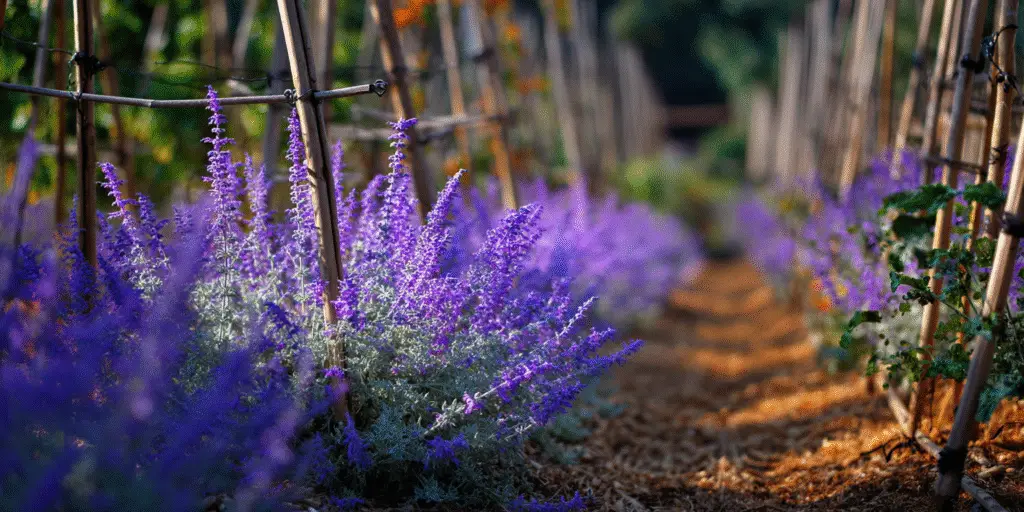
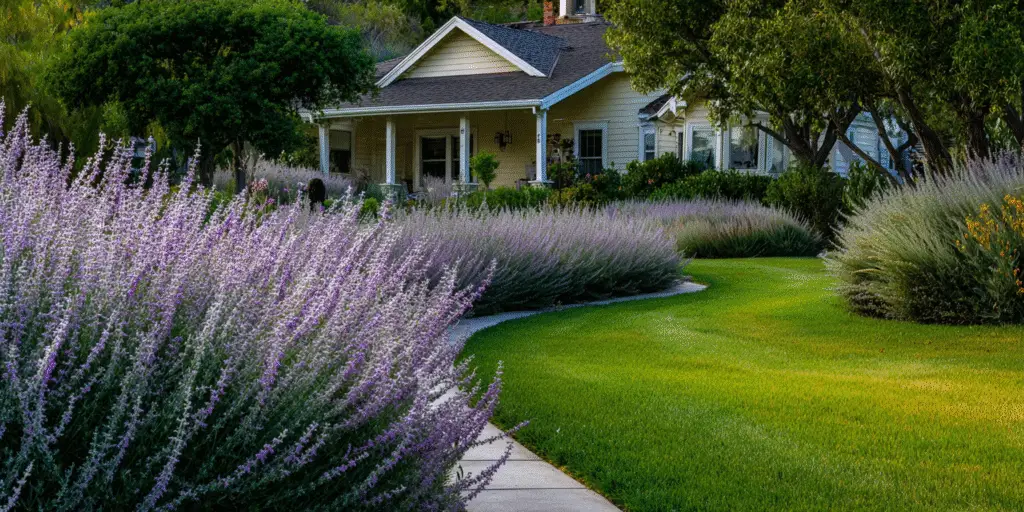
At maturity, a healthy Russian sage plant forms a bushy clump typically around 2 to 4 feet tall (0.6 to 1.2 meters) and about 2 to 3 feet (0.6 to 0.9 m) wide. In ideal conditions and with minimal pruning, some varieties can reach up to 5 feet tall, creating a semi-woody shrub-like presence. The growth habit is upright but with an open, airy branching structure. Stems emerge from a woody base each spring and bear deeply divided, gray-green leaves and plentiful flower stalks on the upper portions. As the season progresses, the weight of blooms can cause stems to lean or sprawl, especially if the soil is very rich or if plants receive inadequate sun. Spacing plants about 2 to 3 feet apart allows good air circulation and helps each plant reach its full form. While Russian sage tends to stay in a clumping habit, established plants can slowly expand via short rhizomes (underground stems) and may produce the occasional sucker shoot a short distance from the main clump. It is not aggressive, but in perfect conditions it can naturalize mildly by spreading and self-seeding. Choosing newer cultivars bred for compactness can ensure a neater height and spread, and simple yearly pruning keeps the size controlled if needed.
☀️ Light
Full sun exposure is best for Russian sage to develop strong stems and abundant blooms. Aim to provide at least six to eight hours of direct sunlight per day. In bright sun, this plant thrives and shows off its best color and form. In less than full sun (for example, a half day of light or dappled shade), Russian sage may survive but often becomes leggy and prone to flopping as it stretches for more light. Reduced sun can also diminish the intensity of flowering. In hot desert climates, a touch of afternoon shade can be tolerated without harm, but generally this sun-loving perennial prefers as much light as possible. Planting in an open area away from dense shade of trees or structures will yield the sturdiest growth. Remember that inadequate light, combined with overly rich soil, is a recipe for a lax, sprawling Russian sage. For upright growth and maximum bloom, a sunny spot is essential. This plant truly relishes the same conditions as a sunflower or other heat-loving, sun-worshipping flowers.
💧 Water
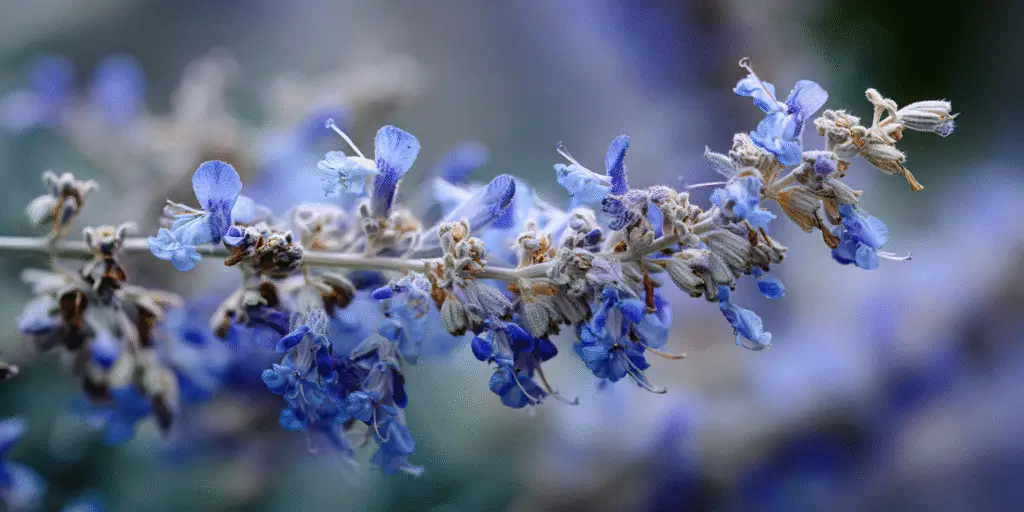
Once established, Russian sage has low water needs and excellent drought tolerance. It evolved in arid regions and is adapted to survive with infrequent rainfall. New transplants should be watered regularly their first season to encourage a deep root system, but mature plants prefer the soil on the dry side. Soggy or waterlogged conditions are very detrimental. Poor drainage can quickly lead to root rot. It’s best to let the top inch of soil dry out between waterings. In fact, Russian sage often performs better with too little water than too much. Overwatering tends to produce lush, weak growth that causes floppiness and increases susceptibility to fungal diseases. In contrast to thirstier shrubs like camellia or hydrangea macrophylla, which demand evenly moist soil, Russian sage is perfectly content in dry, even rocky ground. In drought situations, established plants can survive on rainfall alone, though extreme drought may reduce flowering. A moderate watering schedule (such as deep watering once every week or two if there’s no rain) is more than sufficient in most climates. Mulching around the base with coarse gravel or a light layer of compost can help retain some moisture without keeping the crown too damp. Overall, this plant’s watering needs are minimal. An occasional deep drink during prolonged hot, dry spells will keep it happy.
🌍 Soil and pH
Russian sage thrives in soil conditions that would challenge fussier ornamentals. It grows best in well-drained, poor to moderately fertile soil. In fact, lean or sandy soils with low organic matter tend to encourage sturdier growth and more prolific flowering. Rich, heavy soils high in nutrients can cause the plants to grow too quickly and flop over under their own weight. If your soil is clay or tends to stay wet, improving drainage is crucial – consider raised beds or adding grit and organic matter to open up the soil structure. Regarding pH, Russian sage is tolerant across a broad range but prefers neutral to slightly alkaline conditions. It will do fine in typical garden soil (pH 6.5 to 8.0). Interestingly, unlike plants such as hydrangea macrophylla that exhibit different bloom colors depending on soil pH, Russian sage’s flower color remains consistently blue-purple regardless of the soil’s acidity or alkalinity. Some gardeners even report this plant thriving in soils with a bit of lime or chalk. What Russian sage cannot tolerate is prolonged acidic bogginess or compacted, poorly aerated earth. Thus, the ideal soil is similar to its native habitat, a gritty or sandy loam with decent drainage and a pH around 7.0 to 7.5. Fertilization is rarely needed. A yearly top dressing of compost is plenty. Avoid heavy nitrogen feeding, which would promote soft growth at the expense of flowers.
❄️ USDA hardiness
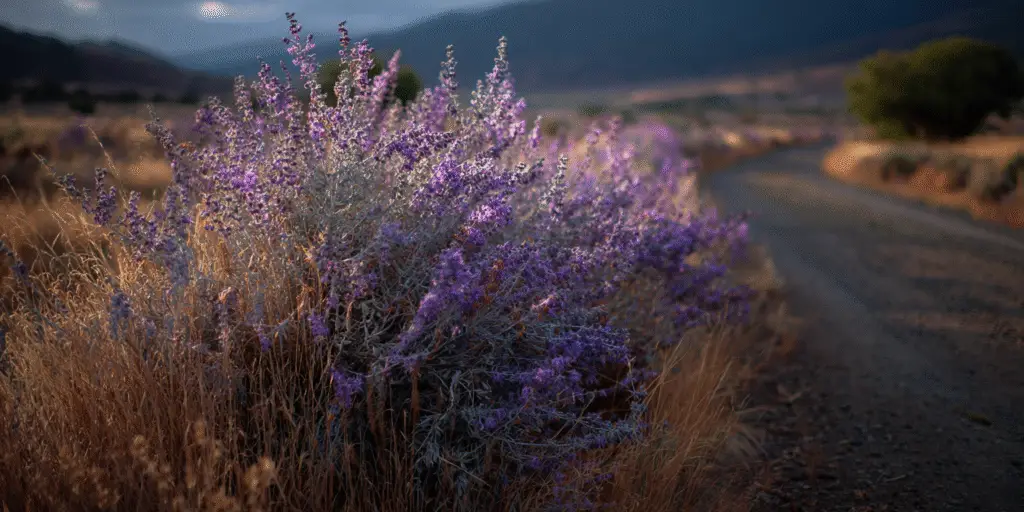
Russian sage is reliably perennial in USDA hardiness zones 5 to 9, making it suitable for a large portion of temperate regions. In zone 5 (where winter lows can reach around -20°F or -29°C), it will survive the cold, though plants may benefit from a layer of winter mulch over the root area for insulation. Some gardeners have even had success overwintering Russian sage in protected microclimates of zone 4, but dieback can be more extensive and survival isn’t guaranteed in harsher winters. In the warmer end of its range, like zones 8 and 9, Russian sage handles heat and sun very well as long as drainage is good. It tends to be semi-deciduous in mild winters, meaning it may not completely die back to the ground in a zone 8 or 9 winter. However, it’s often still advisable to cut it back annually to encourage fresh new growth. Very humid subtropical areas at the upper end of zone 9 might pose a bit of a challenge due to excess moisture and humidity, but generally this plant can tolerate a wide climate range. Russian sage’s hardiness and ability to withstand cold make it a great substitute for more tender Mediterranean plants like lavender, allowing gardeners in colder regions to achieve a similar look. Always ensure the site has winter drainage because cold, wet soil is the enemy of many perennials. With appropriate siting, Russian sage will come back each year reliably within its hardiness range, bringing its beautiful late-season color to the garden.
🌼 Propagation and longevity
Russian sage can be propagated through several methods, giving gardeners options to increase their stock. One of the most common techniques is taking softwood cuttings in late spring or early summer. 4-6 inch stem cuttings from new growth can root in a gritty medium (especially with a bit of rooting hormone) and will often develop into healthy new starts by the next season. Semi-hardwood cuttings in early fall are another option, though they may take longer to root. Division is possible for mature clumps, though its woody crown and taproot make it somewhat challenging. If dividing, do it in early spring as new growth begins. Carefully split off sections of the root mass with shoots attached, and replant them. Russian sage also self-seeds lightly; gardeners might find a few volunteer seedlings around established plants. These can be transplanted or potted up if desired (keep in mind named cultivars won’t come true from seed). Growing from seed is feasible but requires patience. Seeds benefit from a cold stratification period and may take a few weeks to germinate. In terms of longevity, Russian sage is a long-lived perennial. Individual plants often remain vigorous for many years, easily a decade or more in favorable conditions. They develop a woody base over time but continue to send up fresh shoots each growing season. Annual pruning helps renew the plant and can prevent the center from getting too woody or sparse. Unlike some short-lived perennials that need frequent replacement, a well-sited Russian sage can be a permanent fixture in the garden. If an older plant does begin to decline after many years, taking cuttings or divisions will ensure you have young replacements to carry on. Overall, expect a healthy lifespan and consistent performance, with minimal need for replanting once established.
👃 Fragrance
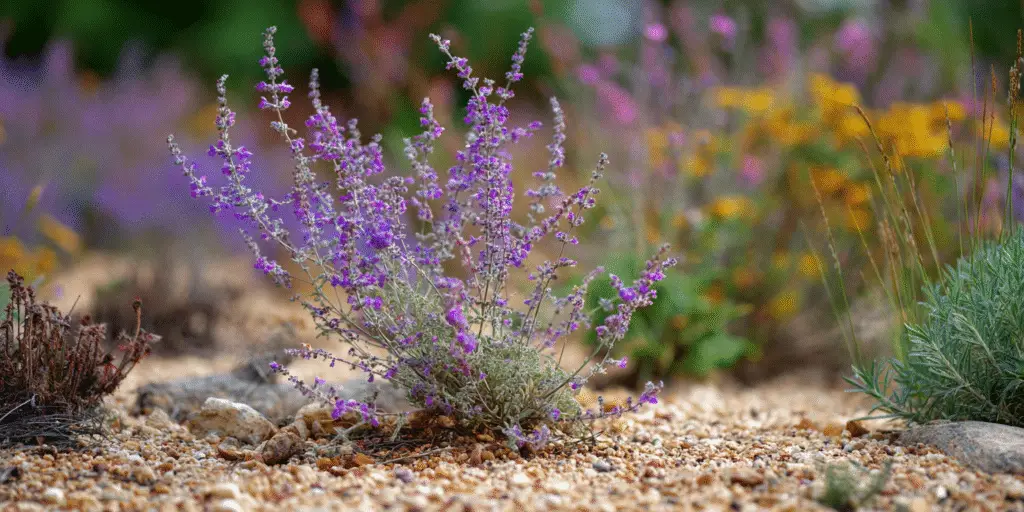
Fragrance is a notable characteristic of Russian sage, though it is quite different from the sweet floral scent of plants like lilacs or roses. Instead, Russian sage emits a pungent, herbal aroma when its foliage is brushed or crushed. The narrow, textured leaves have glands that release a mix of essential oils reminiscent of sage, lavender, and a hint of camphor or menthol. Many gardeners find the smell pleasantly earthy and refreshing, especially on a warm day as you run your hands along the stems. This strong scent serves a purpose in nature. It makes the plant unpalatable to many browsing animals and insects. While the flowers themselves are not particularly fragrant in the air, they do help lure pollinators through their nectar. The overall effect in the garden is subtle; you won’t typically smell Russian sage just walking by, but if you purposefully sniff the foliage or crush a leaf, you’ll notice its distinct perfume. Because of this, Russian sage is often included in sensory gardens or along pathways, where people can easily interact with it. Some people like to cut and dry the stems, using the dried leaves in potpourri or sachets to enjoy the herb-like fragrance indoors. Though not used in perfumes to the extent of true lavender, the fragrance of Russian sage is a charming bonus feature of this hardy plant.
⚠️ Toxicity and pet safety
Gardeners with pets and children will be glad to know that Russian sage is generally considered non-toxic. According to the ASPCA, it is not poisonous to dogs or cats, so having this plant in your garden shouldn’t pose a risk to curious pets. In fact, most animals tend to leave it alone because of the strong scent and slightly bitter, resinous taste of its foliage. If a cat or dog were to nibble a bit, it’s unlikely to cause harm – at worst it might irritate the stomach in large quantities, but it’s not known to be dangerous. For humans, Russian sage is not a culinary herb and is best not ingested beyond perhaps an occasional use as a tea or garnish in small amounts. The leaves contain some compounds (like camphor) that could be mildly toxic if consumed in large doses. Practically speaking, the plant’s flavor and odor deter most from eating it anyway. On the positive side, that pungent foliage means Russian sage is deer resistant and also seldom bothered by rabbits. Deer tend to find the smell unappetizing and will usually avoid munching on it, even when other plants (like hostas or roses) get grazed. Always supervise very young children around any garden plants, but Russian sage does not have spines or serious toxins to worry about. It’s a safe choice for family gardens and provides beauty without hazard.
🌿 Vase life
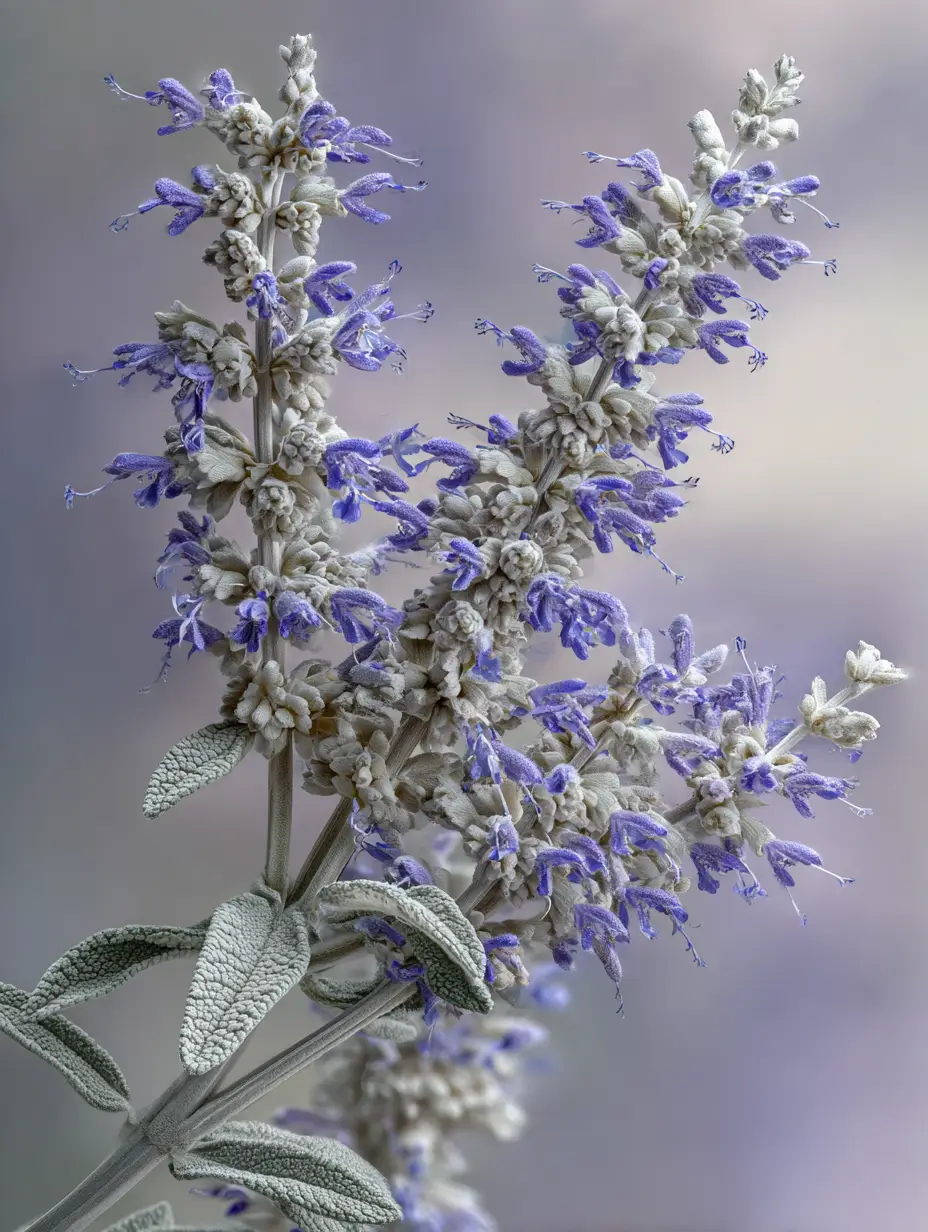
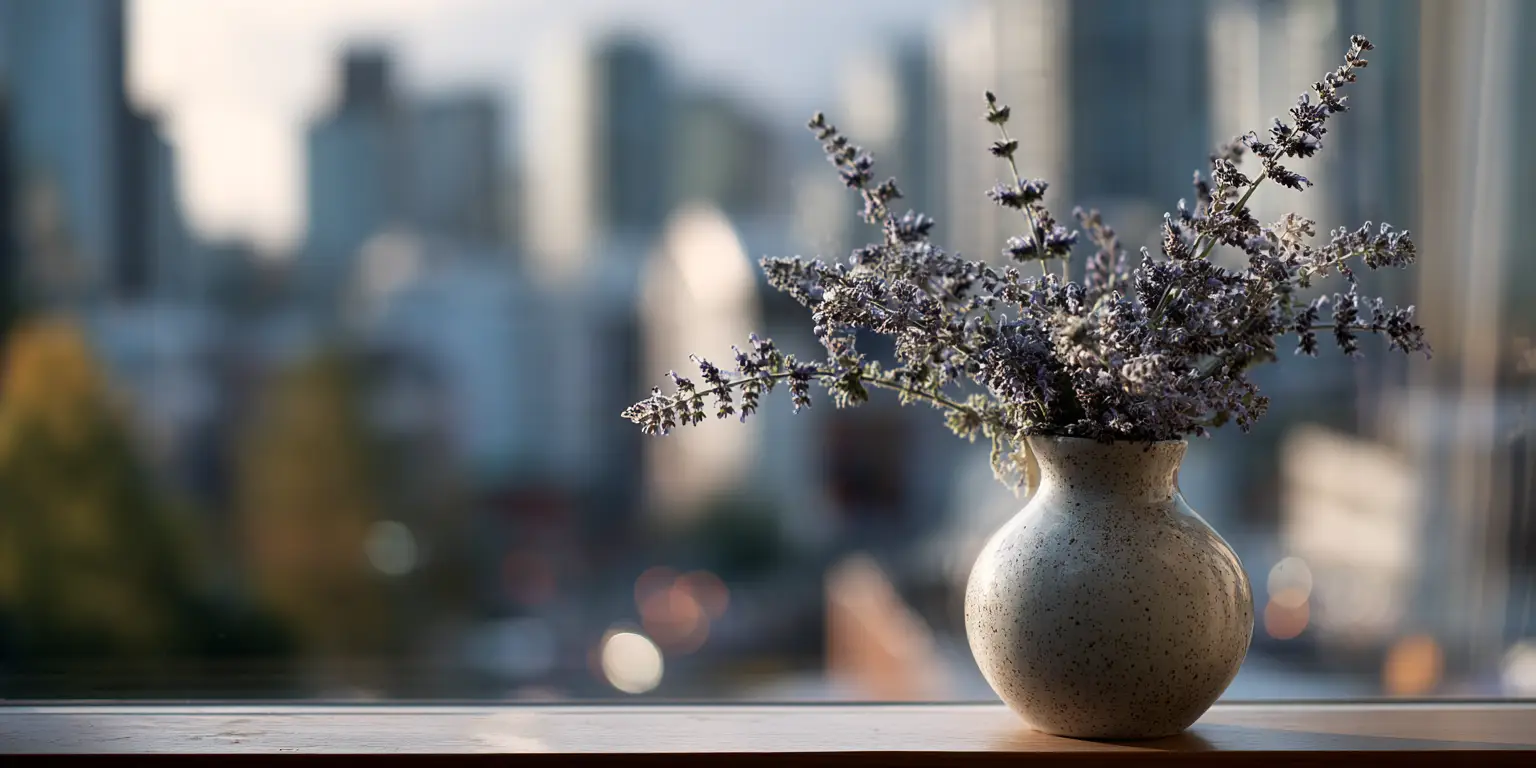
Russian sage can be a lovely and unexpected addition to floral arrangements, with a vase life that is quite impressive. When cut fresh, the slender flowering stems hold up well for about a week or slightly more in water. The tiny purple-blue flowers along the spikes do not shed easily, so arrangements stay tidy. For longest vase life, cut stems in the morning when they are well hydrated, and strip off the lower leaves that would sit in water. Using flower preservative in the vase water can extend freshness a couple of extra days. One remarkable quality is that Russian sage also dries beautifully in the vase. If you simply leave the stems in an empty vase after they’ve finished blooming, they often dry out while retaining their form and color. The calyxes along each spike dry to a papery silver-lavender, essentially creating a dried arrangement that can last for months. Because of this, Russian sage is popular for late-season bouquets and dried flower crafts. It serves as an excellent filler, adding an airy texture to arrangements much like baby’s breath or cosmos, but with a distinctive color and fragrance. Whether used fresh or dried, the cut stems of Russian sage bring a touch of the summer garden indoors and can be enjoyed long after many other cut pink flowers have faded.
🐛 Pests and diseases
One of Russian sage’s best qualities is its strong resistance to pests and diseases. In the garden, it’s generally untroubled by the common problems that plague fussier plants. Its aromatic oils act as natural repellents to many insects. You will rarely see issues like aphid infestations on Russian sage, and it is not susceptible to Japanese beetles or other frequent floral pests. Likewise, deer and rabbits typically steer clear of it, as mentioned earlier, due to the taste and smell. In terms of diseases, Russian sage has no serious foliar diseases to speak of when planted in appropriate conditions. The most important thing is to avoid waterlogged soil, which can lead to root rot (caused by fungi like Phytophthora or Pythium). In poorly drained or chronically wet sites, the roots or crown may rot and the plant will decline or die. Ensuring good drainage and not overwatering is the simple preventative. Occasionally in very humid, rainy summers, you might see some minor leaf spotting or mildew, but this is uncommon and usually not severe. Another “problem” gardeners may notice is stems flopping or breaking late in the season, but this is more of a cultural issue (too much shade or fertilizer) rather than a pest or disease. Staking taller varieties or pruning mid-season can help maintain an upright habit. Overall, Russian sage is about as trouble-free as a perennial can be. Its built-in pest resistance and hardiness mean you’ll spend little time worrying about infestations or infections.
FAQs
Is Russian sage the same as lavender?
No, Russian sage is a different plant than true lavender, though they have a similar appearance. Russian sage (Salvia yangii) is generally taller, with a more open growth habit and later bloom time than most lavender (Lavandula) species. Lavender has a stronger sweet floral fragrance and is used widely as a culinary and aromatic herb, whereas Russian sage’s scent is more pungent and it is grown mainly as an ornamental. Both thrive in sunny, dry conditions, but they are distinct plants.
How and when should I prune Russian sage?
Prune Russian sage in late winter or early spring. It’s best to wait until the worst of winter is over and new buds are just starting to show at the base. At that time, cut back the previous year’s stems to about 6 inches (15 cm) above the ground. This annual hard pruning encourages fresh, vigorous growth and helps keep the plant compact. You can also trim lightly in midsummer if stems begin to flop, but avoid cutting into green growth too much during the growing season. Leaving the silvery stems up over winter can add interest, but by spring you’ll want to rejuvenate the plant with a hard cut-back.
Does Russian sage attract pollinators?
Yes. Russian sage is very attractive to pollinators, especially various bees and butterflies. When in bloom, its many small tubular flowers are rich in nectar and pollen. You’ll often observe bumblebees, honeybees, and butterflies busily visiting the spikes of blossoms. It’s also reported to draw hummingbirds on occasion. The late summer to fall flowering period is particularly valuable, as it provides food for pollinators when many other garden plants have finished blooming.
Is Russian sage invasive or does it spread aggressively?
Russian sage is not considered invasive, but it can spread modestly under ideal conditions. It has a fibrous root system with some rhizomatous tendencies, which means established clumps can slowly widen over time. You might also find a few self-seeded sprouts near the parent plant. However, it does not run rampant or displace native vegetation like a true invasive plant would. Any unwanted seedlings or shoots can be easily pulled up. If you want to prevent spreading, choose modern cultivars that are bred to stay in clump form. Overall, Russian sage stays where you plant it, with only a slow expansion as it matures.
Can Russian sage grow in partial shade or indoors?
Russian sage really performs best in full sun and is not well-suited to low light conditions. In partial shade (for example, half a day of sun), it may live but you’ll likely see fewer blooms and a floppier habit. It often leans toward the light in shaded conditions. Russian sage is not recommended as an indoor plant. It grows into a substantial shrub that requires lots of sun and good airflow. If you want a container plant for a patio, you could grow it outdoors in a large pot, but keep it in a sunny spot. It’s essentially a landscape shrub and won’t thrive long-term inside a typical house.
Do I need to fertilize Russian sage or provide special soil amendments?
Generally no, Russian sage is actually happier in lean conditions. You do not need to fertilize it in average garden soil. In fact, giving it a lot of nitrogen fertilizer or very rich compost can make it grow too lush and weak, leading to flopping stems and fewer flowers. If your soil is extremely poor (pure sand or gravel), you can work in a small amount of compost when planting, but avoid heavy feeding. The only “special” soil requirement is good drainage – amend clay soil with grit or plant on a slope or raised bed to ensure the roots aren’t sitting in water. Other than that, this plant is quite self-sufficient.
Is Russian sage safe for pets and people?
Yes. Russian sage is non-toxic to cats, dogs, and humans. Pets usually ignore it due to the strong smell. If a dog or cat chewed on some leaves, it shouldn’t cause more than maybe minor digestive upset at worst. For people, it’s not poisonous to touch or handle. While it’s not meant to be eaten as a vegetable, small accidental ingestions are not dangerous. Always use common sense. Avoid consuming it in large quantities and keep it out of grazing range of livestock. But in general, you can plant Russian sage in a pet-friendly garden with confidence that it won’t harm your animals.
Why is my Russian sage falling over?
Flopping or falling stems can happen for a few reasons. The most common cause is that the plant is in too rich soil or has been overwatered, which causes overly soft, tall growth that can’t support itself. Insufficient sun can also lead to leggy, floppy stems. To remedy this, make sure the plant gets plenty of sunlight and avoid excess fertilizer or water. Cutting the plant back by about one-third in early summer can encourage sturdier new growth if flopping is a recurring issue. Also, newer compact cultivars have been developed to resist flopping, so if it’s a serious problem you might consider those. Finally, you can use discreet stakes or rings to prop up the stems, especially during peak bloom when the flowers are heaviest.
Interesting tips
- After spring bulbs like tulips finish blooming, Russian sage’s new growth will fill in and cover the fading bulb leaves. This is a helpful way to maintain visual interest in the garden.
- Russian sage was named the Perennial Plant of the Year in 1995 by the Perennial Plant Association, underscoring its status as a superior garden plant.
- Despite its name, it isn’t from Russia. Its natural range is in Central Asian regions with hot, dry summers and cold winters.
- The plant’s strong scent not only deters deer and rabbits, but also makes it a great companion for susceptible plants like roses, which benefit when grown nearby.
- Russian sage is often paired with warm-toned flowers for contrast; for example, its lavender-blue blooms look stunning next to yellow flowers like black-eyed Susans or the bright faces of a sunflower.
- In colder climates, Russian sage can be used as a substitute for less hardy Mediterranean shrubs. It provides a similar look to lavender or sagebrush but survives freezing winters.
- No need to baby this plant. It thrives on neglect. Once established, it can handle extreme heat, poor soil, and drought, making it ideal for low-maintenance and xeriscape gardens.
- The airy, delicate appearance of Russian sage belies its toughness. It combines especially well with other free-flowering, airy plants like cosmos or gaura in a cottage garden setting.
- If you enjoy dried flowers, remember that Russian sage holds its color and form when dried. Harvest some stems in late summer to create long-lasting dried arrangements or wreaths.