Contents 4 sections
Waking the dormant roots in early spring
The gardening year for Russian sage begins when the earth is still mostly asleep, caught in that uncertain period between the deepest cold and the first genuine thaw. When the red-winged blackbirds return to the marshes and the morning air holds a faint scent of thawing mud, it is time to approach the silver skeletons left standing from the previous year. These woody stems have held their ground through ice storms and heavy snows, providing a ghostly architecture while the rest of the garden slept. Now, just as the basal foliage begins to show tiny flecks of gray-green at the crown, the gardener must finally intervene. Pruning Russian sage is a sensory experience that wakes up the gardener as much as the plant itself. As the shears bite into the thick, pale wood, a sharp, herbal scent fills the cold air, a reminder of the summer heat locked inside the dormant roots. Cutting the plant down to just a few inches above the soil line feels drastic, but this severe reduction is exactly what the plant needs to push vigorous new growth. The old stems, having completed their architectural duty all winter, are carried away to the compost pile just as the soil begins to warm in earnest.
Spring advances slowly, and Russian sage is never in a hurry to break its dormancy. While the early bulbs are already finishing their display and the spring ephemerals are fading, this plant waits for the sun to bake the soil and chase the last chill from the ground. Slowly, the tiny nubs at the base lengthen into fuzzy, silver-white stems clothed in finely cut, gray-green leaves. The foliage looks delicate, almost lace-like, but it is built to withstand the punishing heat and drought that will soon arrive. By the time the spring peepers have quieted down and the nights remain reliably warm, the plant has formed a dense mound of aromatic foliage, gathering energy for the long performance ahead.
The heat of summer and the lavender haze
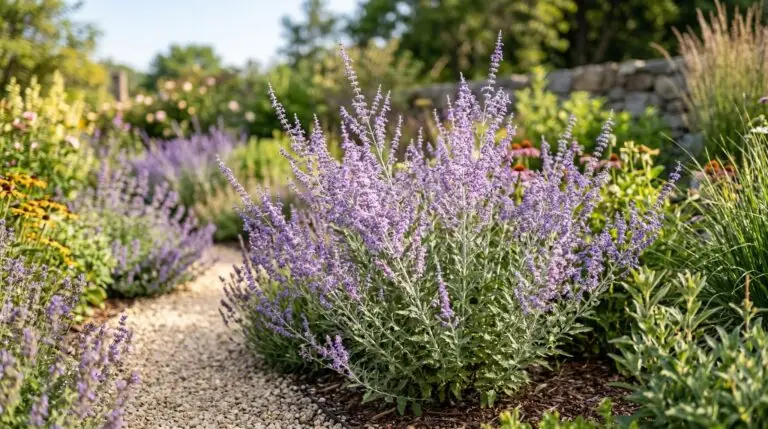
Summer arrives with a heavy, humid weight, and this is when Russian sage truly comes into its own. As the days stretch to their longest and the afternoon sun bakes the garden, the silver stems shoot upward, sometimes reaching four feet or more into the hot air. By midsummer, the tips of these stems develop tight green buds that slowly open into clouds of lavender-blue flowers. The effect is entirely different from the bold, solid disks of a coneflower blooming nearby, offering instead a hazy, cooling mist of color that softens the harsh summer light. The flowers draw in a constant hum of life, pulling bees, butterflies, and wasps from dawn until dusk. The entire plant seems to vibrate with activity, smelling strongly of camphor and lavender whenever the wind brushes against the stems. This long period of bloom persists through the driest, most unforgiving weeks of August, asking for nothing but sunshine and occasional rain. The plant thrives on neglect during these dog days, its deep taproot finding moisture far below the baked crust of the topsoil.
When the nights grow longer and a crisp edge returns to the wind, the garden begins its slow retreat. The bright blue flowers of the Russian sage drop away, leaving behind fuzzy, pale purple calyxes that hold their color long into the autumn months. The intense hum of the summer pollinators fades, replaced by the quiet rustle of drying leaves and the occasional chirp of a passing sparrow. The silver foliage begins to lose its soft, pliable texture, stiffening as the plant pulls its energy down into the root system to prepare for the coming freeze.
Autumn winds and the fading garden
As autumn deepens, the true structural value of the plant begins to reveal itself. Many gardeners feel the urge to clean up the borders now, cutting everything down to the ground to make the beds look tidy and uniform. However, resisting the urge to prune is the secret to unlocking the true winter value of this plant. Leaving the stems standing allows the plant to transition naturally into dormancy while preserving a vital structural element for the coming cold season. The pale stems contrast beautifully with the darkening soil and the rich browns of dying perennial foliage. When planted alongside the spherical seed heads of a globe thistle, the upright, branching habit of the sage creates a varied and engaging texture that carries the garden through the bleakest days of November. The stems harden into tough, woody stalks that will not easily break under the weight of winter weather.
The final leaves eventually detach and blow away, leaving only the bare architecture of the plant behind. The soil freezes solid, locking the roots in a deep, protective sleep that will last for months. The garden is quiet now, stripped of its summer colors and reduced to a palette of grays, browns, and whites. This is the moment when the foresight to leave the stems untouched pays its greatest dividends.
Silver stems in the frozen months
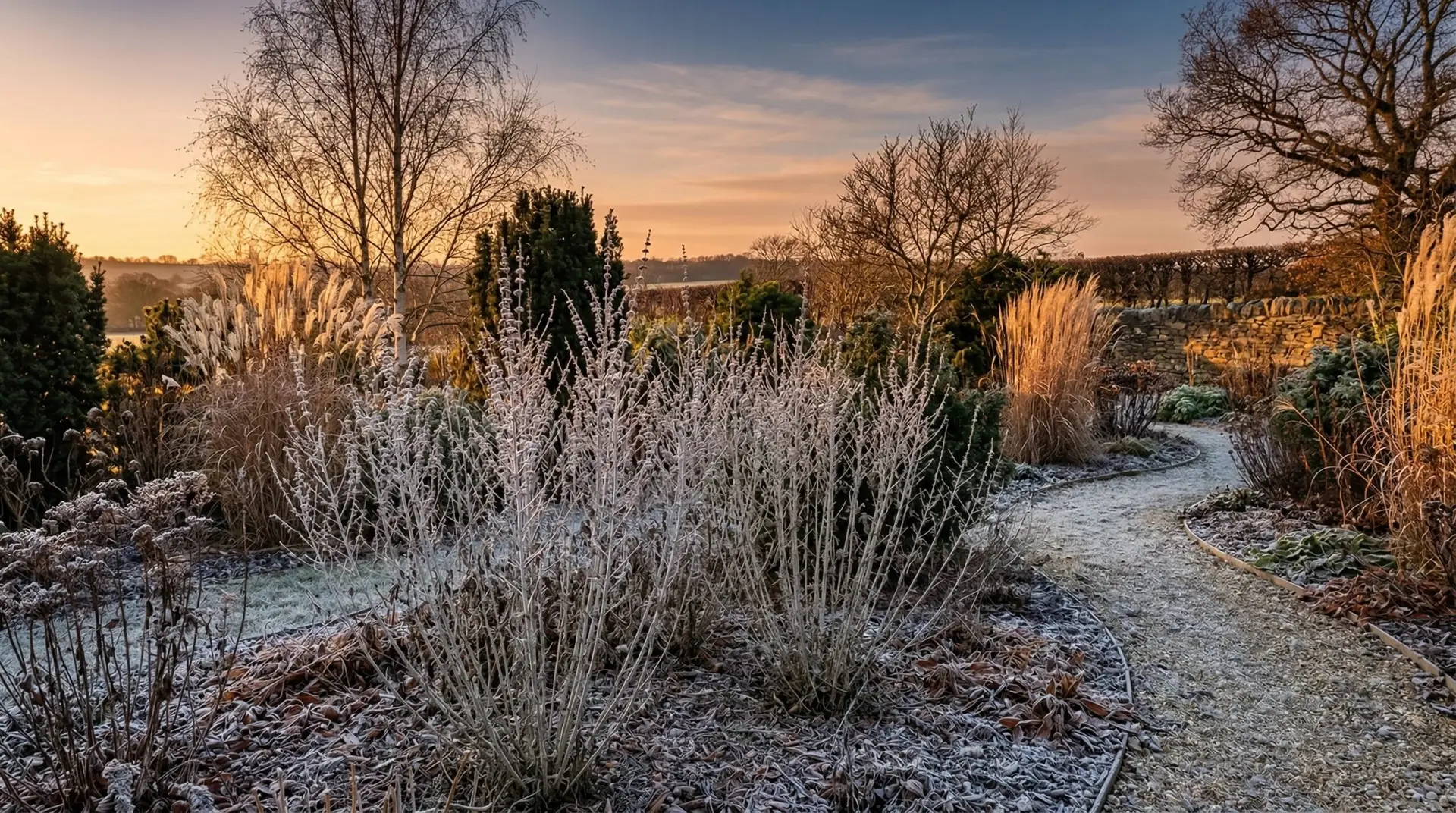
True winter arrives with a hard freeze that silences the yard and strips the last leaves from the deciduous trees. This is the season where Russian sage winter interest becomes the focal point of the dormant border. The pale, chalky stems stand rigidly upright, glowing silver-white against the drab browns and grays of the sleeping garden. When a heavy frost settles over the yard, the fine hairs on the stems catch the ice crystals, turning the entire plant into a shimmering, glass-like sculpture. This skeletal beauty is a hallmark of the perovskia winter experience, proving that a garden can hold deep visual appeal even when completely devoid of green leaves and bright petals. The rigid stems also offer practical support, holding up the heavy snowfalls that might otherwise flatten the garden beds entirely. Seed-eating birds, particularly juncos and goldfinches, often land lightly on the sturdy branches, picking at the dried calyxes for whatever sustenance remains. Proper Russian sage winter care requires nothing more than observation and appreciation, letting the plant wait quietly through the darkest months of the year.
The deep cold eventually breaks, and the cycle prepares to begin again. The silver stems, battered by months of winter winds, may look tired and brittle by the time February gives way to March. Yet, beneath the frozen soil, the thick roots are already stirring, pushing moisture back up toward the crown. Soon, the sharp scent of pruning will fill the air once more, clearing away the old architecture to make room for the new. And then, just as the last bits of ice melt into the warming earth, the tiny gray-green buds will appear, promising another season of silver stems and lavender haze.
More About Russian Sage

Russian sage companion plants: what to grow and avoid
How to grow Russian sage for airy lavender-blue clouds that float above the summer border
Russian sage versus lavender and which silver-stemmed blue bloomer is right for your garden

How to prune Russian sage in spring without ending up with a woody tangled mess

Russian sage as a drought-tolerant superstar for waterwise and xeriscape gardens
Best Russian sage varieties from compact Little Spire to silvery Blue Jean Baby
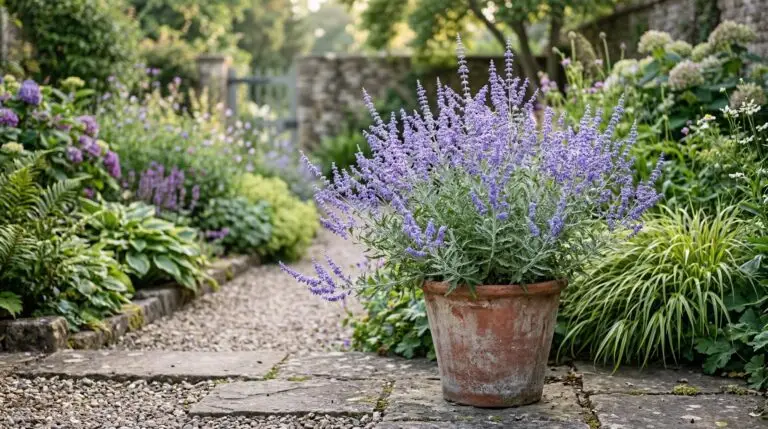
Growing Russian sage in containers for silver-blue drama on sunny patios
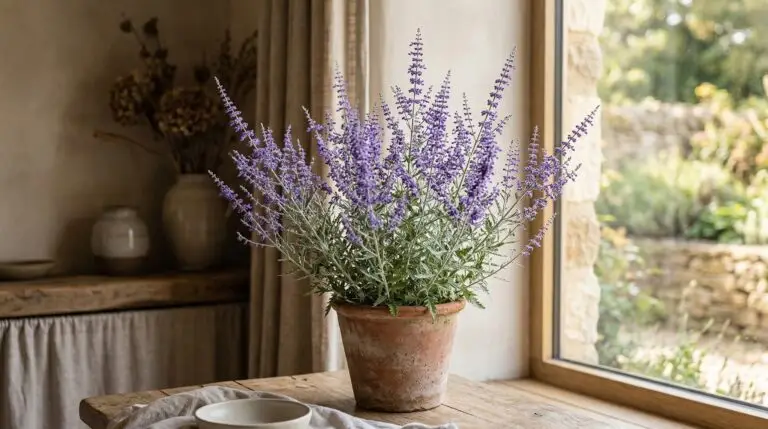
Russian sage for pollinators and the long bloom season that feeds bees for months
Enjoying our flower guides? Add YourFlowersGuide as a preferred source on Google. It helps more readers find us.
Add to Preferred Sources