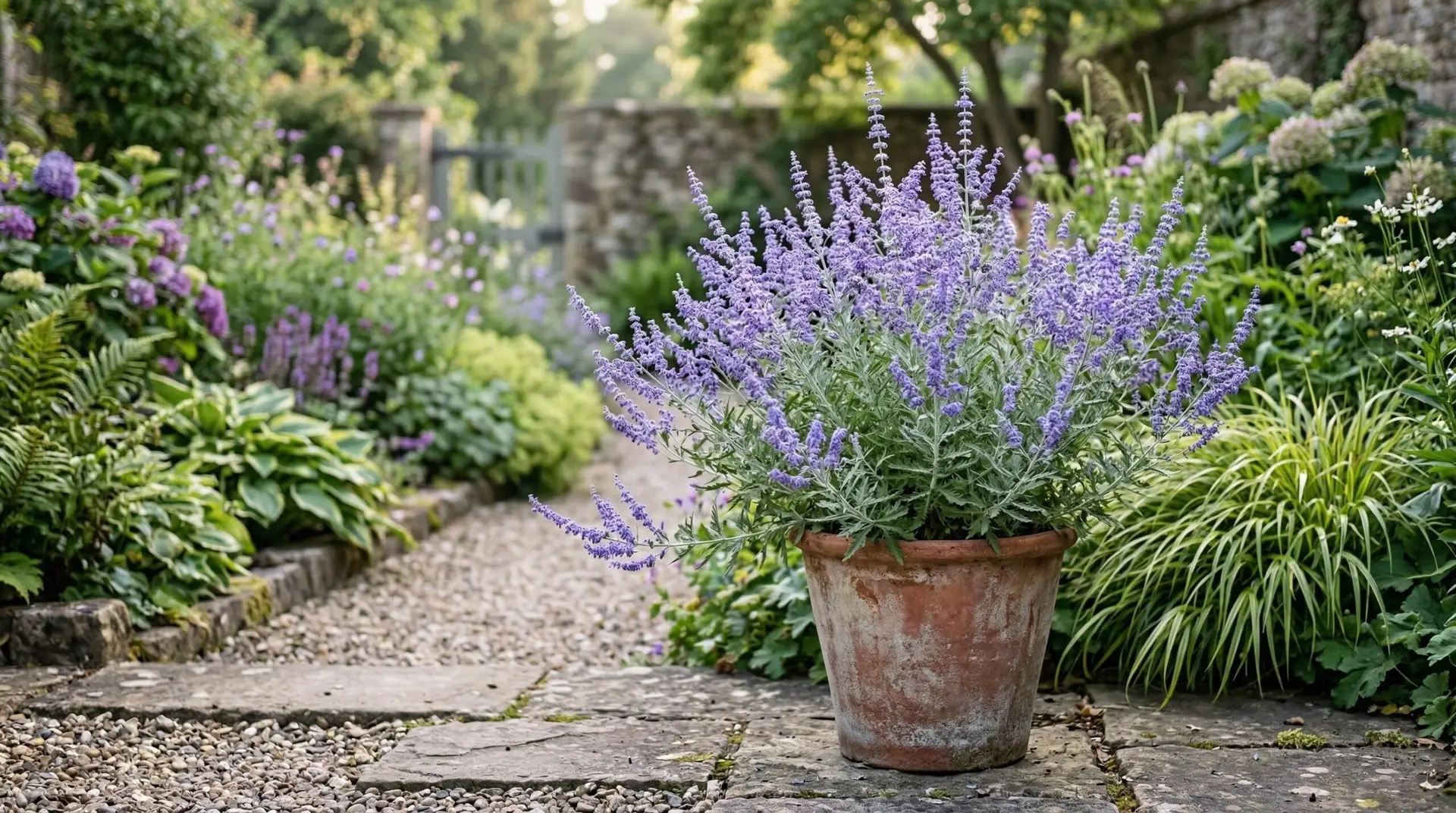
Walking out to a sun-baked patio in late July reveals exactly which plants can handle the heat and which ones just want to give up. When the petunias are wilting and the daisies look exhausted, Russian sage is usually standing tall, completely ignoring the blazing sun. It is a tough, woody perennial that thrives on neglect in the ground, but putting it in a container changes the rules entirely. The standard varieties grow massive and tend to flop over, turning into a sprawling silver-blue mess across the concrete. Growing container Russian sage successfully requires a specific approach to keep that upright, airy look without it taking over the entire seating area. The trick is understanding how to recreate its natural, rugged environment inside the confined space of a pot.
Creating a Mediterranean patio style relies heavily on plants with silver foliage and purple blooms that can handle intense afternoon light. Many gardeners naturally gravitate toward lavender for this look, but Russian sage offers a taller, looser texture that moves beautifully in the breeze. The scent is different too, smelling more like crushed sage and turpentine when you brush past it, which naturally keeps deer and rabbits far away. While it looks delicate with those tiny flowers on silvery stems, it is practically indestructible once established. The main challenge with keeping it in a pot is managing its deep root system and preventing the soil from holding onto too much moisture. Getting the foundation right on planting day will save a lot of frustration later in the season.
Contents 4 sections
Choosing the right variety and the perfect pot
The biggest mistake anyone can make with perovskia container gardening is buying the standard species plant from the discount rack. Those common types easily reach four or five feet tall and will quickly outgrow even a half-barrel planter, eventually splitting cheap plastic pots with their aggressive roots. After trying to force full-sized plants into containers for years, the method that consistently works is seeking out dwarf or compact varieties specifically bred for smaller spaces. Types labeled as Little Lace, Blue Jean Baby, or Denim ‘n Lace stay under three feet tall and naturally maintain a tighter, more upright shape. They still provide the same cloud of blue flowers but actually leave room on the patio for a chair. Spending a few extra dollars on a compact variety at the local nursery is always worth the investment for container gardening.
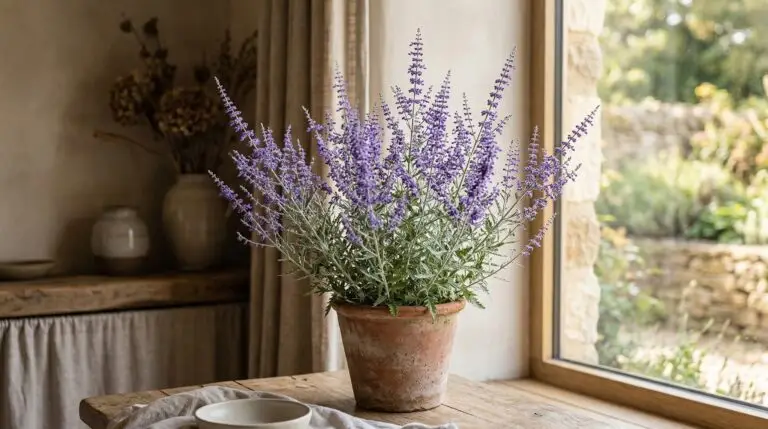
Selecting the container itself is just as important as picking the right plant, and drainage is the absolute priority. A beautiful glazed ceramic pot is useless if it only has one tiny hole in the bottom that easily clogs with wet soil. Terra cotta is usually the best choice because the porous clay breathes, allowing the soil to dry out faster, which is exactly what this plant wants. If terra cotta is too heavy or expensive, a standard plastic nursery pot works fine as long as you drill four or five extra holes in the bottom. You can simply drop that plastic pot into a decorative outer container, but make sure to empty any standing water that collects inside. A pot that is at least eighteen inches wide and equally deep will give the roots enough room to support the plant through a hot summer without requiring daily watering.
Getting the soil mix right for container survival
Standard commercial potting soil straight from the bag is far too rich and moisture-retentive for a plant that naturally grows in rocky, poor dirt. If the roots sit in heavy, wet soil, the plant will develop root rot and die before the first flowers even open. Creating the right mix does not require expensive specialty soils. A reliable, affordable recipe is mixing standard potting soil with an equal amount of coarse sand, perlite, or even fine gravel from the hardware store. This creates a fast-draining medium that mimics the dry, lean conditions where Russian sage naturally thrives. When you water the container, the liquid should run out the bottom almost immediately rather than pooling on the surface.
The actual planting process requires a bit of patience, as these plants often suffer from transplant shock when moved from their nursery containers. The seedlings or newly potted plants usually look completely dead for about two weeks after transplanting. They are not dead, and the worst thing to do at this stage is to panic and start watering them heavily. Give them time to adjust to the new soil and establish their roots in the gritty mix. Hold off on any fertilizer, as rich nutrients will only encourage floppy, weak growth rather than the sturdy silver stems you want. Once the plant settles in and starts pushing out new gray-green leaves, you will know the root system has successfully taken hold.
Watering rules and summer maintenance
A plant in the ground might survive on natural rainfall alone, but a potted plant relies entirely on you for survival. Even the most drought-tolerant plants need regular watering when confined to a container, especially during July and August heatwaves. The rule for Russian sage in pots is to wait until the top three inches of soil are completely bone dry before reaching for the hose. When you do water, soak the pot thoroughly until water pours out the drainage holes, and then ignore it again for several days. Constant, shallow watering encourages shallow roots, which makes the plant much more vulnerable to heat stress. If the foliage starts to look slightly gray and limp, it is time for a deep drink, but it will bounce back quickly once hydrated.
Summer maintenance is minimal, which is why this plant is such a favorite for busy gardeners who want a beautiful patio without constant labor. You do not need to deadhead the tiny flowers, as the purple calyxes hold their color long after the actual blooms have faded. The airy structure makes it an excellent companion for other sun-loving container plants that need a backdrop. Placing a pot of bright yellow coreopsis next to the silver-blue Russian sage creates a classic color contrast that lasts for months. If the stems do start to get a bit unruly or lean too far into the walking path, you can safely trim them back by a few inches to encourage bushier growth. Just avoid cutting into the hard, woody base of the plant during the active growing season.
Winter care for potted perennials
Keeping perennials alive through the winter in containers is always a gamble because the roots do not have the insulating protection of the earth. The general rule of thumb is that a plant in a pot loses about two zones of cold hardiness compared to one planted in the ground. Gardeners in the South may find this easier because their mild winters rarely freeze the root ball solid for extended periods. In northern zones, the approach changes entirely, and leaving a potted Russian sage exposed on an icy patio will usually kill it. The safest method is to move the container into an unheated garage or shed after the first hard frost causes the leaves to drop. The plant needs the cold dormancy period, but it needs protection from the freezing wind and the constant freeze-thaw cycle that turns container soil to mush.
When spring arrives, bringing the pot back out into the sun requires careful timing to avoid shocking the dormant plant. Wait until the severe overnight freezes have passed, and then cut the old, dead stems back to about four inches above the soil line. It takes a long time for Russian sage to wake up in the spring, and it is completely normal to stare at a pot of dead-looking twigs well into May. Once the weather genuinely warms up, tiny silver buds will appear on the lower stems, signaling that the plant survived another year. Growing these tough, aromatic plants in containers takes a bit of planning and a lot of coarse sand, but the reward is a low-maintenance, drought-resistant patio display that stands up to the worst summer heat.
More About Russian Sage
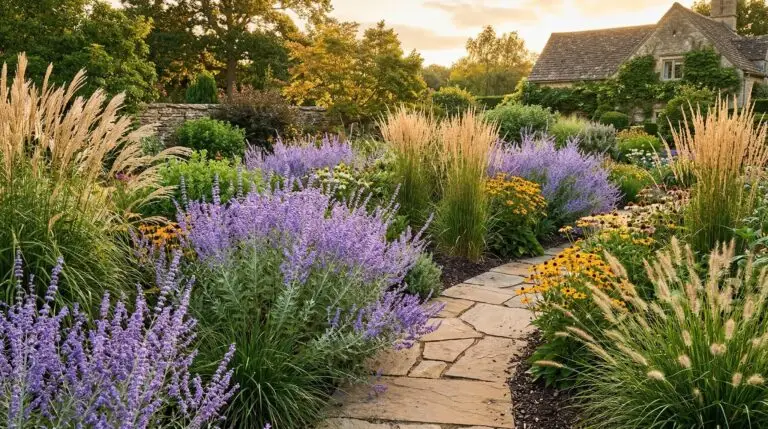
Russian sage companion plants: what to grow and avoid
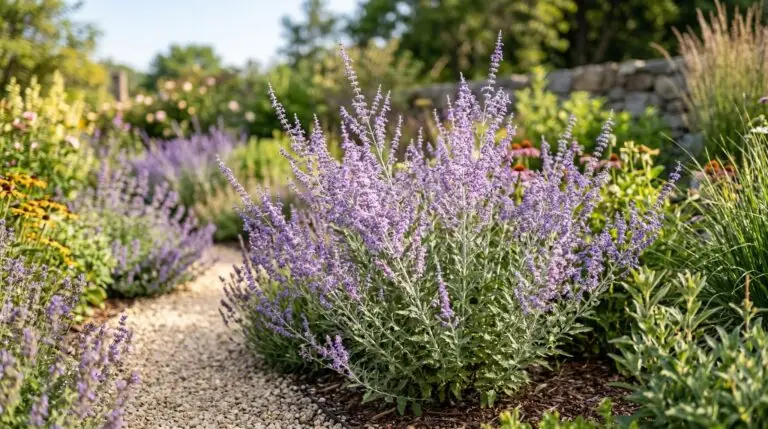
How to grow Russian sage for airy lavender-blue clouds that float above the summer border
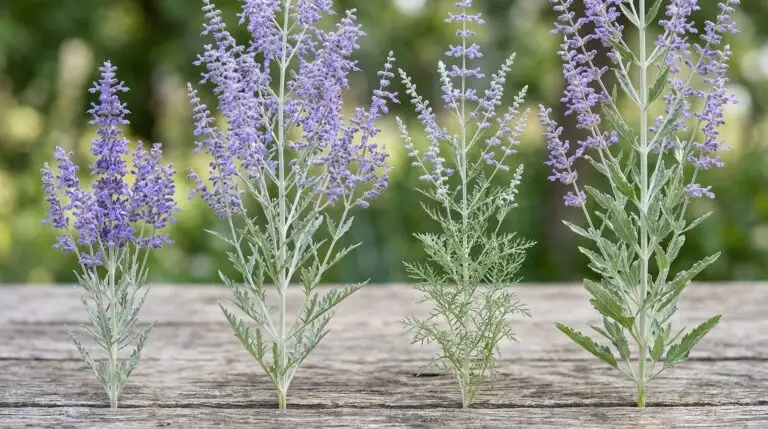
Russian sage versus lavender and which silver-stemmed blue bloomer is right for your garden
How to prune Russian sage in spring without ending up with a woody tangled mess
Russian sage as a drought-tolerant superstar for waterwise and xeriscape gardens
Best Russian sage varieties from compact Little Spire to silvery Blue Jean Baby
Russian sage in winter and the silver-white stems that bring structure to the frozen garden
Russian sage for pollinators and the long bloom season that feeds bees for months
Enjoying our flower guides? Add YourFlowersGuide as a preferred source on Google. It helps more readers find us.
Add to Preferred Sources