What to plant with daylilies
The pairing · pick a flower
All daylilies companions
What not to plant near daylilies
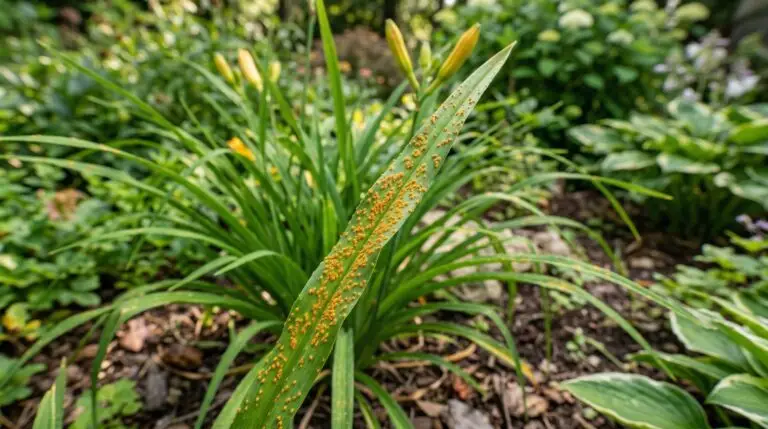
Daylilies are one of the most forgiving perennials in the sunny border, tolerant of heat, drought, salt, and poor soil in a way few other flowers manage, which is exactly why the companion question here is less about survival and more about design. Almost any tough, full-sun plant will grow next to a daylily without complaint. The real problem the reader is trying to solve is what happens after the bloom: each individual flower lasts one day, and even a strong repeat-blooming clump has a bloom window of roughly three to five weeks before the strappy foliage sits there for the rest of the season doing very little. The companions that actually earn their spot are the ones that fill that gap, cover the foliage once it starts to fade, or bring a shape and color a daylily simply doesn’t have.
The best companions for daylilies, explained
The strongest daylily pairings share its exact conditions and then do a job it can’t. Coneflower and black-eyed Susan are the clearest examples: both want the same full sun and average, well-drained soil, and both keep blooming from midsummer into fall, right when most daylily cultivars have finished their flush. Russian sage and catmint match daylily’s tolerance for lean, dry soil even more closely than most flowering perennials, and their fine, airy, gray-green foliage is the sharpest textural contrast available to a daylily’s bold, arching strap leaves. Garden phlox carries the same idea with rounded flower domes that echo the daylily’s warm tones while adding height, though it asks for a little more consistent moisture and airflow in return. For structure that lasts past the growing season, switchgrass and other ornamental grasses share daylily’s drought tolerance and then hold their form through fall and winter, long after daylily foliage has died back to nothing. And for the specific job of hiding a fading base, sedum, hardy geranium, and shasta daisy all mound low enough to screen the daylily’s feet without smothering the crown. None of this is exotic matching. It’s mostly a matter of picking plants that share the same sunny, lean conditions and then bloom on a different calendar than the daylily does, so the bed never goes flat for long.
One pairing deserves its own honest note because it shows up constantly in both directions: hosta. Nursery lists and garden forums repeat "daylily and hosta" as a classic combination, and the leaf contrast really is striking, broad rounded hosta foliage against a daylily’s narrow blades. But Iowa State University Extension is direct about hosta’s actual needs: it grows best in shade to part shade with steady moisture, and it specifically cautions against planting it in the full sun a daylily wants to bloom well. The pairing works in the realistic middle ground many home borders actually have, part sun and part shade with average-to-moist soil, not in a daylily’s driest, sunniest spot. Treat the daylily-and-hosta combination as conditional rather than universal, and you’ll get the leaf contrast without losing bloom on either plant.
What not to plant near daylilies
Daylily has none of the allelopathy or serious pest-transfer risk that dominates the avoid list for flowers like sunflower or rose, so the real fears here are narrower and more mechanical. The most concrete one is crowding between two vigorous clumping perennials of the same scale. Bearded iris is the headline example: both plants are tough, rhizomatous or fibrous-rooted, and similarly sized, and left tight together for a few seasons their root and rhizome zones overcrowd each other, thinning bloom on both and forcing an earlier division than either would need on its own. Clemson HGIC notes that overcrowded iris "decline, which results in reduced growth and few, if any, flowers," a mechanism that applies just as directly when a daylily clump is the plant crowding in. The fix isn’t avoiding iris altogether, it’s giving each clump its own footprint, at least 18 inches, so neither has to fight the other for root space.
The second real avoid category is genuine shade and steady-moisture plants sited in true shade, the same mismatch behind the hosta caveat above, generalized to any plant that actually needs low light and constant water rather than daylily’s sun-and-average-moisture preference. Aggressive spreading groundcovers, ajuga, vinca, and mint among them, are commonly named as a threat to a daylily’s crown, since they form dense running mats that can physically smother a clump over a season or two; this is a generic runner problem rather than anything daylily-specific, so treat it as a plausible, widely repeated caution rather than hard proof. And daylily is frequently steered away from direct planting under trees or large shrubs, not because it can’t tolerate a little shade, but because a big surface-rooted tree competes hard for the same water and nutrients a daylily’s own shallow, fibrous roots need, a factor the NC State Extension Gardener Handbook names directly as part of siting any herbaceous perennial. One genuinely reassuring fact belongs here too: daylily shows up repeatedly on juglone-tolerant plant lists, meaning it is not harmed by black walnut, which makes it one of the easier flowers to place near a walnut tree when almost nothing else in the bed will grow.
Do they like the same conditions?
Daylily’s own conditions are wide and forgiving, which is exactly why its companion pool is so large. It wants full sun to light shade, ideally six or more hours of direct sun, though it will tolerate as little as two hours and simply flower less and grow leggier the more shade it gets. NC State Extension lists it as hardy from USDA zone 3a through 9b, an unusually wide range for a single genus, and notes it tolerates drought, salt, and poor soil once established. Water needs are equally modest: consistent moisture while budding and blooming produces the best flowers, but daylily does not demand the constant moisture a plant like hydrangea or astilbe insists on. Soil is much the same story. Loamy, well-drained ground with organic matter is ideal, but daylily grows in nearly any soil short of one that stays soggy.
The honest myth worth busting here isn’t about daylily itself, it’s about the companions people want to force onto it. Because daylily tolerates so much, gardeners sometimes assume any popular perennial pairing will simply work, hosta being the clearest case, when the actual limiting factor is the companion’s own needs, not daylily’s tolerance. A plant that genuinely wants shade or constant moisture will struggle next to a daylily even though the daylily itself would have been perfectly happy in a shadier, damper spot too. The shared-conditions ruler only protects you if you check the companion’s real preference against the specific spot you’re planting it in, not against daylily’s general reputation for toughness.
How to plant them together
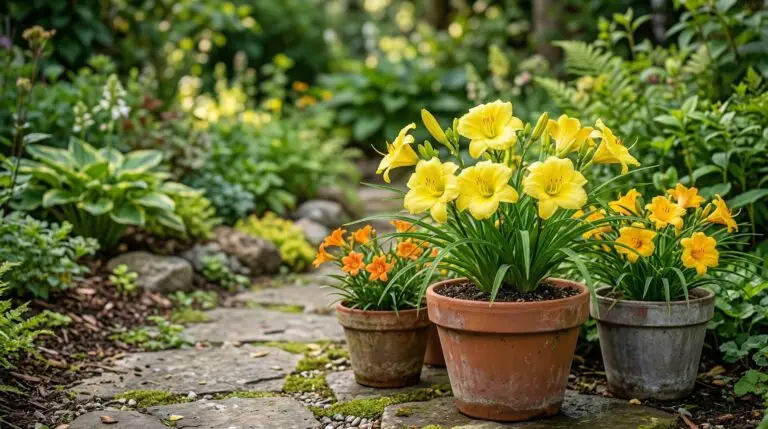
Layer by bloom timing rather than by height alone, since daylily’s short individual bloom window is the real design problem to solve. Start with spring bulbs like daffodil, planted about 6 inches from the daylily crown and 5 to 7 inches deep; they finish blooming and begin their yellowing dieback before daylily foliage is even up, and the daylily’s emerging leaves then cover the fading bulb foliage exactly when it needs to be left alone to recharge for next spring. Space clump-forming companions of a similar scale, bearded iris especially, at least 18 inches from the daylily crown so root zones don’t compete. Low, mounding plants meant to screen the daylily’s base, catmint, sedum, hardy geranium, work best set 12 to 18 inches from the crown, close enough to cover the foliage without smothering it. Taller summer-into-fall bloomers like coneflower, black-eyed Susan, and Russian sage do best 18 to 30 inches out, where they can take over visual interest once the daylily flush winds down without shading the clump. In containers, daylily’s tolerance for average, well-drained soil and full sun makes it an easy anchor plant, paired with a trailing or low-mounding companion at the pot’s edge rather than anything that needs consistently moist soil, since containers dry out faster than open ground and daylily handles that far better than most partners would.
Does companion planting actually work for daylilies?
Some of it, yes, provably. The shared-conditions matches are the most solid ground here: NC State Extension documents coneflower’s full-sun, drought-tolerant profile directly, and Penn State does the same for black-eyed Susan, so pairing either with daylily on conditions alone is Proven, not folklore. The daffodil sequence is Proven too, a simple, well-documented case of two plants whose growth cycles never overlap, so one’s dieback is masked by the other’s emergence without either competing for anything. The iris overcrowding caution is Partial: the overcrowding physiology for iris is well documented on its own, but the specific claim that daylily makes it worse is more consumer-repeated than independently tested for this exact pairing. And several popular claims don’t hold up as more than folklore, that certain herbs "repel" pests near daylily, or that specific companions somehow improve a daylily’s disease resistance beyond what good spacing and full sun already do. Where the evidence is genuinely thin, this page says so plainly rather than dressing up a popular guess as settled fact.
The clearest myth worth resolving directly: daylily is not the same plant as the invasive orange ditch lily people sometimes worry about. That aggressive spreader, *Hemerocallis fulva*, spreads by rhizome and is listed as invasive in several US states and counties. The thousands of hybrid cultivars actually sold and grown in gardens, the ones this page covers, are clump-forming and spread slowly by comparison, so a well-behaved garden daylily is not going to engulf its neighbors the way its wild cousin can engulf a roadside ditch.
Sources
NC State Extension Gardener Plant Toolbox: Hemerocallis · NC State Extension Gardener Plant Toolbox: Hemerocallis fulva · NC State Extension Gardener Handbook: Herbaceous Ornamentals · Iowa State University Extension and Outreach: All About Hostas · Clemson HGIC: Give Your Bearded Irises Some Space · Penn State Extension: Landscaping and Gardening Around Walnuts and Other Juglone Producing Plants
FAQ
What can I plant in front of daylilies?
Low, mounding plants that share daylily’s sun and drainage needs work best in front, catmint, sedum, and hardy geranium all stay under 18 inches and screen the daylily’s base without hiding the bloom stalks. Sweet alyssum or coreopsis do the same job as smaller annual or shorter-lived options.
What should you not plant near daylilies?
Avoid true shade and steady-moisture plants sited in real shade, aggressive spreaders like mint or vinca that can smother the crown, and crowding a similarly scaled clumping perennial like bearded iris tight against it. None of these are toxic to daylily, they’re spacing and conditions mismatches.
Are daylilies invasive?
The hybrid cultivars sold and grown in most gardens are not; they form slow-spreading clumps. The wild orange *Hemerocallis fulva*, sometimes called ditch lily, is a different matter: it spreads by rhizome and is listed as invasive in several US states and counties, including Virginia, Georgia, Ohio, Kentucky, Delaware, West Virginia, and Wisconsin.
Can I plant hosta with my daylilies?
Only if the spot is genuinely part sun and part shade with consistent moisture. In a daylily’s sunniest, driest position, hosta will struggle since it needs shade and steady water to thrive, even though the leaf contrast between the two plants is real and worth having where the light actually supports both.
What blooms after daylilies finish flowering?
Coneflower, black-eyed Susan, Russian sage, garden phlox, and sedum all peak from midsummer into fall, well after most daylily cultivars have finished their bloom window, and all tolerate the same sunny, average-to-dry conditions daylily does.
More About Daylily
Growing daylilies in containers for small spaces and apartment balcony gardens
Daylily flower meaning and why each bloom lasts only one beautiful day
Daylilies versus true lilies and understanding the differences that matter for your garden
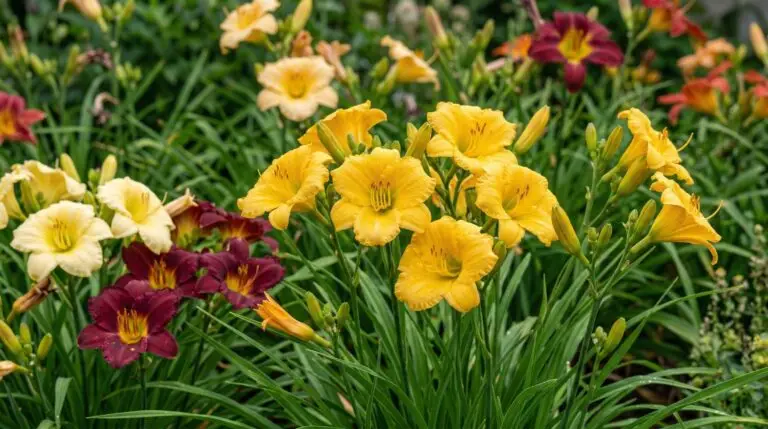
Best reblooming daylily varieties that flower from June through September
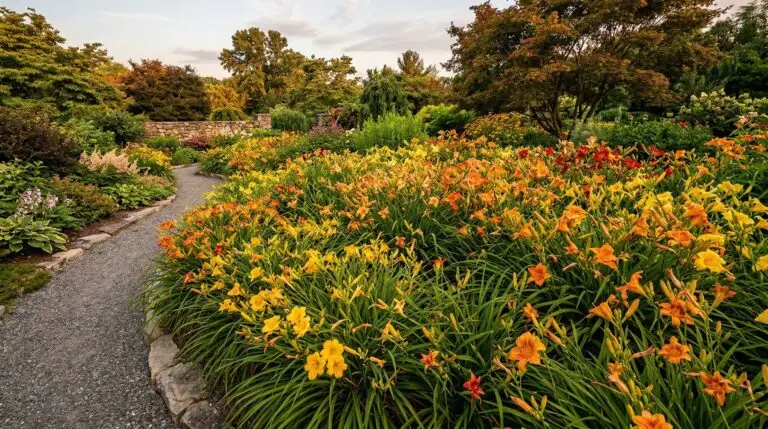
How to divide overgrown daylily clumps for healthier plants and more blooms
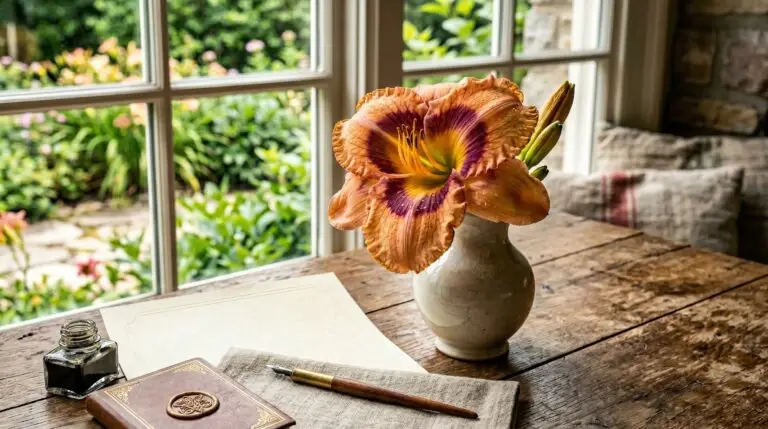
Collecting daylilies and the world of hybridizing with over 90000 named varieties
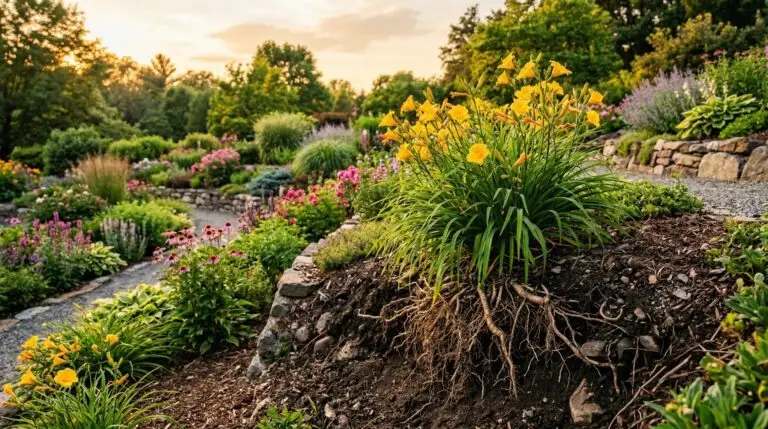
Using daylilies for erosion control on slopes and banks where nothing else grows
Edible daylilies from garden to plate and how to cook with hemerocallis flowers