When gardeners set out to cover a bare fence or a large trellis, they often reach for the first clematis they see blooming in a nursery pot. This approach usually leads to disappointment, as many large-flowered hybrids are bred for compact growth and will never achieve the sweeping vertical scale required to hide a structure. To create a true wall of flowers, you need climbing clematis varieties that possess aggressive vigor and reliable branching habits. I have bypassed the delicate, slow-growing cultivars to focus exclusively on those that can genuinely swallow a fence line or climb a substantial trellis within a few seasons. These selections prioritize coverage speed, disease resistance, and sheer volume of bloom over novelty colors. If you want a temporary fix, you might plant fast-growing annual vines, but for a permanent, structural display, these specific clematis are the only ones worth your time and space.
Early season mass coverage
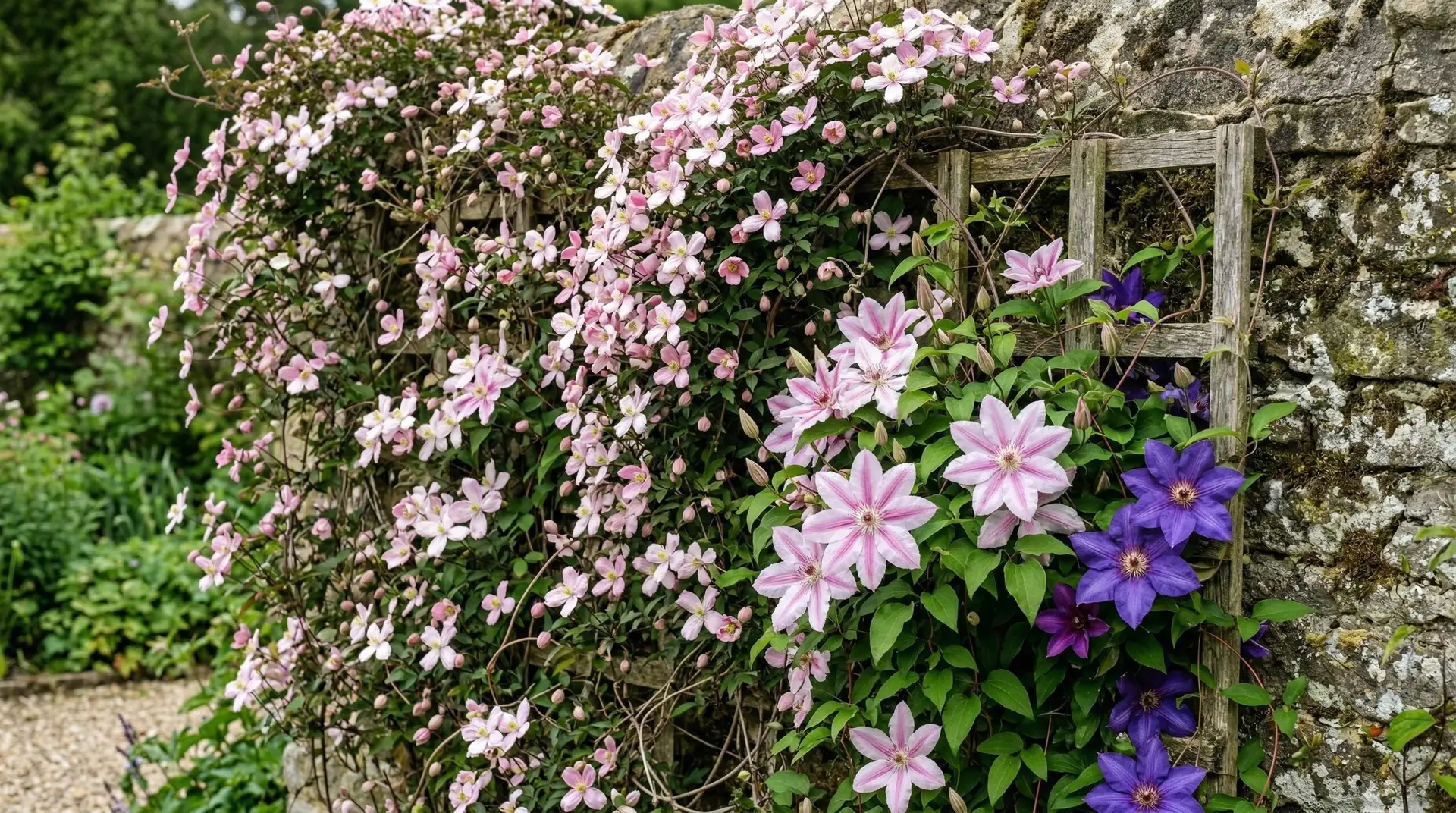
For absolute dominance over a large structure, Clematis montana is the undisputed choice among spring bloomers. This vigorous species can easily produce twenty feet of growth in a single season once established, making it the premier clematis for fence coverage on long property lines. Unlike the delicate hybrids, montana varieties like ‘Rubens’ produce thousands of smaller, four-petaled flowers that completely obscure the foliage in late spring. You must provide a sturdy support system, as the mature weight of a montana vine will easily crush a flimsy wooden lattice. It thrives in full sun but will tolerate partial shade, requiring almost no pruning other than removing dead wood after the blooms fade. I include it here because nothing else matches its raw speed and architectural scale in the early gardening season.
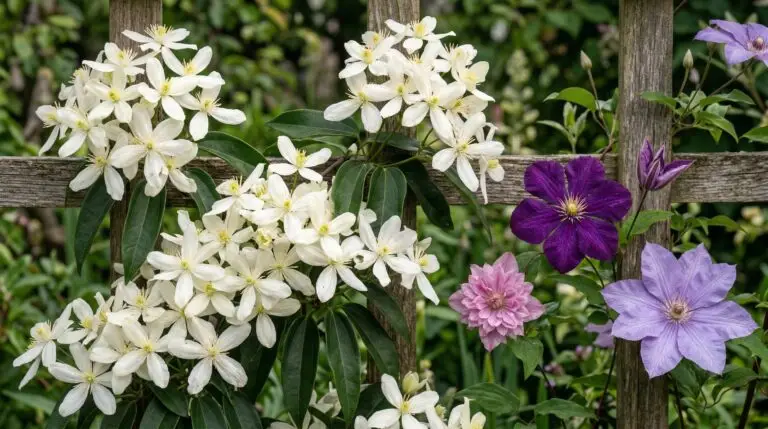
Gardeners in mild climates frequently overlook Clematis armandii, completely missing out on one of the few truly evergreen climbing clematis varieties. This species produces thick, leathery leaves that remain attractive straight through the winter months, solving the common problem of bare, tangled vines looking unsightly in January. In early spring, it yields clusters of white, highly fragrant flowers that rival the scent of traditional warm-climate vines while offering much better cold tolerance. It requires a sheltered location protected from harsh winter winds and demands excellent drainage to prevent root rot. The thick foliage creates a solid visual barrier that completely blocks the view of whatever structure sits behind it. Many general guides skip evergreen clematis entirely, but if you live in zone seven or warmer, armandii is an essential tool for creating year-round privacy on a boundary fence.
Reliable summer performance
Moving into the summer months, the classic Clematis ‘Jackmanii’ earns its permanent place in any curated garden list through sheer, unyielding reliability. While garden centers are flooded with new purple introductions every year, ‘Jackmanii’ consistently outperforms them when tasked with covering a vertical space. It produces four-inch, velvety dark purple blooms in such staggering numbers that the green foliage practically disappears from mid-summer until early autumn. This is a Group 3 clematis, meaning it blooms on new wood and requires a hard pruning down to about eighteen inches from the ground every late winter. This hard pruning cycle actually makes it the best clematis trellis candidate, as it prevents the vine from becoming a top-heavy, tangled mess with bare stems at the base. You can trust this variety to perform beautifully in full sun, provided you follow the old rule of keeping its root zone shaded and cool with low-growing companion plants or a thick layer of mulch.
Finding a vigorous climber for a shaded fence presents a specific challenge, as most clematis require at least six hours of direct sunlight to bloom well. Clematis ‘Nelly Moser’ provides the perfect solution for these difficult eastern or northern exposures where other vines simply produce leaves and refuse to flower. The blooms are enormous, often reaching eight inches across, featuring pale pink petals struck through with a distinct, deep carmine stripe. If you plant ‘Nelly Moser’ in full southern sun, those striking stripes will fade to a washed-out white within days, making partial shade an absolute requirement rather than just a tolerance. As a Group 2 clematis, it blooms primarily on the previous year’s stems in early summer, with a smaller flush of flowers on new growth in the fall. I selected this variety specifically because it brings massive flower size and reliable vertical growth to the darker corners of the garden where most climbing plants fail.
Late season coverage and necessary exclusions
Many old gardening manuals recommend Sweet Autumn clematis for late-season fence coverage, but I intentionally exclude it from this list. This vigorous white bloomer has proven highly invasive across much of North America, seeding itself aggressively into natural woodlands and smothering native vegetation. Instead of risking ecological damage for a few weeks of September flowers, gardeners should look to late-blooming texensis hybrids like ‘Princess Diana’ for autumn color. These varieties climb swiftly to about eight feet, producing unique, tulip-shaped flowers in brilliant pink right as the rest of the garden begins to fade. They offer the same vertical coverage and late-season interest without the destructive, suffocating spread of the autumn species. A good garden choice must be responsible as well as beautiful, and the texensis group provides that perfect balance of late vigor and garden manners.
The curator’s top selection
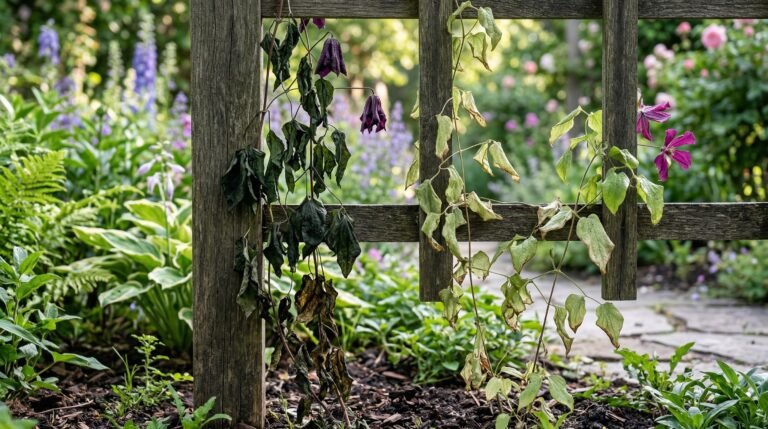
Many gardeners struggle with clematis wilt, a fungal disease that causes large-flowered hybrids to collapse overnight just as they prepare to bloom. To avoid this frustration entirely, I strongly advocate for the Viticella group of clematis, which possess a natural immunity to this devastating wilt. Varieties like ‘Etoile Violette’ produce slightly smaller flowers than the standard hybrids, but they compensate by generating hundreds of blooms on a rapidly growing, deeply resilient plant. These vines are exceptionally forgiving of poor soil and will quickly scramble up a tall fence, weaving themselves through the slats with minimal tying or training. Like ‘Jackmanii’, they require a simple, hard prune near the ground each winter, ensuring a fresh, vigorous flush of disease-free growth every single spring. By trading a few inches of flower diameter for absolute biological resilience, the Viticella varieties offer a far more successful experience for the home gardener.
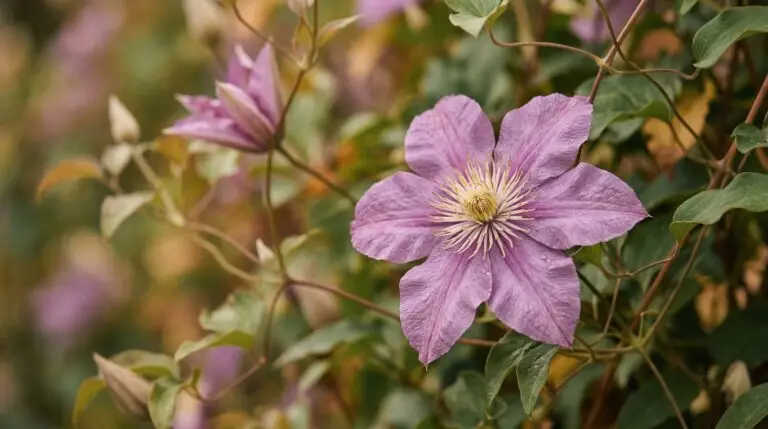
When forced to choose a single, definitive variety for covering a fence or trellis, Clematis viticella ‘Betty Corning’ stands as my absolute top recommendation. It completely bypasses the stiff, flat-faced appearance of typical garden center hybrids in favor of nodding, pale lilac bells that release a subtle, sweet fragrance. The coverage speed is exceptional, easily reaching ten to twelve feet in a single summer while maintaining a graceful, airy texture that never looks heavy or suffocating on a trellis. It blooms continuously from mid-summer straight through to the first hard frost, ignoring the extreme heat and humidity that shuts down lesser varieties. ‘Betty Corning’ requires no careful pruning math, suffers from no wilt, and covers a vertical structure with an elegance that the heavily marketed large-flowered types simply cannot match. If you have one empty trellis and want a guaranteed wall of flowers, this is the exact plant you should source.
More About Clematis

Clematis seed heads as winter garden interest and dried flower arrangements
Evergreen clematis varieties that keep your garden looking alive through winter
Small-space clematis varieties perfect for containers mailboxes and small trellises
Clematis flower meaning and the symbolism of the traveller’s joy vine
Understanding clematis pruning groups so you never accidentally cut off your blooms
Growing clematis on trees for a naturalistic look inspired by woodland climbing vines
How to grow clematis and roses together on the same trellis for a stunning combination