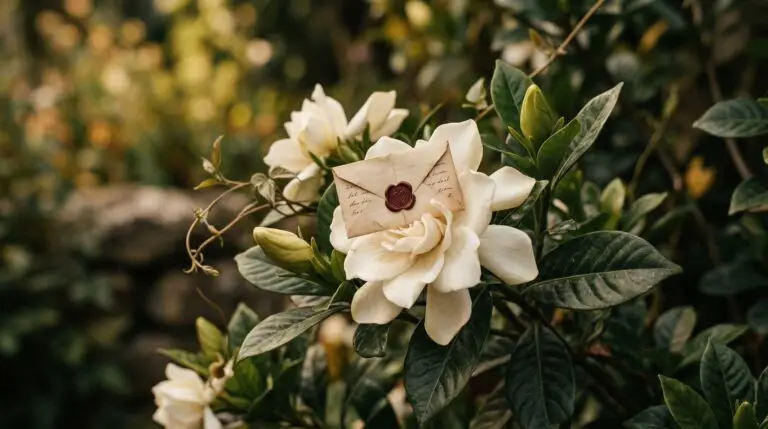
The morning of a wedding carries a specific atmosphere, often defined by the quiet moments before the rush of the day begins. When a florist opens a box of fresh gardenias in a bridal suite, the scent arrives before the flowers are even visible. It is a heavy, sweet perfume that instantly anchors the room and gives the morning a distinct character. A gardenia wedding is defined by this invisible presence, wrapping the bride, the groom, and the guests in a fragrance that belongs entirely to the celebration. The creamy white petals look as though they were sculpted from soft wax, resting against dark, glossy green leaves. There is an undeniable gravity to choosing such a classic flower for a wedding day. Decades of brides have carried these blooms down aisles, drawn to their elegant simplicity and the romantic weight of their perfume.
The tradition of a single pristine bloom
The gardenia corsage holds a particular place in the history of wedding florals. Long before massive installations and cascading floral arches became common, the focus of wedding flowers rested closely on the people involved. Mothers and grandmothers often wore a single gardenia pinned to a lapel or tied to a wrist with a silk ribbon. This solitary flower required no extra embellishment to feel complete.
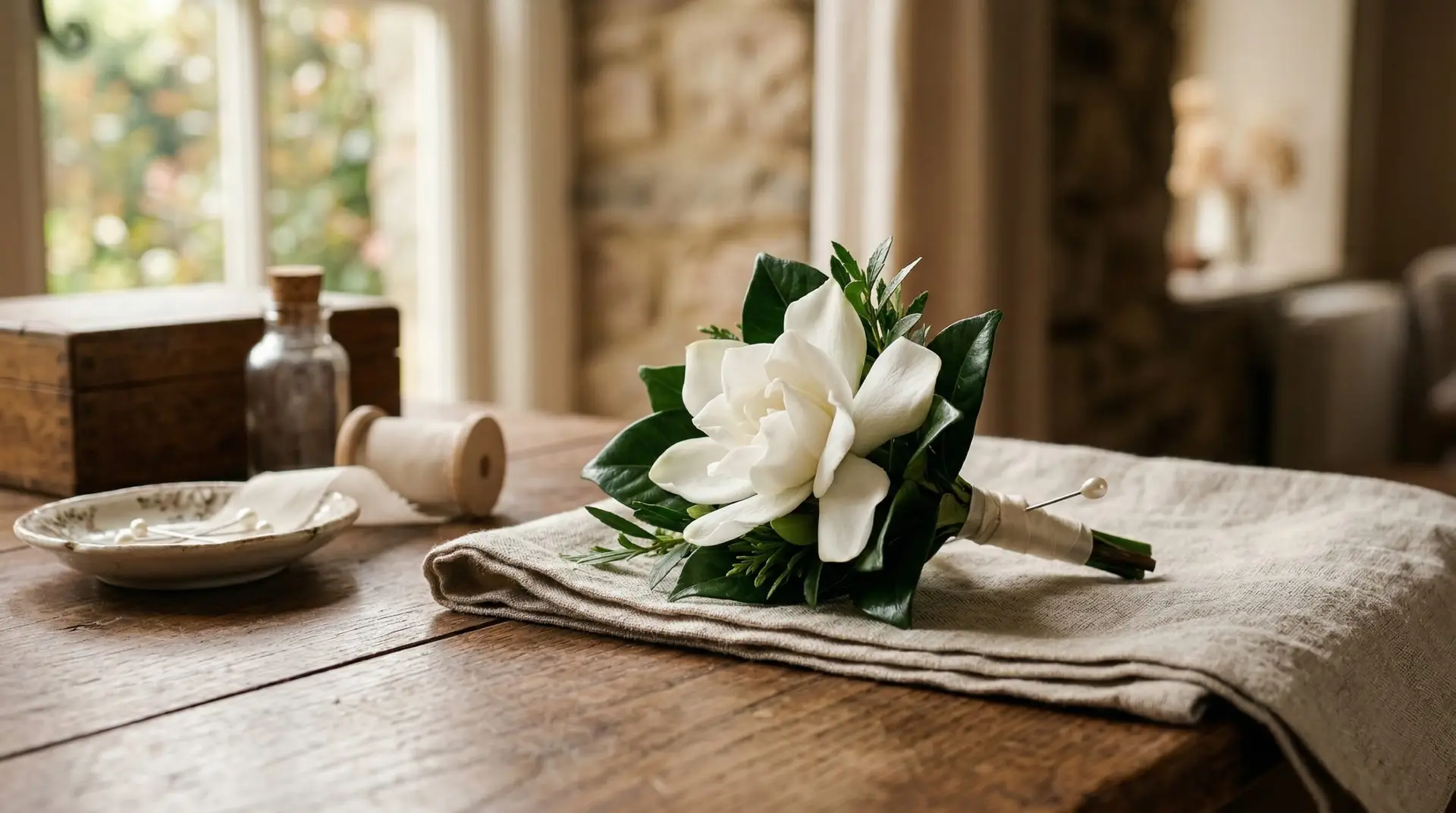
Wearing a single bloom is a quiet statement of elegance that translates beautifully to modern weddings. A gardenia boutonniere pinned to a dark tuxedo lapel offers a sharp, clean contrast that feels entirely sophisticated. The flower stands alone, though it pairs naturally with the structured elegance of a classic rose in surrounding arrangements. Unlike smaller, clustered blossoms, a gardenia commands attention through its perfect symmetry and scale. The tradition of handing a mother a gardenia corsage is a gesture of profound respect, acknowledging her role with a flower that carries historical significance. The scent follows the wearer throughout the reception, creating a personal cloud of fragrance that lingers long after the toasts are finished.
Designing a gardenia bouquet
Carrying a gardenia bouquet requires a commitment to classic design principles. The blossoms are substantial, meaning a bouquet does not need dozens of stems to feel lush and complete. Florists often wire individual gardenias to give them the necessary structure, as their natural stems are quite short and woody. This careful construction allows the blooms to sit at the perfect angle, facing outward to show their swirling center petals.
A bouquet composed entirely of gardenias is a distinct choice, presenting a solid mass of creamy white against the wedding dress. Many florists prefer to mix them with other soft, romantic flowers to create a varied texture. Tucking gardenias among fully open peonies creates an arrangement that feels incredibly rich and abundant. The pure white of the gardenia petals contrasts beautifully with the subtle blush or deep crimson of companion flowers. For a more tailored appearance, designers might weave in sprigs of stephanotis, echoing the star-like quality of the gardenia on a smaller scale. The resulting bouquet is heavy in the hands, a physical reminder of the importance of the day.
Handling delicate petals and preventing browning
The beauty of the gardenia comes with a well-known fragility that requires careful handling. The petals are highly sensitive to the natural oils on human skin, and a single touch can cause the white surface to oxidize and turn a bruised brown. Florists handle these flowers by their stems or leaves, often wearing cotton gloves during the design process to protect the blooms. Keeping the flowers in pristine condition is the primary challenge of a gardenia wedding.
Preventing browning on the wedding day involves a mix of preparation and environmental control. Gardenias must stay cool until the absolute last moment before the ceremony begins. Florists often mist the petals with a specialized floral sealant that creates a microscopic barrier against the air, slowing down the oxidation process. Brides and bridesmaids must learn to hold their bouquets by the ribbon wrap, resisting the urge to adjust the flower heads with their fingertips. Even with perfect care, the edges of the petals may begin to show a faint ivory warmth as the evening progresses. This subtle shift in color is a natural part of the flower’s lifecycle and adds a soft, vintage quality to the blooms by the end of the night.
Scent as a lasting wedding memory
The visual appeal of a gardenia is only half of its value in a wedding setting. The human brain connects scent to memory more strongly than any other sense, making fragrance a powerful tool for preserving the experience of a single day. A bride who carries a gardenia bouquet is essentially choosing the perfume that will define her memories for the rest of her life. Long after the photographs are printed and the dress is stored, the smell of a gardenia will immediately recall the feeling of walking down the aisle.
This lasting connection is the true reward of choosing such a distinct and demanding flower. Years later, passing a blooming gardenia bush in a southern garden or catching the scent of a gardenia candle in a quiet room will bring the wedding day rushing back in vivid detail. The fragile nature of the petals makes their presence on the wedding day feel fleeting and precious. When the reception ends and the lights are turned down, the flowers will inevitably show the physical marks of the celebration. The petals will be softer, the white will have faded to a warm cream, and the edges will carry the faint brown bruises of a day well-lived. Yet the heavy, sweet scent remains exactly the same, lingering in the cool night air as a quiet reminder of the vows just spoken.
More About Gardenia
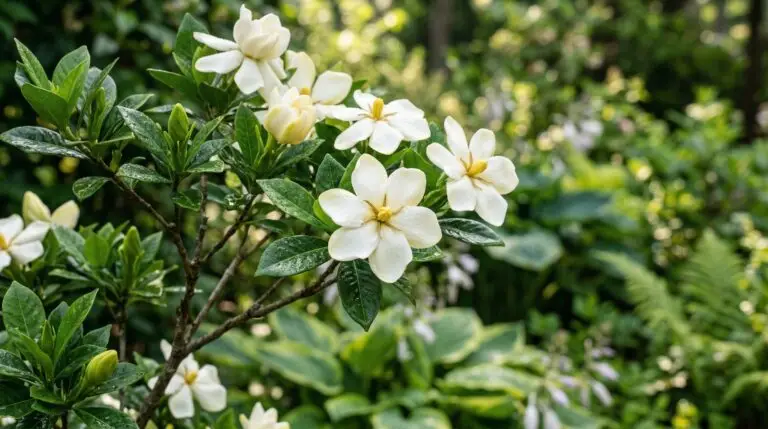
Cold hardy gardenias that survive winter in zones 6 and 7 with fragrant summer blooms
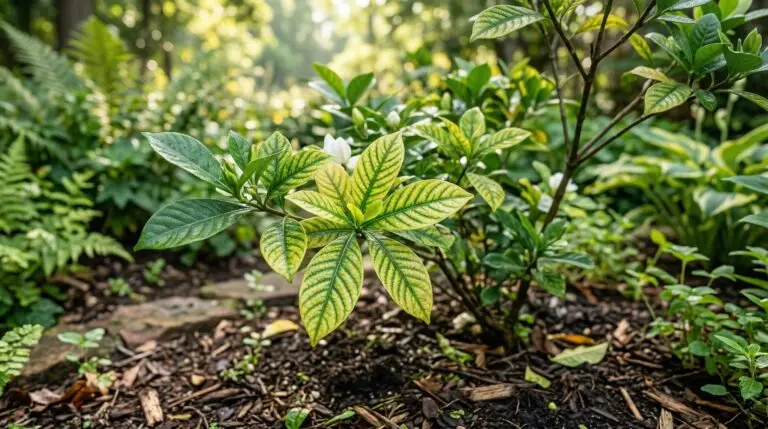
How to fix yellow leaves on gardenias with the right soil and feeding program
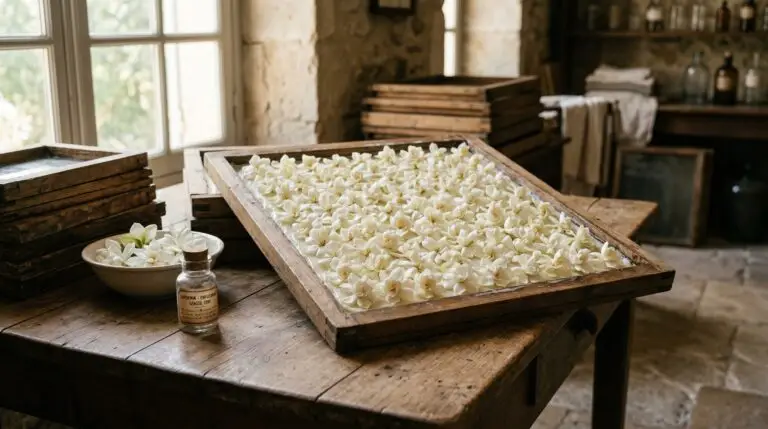
Gardenia essential oil and the history of this fragrance in perfumery and aromatherapy
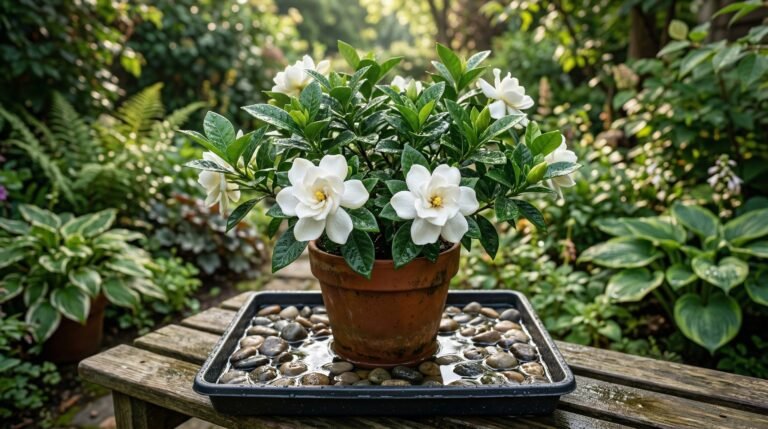
Growing gardenias indoors as houseplants and surviving the humidity challenge
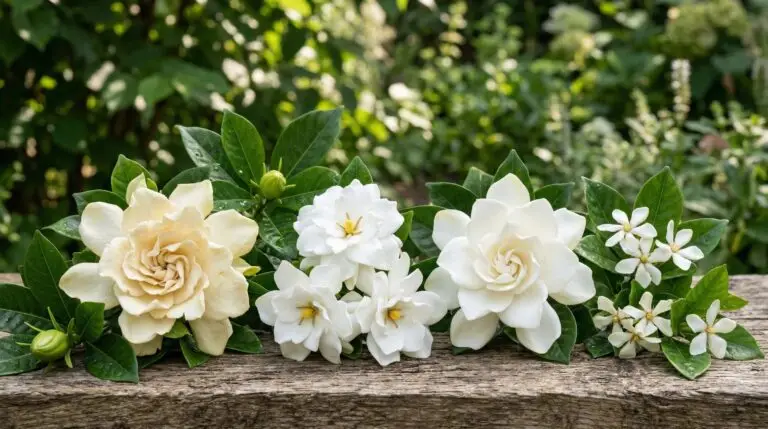
Best gardenia varieties from compact Radicans to the classic August Beauty
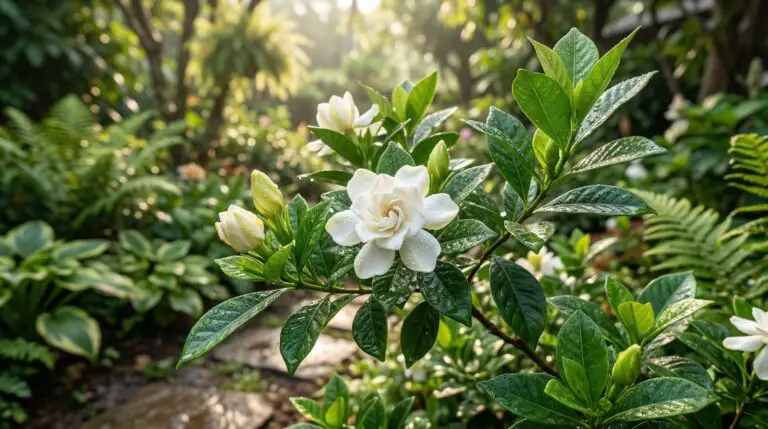
Why gardenia buds turn brown and drop off before opening and how to stop it
Gardenia flower meaning and why this bloom represents secret love and purity
How to grow gardenias for intoxicating fragrance and creamy white blooms