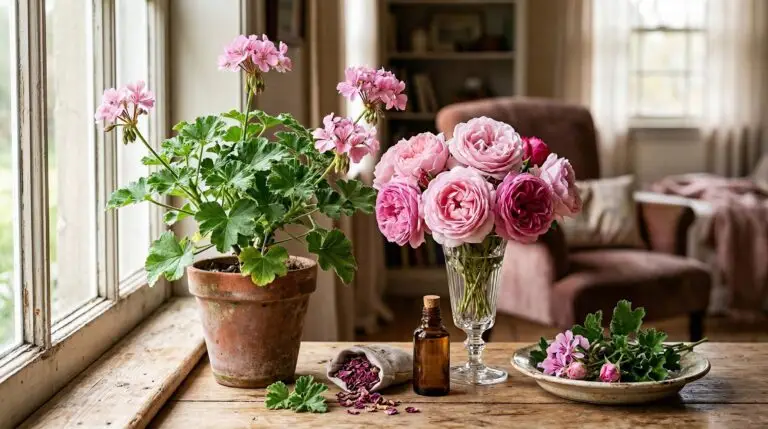
Walk into any local garden center in May, and you will see benches full of bright red and pink flowers labeled as geraniums. Walk to the perennial section, and you will find a completely different plant with delicate blue or purple flowers, also labeled as a geranium. This naming overlap creates a frustrating situation for gardeners trying to plan their beds or containers. You might purchase a plant expecting it to survive the winter, only to watch it turn to mush at the first frost. Or you might buy a plant hoping for massive red blooms all summer, only to get small blue flowers that fade by July. Understanding the difference between a true hardy geranium and the tender plant botanically known as a pelargonium is the first step in making the right choice for your garden. Both plants belong to the same broader plant family, but they serve entirely different purposes in a landscape.
The source of the botanical mixup
The confusion between these two plants started more than two centuries ago when botanists were first classifying plants from around the world. In the eighteenth century, Carl Linnaeus grouped both the European hardy species and the newly discovered South African species into a single genus called Geranium. A few decades later, another botanist realized the South African plants had distinct differences in their flower structure and moved them into a new genus named Pelargonium. By that time, the common name had already taken root in the minds of gardeners and nursery growers. People continued calling the bright, fleshy-stemmed South African imports “geraniums,” and that habit persists today. When we talk about geranium vs pelargonium, we are really comparing the true botanical Geranium genus with plants that just borrowed the common name. Garden centers rarely correct the labels because buyers are already conditioned to look for the familiar, incorrect name.
Characteristics of the true hardy geranium
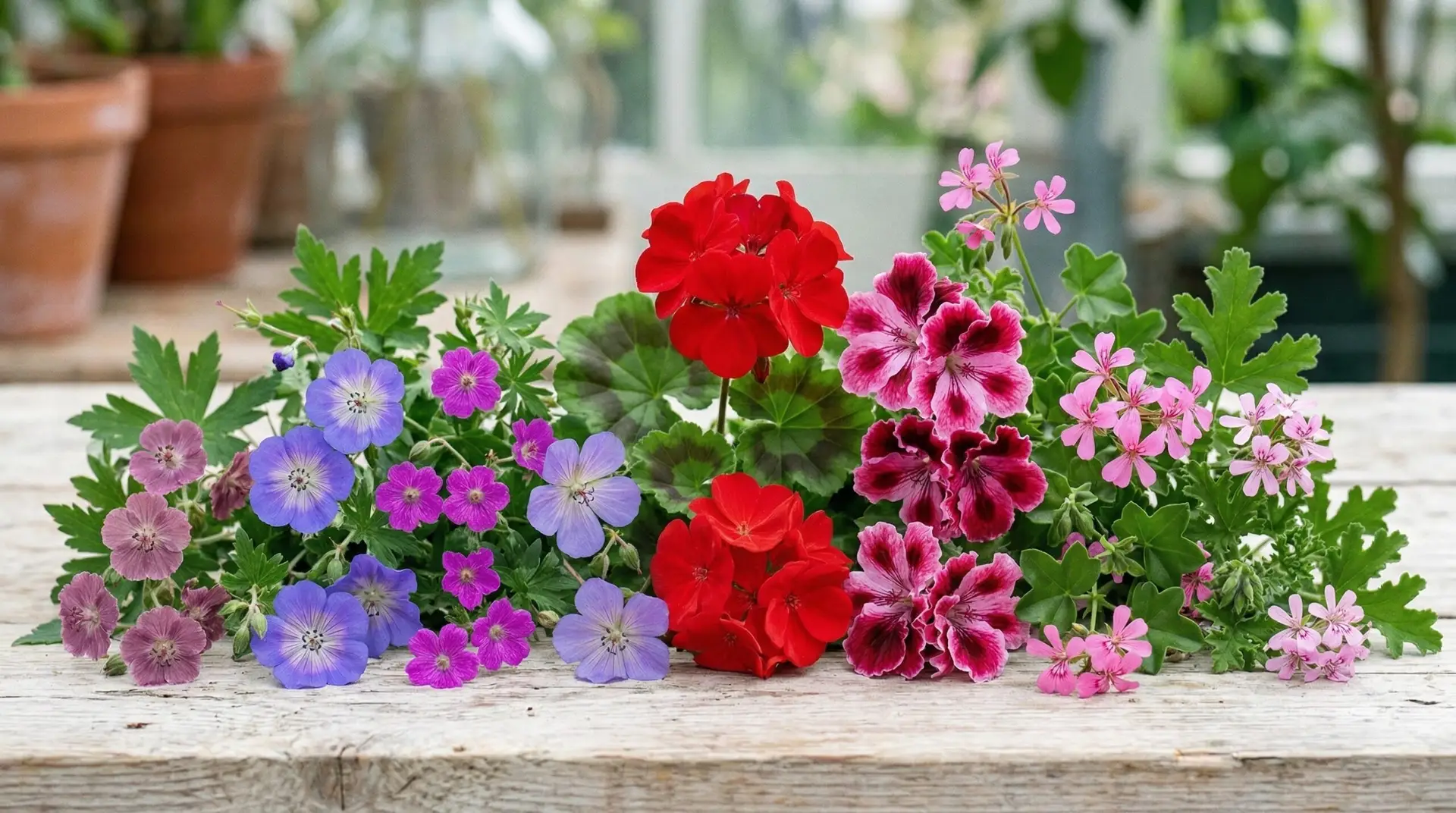
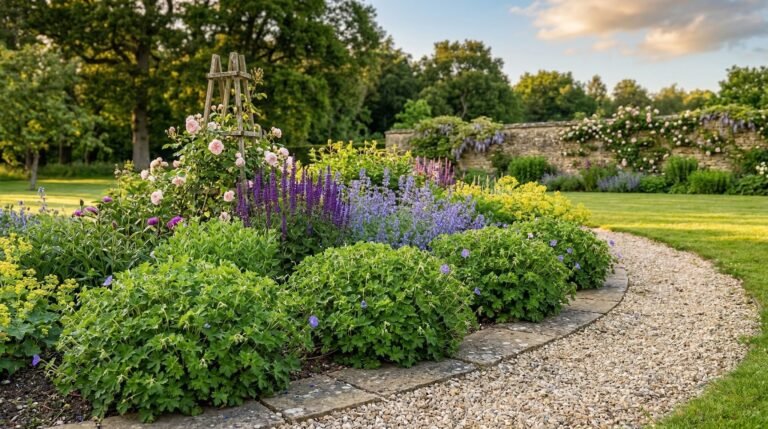
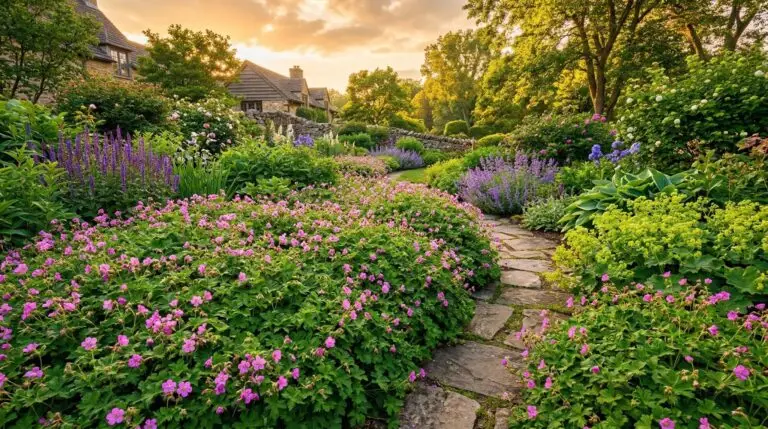
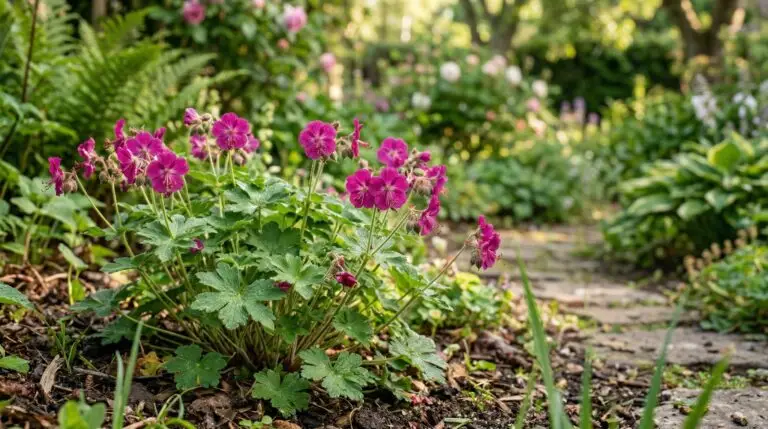
True geraniums, often called cranesbill geraniums, are herbaceous perennials that return year after year in cold climates. Most varieties thrive in hardiness zones three through eight, surviving harsh winters underground before pushing up fresh foliage in the spring. The leaves are deeply lobed, sometimes resembling a hand with spread fingers, and they form dense mounds of greenery that work exceptionally well as groundcover or border edging. Their flowers are perfectly symmetrical, with five identical petals that open flat like a small saucer. The color range leans heavily into cool tones, offering clear blues, deep purples, soft pinks, and pure whites. These plants tend to weave their way through other perennials in a garden bed, filling gaps without demanding the spotlight. They require very little deadheading and generally resist deer and rabbits, making them a low-maintenance option for large garden spaces.
Recognizing the classic garden pelargonium
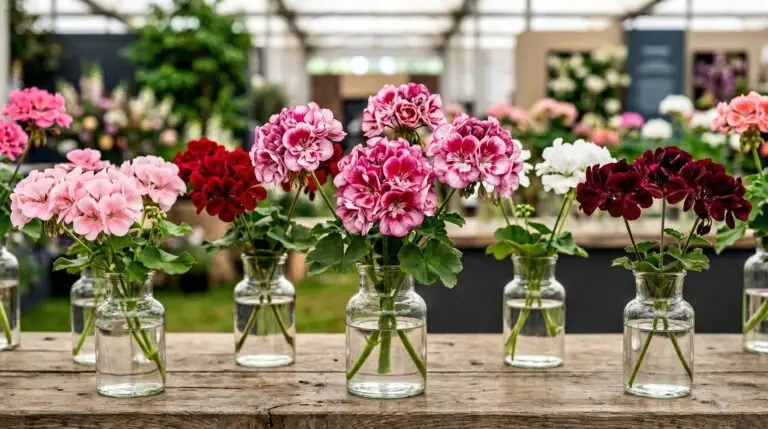
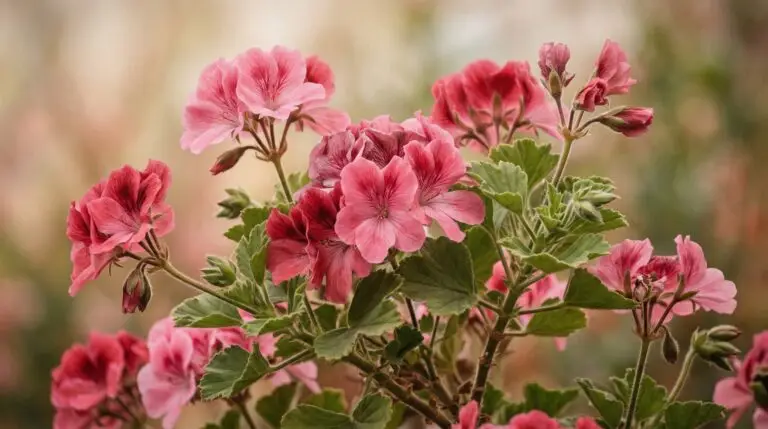
The plant most people envision when they hear the word geranium is actually a pelargonium. These are tender perennials native to South Africa, meaning they will only survive the winter outdoors in zones nine through eleven. For the rest of the country, they are grown as summer annuals or overwintered indoors as houseplants. Pelargoniums have thick, fleshy stems that store water, and their leaves are usually rounded or scalloped, often displaying a distinct dark band or “zone” of color that gives the popular zonal geranium its name. Their flowers grow in large, rounded clusters held high above the foliage on sturdy stalks. If you look closely at an individual pelargonium flower, you will notice it is asymmetrical, with two upper petals that point upward and three lower petals that point downward. The color palette is bold and warm, dominating in bright reds, salmons, hot pinks, and oranges. They are heavy bloomers that provide continuous color all summer long, provided you pinch off the spent flower heads regularly.
Care requirements and climate preferences
The growing conditions for these two plants differ significantly, which makes knowing your true geranium difference essential for plant survival. Hardy geraniums prefer consistent moisture and perform well in partial shade or full sun, depending on the specific variety. They appreciate rich, well-draining soil and will happily share a bed with other shade-tolerant plants. If you are planting a woodland border, you might pair them with a begonia for contrasting leaf textures and continuous subtle color. Pelargoniums, on the other hand, love heat and prefer to dry out slightly between waterings. Their thick stems make them prone to rot if they sit in wet, heavy soil, so they demand excellent drainage. They thrive in full sun and are highly drought-tolerant once established in a container or window box. In deeply shaded areas where pelargoniums would struggle to bloom, you would be better off choosing an impatiens to provide that bright pop of summer color.
Making the right choice for your garden space
Choosing between a hardy geranium and a pelargonium comes down to what you want the plant to do in your yard. If you have a large perennial bed and want a reliable plant that will return every spring, the true hardy geranium is the better choice. It will act as a permanent fixture, suppressing weeds and providing delicate color without requiring constant attention or replanting. The trade-off is that hardy geraniums have a shorter, more concentrated bloom time compared to summer annuals. If you are planting terracotta pots for a sunny patio or filling window boxes, the pelargonium is the clear winner. It offers that classic, bold garden aesthetic and will bloom relentlessly from May until the first frost. You just have to accept that you will either need to replace the pelargoniums next spring or commit to bringing them indoors before the winter temperatures drop. By matching the right plant to your specific space, you can enjoy the best qualities of both without the frustration of mistaken identity.
More About Geranium
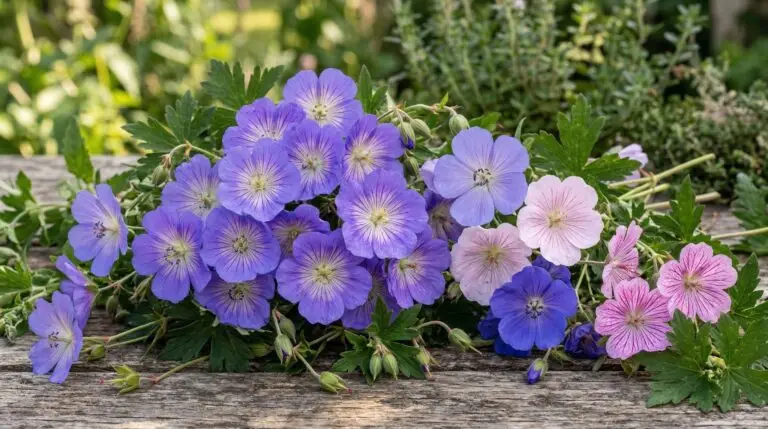
Best hardy geranium varieties from the legendary Rozanne to shade-loving types
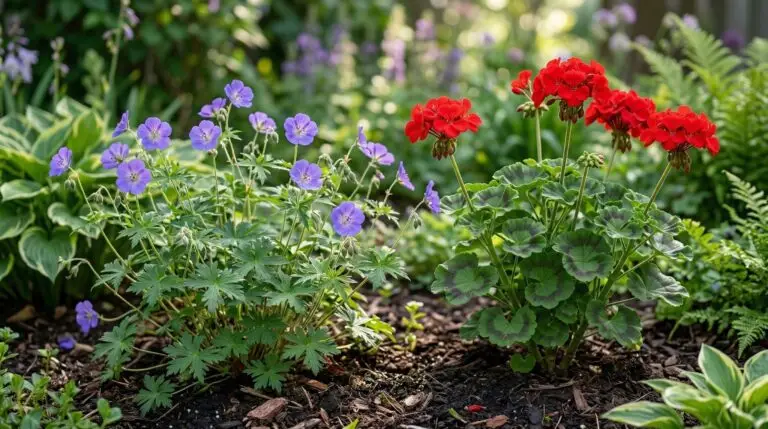
How to grow hardy geraniums for carefree ground cover that blooms for months
Geranium Rozanne and why one plant became the most popular perennial in the world
How to cut back hardy geraniums in midsummer for fresh foliage and a second flush
Geranium flower meaning and the Victorian message of comfort and true friendship
Using hardy geraniums as weed-suppressing ground cover under roses and shrubs
Hardy geraniums for deep shade that bring flowers to the darkest garden corners
Companion plants for hardy geraniums in borders and cottage garden beds