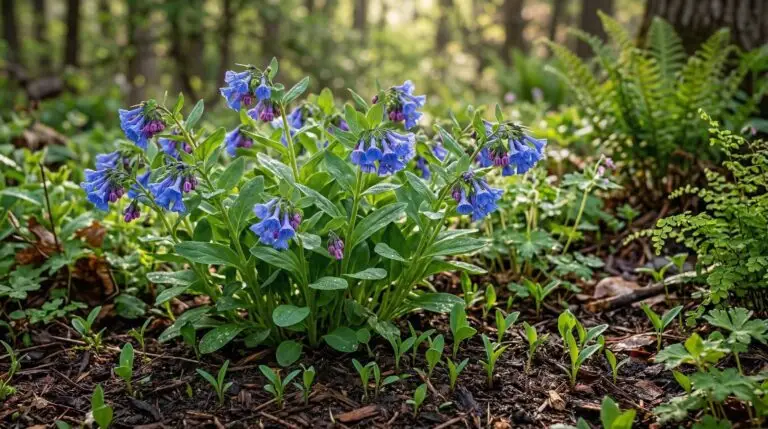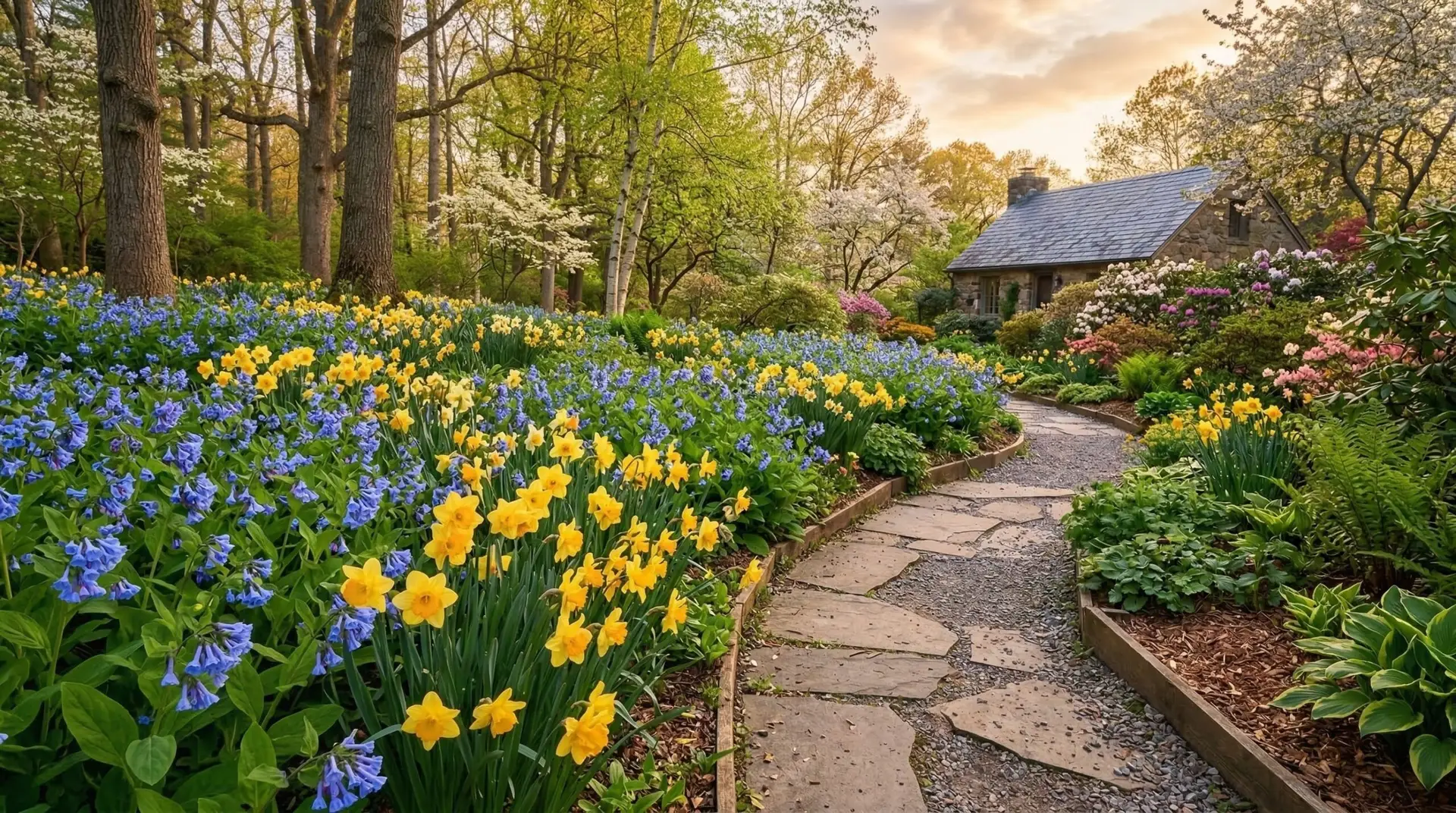
I wish you could stand beside me at the edge of the woods just after the sun breaks the horizon on a late April morning. The air carries that distinct scent of thawing earth and crushed pine needles, a cold, sharp fragrance that catches in the back of your throat. Low angles of pale morning light slip through the bare branches of the oak trees above, pooling on the forest floor in shifting patches of illumination. Right where the shadow meets the light, a drift of Virginia bluebells leans into a cluster of early yellow trumpets. The contrast is sharp enough to make you blink, a sudden splash of saturated color against the muted browns and grays of last autumn’s decaying leaves. The air is entirely still, allowing the faint, sweet fragrance of the blossoms to hang close to the damp ground. It is the kind of scene that makes you want to kneel in the wet soil just to look closer at how the morning dew clings to the edges of the petals.
The blue and gold awakening
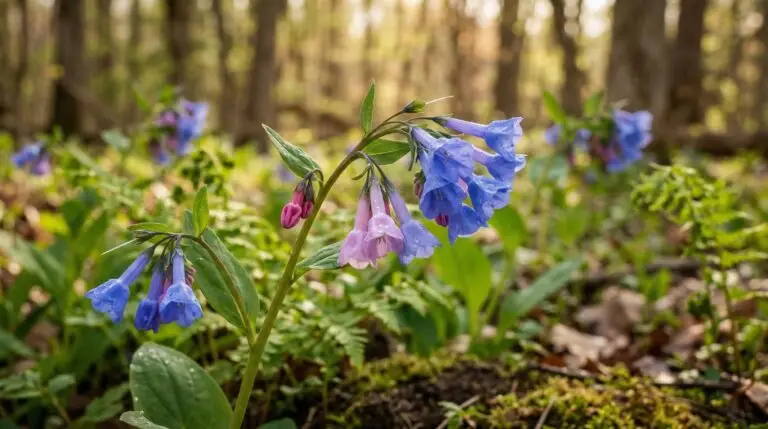
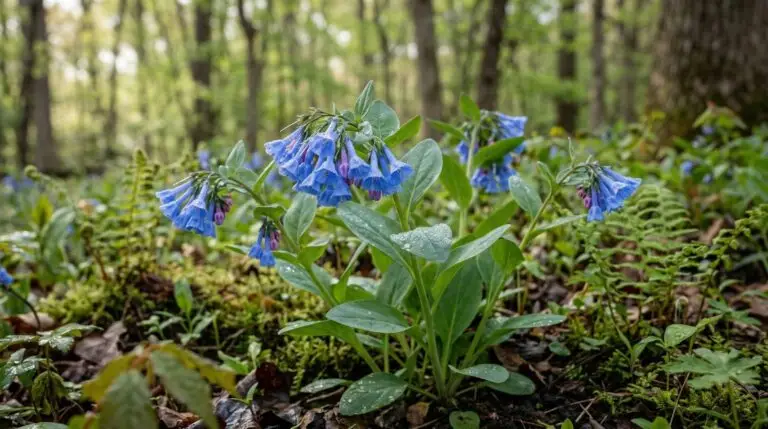
Virginia bluebells emerge from the cold ground looking entirely different from the flowers they will eventually become. The thick, fleshy leaves push up through the matted leaf litter in tight clusters of deep purplish red, feeling almost rubbery to the touch when you brush against them. As the days warm and the frost retreats, the stems stretch upward and the foliage opens into smooth, pale green ovals that catch the spring rain in small, silvery beads. The flower buds appear first as tight clusters of a soft, bruised pink, nodding heavily at the ends of arching, fragile stems. When they finally open, the pink shifts to a clear, luminous sky blue, creating a mesmerizing two toned effect on every stalk where the young pink buds mingle with the mature blue bells. The blossoms feel as thin as tissue paper between your fingers, yet they easily withstand the unpredictable chill of early spring mornings without browning or wilting. The flowers hang like tiny lanterns, catching the morning light and glowing softly against the dark trunks of the surrounding trees.
Beside these delicate blue clusters, the thick, ribbed stems of daffodils stand rigid and upright in the cool air. Their flat, straplike leaves feel waxy and tough, providing a stark textural contrast to the soft, pliant foliage of the bluebells. When the papery brown sheaths finally split open, the yellow petals unfurl with a surprising crispness that you can almost hear. The yellow is never a shy or muted color, but rather a deep, saturated gold that seems to generate its own heat in the cool woodland shade. The trumpets catch the wandering spring breezes, nodding in a synchronized, rigid rhythm while the neighboring bluebells sway in a looser, more fluid motion. Together, the cool blue and the warm gold create a visual resonance that feels almost electric under the dappled light of the bare canopy above. You can smell the daffodils from several yards away, a clean, soapy fragrance that cuts through the earthy scent of the damp woods.
Timing the spring display
The magic of this pairing lies in their perfectly matched internal clocks, waking up together just as the ground begins to thaw. Both plants wait for the soil temperature to rise just enough to signal the end of winter, often pushing their first green shoots up while frost still coats the surrounding morning grass. They follow the earliest bloomers of the season, coming into their full glory just as the last white petals of a snowdrop fade into the warming earth. For about three weeks, the bluebells and daffodils share the woodland stage, blooming in unison before the overhead tree canopy can unfurl its heavy leaves and block out the sun. This brief window of intense, direct sunlight allows both plants to store enough energy in their underground roots and bulbs to survive the long, dark dormancy ahead. The timing is incredibly precise, allowing you to set your seasonal calendar by the exact moment the first blue bell opens next to a bright yellow trumpet. The light during these weeks is thin and clear, illuminating the blue and gold pairing with a clarity that summer light never quite achieves.
If you live near wooded areas, you know the deep frustration of watching tender spring growth disappear overnight, but this particular combination remains entirely untouched. Deer and rabbits rely heavily on their sense of smell to forage, and the chemical composition of these plants acts as an invisible, bitter shield. The sap inside the daffodil stems contains sharp, microscopic crystals and toxic alkaloids that irritate an animal’s mouth, emitting a faint, acrid scent when a leaf is accidentally broken or crushed. The Virginia bluebells lack this toxicity, but their foliage holds a watery, slightly metallic odor that grazing animals find completely unappealing. You can walk through the garden at dawn and see the sharp, cloven hoofprints pressed deep into the soft soil right beside the plants. Yet, despite the heavy animal traffic, every blue and gold petal remains completely intact, swaying untouched in the morning breeze. It brings a profound sense of relief to watch these flowers bloom without the constant worry of losing them to hungry wildlife.
Planting your woodland floor
Creating this scene requires paying close attention to the texture, smell, and moisture of the earth beneath your bare hands. You will know the soil is right when you scoop up a handful and it feels exactly like a wrung out sponge, holding its shape lightly before crumbling apart under the gentle pressure of your thumb. Both plants need this rich, loose leaf mold to thrive, preferring the cool, damp conditions found naturally at the edge of a forest or under the shade of deciduous trees. When you dig the holes in late autumn, the soil should smell deeply of mushrooms, wet leaves, and old, decaying wood. The dormant roots and bulbs go into the ground at the exact same time, though they require a much different approach than planting a sun loving tulip in a formal, straight border. You want to scatter them in sweeping, irregular drifts, dropping the bluebell roots and daffodil bulbs onto the soil and planting them exactly where they fall. This method mimics the random, beautiful chaos of wild growth, ensuring the spring display looks as though nature planted it herself.
By the time the oak leaves fully expand to cast heavy, cooling shade over the ground, the spring show begins a quiet, inevitable retreat. The golden trumpets dry into thin, papery husks that rustle in the wind, and the sky blue bells drop silently to the earth, leaving behind small, smooth green seed pods. The fleshy green leaves of both plants slowly lose their rigid structure, turning a pale, translucent yellow before melting softly back into the forest floor. You must let them wither completely, resisting the urge to clear away the collapsing foliage, because this slow decay is exactly how the plants pull the last of the spring sun down into their roots. The garden takes on a quiet, restful atmosphere as the bright colors fade into the uniform green of summer ferns and hostas. I like to visit the patch one last time during a soft May rain, watching the water flatten the dying leaves against the dark soil. I walk away knowing that the vivid blue and gold are already resting safely just beneath the surface, waiting in the dark for the earth to thaw again next year.
More About Virginia Bluebells
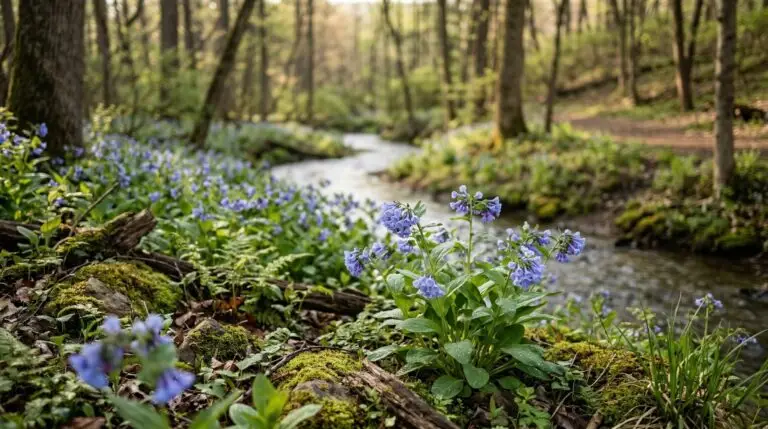
Where to see Virginia bluebells in the wild and the best springtime woodland hikes
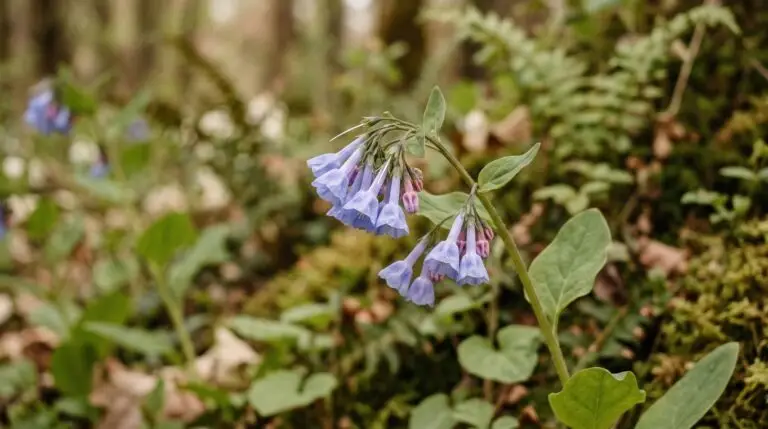
Virginia bluebells flower meaning and the native wildflower that colors eastern woodlands blue
Virginia bluebells as spring ephemerals and planning for the gap when they vanish in summer
Why Virginia bluebell flowers change from pink buds to blue and the pH science behind it
How to grow Virginia bluebells for dreamy blue drifts in spring woodland gardens
Growing Virginia bluebells in containers for a spring shade garden on a patio
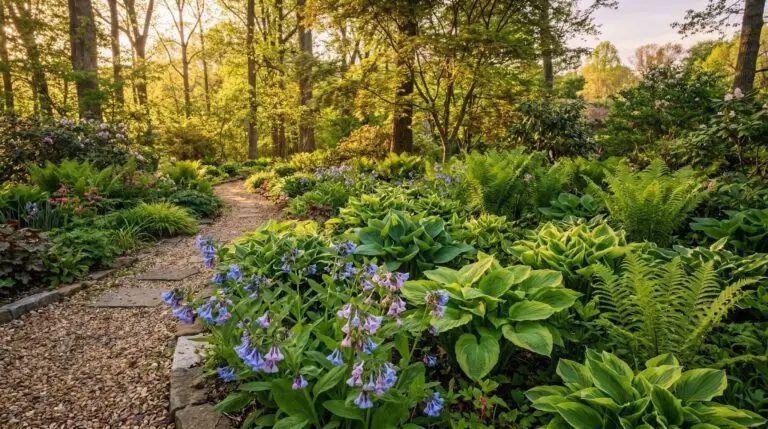
Virginia bluebells companions: what to plant and avoid
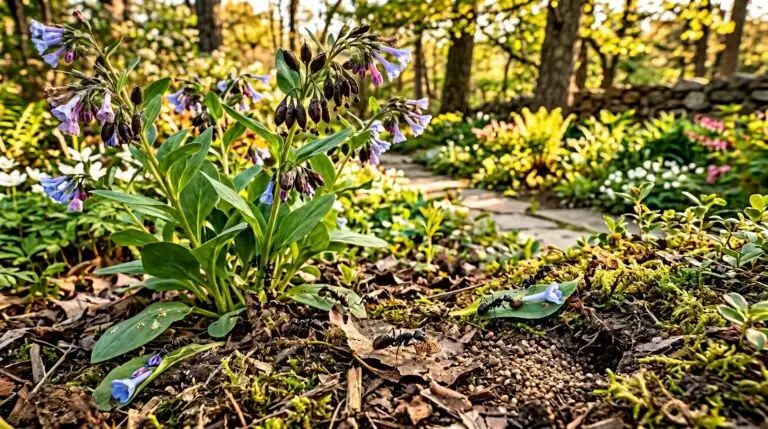
Naturalizing Virginia bluebells in woodland areas for expanding blue carpets every spring