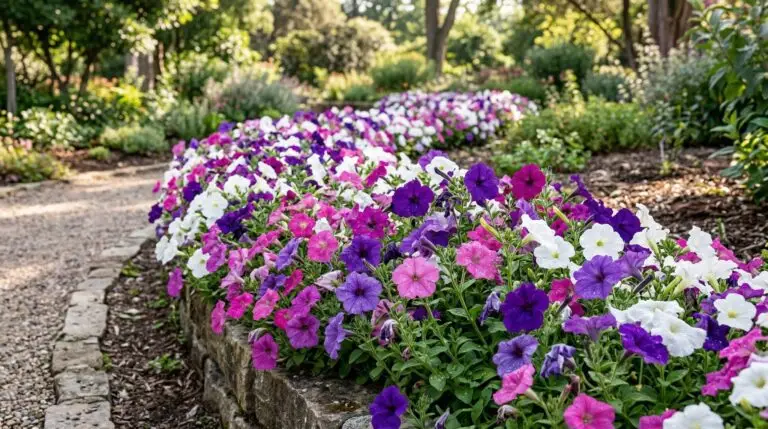
What to plant with petunia
The pairing · pick a flower
All petunia companions
What not to plant near petunia
The best companions for petunias, explained
Petunia is a color-and-texture flower before it is a problem-solving one, and its strongest partners work the way a good container recipe works: they share its full-sun, even-water habit and then do a job petunia cannot do for itself. Verbena is the closest match on paper, wanting the same light and moderate moisture and filling in as either a spiller or a filler depending on the type, and it draws the same bees, butterflies, and hummingbird moths that petunia does across a season. Calibrachoa, often sold under the name million bells, is close enough to petunia in cultivation that nurseries treat the two as a default pairing, its miniature trumpets trailing where petunia mounds and its needs lining up with petunia’s almost exactly. Lantana and salvia both earn a place for reasons petunia genuinely lacks: lantana brings a stronger heat and drought tolerance that forgives an occasional missed watering, and salvia’s upright spikes give a mounding petunia bed the one vertical shape it never produces on its own, while both keep pulling pollinators through the hottest weeks of summer.
Foliage plants do a different, equally real job. Ornamental sweet potato vine is grown purely for chartreuse, bronze, or near-black leaves, so it never competes with a petunia bloom, only spills past its edges in the thriller-filler-spiller recipe that built modern porch containers. Dusty miller’s felted silver leaves do something similar at a smaller scale, cooling or echoing whatever color the petunia carries, and a Clemson factsheet photo of a trailing ‘Tidal Wave Silver’ petunia growing straight through silver sage is a tidy real-world confirmation of exactly that pairing. Sweet alyssum earns its place on a different axis entirely: its tiny flowers are one of the better-documented insectary plants for hoverflies and parasitic wasps, university pest-management trials confirm it, and it sits low enough at a bed’s front edge to never shade the petunia behind it. Marigold shares petunia’s sun, water, and long bloom season and is recommended by grower literature as often as it is called a foe by unsourced blog lists, a tension worth resolving honestly rather than picking a side by default, which the next section does directly.
What not to plant near petunias
The real failure mode for petunia is rarely attack, it is mismatch: pairing a plant with different sun or water needs in the same pot forces one of the two to be watered or lit wrong. Shade-lovers are the cleanest case. Impatiens and most begonias want partial to full shade and petunia needs at least five to six hours of direct sun to bloom at all, so a container split between the two either scorches the shade plant or leaves the petunia leggy and flowerless, and there is no compromise setting that serves both. Succulents and cacti fail for the mirror-image reason: they need soil to dry out completely between waterings and rot in anything wetter, while petunia wants fairly consistent moisture and wilts dramatically when it dries out too far, so sharing a pot means overwatering one plant or starving the other on purpose.
Aggressive spreaders are the second real category. Mint and other running herbs like oregano and creeping thyme spread by underground rhizomes that can colonize a bed within a season, running straight through petunia’s shallow root zone and crowding it out for water and space before either plant shows visible stress. Morning glory does the same thing above ground: North Carolina State Extension tags it as a rapid-growing, self-seeding, weedy twining vine, and left to climb through a petunia bed its vigorous vertical growth and dense leaf cover cut off the light a sun-hungry petunia cannot do without. The single most useful name-collision to know is Mexican petunia, Ruellia simplex, which despite its common name belongs to a completely different plant family from true petunia and spreads so aggressively by rhizome and explosively self-sown seed that it is listed as a Category One invasive species in Florida. Anyone searching for a Mexican petunia and true petunia pairing is really asking whether a garden thug and a bedding annual belong in the same space, and they do not.
There is one distinctive, less obvious risk worth naming plainly: petunia is a shared-disease victim more than a shared-disease source. A fungus called Podosphaera xanthii causes powdery mildew across petunia, calibrachoa, and verbena alike, which means underplanting petunia densely with its own two best-loved companions in poor airflow is a real, specific, citable risk, not a generic overcrowding warning. It is worth stating plainly because calibrachoa and verbena are exactly the pairings most likely to end up crowded together in a single hanging basket.
Do they like the same conditions?
Petunia’s growing profile is narrower than its reputation suggests. It needs full sun, ideally all day and never less than five to six hours, and it is genuinely non-negotiable on this point: shade produces a spindly plant with few flowers rather than a slightly slower one. Water is where petunia earns its "fussy" reputation unfairly. Established plants in the ground want roughly one to two inches per week, and container plants need more frequent watering simply because pots dry faster, but the plant itself is not delicate; it is a dramatic wilter that droops visibly when thirsty and typically recovers within hours of a good soak, and the real risk is chronic overwatering in a container, especially one shared with a drought specialist that needs the opposite schedule. Soil pH sits at an ordinary 6.0 to 7.0, and there is no acid-versus-alkaline drama here the way there is for a plant like hydrangea; petunia simply is not soil-fussy, provided the soil drains well, since it tolerates poor fertility fine but resents wet feet.
Petunia is grown as a warm-season annual almost everywhere in the continental United States, staying perennial only in the mildest coastal zones and even there usually getting replaced each spring anyway, which means USDA hardiness zone matters far less to a companion choice than it would for a shrub or perennial. The real matching question is whether a partner also reads as a summer annual or tender perennial that gets pulled or dies back at the same first frost, regardless of how its winter hardiness lines up on a map. Spacing exists for a specific, citable reason beyond tidiness: petunias planted 8 to 18 inches apart, depending on whether the variety mounds or spreads, get the airflow that keeps powdery mildew and botrytis gray mold in check, and that spacing rule applies just as much to the gap left for a neighboring calibrachoa or verbena as it does to petunia’s own row spacing.
How to plant them together
Start with the sun-hungry companions in the center or back of a container and the foliage-only plants at the rim, since sweet potato vine and dusty miller never compete with petunia’s bloom and can be packed slightly closer without consequence. In a typical 14 to 16 inch hanging basket or patio pot, one petunia anchors the middle, a calibrachoa or trailing verbena spills over one side, and a single sweet potato vine or dusty miller fills the opposite gap, giving each plant its own breathing room rather than three flowering plants competing for the same light and water at the crown. Salvia and lantana work better planted slightly behind or beside a petunia bed rather than in the same small pot, since both eventually want more room than a shared container comfortably offers, and both tolerate a touch more dryness than petunia prefers, so positioning them at the bed’s drier margin resolves that small mismatch rather than fighting it.
Timing follows the frost calendar for every genuine companion on this list, since none of them are true perennials in most US climates; set transplants out together after the last frost date and expect all of them, petunia included, to need replacing or pulling the following spring. Deadheading and a light monthly feed keep petunia blooming through the season regardless of what shares its pot, and the same feeding schedule generally suits calibrachoa, verbena, lantana, and salvia without adjustment, since all five are heavy or moderate summer bloomers with similar appetites. Sweet alyssum, by contrast, needs almost nothing extra: tuck it at the front edge 6 to 10 inches from the petunia crown and let it self-seed lightly through the season if the bed allows.
Does companion planting actually work for petunias?
Some of it, honestly, and the parts that work are not the parts most listicles lead with. The shared-conditions logic is Proven in the plainest sense: verbena, calibrachoa, lantana, and salvia genuinely want the same light and a similar water rhythm as petunia, extension sources describe each independently, and putting sun-loving, moderate-water plants in the same sun-loving, moderate-water pot is basic horticulture rather than a leap of faith. The pollinator claim is also solidly documented rather than folklore dressed up as fact: University of Wisconsin-Madison’s horticulture extension names petunia specifically as a favorite nectar plant for hummingbird clearwing moths in real garden observations, and separate sources confirm differentiated pollinator draw by petunia type, tubular bright colors for hummingbirds, paler open forms for bees.
The avoid side is where the real signal lives, and where a lot of consumer content quietly invents drama that does not exist. Sun and water mismatches with shade plants or succulents are basic plant physiology repeated by every extension source that touches the topic, and Mexican petunia’s invasive habit is documented directly by NC State’s own plant toolbox rather than passed along as a rumor. But the frequently repeated claim that marigold or geranium "compete for nutrients and win" against petunia has no real study behind it anywhere in current search, and it directly contradicts commercial grower literature that pairs both plants with petunia as a matter of course; that claim gets an honest Folklore label here rather than a promotion it has not earned. The powdery mildew fact is the one piece of information this page adds that most petunia content skips entirely: it is real, it is specific to petunia, calibrachoa, and verbena together, and it means the single most popular petunia pairing on the market also carries its single most citable disease risk, which is worth knowing before buying three flats of the same fungus-susceptible trio for one basket.
Frequently asked questions
What can I plant with petunias in a hanging basket?
Calibrachoa and trailing verbena are the standard choices because they share petunia’s exact sun and water needs and trail at a similar rate, while a single sweet potato vine adds foliage contrast without competing for bloom space. Space the crowns with at least a few inches of breathing room, since calibrachoa, verbena, and petunia can all carry the same powdery mildew fungus in a crowded, poorly ventilated basket.
What should you not plant near petunias?
Shade-lovers like impatiens and most begonias fail because petunia needs full sun and they need the opposite, succulents and cacti fail because their bone-dry watering needs clash with petunia’s regular moisture, and aggressive spreaders like mint and morning glory will physically crowd or shade out a petunia’s shallow roots and low growth habit over a single season.
Is Mexican petunia the same as regular petunia?
No. Mexican petunia, botanically Ruellia simplex, only shares a common name and a passing flower resemblance with true petunia; it belongs to an entirely different plant family and is documented as an aggressive, rhizome-spreading plant that is formally listed as invasive in Florida, so it is not a relative worth planting alongside a bedding petunia.
Do petunias attract bees and hummingbirds?
Yes, and which pollinator shows up depends on the petunia type: bright, tubular-flowered varieties draw hummingbirds and hummingbird clearwing moths, paler or single-petaled forms draw bees, and white, fragrant, evening-opening types draw hawk moths, so mixing petunia forms in one pollinator container does real work beyond mixing companion species.
Why do my petunias keep getting powdery mildew?
Petunia, calibrachoa, and verbena share a susceptibility to the same fungus, Podosphaera xanthii, and crowding these three most-popular petunia partners together in a basket or bed with poor air circulation is one of the most direct routes to an outbreak; wider spacing and morning watering that lets foliage dry by afternoon are the two most reliable fixes.
Can I plant petunias with succulents in the same pot?
It is not a good idea. Succulents need the soil to dry out completely between waterings or their roots rot, while petunia wants fairly consistent moisture and wilts if it dries out too far, so any watering schedule that keeps one plant happy will stress the other.
Sources
Clemson Cooperative Extension Home & Garden Information Center: Petunia · University of Minnesota Extension: Growing petunias · Illinois Extension: Calibrachoa · University of Wisconsin-Madison Horticulture Extension: Hummingbird Moth, Hemaris thysbe · North Carolina Extension Gardener Plant Toolbox: Ruellia simplex · North Carolina Extension Gardener Plant Toolbox: Ipomoea purpurea · UF/IFAS Gardening Solutions: Lantana · Iowa State University Yard and Garden: Common problems and issues of succulents
More About Petunia
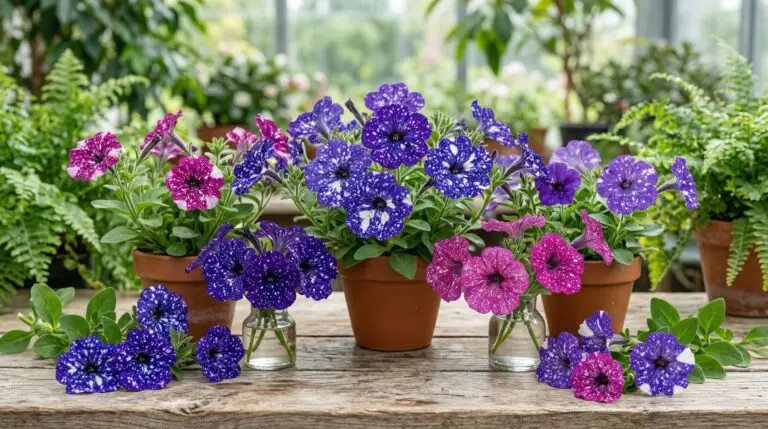
Night Sky petunia and the novelty varieties that look like galaxy flowers
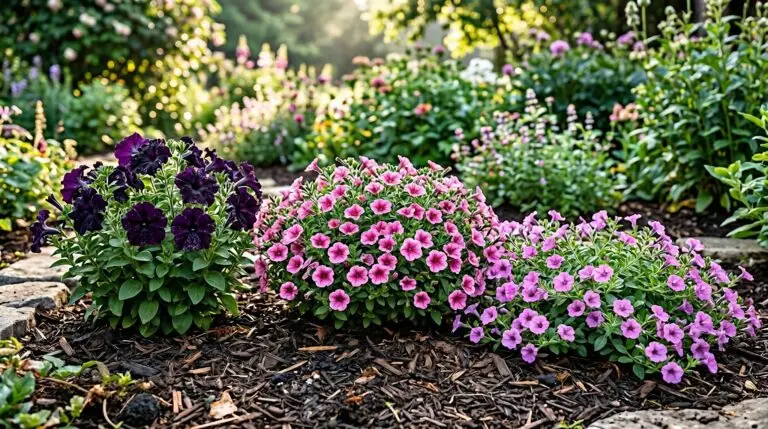
How to grow petunias for explosive color in hanging baskets containers and garden beds
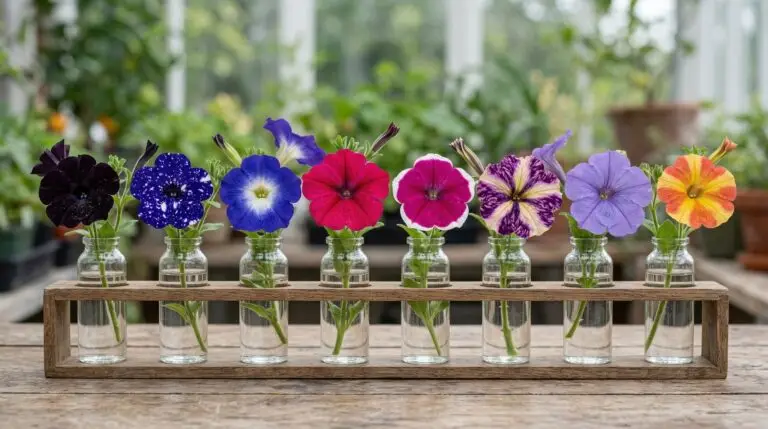
Supertunia and Surfinia versus regular petunias and why branded varieties outperform
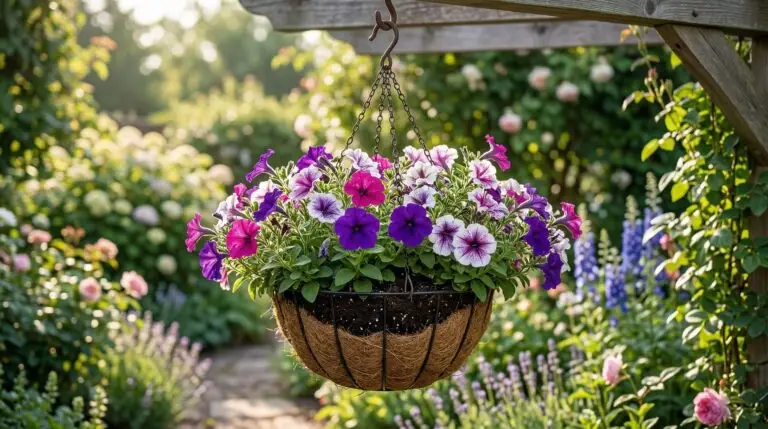
Growing petunias in hanging baskets for cascading waterfalls of summer color
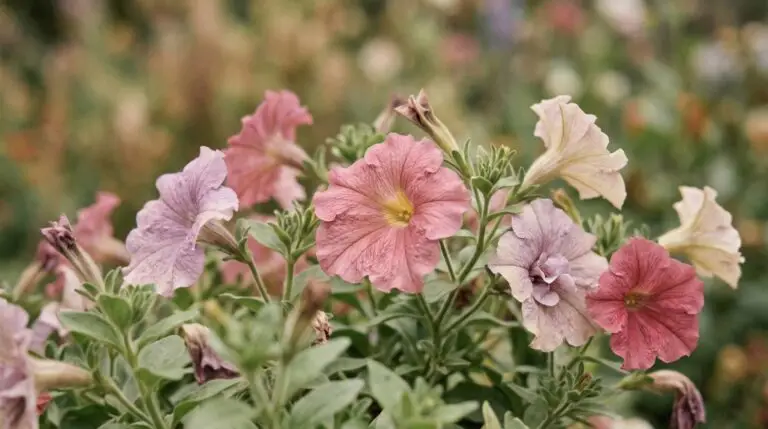
Petunia flower meaning and why this humble bloom represents desire and comfort
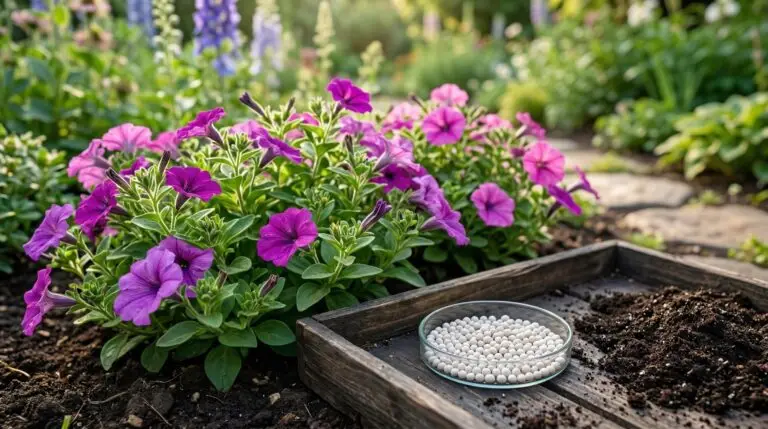
Growing petunias from seed and the tiny seeds that need light and patience to germinate
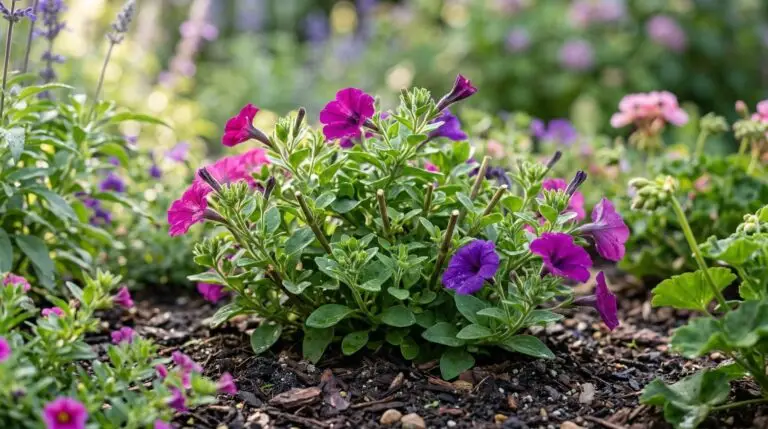
Why petunias get leggy and scraggly by midsummer and the hard cutback that saves them