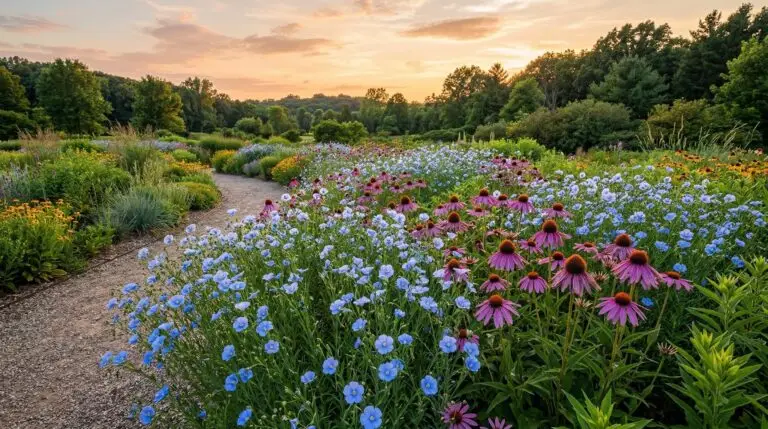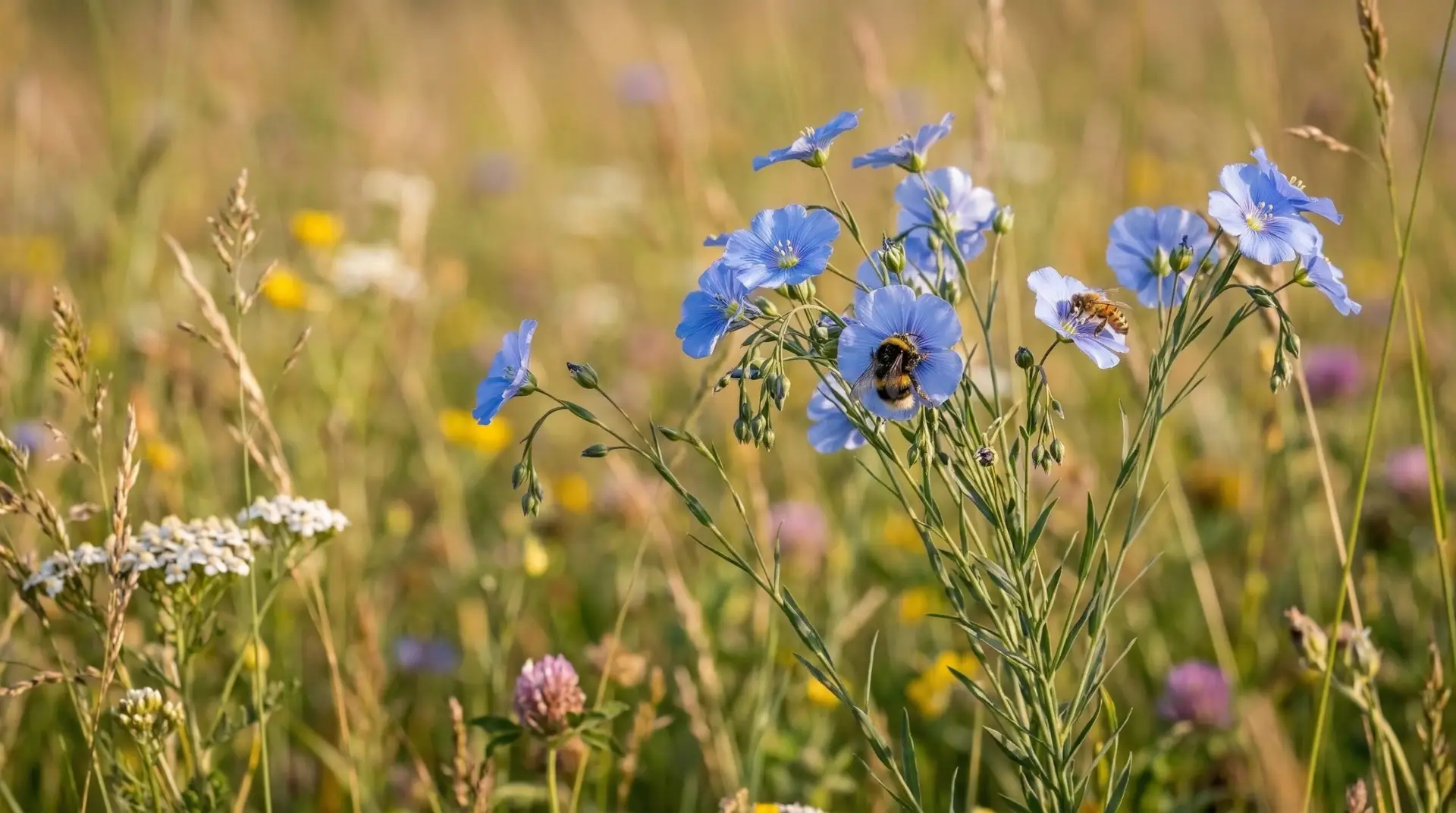
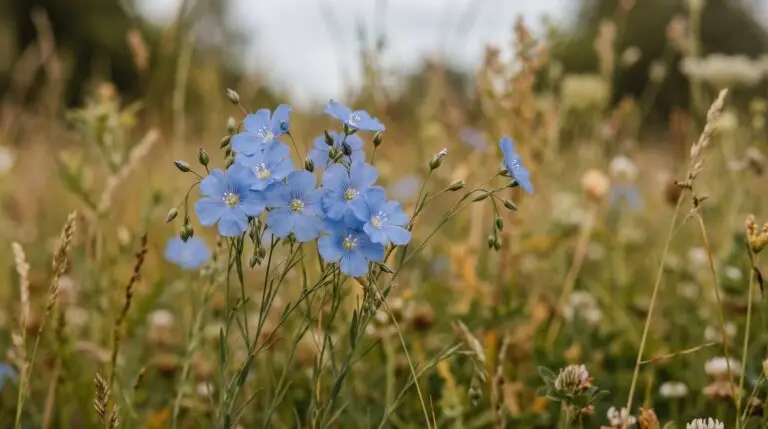
The sun clears the eastern ridge just before six, casting long, pale shadows across the dew-soaked grass. By the time the light touches the dry slope near the driveway, the blue flax has already opened its silken cups to the morning air. The petals are the exact color of the May sky, a clear and piercing blue that seems to hold the coolness of the night. If you arrive late, past noon, you will find only bare stems and scattered blue confetti on the soil, because the life of a single flax flower lasts only a few hours. But in this early window, the plant is entirely awake and humming with purpose. You have to be out here with your boots wet in the grass to see the real work happen. A small metallic green sweat bee circles the newly opened bowl, lands lightly on the pale yellow center, and begins to gather pollen. The day has barely begun, yet the most important ecological exchanges are already underway.
This daily resurrection of blooms transforms a quiet corner of the yard into a busy intersection for wild insects. Each morning brings a fresh crop of flowers, and each morning brings the bees who know exactly when to arrive. The relationship between the plant and the insects is a precise choreography timed to the rising heat of the sun. Before the day warms enough to wilt the delicate petals, tiny solitary bees and early foraging bumblebees move methodically from stem to stem. They are not looking for the large, showy displays of hybridized garden center plants, but rather the simple, open architecture of a wild flower. The shallow bowl of the flax allows easy access for insects with short tongues, making it an essential food source in the lean weeks of late spring. Watching them work, you realize that planting flowers is not about decorating a space, but about setting a table for the original inhabitants of the land.
The morning rush of native bees
The specific native bees that visit these plants are often small and easily overlooked by the casual observer. Halictid bees, commonly known as sweat bees, seem particularly drawn to the pale centers of the blossoms. They move with a frantic energy, dusting their undersides with heavy yellow grains before darting to the next swaying stem. It is fascinating to watch the blue flax bees navigate the slender, arching branches that dip under the weight of a larger bumblebee. When a heavy queen bumblebee lands, the entire stalk bends toward the earth, yet she clings upside down to extract her meal before the stem springs back into place. This constant motion gives the patch a restless, living quality that lasts until the sun climbs high and the heat settles in. By eleven o’clock, the petals begin to loosen their grip on the receptacle, and the morning rush quietly concludes.
The shedding of the petals is a daily lesson in letting go, a reminder that the garden is a place of constant transition. The ground beneath the plants turns blue with fallen flowers, resembling a shallow pool of water mirroring the sky. Most gardeners want their blooms to last for weeks, holding their color rigidly against the elements, but there is a deep beauty in a plant that gives itself away so freely. The stems are left holding tiny, round seed capsules that will swell and dry as the summer progresses. Inside those capsules lies the promise of next year’s meadow, a continuation of the cycle that the morning bees helped to guarantee. You learn to appreciate the bare, wiry stems in the afternoon just as much as the morning flowers, knowing they are busy maturing the seeds. The plant does not waste energy maintaining a display once the ecological work of pollination is complete.
Designing a space for wild visitors
Creating a dedicated space for these interactions requires a shift in how we think about garden design. Instead of isolated specimens surrounded by bare mulch, a true pollinator strip mimics the dense, tangled growth of a wild meadow. You scatter the dark, slippery seeds of the flax in the cool days of autumn, letting the winter snows press them into the soil. When spring arrives, the seedlings emerge thick and eager, looking like a patch of fine turf before they stretch upward. Thinning seedlings feels like a small act of cruelty, but crowded plants compete for light and water until none of them thrives. You pull the weakest ones, leaving enough room for the survivors to branch out and form the airy, vase-like shapes that allow the wind to pass through without breaking them. The goal is to build a community of plants that support each other and the insects that rely on them.
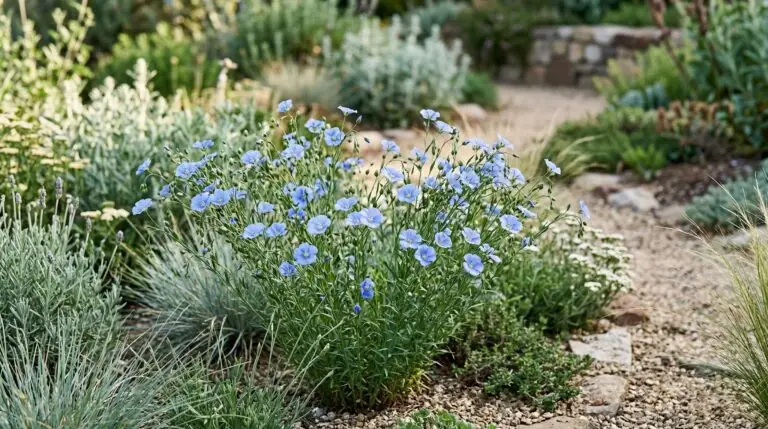
To extend the season of sustenance for the insects, the flax should grow alongside companions that pick up the work when the blue petals fall. As the flax begins to set seed in the heat of early summer, the sturdy stalks of coneflower rise up to offer their deep nectar reserves to the butterflies and larger bees. You might also plant sprawling mounds of catmint nearby, letting its aromatic foliage spill over the edges of the bed while its purple spikes draw a constant hum of winged visitors. For dry, sun-baked areas where flax thrives best, adding lavender creates a layered environment of scent and structure that requires very little supplemental water. Finding the right pollinator garden blue flowers is a matter of observing what thrives in your specific soil and climate without constant human intervention. The most successful garden beds are those where the plants are allowed to mingle, cross boundaries, and figure out their own relationships below the ground.
The quiet rhythm of the pollinator garden
There is a profound satisfaction in stepping back and watching an ecosystem assemble itself around the plants you have chosen. The blue flax does not ask for fertilizer or rich compost, preferring the lean, well-draining soil that mimics its native mountain slopes and dry prairies. In fact, too much care will cause the stems to grow weak and flop over, a reminder that wild things need a bit of struggle to remain strong. As the seasons turn, the plant quietly goes about its work, sending a deep taproot down into the subsoil to anchor itself against the wind. This hidden strength allows it to survive drought and neglect, returning year after year to offer its daily gift of blue to the morning sky. The gardener becomes less of a manager and more of a witness, observing the subtle shifts in insect populations and the gradual spread of the plant through self-sowing.
Ultimately, growing this simple, short-lived flower connects you to the older, slower rhythms of the natural world. You learn to measure time not by the clock, but by the opening of the petals and the arrival of the first foraging insects. The blue flax pollinators depend on this reliable sequence, trusting that the earth will warm, the flowers will open, and the nectar will be waiting. When you stand in the garden at dawn and watch the bees work the fresh blooms, you are participating in a quiet covenant that has existed for millennia. The dropping of the petals at noon is no longer a disappointment, but a sign of a completed task and a promise kept. The garden becomes a place of belonging, where every falling flower and gathering bee plays a necessary part in the turning of the year.
More About Blue Flax
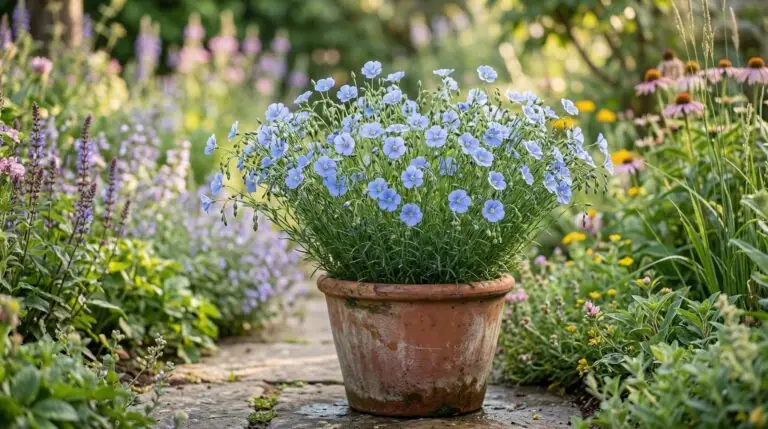
Growing blue flax in containers and window boxes for sky-blue summer color
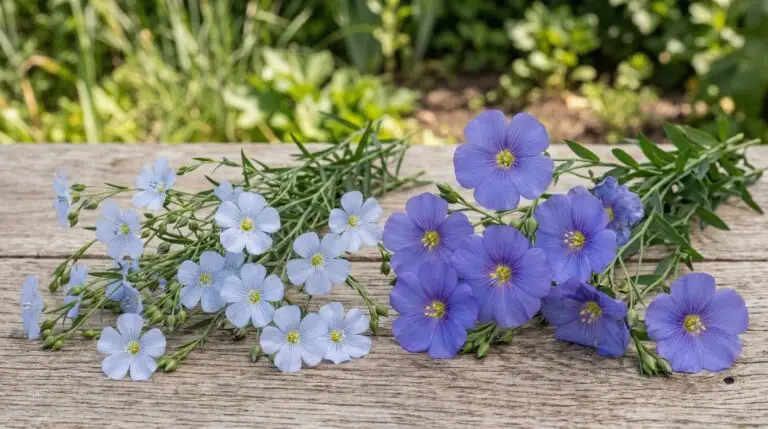
Lewis flax versus perennial blue flax and which native species to grow
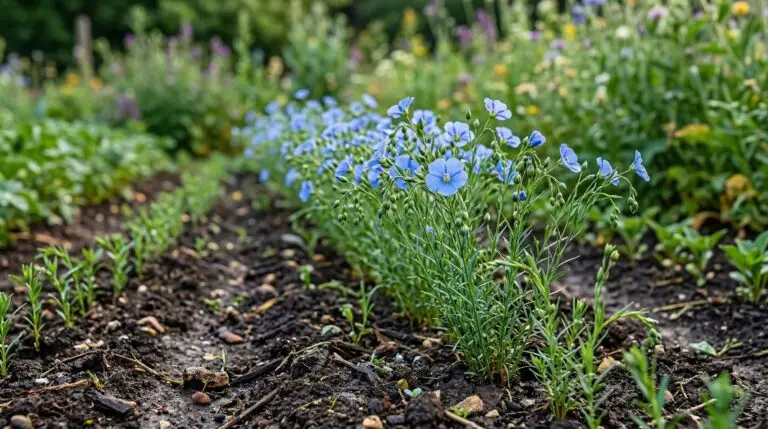
How to grow blue flax from seed for a low maintenance wildflower meadow
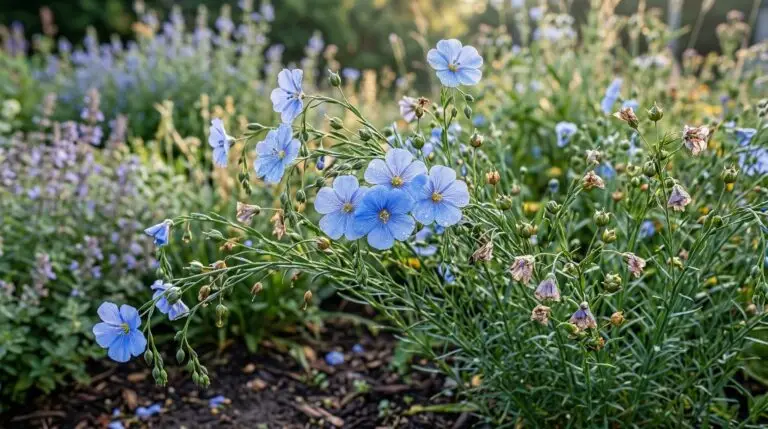
Why blue flax flowers only last one day and why that is actually a good thing
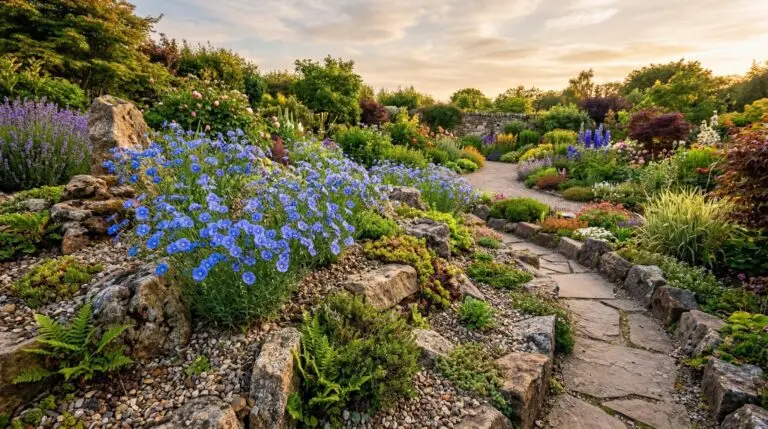
Blue flax in rock gardens and gravel pathways for a natural alpine look
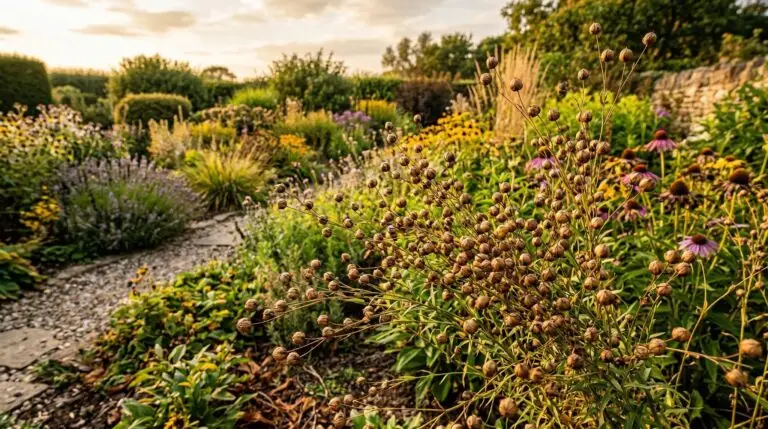
How to collect and save blue flax seeds for planting next season
The history of flax from ancient linen production to ornamental garden flower
Blue flax for xeriscaping and drought-tolerant gardens that still look beautiful