Before the guests arrive and the music begins, the morning of a wedding has a distinct atmosphere of quiet anticipation. The air in the preparation room often carries the unmistakable scent of fresh greenery and damp petals waiting in their water sources. When the florist finally unboxes the bridal flowers, the room usually falls silent for a moment as the designs are revealed. At the center of this ritual, more often than not, sits the classic rose bridal bouquet. These blooms have an innate ability to anchor a design with their heavy, layered heads and thick stems. Even as floral trends shift toward wilder, foraged aesthetics, the rose remains a constant presence in matrimonial design. There is something satisfying about holding a bundle of these flowers, feeling the weight of the stems wrapped in silk ribbon. They bring a sense of gravity and tradition to a fleeting, highly emotional day.
Garden roses and the florist varieties that mimic them
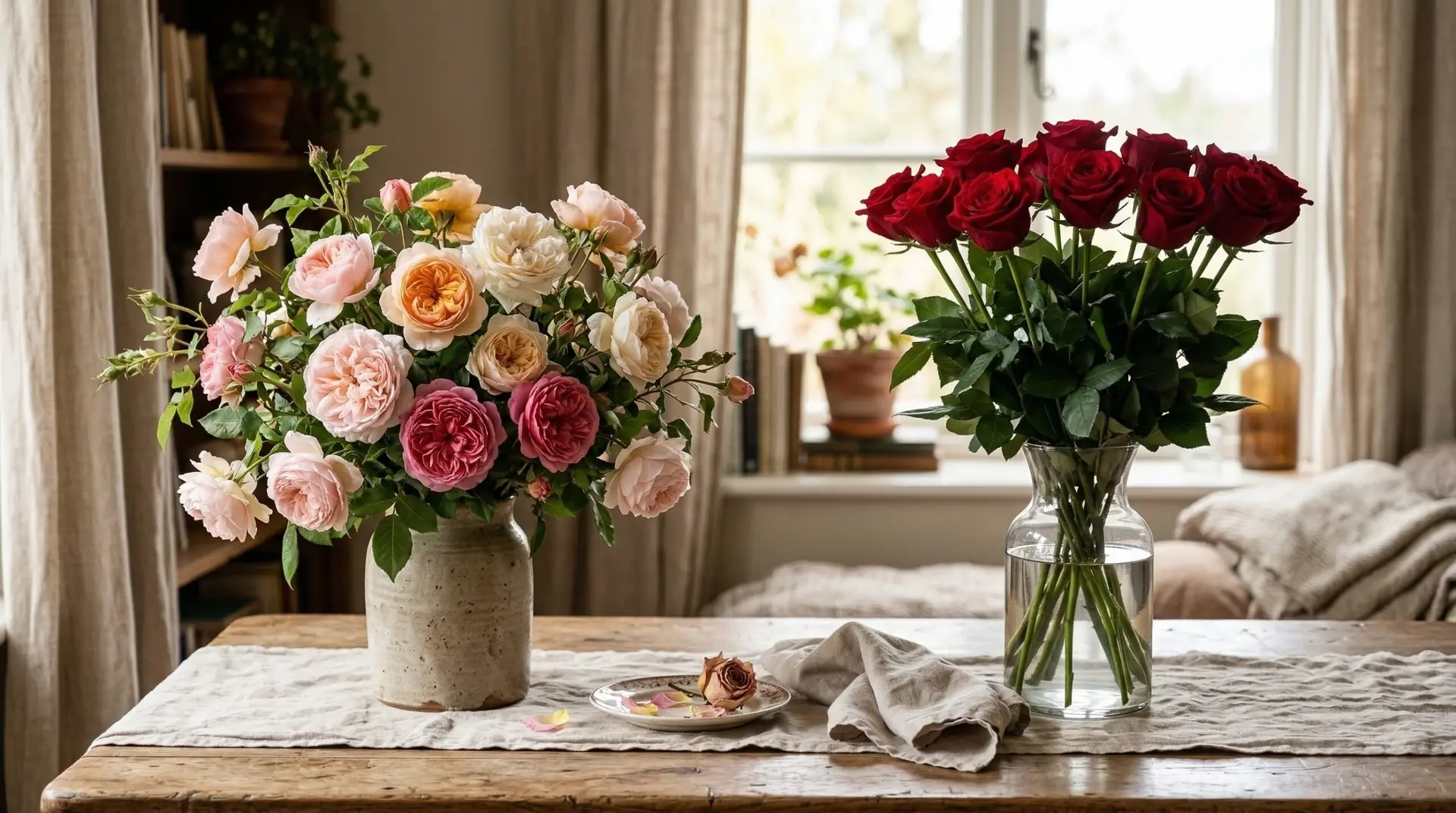
The terminology surrounding wedding roses can confuse even the most enthusiastic planner. Florist roses are the traditional, tight-budded varieties bred for long, straight stems and exceptional shipping durability. Garden roses offer a completely different visual experience with their ruffled centers, intense fragrance, and softer, more fragile appearance. Breeders have spent decades trying to capture the romantic look of an old English garden rose in a flower that can survive commercial transport. The result is a specialized category of greenhouse-grown garden varieties that provide the wild, open shape of a backyard flower with the reliability needed for event work.
This pursuit of the perfect romantic bloom reached a peak with the introduction of the Juliet rose by breeder David Austin. This specific flower changed the expectations for wedding floral design entirely with its distinctive shallow cup shape and densely packed apricot petals. The Juliet proved that a commercially grown rose could possess the charm and complexity of antique varieties. Planners and designers began treating these premium roses as focal flowers, giving them the same design real estate previously reserved for peonies in the early summer months. They offer a similarly lush, voluminous presence but without the strict seasonal limitations that frustrate so many winter and autumn brides. The garden rose has a way of opening over the course of the wedding day, shifting from a neat cup in the morning to a wide, ruffled saucer by the evening reception. This natural evolution makes the floral arrangements feel alive and responsive to the environment.
Choosing colors for a rose wedding celebration
The color palette chosen for a rose wedding dictates the entire mood of the event space. Pure white and ivory roses have long held their place as the standard for traditional ceremonies, offering a clean, formal look against dark suits and greenery. Red roses carry an undeniable weight of classic romance, often used in tightly packed arrangements for evening events in grand venues. Soft pinks and blush tones bring a gentle, airy quality that works beautifully in outdoor settings or daytime celebrations. These historical associations with color remain strong, but modern growers have expanded the spectrum far beyond these primary categories.
Today, the most sought-after wedding roses often have complex, muted tones that are difficult to describe with a single word. Planners frequently request varieties in shades of dusty mauve, warm terracotta, pale mustard, and a brownish-pink hue commonly referred to as toffee. These nuanced colors allow designers to create sophisticated, layered palettes that look entirely natural in a variety of lighting conditions. A bouquet blending warm beige roses with faded peach varieties looks beautiful in the harsh sunlight of an afternoon ceremony and takes on a rich, glowing quality under candlelight. These unusual shades also blend perfectly with the dried botanical elements and textured grasses that have become popular in contemporary event design. The transition from bright, clear colors to these muddy, sophisticated tones marks a significant shift in how people approach wedding aesthetics. The rose has adapted to this change perfectly, proving its versatility across entirely different design philosophies.
Shaping the modern rose bridal bouquet
The construction of the bridal bouquet has evolved just as much as the colors of the flowers themselves. For many years, the standard approach was a tight, symmetrical dome where every rose head sat at the exact same height. Modern designers favor a loose, asymmetrical style that allows each individual stem to curve and bend naturally. This method requires the designer to study the natural posture of the flower, placing the heavy garden roses deep in the arrangement while allowing lighter, more delicate buds to float above the main cluster. The resulting bouquet feels less like a manufactured object and more like a carefully gathered handful of the garden.
Building these organic shapes requires a thoughtful selection of supporting elements to frame the focal roses. Designers often weave trailing vines, delicate ferns, or flowering branches through the roses to break up the solid mass of petals. A designer might incorporate traditional accents like stephanotis for a subtle nod to classic wedding history, tucking the small white stars between large, open rose heads. In the late summer and early autumn, the dense, geometric heads of a dahlia provide a beautiful textural contrast to the soft, ruffled edges of the garden roses. Early spring events might see the roses paired with the papery, delicate layers of ranunculus stems. The rose acts as the structural foundation in all these combinations, providing the visual weight necessary to anchor the lighter, more fragile materials. This ability to play well with others is a primary reason the rose remains the core of bridal floral design.
The reliable beauty of roses in any season
Beyond their visual appeal, roses dominate the wedding industry because of their unmatched reliability and year-round availability. While many beloved flowers have frustratingly short growing seasons, global cultivation ensures that a bride can carry a lush rose bouquet in the dead of winter just as easily as in midsummer. This consistent supply chain removes a significant amount of stress from the planning process. Florists know they can secure specific rose varieties months in advance, allowing them to promise exact color matches and design shapes without worrying about an early frost or a late spring.
The physical durability of the rose also makes it perfectly suited for the demands of a long event day. A well-hydrated rose can survive hours out of water, lasting through photographs in the sun, the heat of a crowded room, and the constant handling of the wedding party. Long after the reception ends and the guests have gone home, the flowers continue to hold their shape and meaning. Many people choose to hang their bouquets upside down in a dark, dry place to preserve the blooms. The petals will slowly darken and shrink, taking on the texture of fine parchment paper while retaining a faint, sweet scent. A dried rose kept in a display box or a glass cloche becomes a lasting physical memory of the day the vows were spoken. It is a quiet reminder that the beauty of a garden, even when brought indoors for a single afternoon, has a way of lingering.
More About Roses
How to grow roses for beginners with disease-resistant varieties that practically care for themselves
Climbing roses that cover walls arbors and fences with cascading blooms
Growing roses in containers for patios balconies and small-space rose gardens
Rose meaning and rose colour meanings, honestly explained
Best David Austin English roses for old-fashioned fragrance and modern disease resistance
Making rose water and rose petal recipes from your garden’s fragrant harvest
Companion plants for roses: what to grow and what to avoid
Pruning roses at the right time and the basic cuts every gardener needs to know