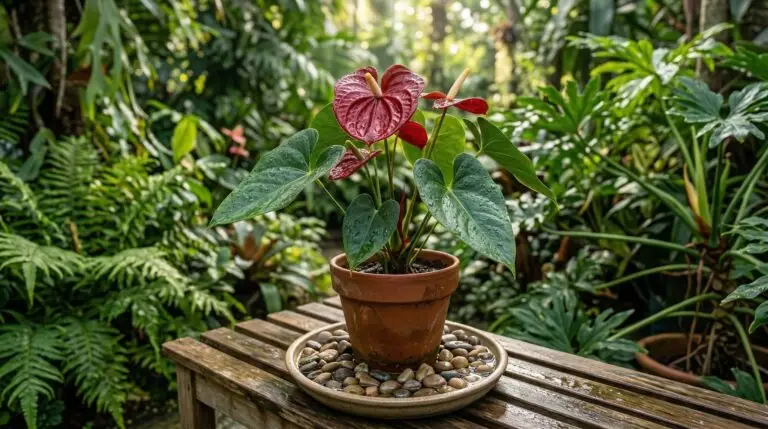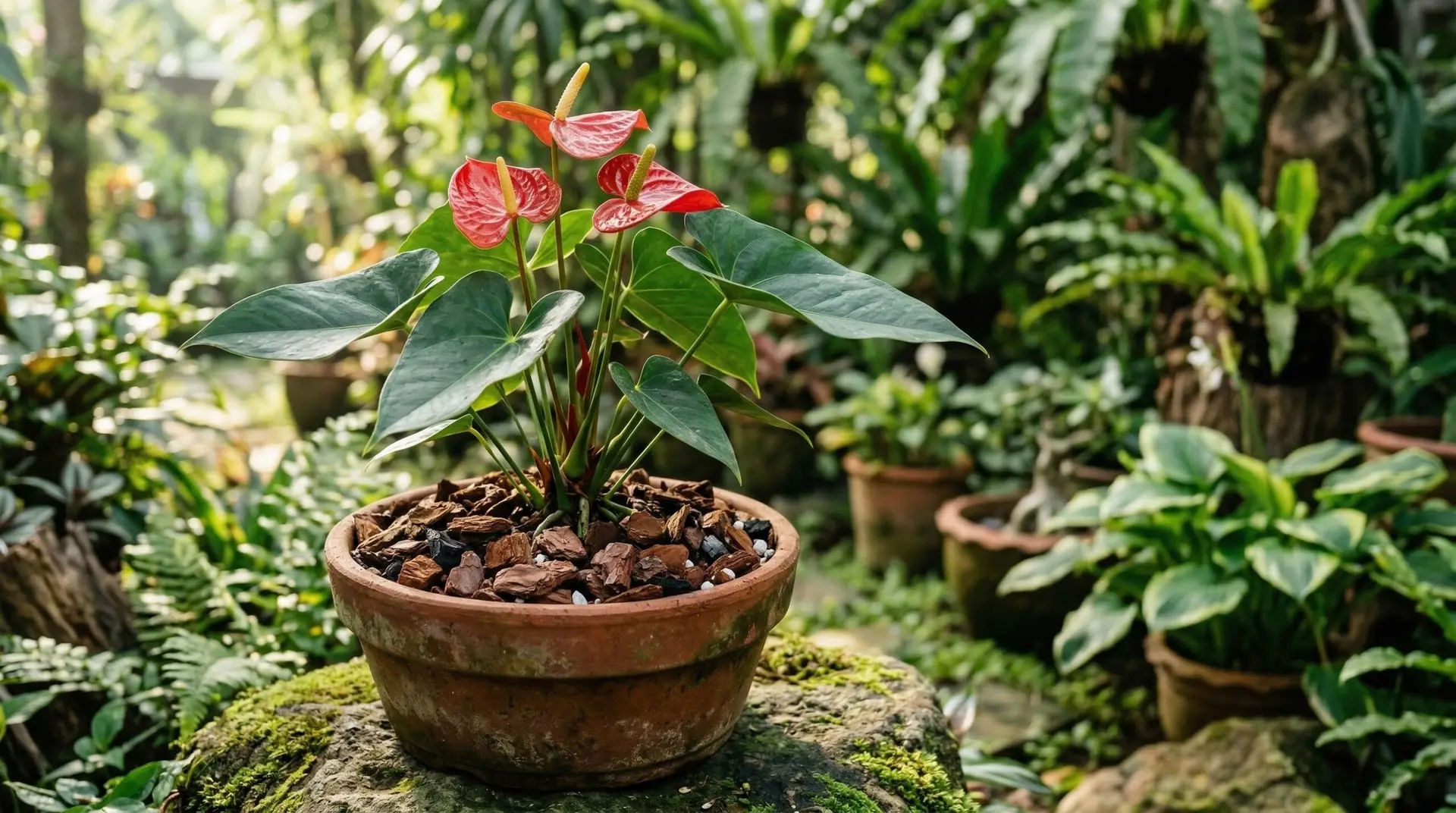
Anthuriums die in standard houseplant soil because their roots need air just as much as they need water. These plants are epiphytes in their native habitat, meaning they grow on the branches of trees rather than in the ground. Their thick, fleshy roots are adapted to grasp bark and absorb moisture from humid air and passing rain showers. When you bury these specialized roots in dense, fine-grained potting soil, you cut off their oxygen supply entirely. The roots suffocate, the organic matter around them stays wet too long, and fungal pathogens quickly destroy the plant. Creating the right anthurium soil requires mimicking the airy, fast-draining environment of a forest canopy. You must build a chunky substrate that holds moisture without ever becoming soggy.
Understanding the epiphytic root system
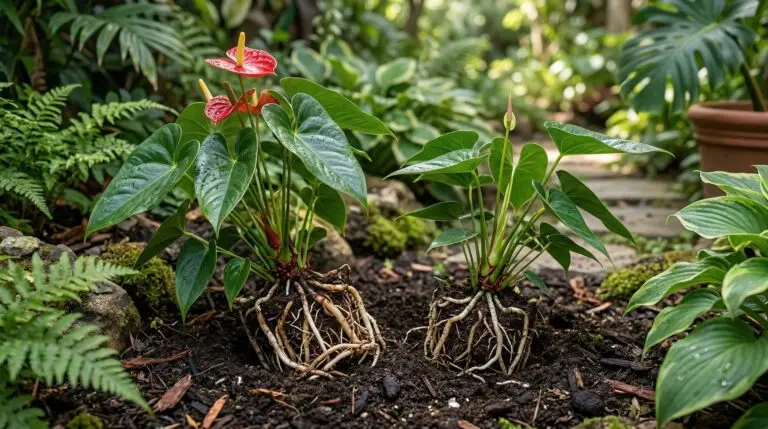
Most commercially available potting soils are formulated for terrestrial plants that require constant contact with fine soil particles. Anthurium roots operate differently, functioning much like the aerial roots found on a Moth Orchid. They possess a specialized outer layer called velamen that acts like a sponge to rapidly absorb water and dissolved nutrients. This spongy tissue must dry out slightly between waterings to maintain its structural integrity and resist decay. If the velamen remains constantly submerged in a wet, heavy medium, it rots away and leaves the inner root core unable to transport water to the leaves. You will notice the leaves turning yellow and developing brown, crispy edges, which ironically looks like underwatering because the rotted roots can no longer hydrate the plant. A proper anthurium potting mix respects this anatomy by providing massive air pockets throughout the container.
Building the ideal anthurium potting mix
The foundation of an excellent anthurium soil relies on large, rigid particles that refuse to compact over time. Start your mixture with forty percent medium-grade orchid bark, which provides the primary structural framework and mimics the tree branches these plants naturally climb. Add thirty percent coarse perlite or pumice to prevent the bark pieces from settling together and to allow for rapid drainage. Mix in twenty percent high-quality peat moss or coco coir to retain just enough moisture and provide a slight acidity that anthuriums prefer. Complete the recipe with ten percent horticultural charcoal, which absorbs impurities and keeps the mixture from souring as the organic components slowly break down. This specific ratio creates a highly porous environment where water runs through the pot almost instantly. You can adjust the peat moss slightly depending on your home environment, using less if you live in a humid climate and slightly more if your indoor air is very dry.
Despite what many sources claim, adding sand or fine gravel to your mix does not improve drainage for epiphytes. Fine particles actually fill the essential air gaps between the larger bark pieces, creating a dense cement that suffocates the root system. Always sift your ingredients before mixing them to remove the dust and tiny fragments that accumulate at the bottom of the bags. If you cannot find horticultural charcoal, you can substitute it with coarse tree fern fiber or simply increase the proportion of orchid bark. The goal is to create a texture so loose that you can easily push your bare fingers all the way to the bottom of the pot. When you water this chunky mix, you should hear a distinct crackling sound as the dry bark and perlite absorb the moisture. This auditory feedback confirms you have achieved the correct density for healthy root development.
Managing moisture and preventing root rot
Anthurium root rot is almost always a product of heavy soil rather than excessive watering frequency. When you use the chunky mix described above, it becomes very difficult to overwater your plant because gravity pulls the excess moisture away from the roots immediately. The bark and perlite hold onto a thin film of water, creating a humid microclimate inside the pot while leaving the air spaces completely open. You must water this type of substrate differently than standard soil, flushing it heavily until water pours freely from the drainage holes. Never let the pot sit in the runoff water, as the capillary action of the peat moss will pull the moisture back up and drown the lower roots. During the active growing season, you will likely need to water the plant every five to seven days, depending on the ambient temperature and light levels. Wait until the top two inches of the mix feel completely dry to the touch before watering again.
Fertilizing anthuriums in a soilless, chunky mix requires a modified approach compared to traditional houseplants. Because the large particles do not hold onto nutrients well, you must supply food regularly but in very diluted doses. Use a balanced liquid fertilizer at one-quarter of the recommended strength every time you water during the spring and summer months. This constant, weak feeding replicates the slow trickle of nutrient-rich water washing down from the forest canopy above. Flush the pot with pure water once a month to dissolve and wash away any accumulated mineral salts that could burn the sensitive velamen layer. If you notice a white, crusty buildup on the surface of the bark or the rim of the pot, you are applying too much fertilizer. Scale back the concentration immediately and flush the root zone thoroughly to prevent chemical root burn.
Repotting signs and transition techniques
Anthuriums prefer to be slightly under-potted and will direct their energy into foliage and flower production when their roots fit snugly in the container. You only need to repot when the roots are actively pushing the plant up and out of the pot, or when the organic components of the mix have broken down into sludge. This decomposition usually takes two to three years, at which point the bark loses its rigidity and begins to hold too much water. When moving a plant from a dense nursery soil into your custom chunky mix, you must remove as much of the old, fine dirt as possible. Soak the root ball in room-temperature water for twenty minutes to soften the old peat, then gently massage the roots to free the trapped soil. Do not worry if you break a few minor roots during this process, as the plant will quickly regenerate them in the highly oxygenated new medium.
Transitioning an anthurium to a vastly different soil structure requires a brief period of careful observation while the plant acclimates. The roots built in heavy soil are often weak and may struggle initially to extract moisture from the new, airy environment. You can ease this transition by placing a thin layer of damp sphagnum moss over the surface of the new potting mix to elevate the local humidity. Maintain bright, indirect light and avoid direct sun entirely while the root system establishes its grip on the fresh bark. Similar to the care required when repotting an Oncidium Orchid, you should withhold fertilizer for the first month after the transfer. The plant needs to focus its energy on growing new, thick roots adapted to the chunky substrate rather than processing excess nutrients. Once you see new green root tips pushing through the mix or fresh leaves emerging from the crown, you can resume your regular watering and feeding schedule.
More About Anthurium
Anthurium versus peace lily and which tropical houseplant suits your home better
Anthurium flower meaning and why it is the perfect gift for lasting love
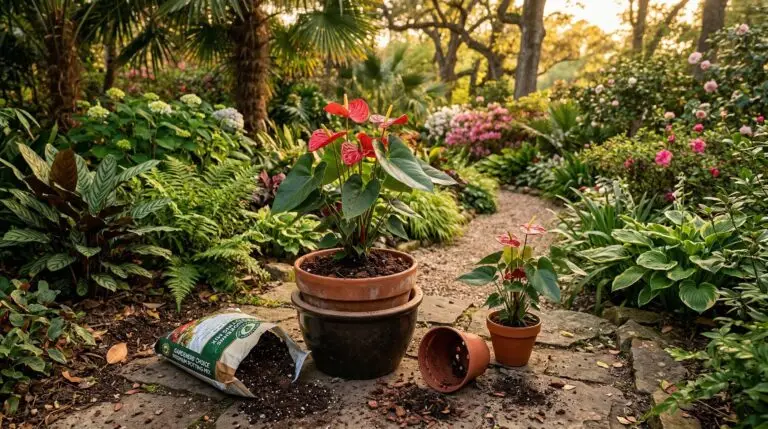
How to repot anthurium plants and when to know it is time for a bigger pot
Using anthurium flowers in modern minimalist home decor and arrangements
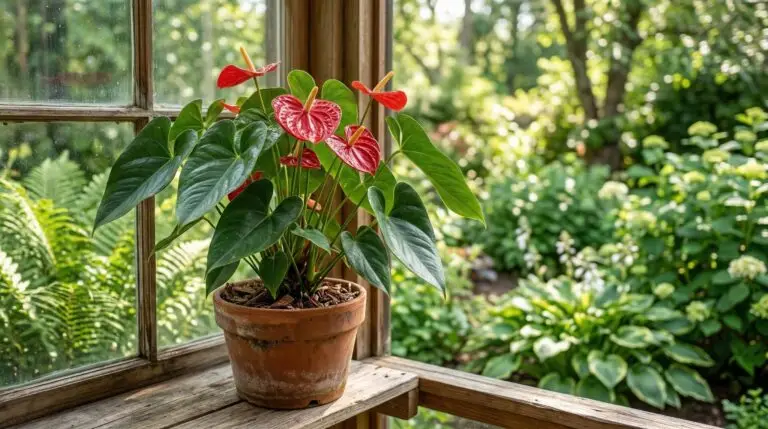
How to care for anthurium houseplants so they bloom all year long
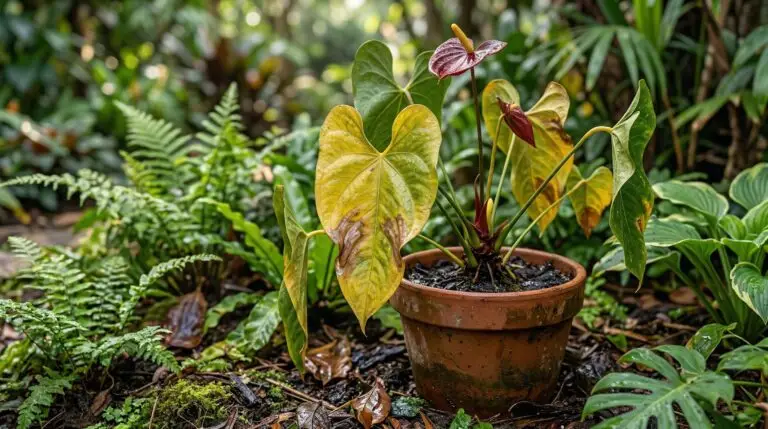
Why your anthurium leaves are turning yellow and brown and what to do about it
How to propagate anthurium by division and stem cuttings for more plants