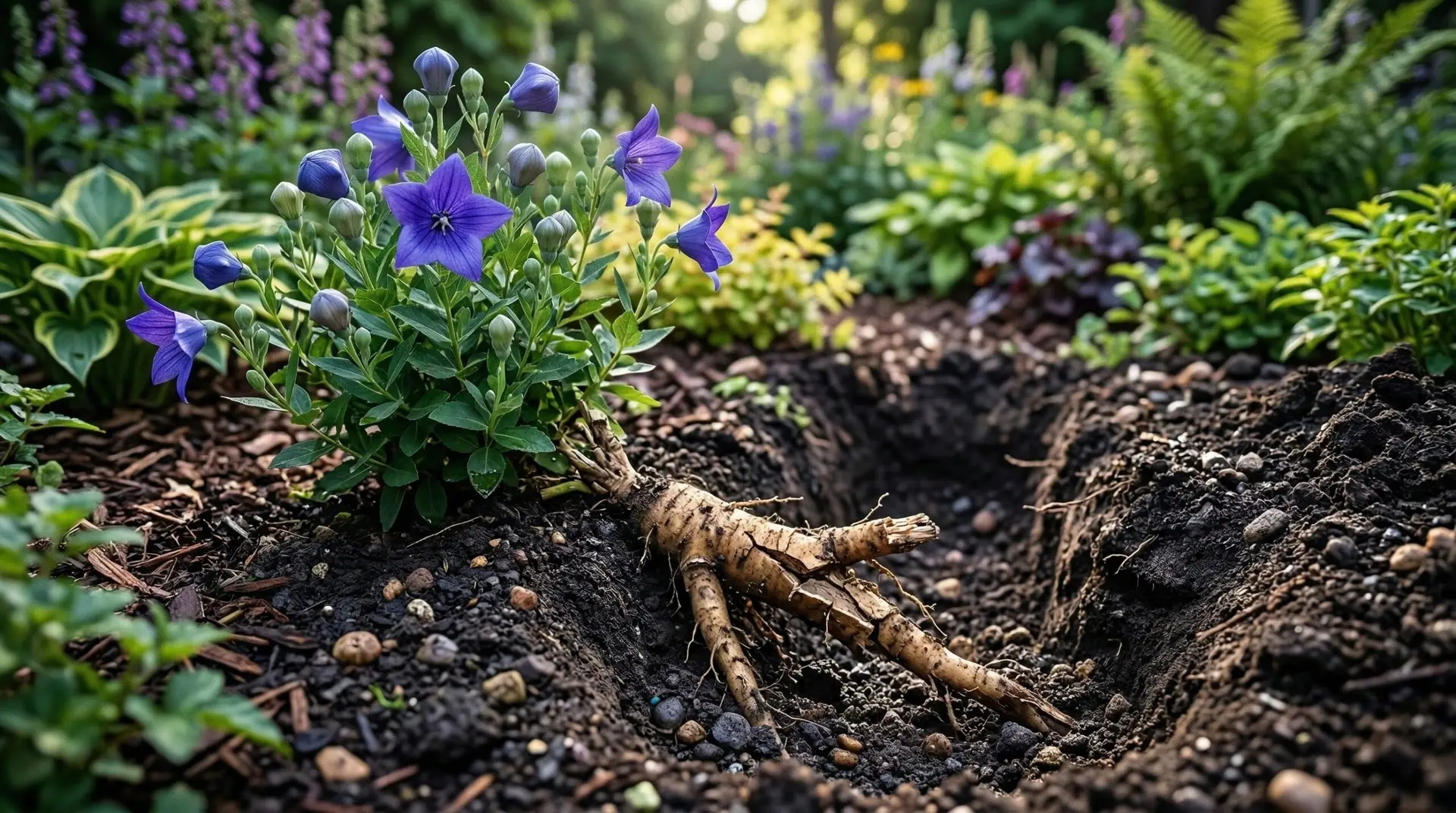
Over the decades I have spent working with herbaceous perennials, I have found that few plants test a gardener’s patience quite like Platycodon grandiflorus. The balloon flower emerges late in the spring, often causing panic that it has not survived the winter, before finally sending up its distinctive purple-tinged shoots. Beneath the soil lies the true reason for this plant’s longevity and its notorious reputation among propagators. The plant relies on a thick, fleshy structure known as a taproot, which drives deep into the earth to access moisture and store energy. Because of this specialized root system, balloon flowers can thrive in the same spot for decades without ever needing to be lifted or refreshed. Gardeners accustomed to routinely splitting their daylilies and hostas often assume they should do the same here, but that assumption usually leads to disappointment.
Understanding the balloon flower taproot
To successfully manage this plant, you must first understand what is happening beneath the soil surface. The balloon flower taproot closely resembles a pale, brittle carrot that thickens and branches slightly as the plant ages. This thick central root anchors the plant firmly and holds significant water reserves, allowing it to withstand prolonged dry spells once established. However, this fleshy structure lacks the dense, fibrous network of feeder roots found on many common garden perennials. When you sever or heavily damage a fibrous root system, the plant quickly regenerates new root hairs to compensate for the loss. A damaged balloon flower taproot has very little regenerative capacity and will often succumb to fungal rot if it is broken, bruised, or sliced during digging.
This intolerance for root disturbance is a trait shared by several other beloved garden plants. If you have ever tried moving an established poppy or a mature lupine, you have likely encountered a similar problem with sudden wilting and failure to establish in the new location. The taproots of these plants are designed for permanence rather than mobility, making them highly vulnerable to mechanical damage. When the terminal end of the taproot snaps off in the soil, the plant loses its primary means of drawing water from deep in the soil profile. The remaining upper section of the root cannot easily heal the wound, leaving the entire crown susceptible to soil pathogens. Knowing this biological limitation changes how we approach the maintenance of these deep-rooted species in a mixed border.
When transplanting becomes absolutely necessary
Despite their preference for permanence, situations occasionally arise where transplanting platycodon is the only viable option for saving the plant. A nearby shrub may have grown too large and shaded out the balloon flower, or poor drainage in the current location might threaten to rot the crown over winter. If you must move the plant, timing the operation correctly makes the difference between success and total failure. The ideal window for this task opens in early spring, just as the new shoots become visible above the soil line but before they elongate. At this stage, the plant is actively pushing new growth but has not yet expended the energy required to support a full canopy of foliage. Moving the plant in late autumn after the foliage has died back is a secondary option, though the dormant root remains highly susceptible to winter rot if the new planting hole holds excess moisture.
The process of moving an established plant
Executing the move requires careful preparation and a willingness to excavate a much larger area than the visible crown suggests. Begin by watering the soil deeply the day before you plan to dig, which helps hold the soil together and softens the ground for deeper penetration. Insert a long-handled spade into the soil at least ten inches away from the outer edge of the emerging stems. Dig straight down in a complete circle around the plant, aiming for a depth of twelve to fifteen inches to get beneath the lowest point of the root system. Once you have circumscribed the plant, gently pry the entire soil mass upward, doing your best to keep the root ball intact. Lift the plant from the bottom of the root mass rather than pulling on the stems, as the crown breaks away from the taproot under surprisingly little tension.
The new planting location must be fully prepared before you lift the balloon flower from its original spot. The receiving hole should be dug slightly wider than the root ball and exactly to the same depth. Platycodon crowns are highly sensitive to planting depth, and burying the top of the taproot even an inch too deep will encourage crown rot. Settle the root mass into the new hole carefully, ensuring the brittle taproot does not bend or snap against the bottom of the excavation. Backfill the hole with the native soil, pressing it down gently with your hands to remove large air pockets without compacting the earth too firmly. Water the transplant deeply immediately after planting to settle the soil against the roots, and monitor the soil moisture carefully throughout the first growing season.
Why dividing balloon flowers is rarely recommended
The subject of dividing balloon flowers frequently comes up in horticultural circles, usually initiated by gardeners dealing with exceptionally large, old clumps. Unlike fibrous-rooted plants that naturally pull apart into multiple distinct plantlets, platycodon forms a single, thick crown at the top of the taproot. All of the growing points, or eyes, originate from this central woody hub. Attempting to slice down through this crown with a spade or a knife usually destroys the structural integrity of the taproot and creates massive wounds. These large, open cuts rarely callus over fast enough to prevent soil moisture and bacteria from initiating rot. While highly skilled propagators occasionally succeed by carefully slicing a very large crown into two pieces with a sterilized knife, the failure rate remains exceptionally high even under greenhouse conditions.
Seed propagation as the reliable alternative
Because dividing the taproot carries such a high risk of mortality, growing new plants from seed is the most reliable method for increasing your stock. Balloon flowers produce abundant seed pods in late summer, which dry into crisp brown capsules filled with tiny black seeds. These seeds germinate readily when sown directly into the garden in early spring, or they can be started indoors under lights about six weeks before the last frost. The seedlings will develop their own delicate taproots within a few weeks, meaning they should be moved to their permanent locations while they are still quite small. Cultivars like the popular dwarf varieties often come true from seed, provided they are not cross-pollinated with other types in the garden. Leaving your established balloon flowers undisturbed while focusing on seed propagation ensures you maintain your mature blooming plants while safely expanding your garden display.
More About Balloon Flower
How to grow balloon flowers from seed for charming summer blooms year after year
Balloon flower meaning in Korean and Japanese culture and garden traditions
Balloon flowers in children’s gardens and why kids love watching the buds pop open

Designing a blue and purple perennial garden with balloon flowers as the star
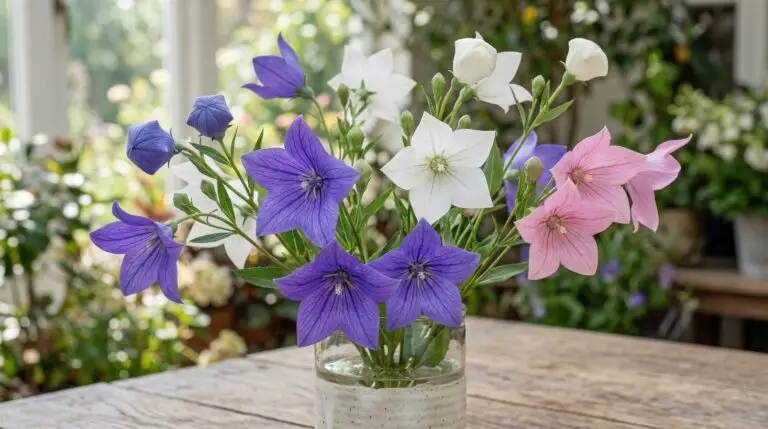
Best balloon flower varieties including double blooms and dwarf forms for small gardens
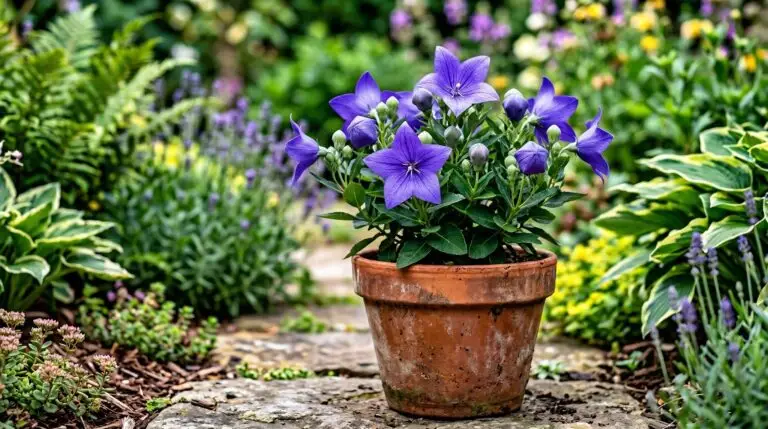
Growing balloon flowers in containers for a whimsical patio garden display

How to deadhead balloon flowers to keep them blooming through late summer
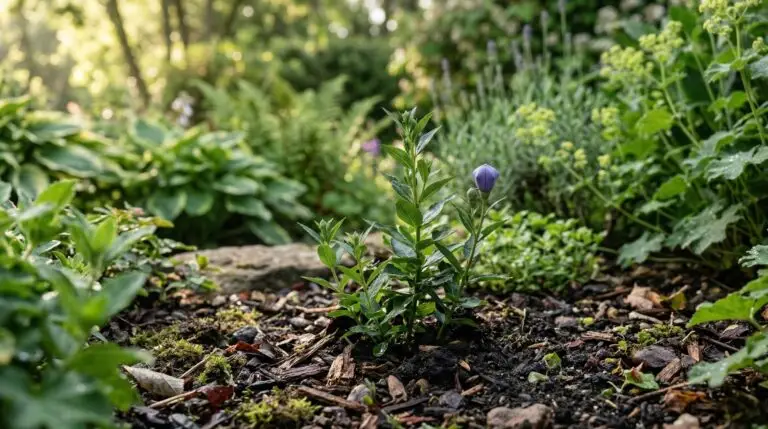
Why balloon flowers are late to emerge in spring and how to avoid digging them up