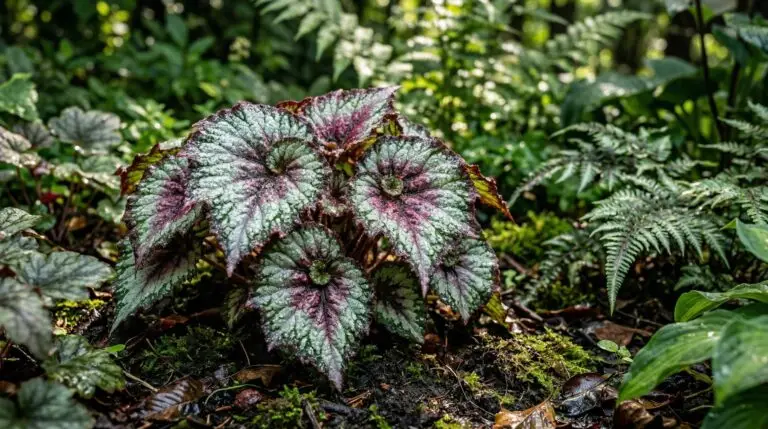
Multiplying your begonia collection is a rewarding process that requires very little specialized equipment. Begonia propagation takes advantage of the plant’s natural ability to generate new roots and shoots from various parts of its anatomy. Before you begin taking cuttings, you need to look closely at the plant you want to multiply because different types of begonias require different approaches. Cane begonias with their tall bamboo-like stems respond best to stem cuttings. Rex and rhizomatous begonias have thick fleshy leaves that can sprout entire new plants from a single leaf vein. The best time to start this process is when the days grow longer and daytime temperatures consistently stay above sixty degrees Fahrenheit. Active spring and summer growth gives the cuttings the energy they need to establish roots quickly before the cooler months slow them down.
Choosing your rooting medium and preparing tools
Cleanliness dictates your success rate when making a begonia leaf cutting or stem cutting. You need a very sharp cutting tool like a scalpel or a fresh razor blade. Wipe the blades thoroughly with rubbing alcohol before you make any cuts to prevent fungal spores or bacteria from entering the open wounds. Begonias have soft tissues that are highly susceptible to rot if introduced to pathogens. You will also need small nursery pots or shallow plastic trays to hold your rooting medium. Damp sphagnum moss offers excellent aeration and natural antimicrobial properties that keep cuttings healthy. Coarse perlite mixed with a little peat moss provides a sterile, well-draining environment that prevents waterlogging. You can also propagate begonia in water if you prefer to watch the roots develop, though roots grown in water are somewhat fragile and require careful handling when you eventually move them to soil.
Taking and rooting stem cuttings
Cane and fibrous begonias multiply easily through standard stem cuttings. Look for a healthy stem tip that has at least three leaves and feels firm to the touch. Make your cut just below a node, which is the slightly swollen joint where a leaf attaches to the main stem. This node contains the specialized cells that will transform into root tissue. Strip off the lowest leaf so you have a bare section of stem to insert into your chosen medium.
If you decide to propagate begonia in water, place the cutting in a small glass jar filled with room-temperature tap water. Make sure no leaves are submerged below the water line. Change the water every few days to keep oxygen levels high and prevent bacterial slime from forming on the stem. If you use perlite or sphagnum moss, poke a hole in the moistened medium with a pencil, insert the bare stem, and press the medium gently around it. At this point you might notice the lower leaves drooping slightly. That is normal and means the plant is redirecting its energy toward forming roots. Just like when propagating a geranium, keeping the medium lightly damp rather than soaking wet will prevent the buried stem from turning mushy.
Creating whole leaf cuttings for rhizomatous types
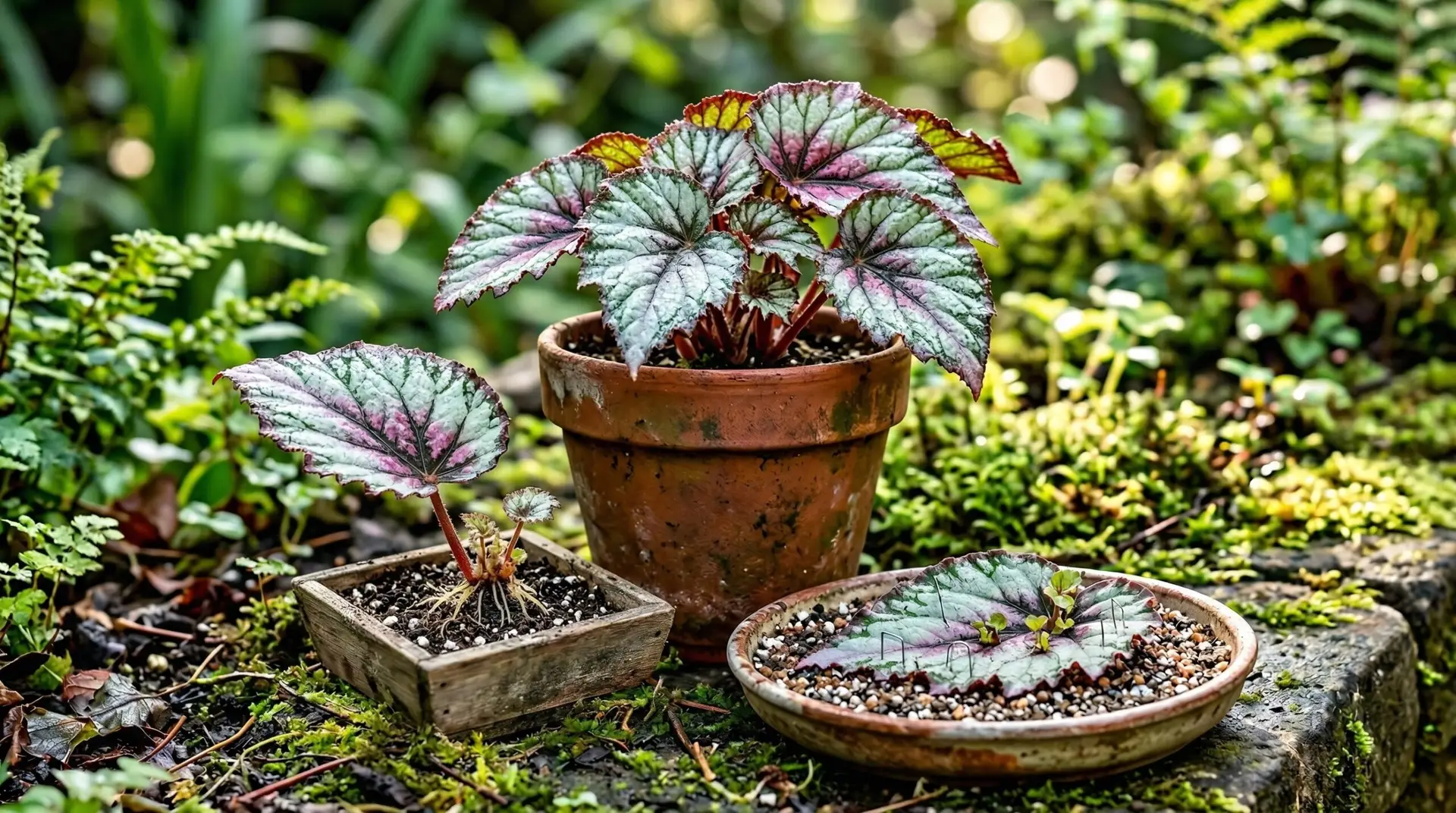
Rex and rhizomatous begonias can produce dozens of new plants from a single healthy leaf. Select a mature, unblemished leaf from the middle of the plant and cut it off with about an inch of the petiole attached. Turn the leaf upside down on a clean cutting board so the prominent veins on the underside face up. Take your sterilized razor blade and make shallow horizontal slits across the thickest veins, spacing the cuts about an inch apart. Flip the leaf back over and lay it flat against a tray filled with moistened perlite or sphagnum moss, ensuring the cut veins maintain constant physical contact with the damp medium. You can pin the leaf down using small U-shaped floral pins or small pebbles placed strategically between the veins. Place a clear plastic dome or a loose plastic bag over the tray to trap humidity around the leaf. Over the next few weeks, the leaf might look slightly ragged or discolored, but do not throw it away unless it turns black and slimy.
Using the leaf wedge technique to maximize yield
The leaf wedge method is another highly effective way to propagate begonias with large, fleshy leaves. Instead of keeping the leaf whole, you slice it into several distinct triangular pieces. Start by cutting away the outer margins of the leaf and discarding them. Use your razor blade to divide the remaining leaf tissue into wedges, making sure every single wedge contains a section of a main vein pointing toward the center of the original leaf. The vein is the critical component because the new roots and shoots will only emerge from the thickest part of that vein structure. Insert the pointy end of each wedge into your moistened potting medium, burying it about half an inch deep. The wedges should stand upright or lean slightly, similar to how you might arrange cuttings for an anthurium propagation box. Space the wedges far enough apart to allow air circulation, then cover the container with a clear lid and place it in a warm spot that receives bright, indirect light.
Managing humidity and transitioning new plants
Consistent moisture and high humidity are the driving forces behind successful begonia propagation. You should check your cuttings every few days to ensure the perlite or moss remains lightly damp. If the medium feels dry to the touch, mist it lightly with a spray bottle, being careful not to soak the foliage itself. If you notice heavy condensation dripping down the inside of your humidity dome, prop it open for an hour to let excess moisture escape. Too much trapped water encourages gray mold to form on the dying edges of the mother leaf. After about four to six weeks, you will see tiny pink or green plantlets emerging from the soil line at the base of your stem cuttings or along the cut veins of your leaf wedges. These miniature plants will grow slowly at first as they build their root systems. Wait until the baby plants have at least three true leaves of their own before you transfer them to individual small pots filled with a lightweight indoor potting mix.
More About Begonia
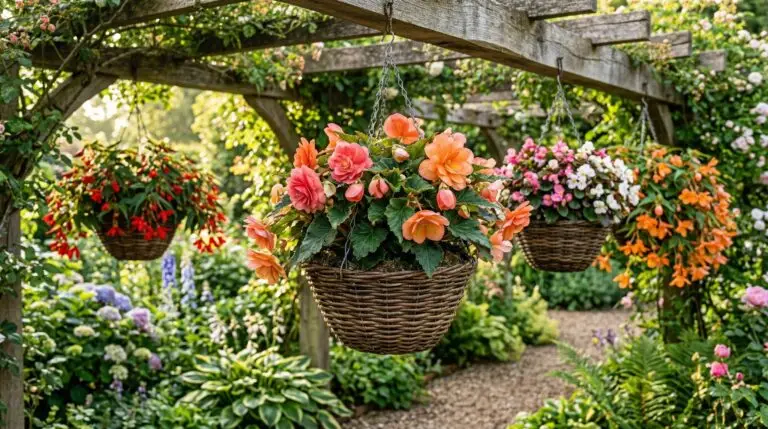
Growing tuberous begonias in hanging baskets for cascading summer color
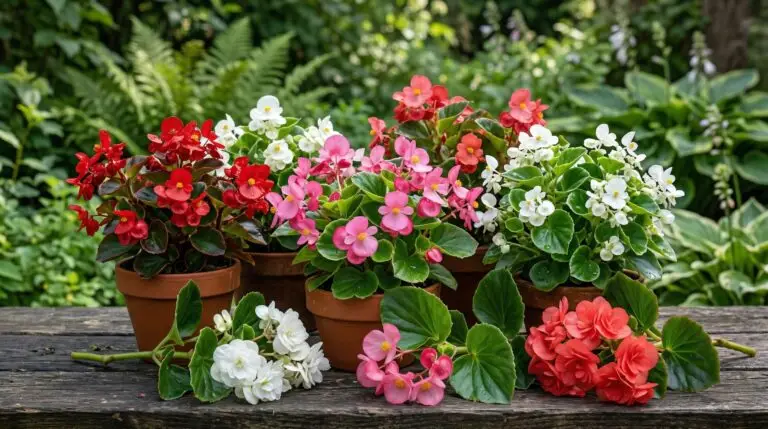
Best begonia varieties for shade gardens that add color where sun rarely reaches
Angel wing begonias as statement houseplants with polka dot leaves and hanging clusters

How to overwinter begonia tubers and bring them back bigger next summer
Begonia container combinations that look gorgeous on a shaded front porch
Begonia flower meaning and the Victorian message of caution and gratitude
Why begonia leaves are curling dropping or developing brown spots