The late afternoon sun drops low enough to hit the back of the garden border, sending long shafts of amber light through the foliage. Most plants glow bright chartreuse in this light, but the dark leaf dahlia absorbs the sun entirely. These plants stand like pools of deep shadow among the fading summer greens. Their leaves are a saturated aubergine, so dark they register as bruised plum or bitter chocolate to the eye. When you brush past them, the foliage feels slightly leathery, carrying a faint, spicy scent of warm dust and green sap. Rainwater behaves differently on these dark surfaces, beading up like quicksilver drops that catch the sky before rolling down the rough, burgundy-tinted stems. You would plant these just for the mood the black dahlia foliage creates, a quiet anchor in the chaotic late summer beds. Then the buds swell, splitting their dark calyxes to reveal tightly rolled petals of pure, concentrated color.
The velvet depth of the Bishop series
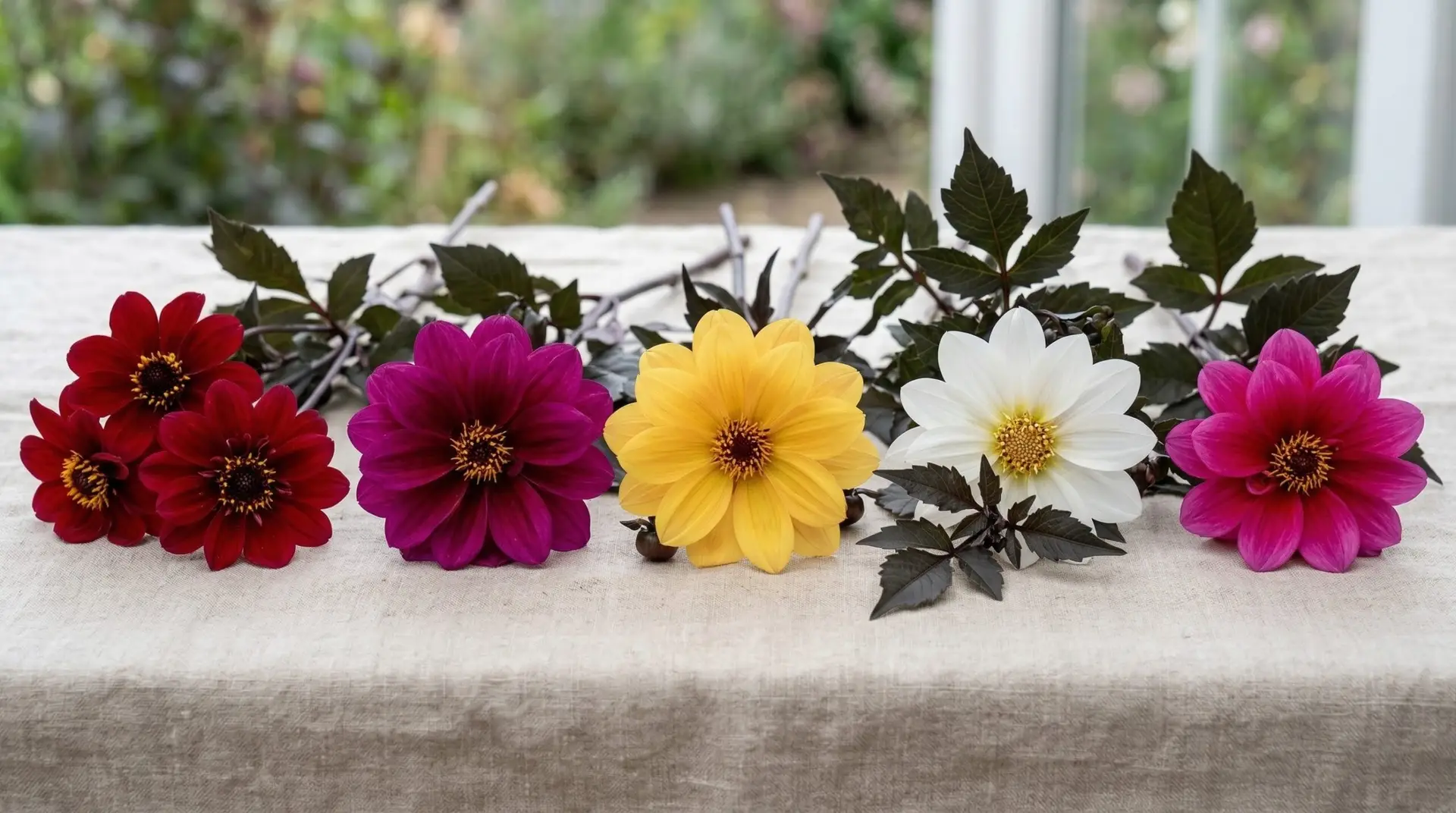
The Bishop series remains the classic introduction to this moody color palette. ‘Bishop of Llandaff’ is the oldest and perhaps the most visually arresting, producing semi-double flowers the exact shade of arterial blood. These ruby red petals look like crushed velvet when the morning dew settles on them. Against the mahogany and bronze foliage, the red practically hums with intensity. As the day warms, the flowers open fully to expose a dark, pollen-rich center that draws solitary bees. The leaves on these Bishop varieties are heavily dissected, resembling oversized fern fronds dipped in dark ink. When the autumn wind moves through the bed, the finely cut foliage rustles with a dry, papery sound. The visual weight of the heavy, saturated color pulls your eye straight to the center of the garden.
Placing these dark plants in the garden requires thinking about how shadows work in a painting. You want to surround the deep purple-black foliage with plants that catch the light and bounce it back. A silvery artemisia or a pale, fuzzy lamb’s ear provides a tactile and visual shock next to the smooth, dark dahlia leaves. You might also position them near a tall, broad-leaved canna lily, letting the massive, ribbed green leaves become a bright backdrop for the delicate dark foliage. The deep foliage color deepens even further when planted alongside flowers in pale apricot or soft blush pink. As the evening fog rolls in, the bright companions seem to float, while the dark dahlia leaves recede entirely into the mist. Only the jewel-toned dahlia blooms remain visible, hovering like disembodied lanterns in the damp, cooling air. The entire composition changes hour by hour as the sun moves across the sky.
Painting with the Mystic and Happy Single collections
Breeders have expanded this dark canvas with the Mystic series, a collection that pushes the foliage color even closer to true black. The leaves on a variety like ‘Mystic Illusion’ have a glossy, lacquered finish that reflects the morning light. This high shine makes the dark pigment look wet and fresh, even in the middle of a dry August afternoon. ‘Mystic Illusion’ produces single blooms in a sharp, acidic yellow that borders on sulfur. The visual impact of those bright lemon petals against the near-black stems is startling and immediate. Other Mystic varieties offer flowers in shades of saturated magenta, burnt orange, and soft peach. The single-flower form means the petals drop cleanly when they fade, leaving behind a smooth, spherical seed head that turns from green to chocolate brown as it dries. You can run your thumb over the dried seed heads, feeling the stiff, papery husks that hold the flat, grey seeds.
The Happy Single series brings another variation on the dark-leaved theme, focusing on compact plants with an abundance of nectar-rich single blooms. The foliage here is a soft, matte burgundy, absorbing rather than reflecting the harsh midday light. When you look closely at the leaves, you can see fine green veining running through the dark pigment, like rivers seen from a great height. The flowers are simple, flat faces of color, often with a darker halo bleeding out from the central disc. A variety like ‘Happy Single Kiss’ opens a soft salmon pink with a deep crimson ring around a golden eye. The texture of the petals is smooth and waxy, holding up well under heavy summer rainstorms. Much like the thick, fleshy stalks of an amaryllis, the stems of these dahlias are thick and water-filled, snapping with a crisp sound if you cut them for a vase. Bringing a few stems indoors fills the room with a subtle, earthy scent that smells exactly like a late summer afternoon.
Cultivating the shadows in your garden soil
Growing these dark-leaved varieties requires attention to the soil beneath your feet. The tubers need earth that feels like a wrung-out sponge in your hand, moist but never heavy or waterlogged. When you dig the planting hole in late spring, the soil should smell sweet and rich, full of broken-down compost and leaf mold. You bury the rough, knobby tubers just below the surface, waiting for the soil to warm enough to trigger the pale pink eyes into growth. Full sun is an absolute requirement for the deepest foliage color. If planted in partial shade, the leaves will revert to a muddy, olive green, losing the dramatic purple-black tones that make them so special. You will know the light is right when the new growth emerges a shiny, metallic bronze before darkening to plum as the leaves expand. The daily ritual of watering them at the base releases the scent of wet earth, a grounding smell that anchors the bright visual display.
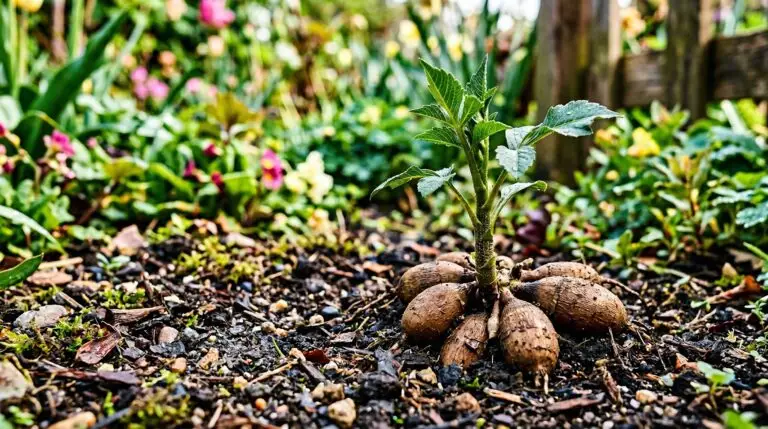
The sensory experience of the dark leaf dahlia shifts dramatically as the season turns toward autumn. The cooler night temperatures deepen the foliage color, pushing the burgundy and bronze tones into an almost pure, charcoal black. The flowers seem to glow with more intensity against this darkened backdrop, their petals taking on a richer, more saturated hue. Eventually, the first heavy frost arrives, leaving the leaves limp, blackened, and smelling faintly of crushed greens. This is the signal to cut the hollow, watery stems down to the ground. Digging up the tubers is a tactile treasure hunt in the cold, damp November soil. You pull the clump from the earth, brushing away the clods of dirt to reveal the cluster of plump, storage roots. They feel firm and cool to the touch, wrapped in a rough, papery skin that will protect them in the dark basement until spring returns.
The true magic of the dark leaf dahlia reveals itself in the final moments of daylight. As the sun dips below the horizon, the reds, yellows, and pinks of the garden begin to wash out into shades of grey. The purple-black foliage, however, holds its visual weight, anchoring the twilight garden with solid shapes of deep shadow. The single, jewel-toned blooms catch the very last ambient light, appearing to generate their own soft illumination against the dark leaves. You can stand in the quiet garden and watch the colors slowly extinguish, one by one. The air cools, carrying the scent of damp soil and the faint, dusty perfume of the dahlia pollen. It is a moment of perfect, quiet drama, painted in shadows and fading light. The dark leaves simply fold into the night, waiting to catch the first dew of tomorrow’s morning.
More About Dahlia
Dahlia wedding flowers and why brides are choosing dahlias over traditional roses
Dahlia tuber storage over winter so your favorite varieties survive until spring
Dahlia flower meaning and the Victorian language of flowers message behind each color
How to pinch and disbud dahlias for more flowers or bigger individual blooms
How to divide dahlia tubers in spring for more plants from your collection
How to grow dinner plate dahlias for enormous blooms that stop people in their tracks
Growing dahlias in containers for a patio flower show from midsummer to frost
Dahlia pests and diseases including earwigs slugs and powdery mildew solutions