
Catmint requires an aggressive mid-summer shearing to prevent the plant from splaying open and to force a second round of flowers. Many gardeners hesitate to cut down a plant that still has a few purple tips on the ends of its branches, but waiting ruins the plant’s structural integrity. When the first massive flush of late spring flowers begins to fade and the heavy stems flop outward, you must cut the entire plant back to a few inches above the soil. This hard reset removes the developing seed heads and redirects the plant’s energy from reproduction back into vegetative growth. The result is a compact mound of fresh silver foliage that will produce another full set of flowers within three weeks. You cannot achieve this tight, secondary bloom by deadheading individual stems. A complete, ruthless shearing is the only way to maintain the shape and vitality of the plant through the late summer heat.
Timing dictates the success of cutting back catmint. You should make your cuts when the bottom half of the flower spikes turn brown and dry, even if the top few inches still hold pale blue or purple color. Leaving the exhausted stems in place causes the center of the crown to rot out from poor air circulation while the heavy stems collapse onto neighboring plants. You will often see new, small gray leaves already pushing up from the base of the plant right at the soil line when the first flush finishes. These basal shoots are your signal to act immediately. Delaying this cut forces the plant to waste energy maturing seeds, which delays the catmint second bloom and results in a weaker, sparser autumn display.
Executing the mid-summer shear
The physical act of catmint pruning requires hedge shears rather than bypass pruners. Grab the entire mass of stems with one hand, pull them upward into a tight bundle, and cut straight across the plant. You want to leave a dome of stems that stands three to four inches above the crown. Despite what many sources claim, you do not need to make precise cuts above specific leaf nodes for this perennial. The plant responds to mass shearing by activating dormant buds along the remaining woody bases and pushing rapid new growth directly from the crown. If you are growing companion plants like lavender nearby, you will notice that catmint handles much harder pruning than its woody-stemmed neighbors. Do not leave the stems at six or eight inches tall, as this intermediate height leaves ugly, bare sticks protruding above the new foliage.
Clean up the debris thoroughly after making your cuts. Catmint drops a massive amount of spent blossoms and tiny leaves into the center of its own crown during the first bloom cycle. You must physically rake this dead material out of the center of the plant using your fingers or a small hand rake. Leaving this decaying matter in the crown traps moisture against the base of the stems and invites fungal diseases during humid summer weather. Once the crown is clean and exposed to sunlight, the new basal growth will harden off and begin expanding within forty-eight hours. The sheared plant will look like a severe, ugly stump for exactly one week before the new foliage covers the cuts completely.
Forcing the second bloom cycle
A sheared catmint needs immediate resources to rebuild its canopy and produce a second round of flowers. Water the plant deeply right after cutting it back, soaking the soil around the crown to a depth of six inches. Apply a liquid, balanced 10-10-10 fertilizer at half strength to the soil around the base of the plant. Granular fertilizers act too slowly for this mid-season reset, while a full-strength liquid application pushes too much weak, leggy foliage that will flop over again. The half-strength liquid dose provides exactly enough nitrogen to fuel the new leaf growth and enough phosphorus to initiate the next round of flower buds. If your soil is exceptionally rich or heavily amended with compost, you can skip the fertilizer entirely and rely on deep watering alone.
The recovery follows a strict three-week timeline when you provide adequate water. Week one produces a dense mound of fresh, aromatic gray-green foliage that completely hides the woody cuts. Week two sees the stems elongate to about half their mature height, often resembling the tight growth habit of blue salvia before it sets buds. By the end of week three, the new flower spikes emerge and begin showing color. This second flush of flowers will be slightly shorter than the spring display but equally dense, and it will last until the first hard frost. Maintaining consistent soil moisture during this three-week period prevents the new growth from stalling in the summer heat.
Fall management and winter preparation
Late season care requires a completely different approach than the mid-summer shear. When the second flush of flowers finally dies back after the first hard frosts of autumn, you should leave the dead stems standing through the winter. The hollow stems and dried foliage insulate the crown against freezing temperatures and protect the shallow roots from frost heaving during repeated freeze-and-thaw cycles. Many gardeners mistakenly cut catmint down to the ground in October to tidy the beds, which exposes the dormant crown to excess winter moisture and severe cold. The standing dead stems also catch and hold snow, which provides a highly effective layer of natural insulation.
Wait until early spring to remove the winter debris. You should make this final cleanup cut in March or April, just as the earliest signs of new green growth appear at the soil line. Cut the dead stems down to one inch above the ground, taking care not to nick the soft new shoots emerging from the crown. Rake away the winter mulch and accumulated dead leaves to let the spring sun warm the soil and trigger active growth. A clean crown in early spring guarantees the tight, upright structural integrity needed to support the massive first wave of flowers in May.
More About Catmint
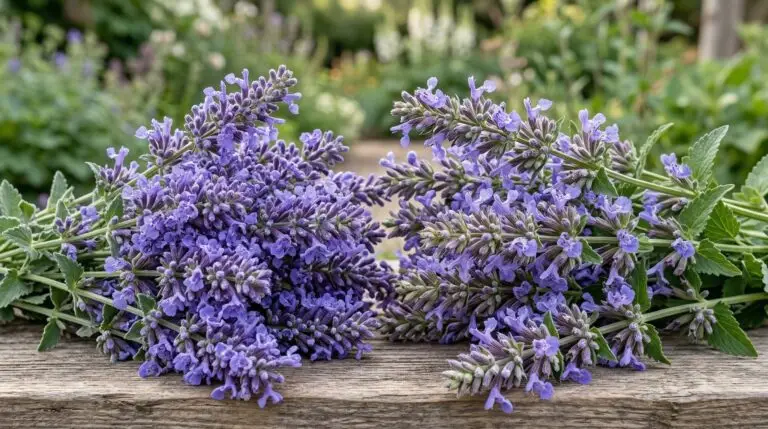
Catmint versus lavender and which fragrant purple perennial works better in your garden
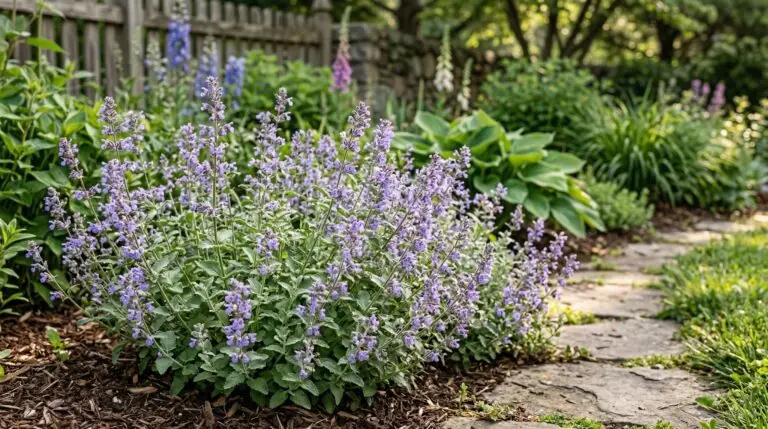
Catmint as the ultimate deer-resistant and drought-tolerant perennial for easy gardens

Designing a low-water perennial border with catmint as the anchor plant
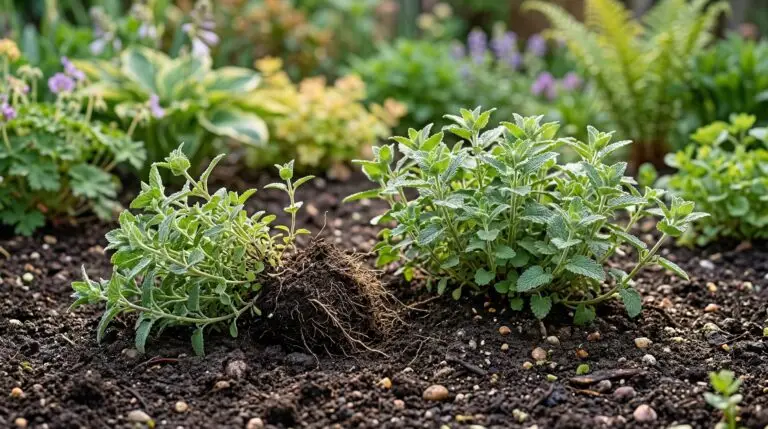
How to propagate catmint from stem cuttings and division in spring

How to use catmint as a flowering ground cover that chokes out weeds
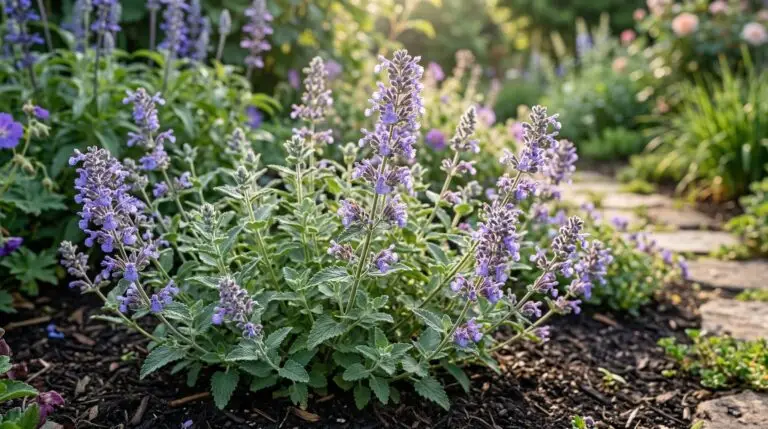
Catmint versus catnip and why they are different plants with different garden uses
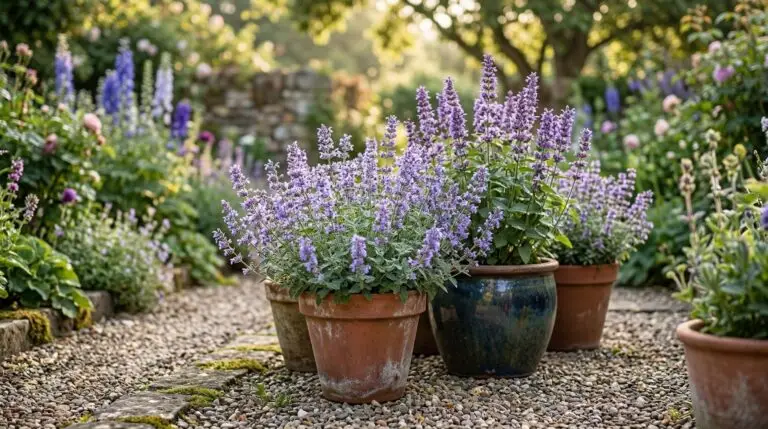
Growing catmint in containers for a fragrant pollinator-friendly balcony
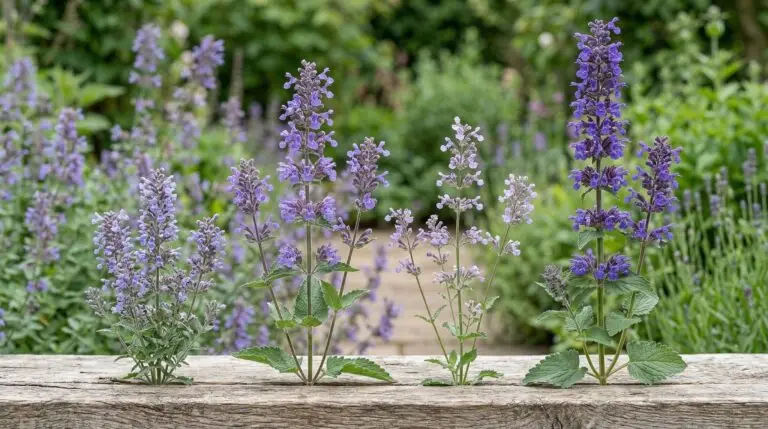
Best catmint varieties from compact Walker’s Low to towering Six Hills Giant