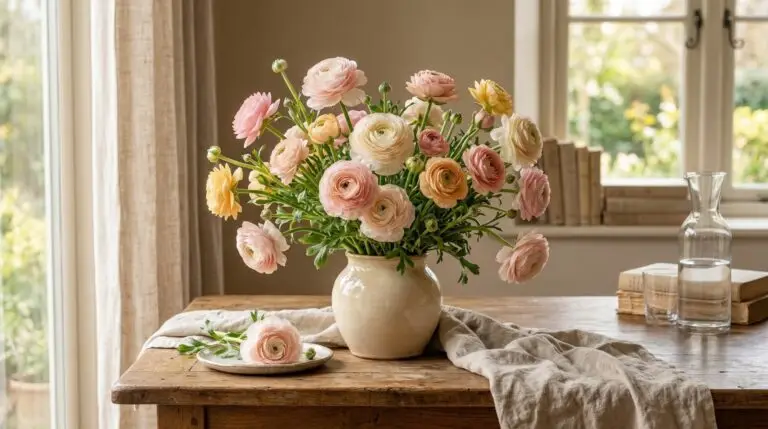
The story of the ranunculus begins near the damp edges of ancient streams, long before it became a staple of spring gardens. Its name comes from the Latin word for frog, a quiet observation by early botanists who noticed these wild blooms thriving in the same wet, marshy areas where small amphibians gathered. Before it was cultivated into the densely petaled flower we know today, the wild ranunculus grew in the Middle East as a simple member of the buttercup family with a bright, open face. A Persian legend tells of a young prince who sang to a beautiful nymph day and night, eventually turning into this very flower when his love went unrequited. The ranunculus meaning has always carried a sense of intense attraction, rooted in these early stories of devotion and natural radiance. Today, the flower has traveled far from those ancient riverbanks, finding its way into garden beds and floral arrangements across the world.
From a strange claw to a spring bloom
The life of a cultivated ranunculus starts in the quiet cold of autumn, resting in the palm of a gardener’s hand as a dry, brittle corm. These corms look nothing like the delicate flowers they will become, resembling tiny, withered claws or dried spiders rather than anything capable of producing beauty. Planted in the cooling earth before winter arrives, they wait in the dark soil, slowly absorbing moisture and swelling with life as the temperatures drop. When the first signs of spring break through the frost, green shoots push upward, unfurling fern-like foliage that gathers the early sunlight. The transformation from that hard, dormant corm into a stem bearing tightly wound buds is a slow process of patience and precise timing. As the days lengthen and the air warms just enough, the buds begin to swell, preparing to reveal the radiant charm that defines the ranunculus symbolism.
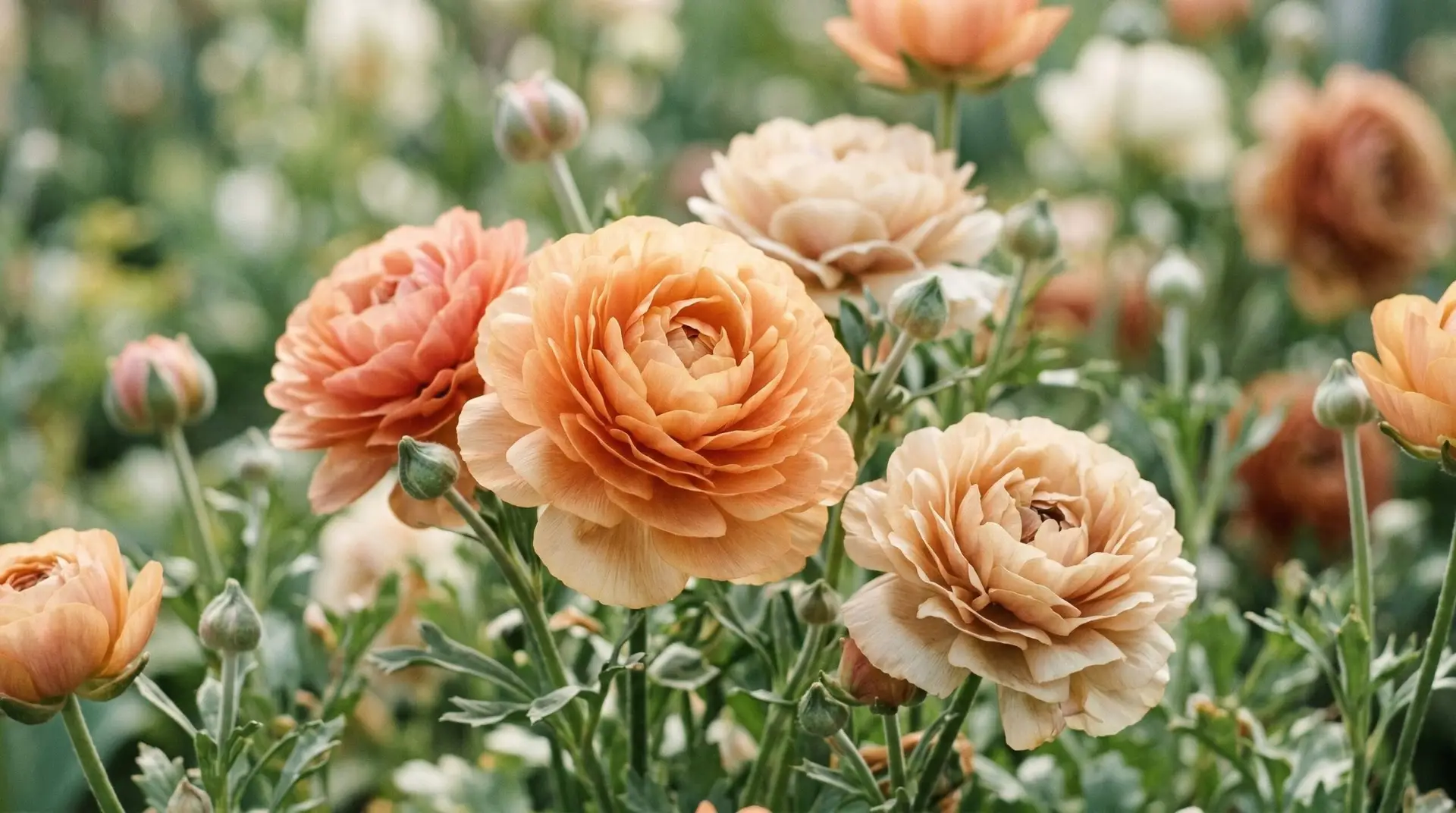
When the ranunculus finally opens, it reveals layers upon layers of tissue-thin petals, sometimes numbering in the hundreds on a single bloom. The texture of these petals catches the light in a way that makes the flower seem to glow from the inside out. This dense structure often invites comparisons to other beloved garden staples, as the ranunculus can mimic the classic form of a rose while maintaining its own distinct, cup-like shape. In the late spring garden, they also share the stage with peonies, offering a smaller but equally dramatic display of ruffled color. Unlike those larger blooms, the ranunculus holds its head high on a slender, unbranched stem, giving it an elegant posture that sways easily in a spring breeze. The sheer volume of petals packed into such a compact space is exactly what earned the flower its reputation for intense, concentrated beauty.
A Victorian message of dazzling attraction
During the nineteenth century, the strict social codes of the Victorian era forced people to communicate their feelings through the silent language of flowers. In this complex system of botanical messaging, handing someone a bouquet of ranunculus carried a very specific and bold declaration. The ranunculus flower language translated directly to the phrase “I am dazzled by your charms,” a message of pure, overwhelming attraction. Unlike subtle flowers that whispered of secret crushes or quiet affection, this bloom was given when the sender wanted to express a feeling of being completely captivated. The recipient of these flowers would understand immediately that they were admired for their radiant charm and undeniable presence. This tradition turned the ranunculus into a symbol of intense fascination, a physical representation of the moment someone catches your eye and holds your attention completely.
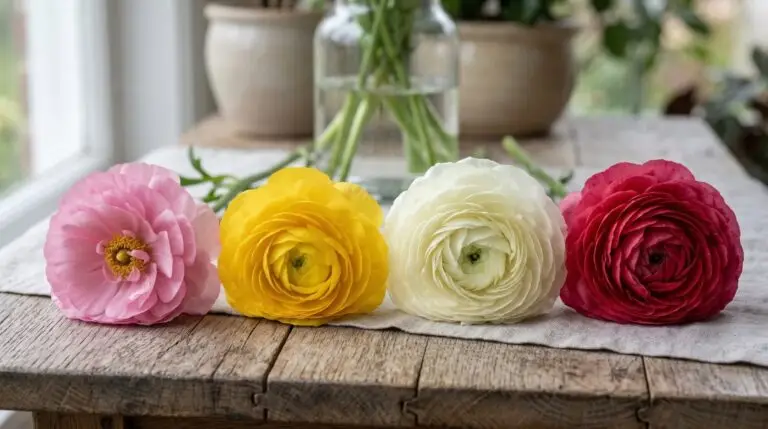
The specific shade of the flower added another layer to the ranunculus meaning, allowing the sender to fine-tune their message of attraction. A bright yellow bloom, true to its buttercup family roots, communicated a cheerful, sunlit happiness mixed with admiration. Red ranunculus carried the weight of deep, romantic love, similar to a classic rose but with that added note of being utterly dazzled. Pink varieties softened the message slightly, expressing a gentle but persistent infatuation, while white blooms spoke of pure, sincere fascination without the heavy expectations of romance. Orange ranunculus, with their fiery, glowing petals, were given to express a strong, energetic attraction that could not be ignored. Cultivators eventually developed deep purple and nearly black varieties, which added a sense of mystery and profound elegance to the garden and the bouquet.
The enduring appeal of the buttercup family
The ranunculus belongs to the Ranunculaceae family, a botanical group that includes other cool-weather favorites like anemones, hellebores, and clematis. Many members of this family share a preference for the damp, cool conditions of early spring, returning to dormancy when the summer heat arrives. The most common garden variety, Ranunculus asiaticus, was brought to Europe from the eastern Mediterranean in the sixteenth century. It quickly gained popularity among collectors and gardeners who were fascinated by its tightly layered petals and vivid colors. By the eighteenth century, it had become a highly sought-after prize, with breeders competing to develop larger blooms and entirely new color patterns. This historical fascination mirrors the very meaning of the flower, as generations of gardeners have found themselves thoroughly dazzled by its reliable spring performance.
Bringing ranunculus into your own garden requires a willingness to work with the changing seasons and a bit of faith in those dry, claw-like corms. When you plant them in the cool autumn soil, you are participating in a tradition of cultivation that stretches back centuries across continents. Watching the tightly wrapped buds finally open their paper-thin petals on a crisp spring morning is a quiet reward for months of patience. You can see exactly why the Victorians chose this specific flower to represent radiant charm and overwhelming attraction. The ranunculus asks for careful timing and cool earth, but it repays the effort by holding the spring light in its hundreds of petals. It remains a beautiful reminder that the most dazzling things often grow from the most unlikely beginnings, waiting quietly in the dark until it is time to bloom.
More About Ranunculus
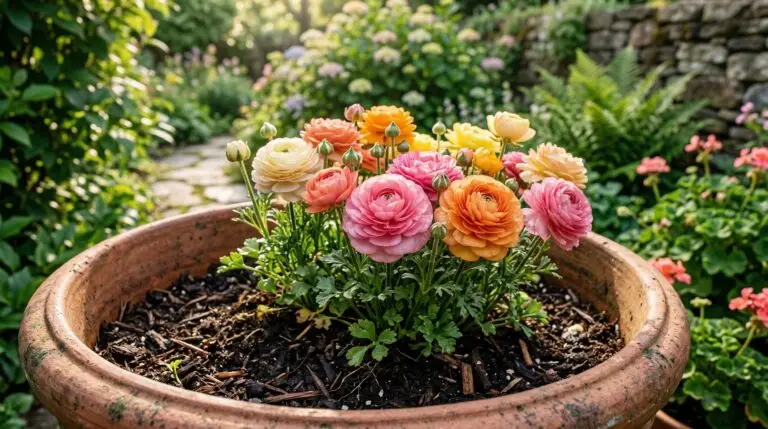
Growing ranunculus in containers for a spring flower show on patios and porches
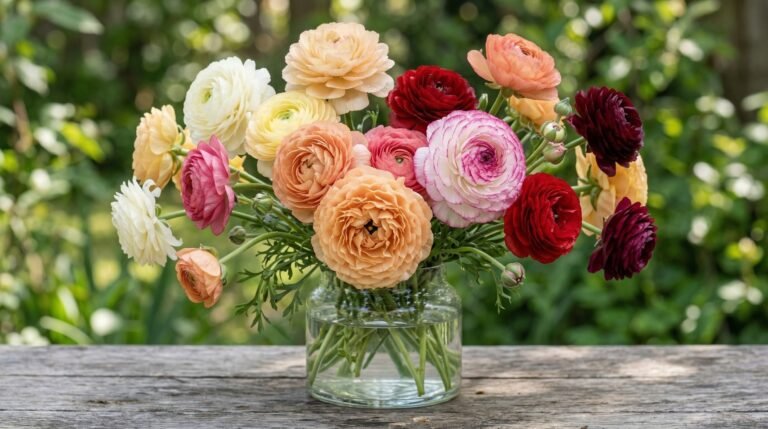
Best ranunculus varieties from classic Italian to ruffled Butterfly and Elegance types
Ranunculus versus garden roses and why these corm flowers compete with the queen of flowers
Ranunculus companion plants: what to grow, and what to avoid
Ranunculus as the ultimate cut flower and why flower farmers cannot grow enough of them
Why ranunculus melts in summer heat and the fall-to-spring growing trick for warm climates