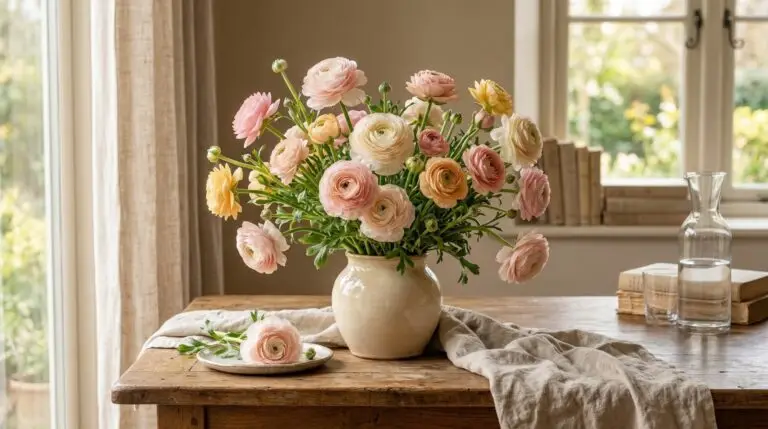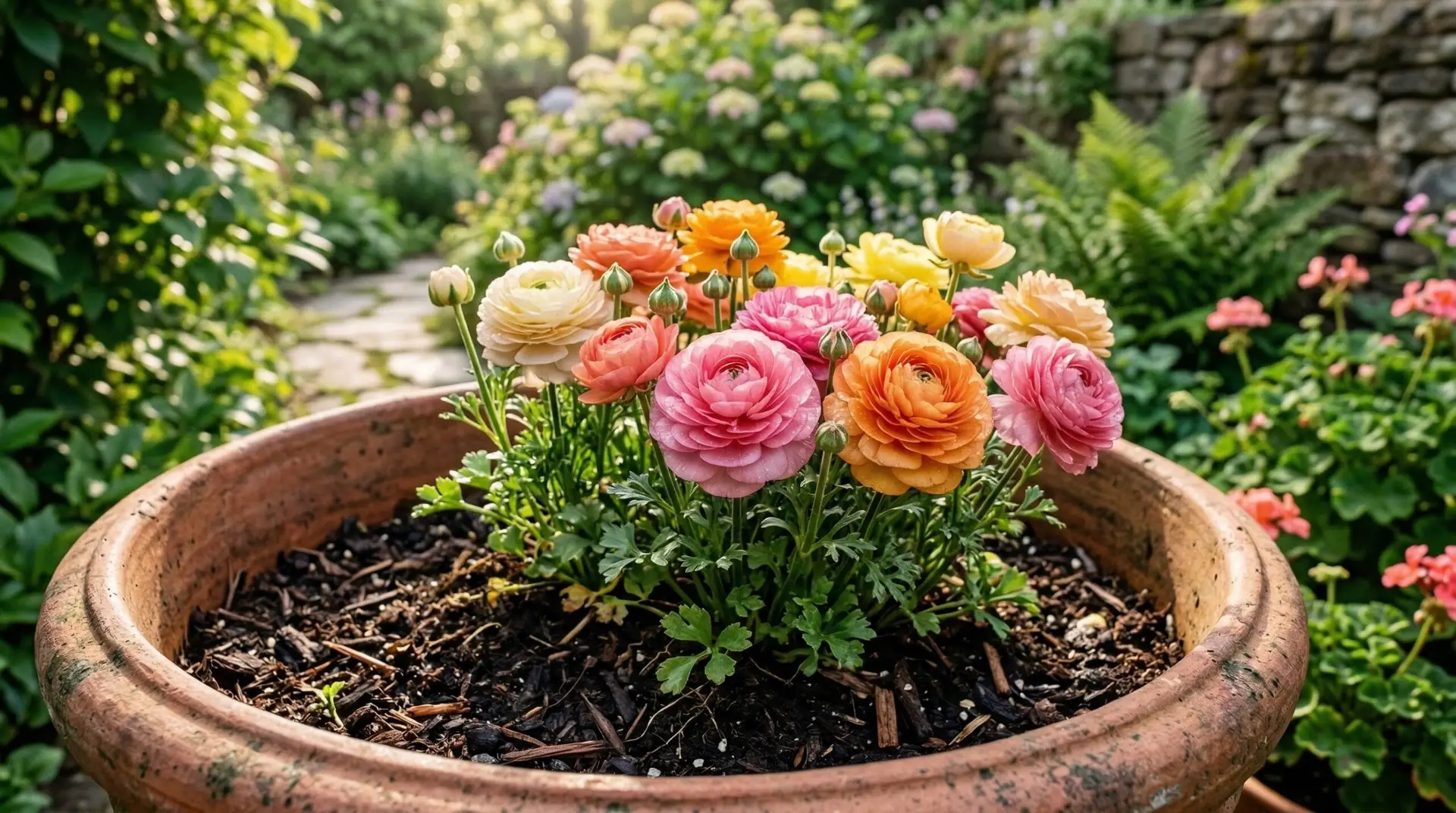
Spring fever hits hard on the first warm day of the year, usually leading to a car full of blooming nursery plants that immediately get zapped by a late frost. A better approach for early spring color is starting ranunculus in pots long before the local garden centers open their doors. These paper-thin blooms look impossibly delicate, but the plants themselves actually thrive in the brisk, unpredictable weather of early spring. Growing container ranunculus right on the patio or porch keeps these spectacular flowers close to the house where they can be enjoyed daily. Taking the time to plant those strange, hard little corms in late winter guarantees a porch display that outshines anything available in a plastic nursery six-pack.
The secret to a successful ranunculus patio display comes down to controlling the soil moisture and temperature, which is much easier to do in a pot than out in the garden beds. After losing expensive corms to rot in heavy clay garden soil year after year, moving the entire operation into containers proved to be the most reliable method. Putting them in pots solves the drainage problem completely and allows for quick relocation if an unexpected hard freeze threatens the young foliage. The plants take up surprisingly little space above ground while they are growing, making them perfect candidates for small porches or tight balcony corners. Once the foliage finally emerges, it grows rapidly into a lush mound of parsley-like leaves that looks beautiful even before the flower stalks appear.
Choosing the right pot and soil for ranunculus
The biggest mistake most beginners make with ranunculus in pots is choosing a container that is far too shallow. These plants develop an extensive, aggressive root system that needs room to reach down, so a pot needs to be at least ten to twelve inches deep. Standard terra cotta pots work beautifully because the porous clay allows excess moisture to evaporate, keeping the corms from sitting in damp soil. There is no need to spend a fortune on fancy planters, as ordinary black plastic nursery pots can simply be slipped inside decorative baskets or galvanized buckets for the porch display. Just make sure whatever container holds the soil has several large drainage holes punched in the bottom.
Heavy garden soil will smother these plants, so a high-quality commercial potting mix is the best foundation for container planting. Adding a generous handful of perlite to the mix prevents the soil from compacting over the long growing season and ensures water runs through the pot quickly. The corms rot easily if they stay wet, so a loose, fluffy soil mix is the best insurance policy against losing the crop. Mixing in a slow-release granular organic fertilizer at planting time gives the roots plenty of accessible food as they develop in the cool soil. When the potting mix is right, the plants will require very little supplemental feeding until the flower buds actually begin to form.
Preparing and spacing the corms
Dormant ranunculus corms look exactly like tiny, dried-up brown spiders when they arrive in the mail or from the garden center. Waking them up requires soaking them in room-temperature water for about three to four hours before they touch the soil. During this soak, the shriveled claws will plump up significantly, signaling they are ready to start growing roots. Leaving them in the water for more than four hours is a common trap that usually leads to mushy, rotting corms, so setting a kitchen timer is a smart habit. Once they are plump, plant the corms with the pointy claws facing straight down into the soil about two inches deep.
Spacing rules change entirely when moving from the open garden into the confined space of a patio pot. While field growers space their plants several inches apart, container ranunculus can be packed quite densely to create a massive, overflowing display of blooms. Placing the corms just two to three inches apart in a large pot forces the foliage to grow together into a solid green canopy that supports the tall flower stems later on. The seedlings look dead or completely stalled for about two weeks after the first leaves emerge, but they are simply putting all their energy into root growth below the surface. Give them time and resist the urge to dig them up to check on their progress.
Timing the cool weather advantage
Ranunculus are cool-weather creatures that absolutely despise the heat of summer, making them the perfect early spring patio plant. Gardeners in the South may find this easier because the corms can often be planted in pots in late autumn and left outside all winter to bloom in March. In northern zones, the approach changes, requiring gardeners to start the pots in a cool basement or unheated garage in late winter before moving them outside when the worst freezes have passed. The plants can easily handle light frosts and temperatures dipping into the upper twenties without showing any signs of stress. If a severe late freeze threatens, simply throwing an old bedsheet over the pots or pulling them into the garage for the night will save the foliage.
Watering these cool-weather plants requires a bit of restraint, especially during the early weeks when the temperatures are still quite low. The soil takes much longer to dry out in March and April than it does in June, so the pots might only need water every week or two. Sticking a finger deep into the potting mix is the only reliable way to know if the plants actually need a drink. Overwatering during the cool establishment phase is the quickest way to kill a pot of ranunculus before it ever produces a single bud. Once the days lengthen and the plants start pushing up thick flower stalks, their thirst will increase dramatically and they will need more frequent attention.
Designing a spring patio arrangement
A large container filled entirely with ranunculus is a beautiful sight, but mixing them with other cool-season flowers elevates the whole porch display. Planting a border of trailing violas around the edge of the pot provides instant color while waiting for the main attraction to start blooming. For a truly spectacular spring show, try layering the ranunculus corms over a deep planting of tulips in the same large container. The tulip bulbs sit at the bottom of the pot, pushing their stems right up through the fluffy ranunculus foliage just as the weather begins to warm. Mixing in some daffodils also works perfectly, as they share the exact same preference for cool soil and bright spring sunshine.
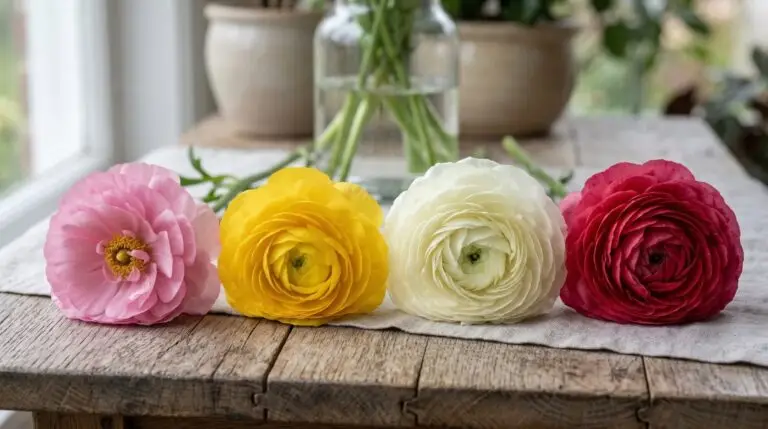
Color coordination on the patio is entirely a matter of personal preference, but sticking to a specific palette usually yields the best results. A pot filled with soft pastel pink ranunculus paired with white anemones creates a classic, elegant look that brightens up a shaded porch corner. Bright orange and yellow corms mixed together offer a much punchier display that holds its own against the gray skies of early spring. Because the stems grow quite tall, placing the pots on the ground or on low plant stands keeps the heavy blooms from snapping in the spring wind. Cutting a few flowers for a kitchen vase actually encourages the plants to send up even more buds, so there is no reason to hoard them all outside.
The reality of growing ranunculus is that the spectacular flower show has a hard expiration date tied entirely to the weather. The moment daytime temperatures consistently reach into the eighties, the foliage will begin to yellow and the plant will stop producing new buds. This die-back is a completely normal part of the plant’s life cycle and does not mean anything went wrong with the soil or the watering routine. Once the heat arrives, simply move the pots out of sight, let the foliage die back completely, and save the dried corms for the following year. Enjoying the massive, ruffled blooms on the patio for those few perfect weeks of spring makes the entire process completely worthwhile.
More About Ranunculus
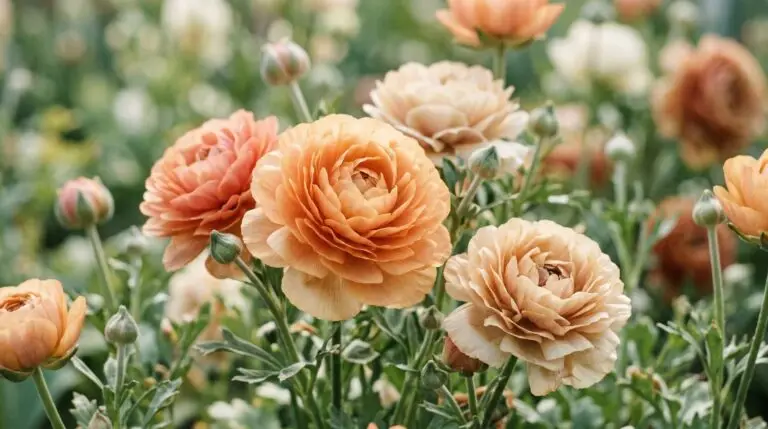
Ranunculus flower meaning and the radiance this buttercup-family bloom symbolizes
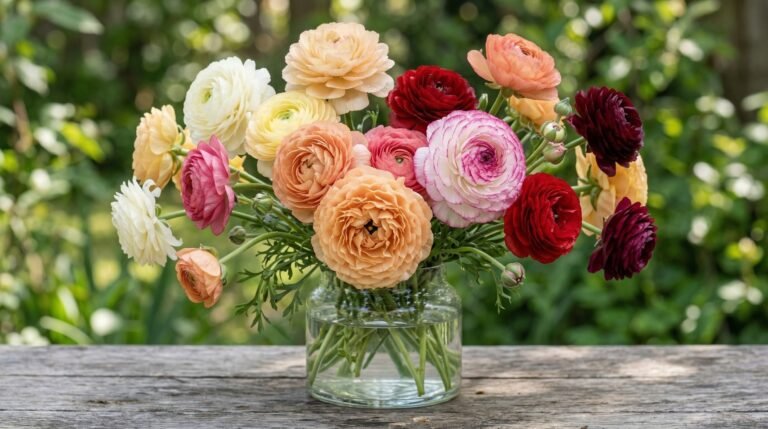
Best ranunculus varieties from classic Italian to ruffled Butterfly and Elegance types
Ranunculus versus garden roses and why these corm flowers compete with the queen of flowers
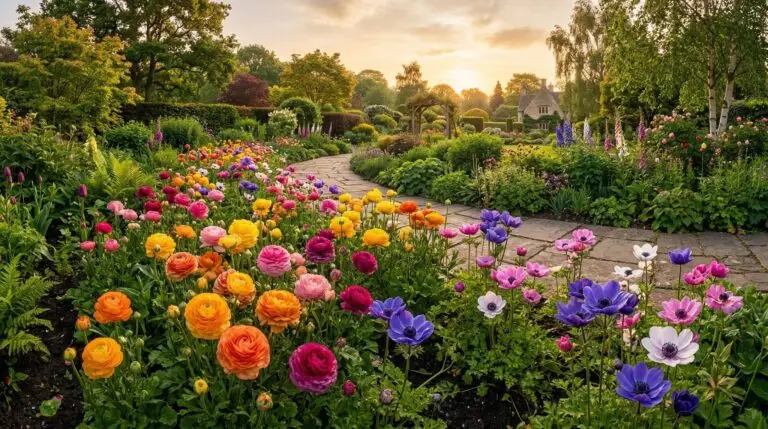
Companion plants for ranunculus in spring cutting gardens and cool season borders
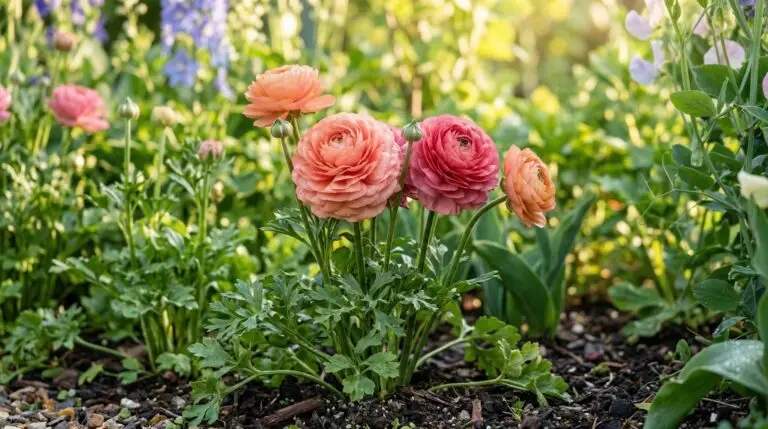
Ranunculus as the ultimate cut flower and why flower farmers cannot grow enough of them
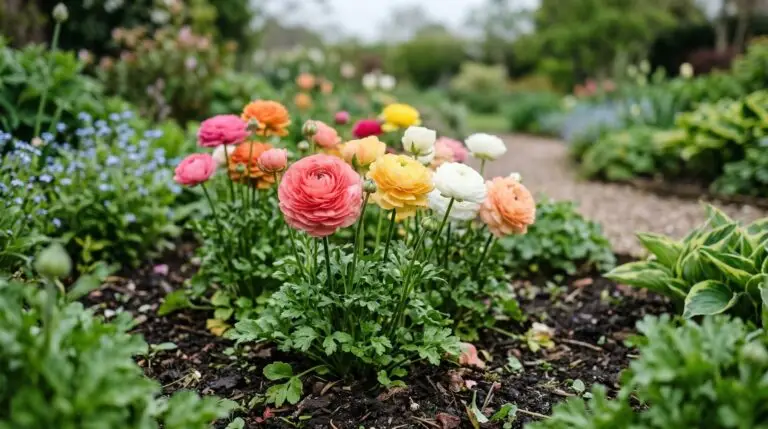
Why ranunculus melts in summer heat and the fall-to-spring growing trick for warm climates