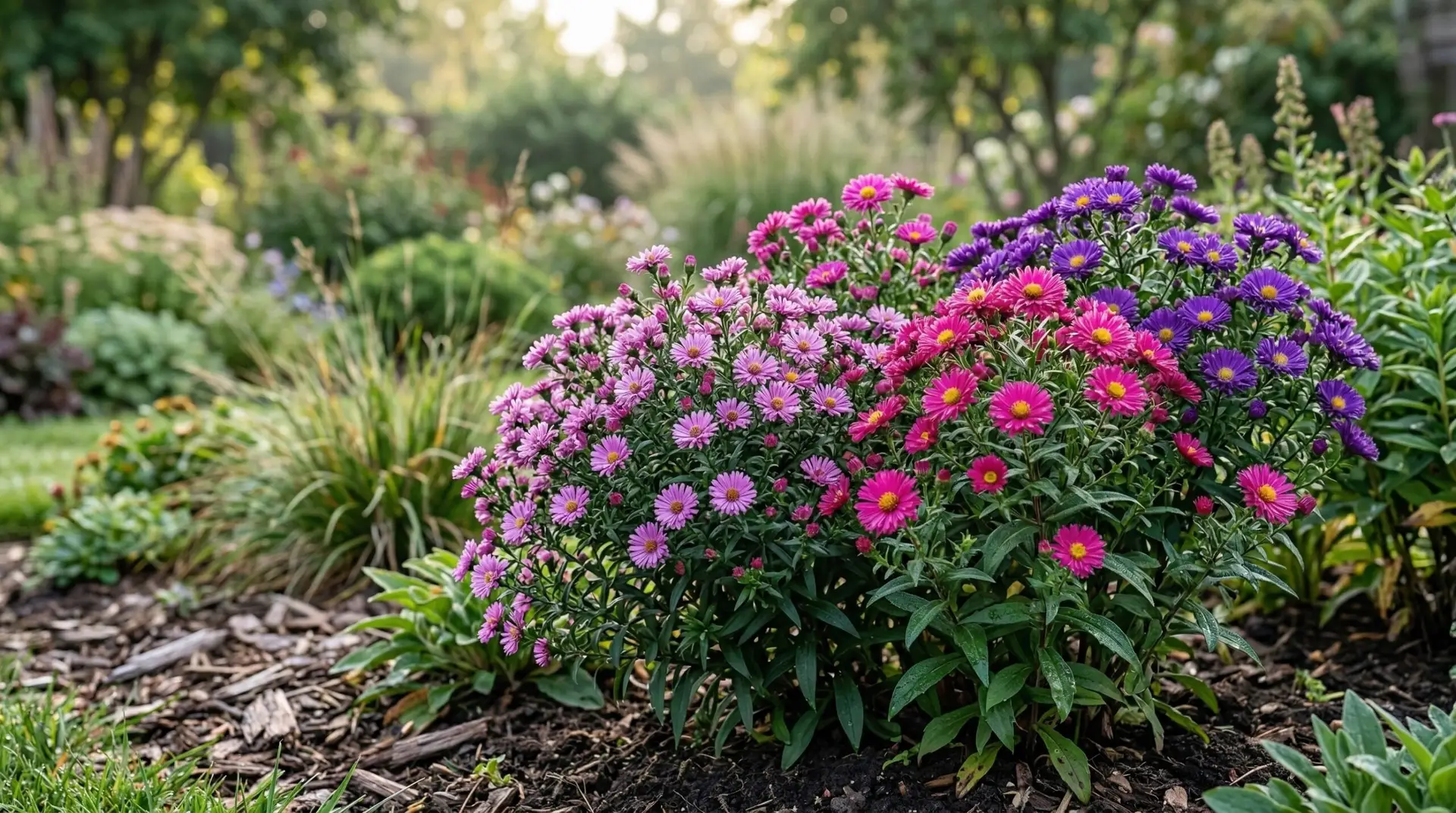
Most people buy asters in late summer because they want a blast of purple or pink just as everything else in the yard fades. Then, right when the buds form, the leaves turn gray and look like someone dumped a bag of flour over the plant. This is powdery mildew, and it is the single most common frustration home gardeners face with these late-season bloomers. You watch the lower leaves shrivel, turn brown, and drop off, leaving bare stems with a few pathetic flowers at the very top. I see this happen constantly, and the usual reaction is panic followed by heavy chemical spraying that rarely works. The truth is that powdery mildew on asters is entirely predictable and mostly preventable once you understand what triggers the fungus to spread.
Why powdery mildew attacks your asters
When you see that white film on your aster leaves, you are looking at millions of fungal spores taking advantage of perfect weather conditions. Powdery mildew thrives when days are warm and humid but nights start getting cooler, which perfectly describes late August and September in most areas. Unlike many other fungal diseases that require wet leaves to spread, this specific fungus actually prefers dry foliage combined with high air humidity. When asters are planted too close together or shoved against a solid fence, stagnant air gets trapped around the stems. This creates a humid microclimate where the spores settle and multiply rapidly. This is the exact same environmental problem that plagues phlox and bee balm in the late summer garden. If your plants are crowded and the wind cannot blow through the leaves, the mildew will find them every single year.
Fixing the environment before relying on sprays
The hardest lesson about powdery mildew is that sprays will never fix a plant growing in the wrong spot. Asters need full sun to stay healthy, meaning they require at least six hours of direct sunlight every day to burn off morning dew and keep the surrounding air dry. If you planted your asters in partial shade because you thought they looked nice under a tree, you have practically guaranteed a mildew outbreak. You need to dig them up in the spring and move them to an open, sunny location. Once they are in the sun, you also have to give them physical space to breathe by digging out any competing weeds. Make sure there is a clear gap of at least a foot between your aster and the neighboring plants. When the plant emerges in the spring, thinning out a third of the inner stems right at the ground level goes a long way toward keeping the center of the plant open to the wind.
Proper watering habits to keep foliage dry
Watering technique directly influences how susceptible your asters are to disease. Many gardeners stand over their flower beds with a hose nozzle and spray the entire canopy, which encourages shallow root growth and leaves the plants vulnerable to drought stress. A drought-stressed aster is a weak aster, and powdery mildew always attacks weak plants first. You need to water at the base of the plant, soaking the soil deeply so the roots grow downward into cooler, moister earth. Use a soaker hose or a watering wand directed right at the dirt, and do this in the morning so any accidental splashes on the lower leaves have the entire day to dry out. Keeping the soil consistently moist but never soggy prevents the plant from experiencing the dry-root stress that invites the fungus to take hold. Adding a layer of wood mulch around the base will also help trap that moisture in the soil where it belongs.
Treating active mildew outbreaks effectively
If you already have white fuzzy leaves on your asters, you need to understand that no treatment will turn those leaves green again. The goal of treating an active outbreak is to stop the fungus from spreading to the new growth and the flower buds. As soon as you spot the first white patches, prune away the worst-affected lower leaves and throw them in the trash, not the compost pile. You can then apply an organic fungicide like neem oil, a sulfur-based spray, or potassium bicarbonate to the remaining foliage. Some gardeners also have success with a simple spray made from one part milk to nine parts water, which changes the pH on the leaf surface and makes it hostile to spores. You have to spray the tops and the bottoms of the leaves thoroughly, and you will need to reapply it every week or after a heavy rain. This requires patience and consistency, and if you wait until the entire plant is white before you start spraying, you have already lost the battle for that season.
The single most useful piece of advice I give gardeners struggling with this issue is to stop fighting bad genetics and buy resistant plants. The smooth-leaved New York asters are notorious magnets for powdery mildew, while the hairy-leaved New England asters naturally repel the fungus much better. When you go to the nursery, read the plant tags carefully and look for varieties specifically labeled as mildew-resistant. If you have an old aster that gets completely covered in white powder every single year despite good sun, good spacing, and proper watering, dig it up and throw it away. Gardening is too much work to spend your September spraying chemicals on a sick plant when a healthier, tougher aster could be blooming perfectly in that exact same spot.
More About Aster

Aster flower meaning and the September birth flower connection

Pinching asters in spring for bushier plants and more abundant fall flowers

How to divide and rejuvenate aster clumps for stronger blooms every fall

Best aster varieties for a colorful fall garden that blooms into frost
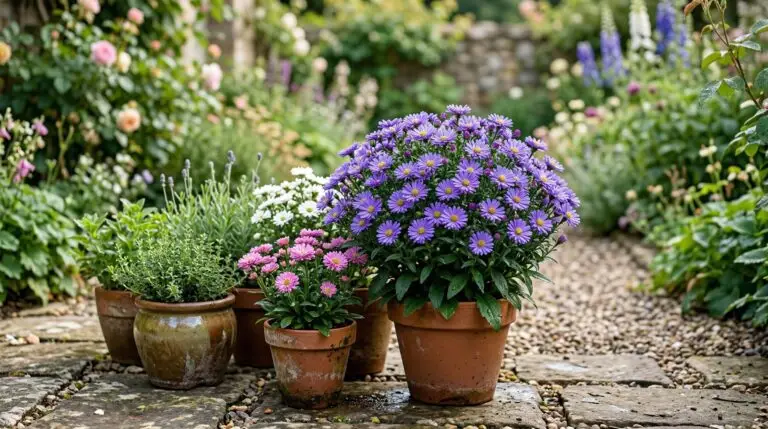
Growing asters in containers for fall color on porches and patios
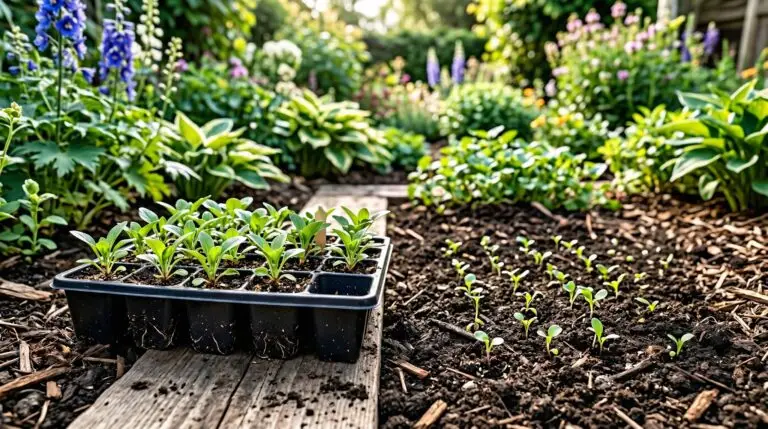
How to grow asters from seed for a wildflower meadow look on a budget

Asters for pollinators and why they are one of the most important late-season flowers

Using asters as cut flowers for fall bouquets and Thanksgiving arrangements