Violet tattoo: fine-line designs, historical meaning, and placement
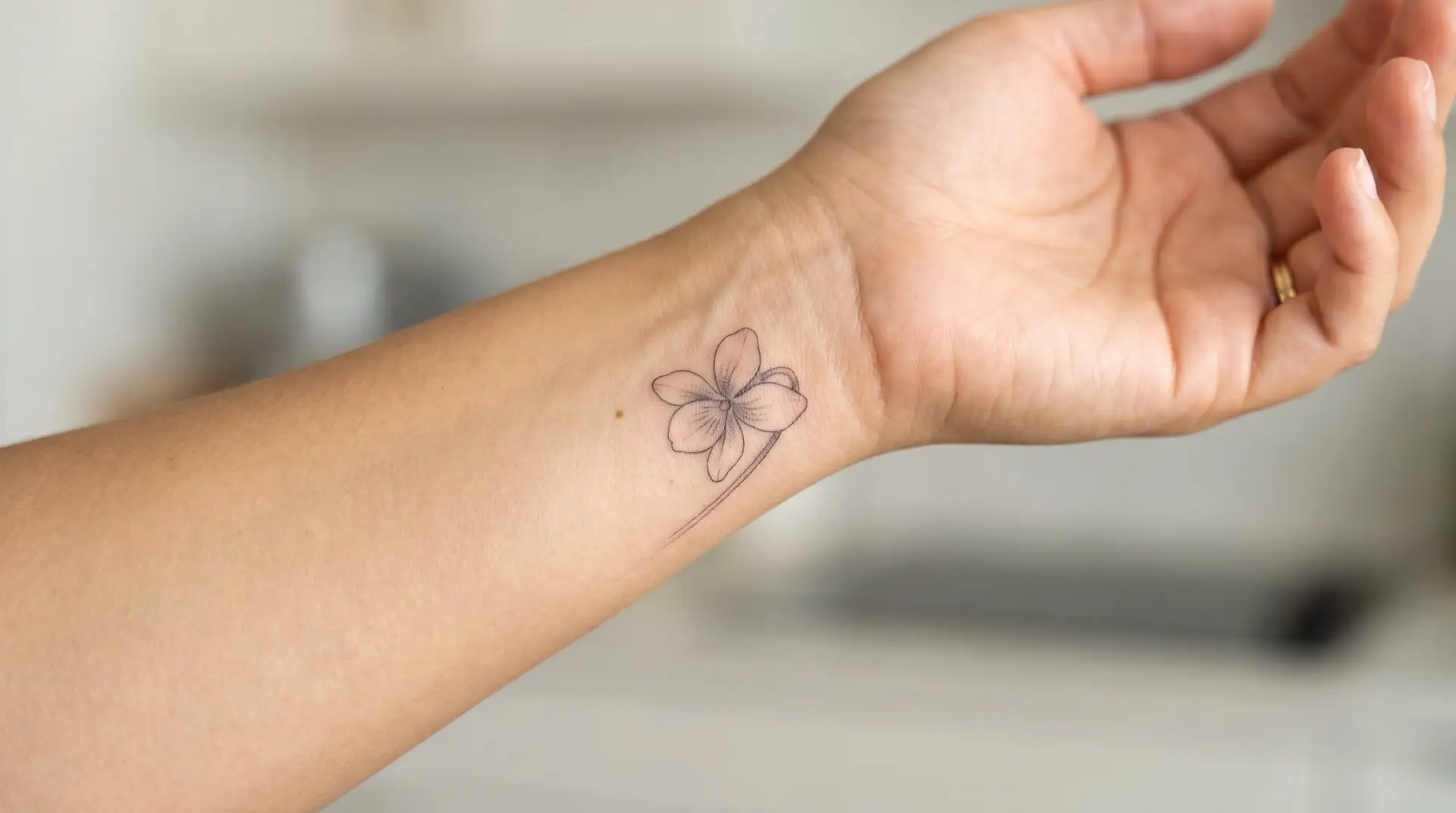
Violet is February’s primary birth flower, and its delicate five-petal form makes it one of the more accessible tattoo subjects for readers seeking small-scale meaningful body art. The flower symbolizes modesty, faithfulness, and watchful love in Western tradition, with additional layers from Greek mythology (the Io story), French political history (Napoleon’s “Caporal Violette” emblem), and Shakespeare (heartsease as Oberon’s love potion in A Midsummer Night’s Dream).
The visual logic of violet differs from most birth flower tattoos. Where rose, peony, and dahlia tattoos typically require medium to large size to render petal detail well, violet thrives at small scale. A 1-inch single violet on the inner wrist reads as clearly as a 4-inch botanical illustration on the forearm. This small-scale suitability matches the dominant modern tattoo aesthetic of fine-line single-needle work, which has become the most popular style for birth flower tattoos in the past five years. February birthday readers who want a meaningful tattoo without the visual weight of a full-sleeve piece have an unusually good match in violet.
Why violet works for small-scale tattoos
Most birth flower tattoos default to medium or large designs because the visual symbolism requires petal detail that small scale cannot support. A 1-inch rose loses its layered petal structure and reads as a generic flower silhouette. A 1-inch dahlia loses the spiral petal arrangement that makes the flower recognizable. Violet is an exception.
The five-petal violet structure is recognizable at any size. Two upper petals, two lateral petals, and one lower spurred petal create a distinctive silhouette that reads correctly even when the entire tattoo is the size of a fingernail. The natural color contrast between deep purple petals and a paler throat at the flower’s center adds visual depth without requiring detailed shading work.
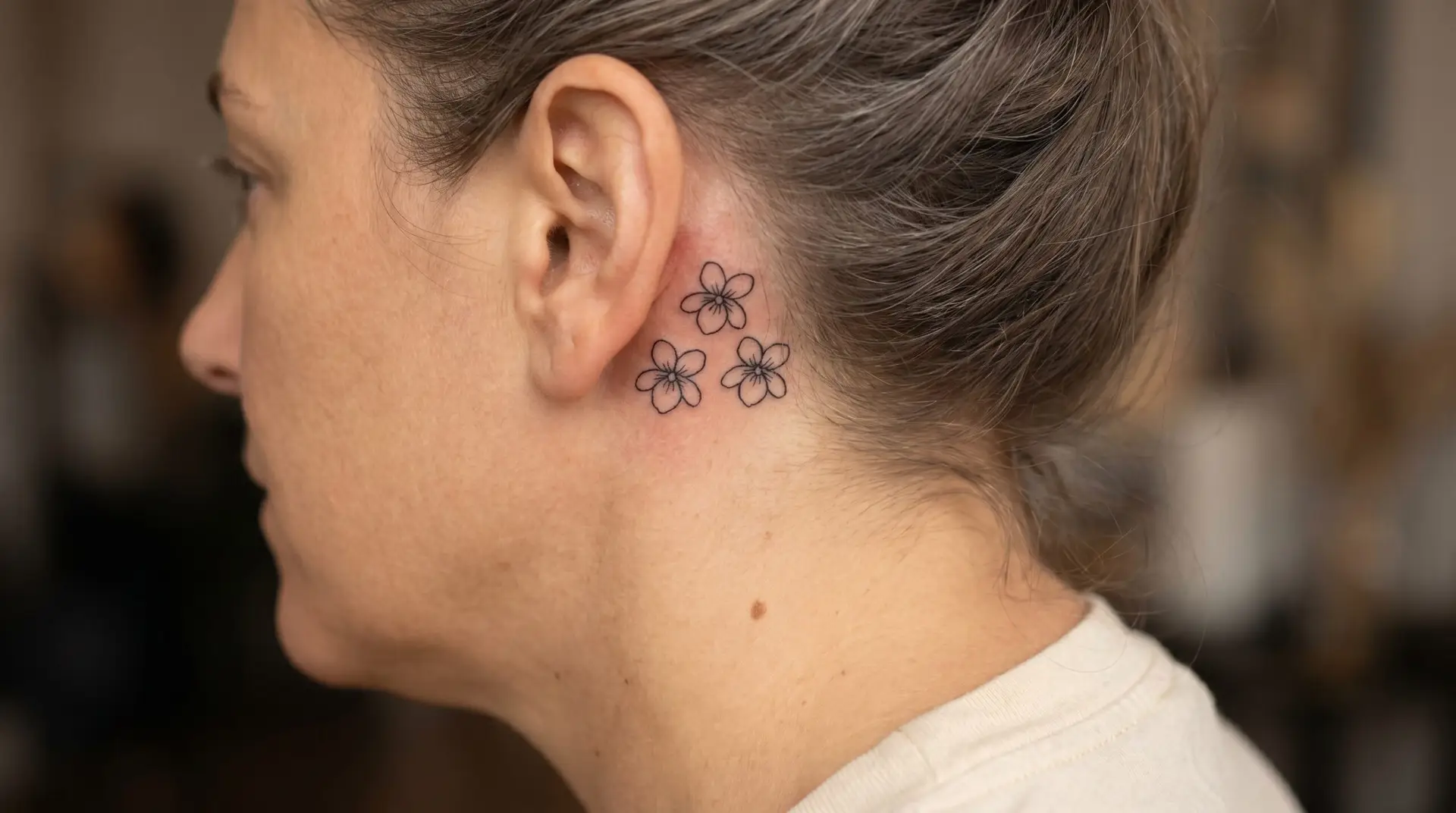
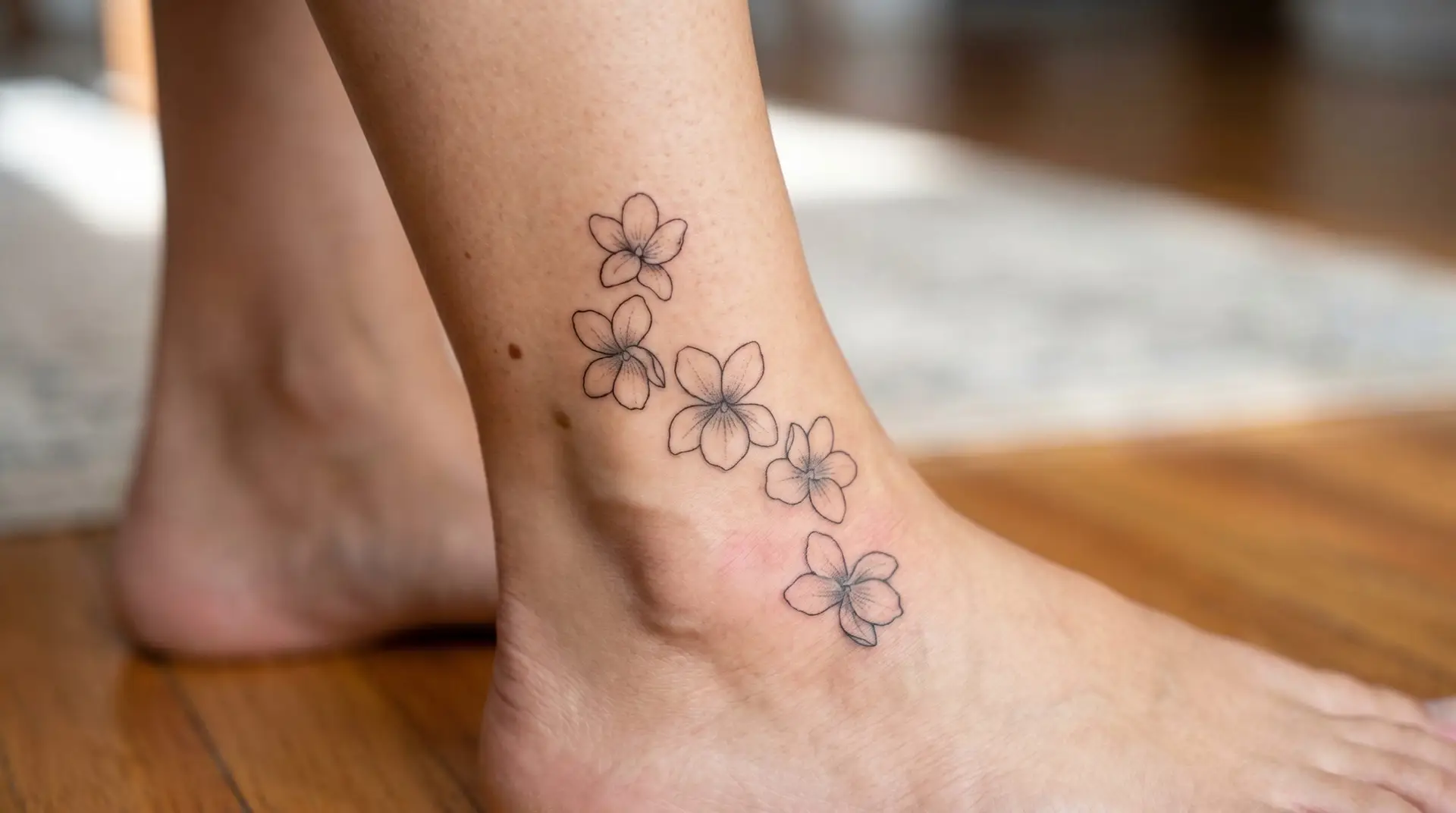
Single bloom and small cluster both work well. A single violet at 1 to 1.5 inches sits comfortably on the inner wrist or behind the ear. A cluster of three to five violets at 2 to 3 inches works on the forearm, collarbone, or ankle. The cluster form allows symbolic pairings (one bloom per family member, one bloom per significant year) without scaling the design up to forearm-sleeve proportions.
Fine-line single-needle tattooing has become a dominant style for birth flower work in recent years, driven by Instagram-influenced tattoo culture and the rise of specialist fine-line artists in major cities. Violet’s small-scale natural fit matches this aesthetic well, which has helped sustain interest in violet as a tattoo subject.
Style options for violet tattoos
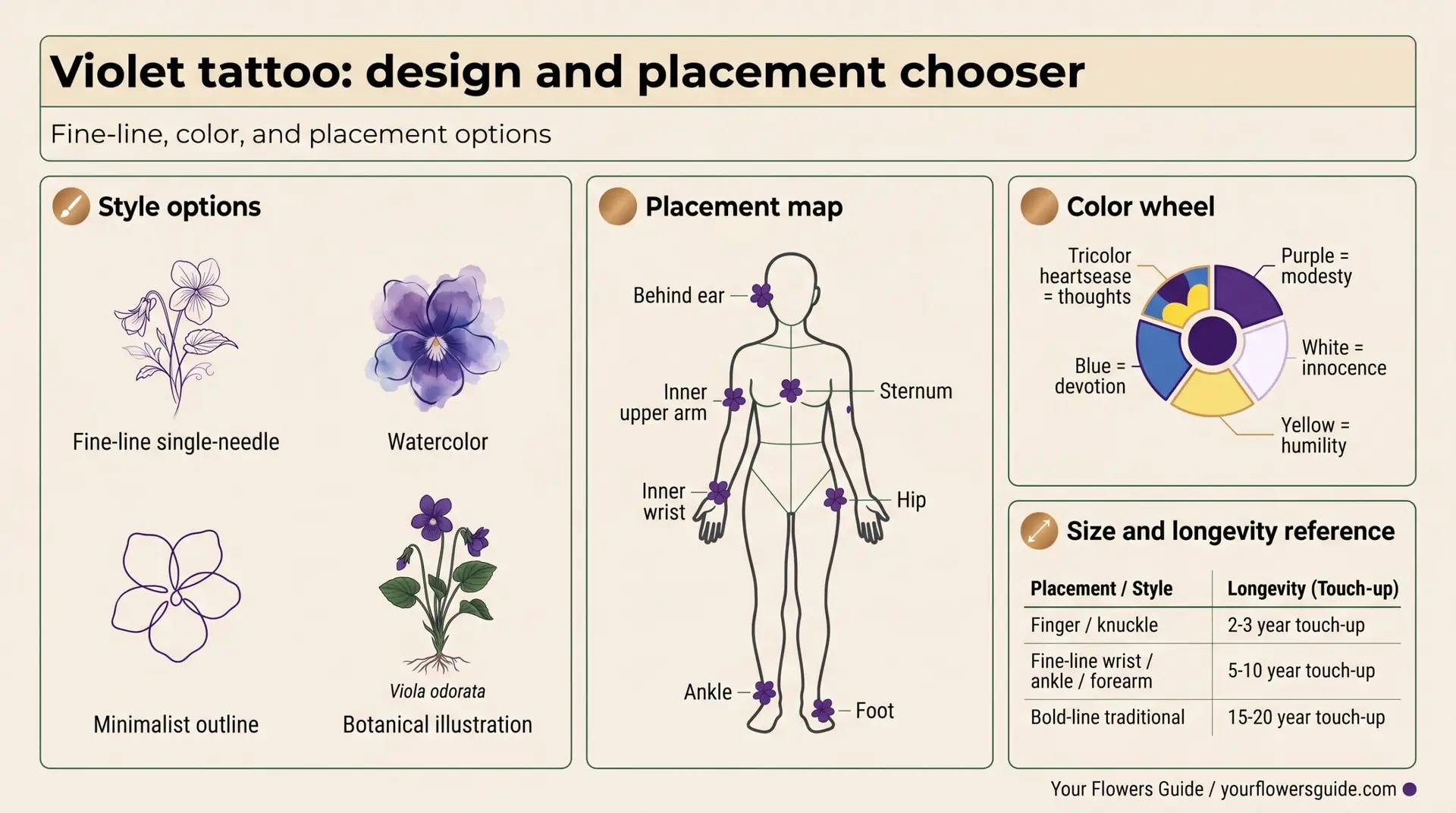
Style choice shapes longevity, placement options, and visual register. The main violet tattoo styles in modern practice include:
Fine-line single-needle. The dominant violet style. A single needle (rather than the standard 3 to 7 needles used in conventional tattooing) creates very thin clean lines that render the delicate violet form well. Best suited to wrist, ankle, collarbone, and small intimate placements. Touch-ups every 5 to 10 years are standard.
Minimalist outline. A simple five-petal sketch with no fill or shading. Often appears as a single continuous line drawing. Works at very small scale (1 inch or less) and ages well because there is less ink to fade. Behind-the-ear and finger placements suit this style.
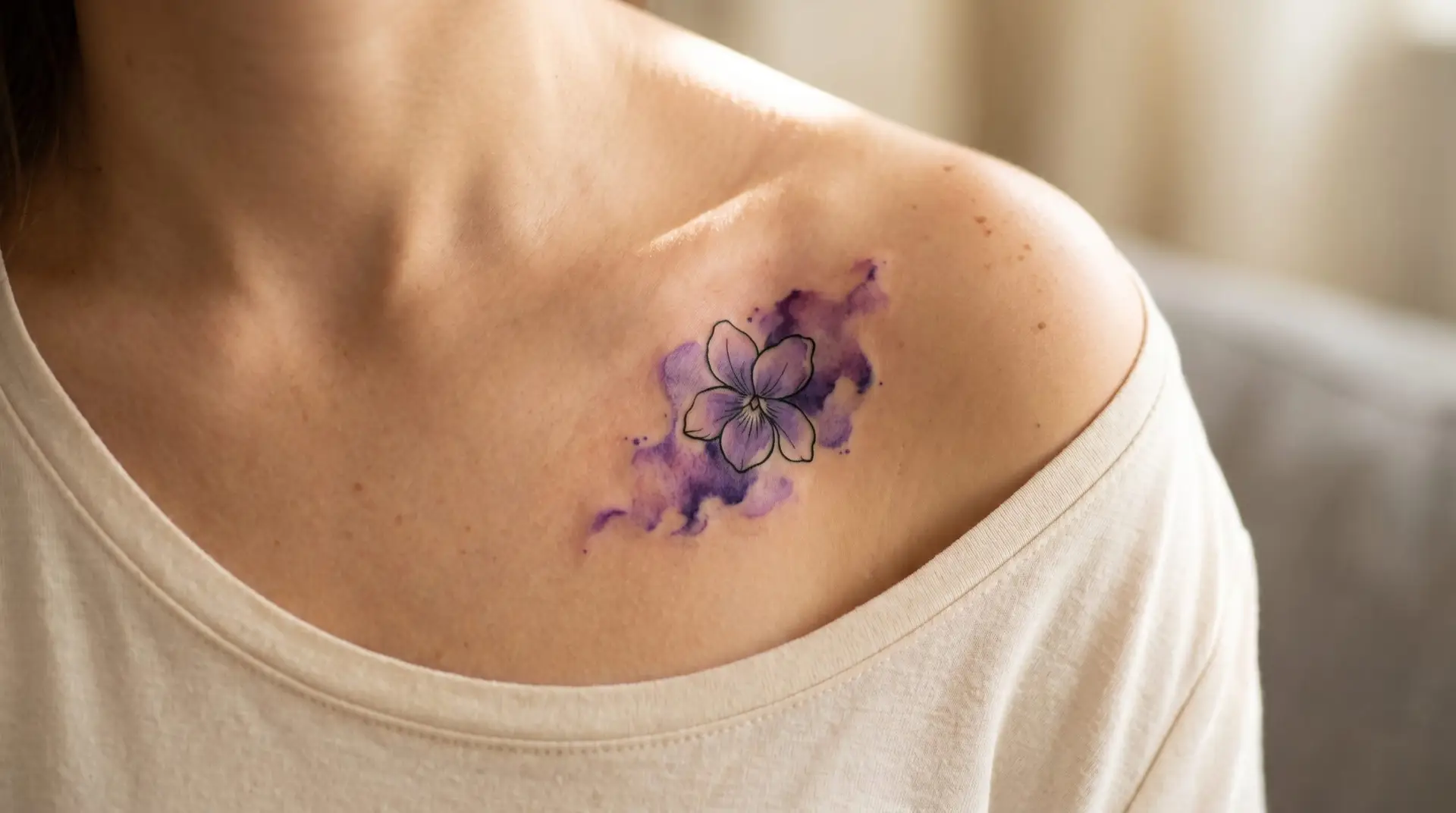
Watercolor. Soft purple bleeding into surrounding skin tone, mimicking watercolor painting. The purple-bleed effect matches violet’s natural color saturation. More demanding to execute well; requires an artist experienced in watercolor technique. Fades faster than traditional tattoos and requires touch-ups every 3 to 5 years.
Traditional American. Bold outline, saturated purple fill, classic boutonniere aesthetic. Works at slightly larger scale (2 to 3 inches minimum). Ages well because of the heavy ink saturation. Suits forearm, calf, and chest placements.
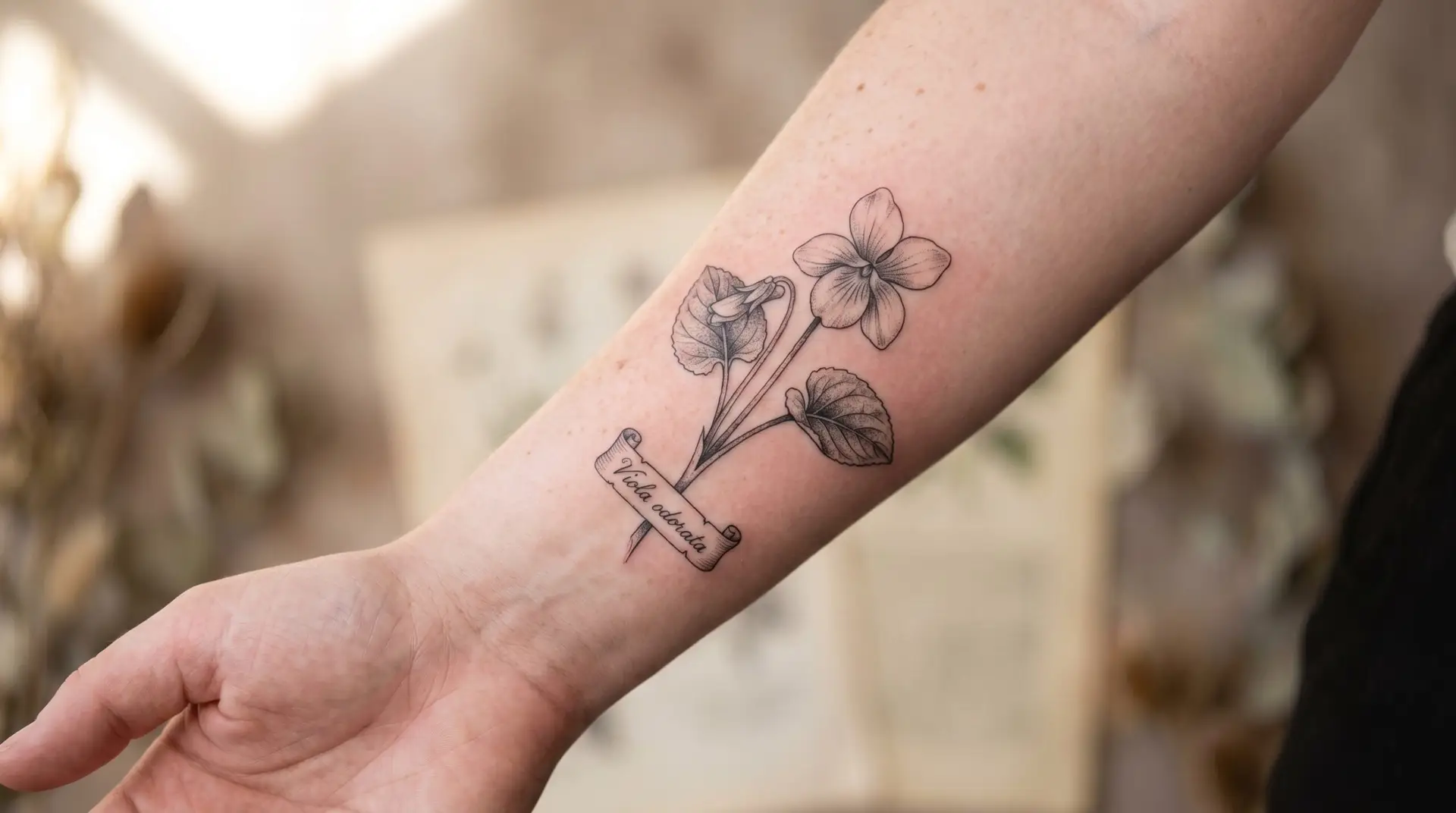
Botanical illustration. Vintage scientific drawing aesthetic with optional Latin label (“Viola odorata”) integrated below the bloom. Often paired with thin stem and leaf detail. Suits forearm, ribs, and back placements where the illustration scale can be 3 to 5 inches.
Dotwork. Texture built from small dots rather than solid lines or fills. Creates a soft fuzzy texture that suits the violet’s velvety petal quality. Works at medium scale (2 to 3 inches) and ages distinctively as individual dots blur into texture over time.
Geometric. Violet stylized into geometric patterns, often with mandala integration or sacred-geometry framing. Modern aesthetic; suits readers who want symbolism with strong graphic design appeal. Works at medium to large scale (3 to 4 inches).
Historical and literary references
Two reference layers add depth to violet tattoo design beyond the basic birth flower meaning. Readers who care about historical and literary integration often find these layers useful for justifying the tattoo choice to themselves and to others who ask about it.
Napoleon-era violet. Violet was Napoleon Bonaparte’s personal emblem, originating in his marriage to Joséphine de Beauharnais. After Joséphine’s death in 1814 and Napoleon’s exile to Elba, his supporters adopted violet as a secret recognition symbol for Bonapartist sympathy. Napoleon was known as “Caporal Violette” (Corporal Violet) in supporter circles. The full history sits in the February birth flower portal.
For tattoo integration, the Napoleon layer adds a faithful-through-difficulty reading to the violet’s basic modesty symbolism. Common design choices that draw on this layer include violet paired with an oval gilt-style locket frame, violet with a small bicorne hat silhouette (Napoleon’s iconic headwear), or violet with the date of a personal anniversary that the wearer wants to honor with a “long-term faithful affection” symbolism.
Shakespeare’s heartsease. The tricolor violet (Viola tricolor), known by its English folk name “heartsease” or “love-in-idleness,” appears in Shakespeare’s A Midsummer Night’s Dream as the source of Oberon’s love potion. Puck applies the heartsease juice to sleeping eyes, causing the recipient to fall in love with the first creature they see upon waking. The flower is named in Act 2 Scene 1.
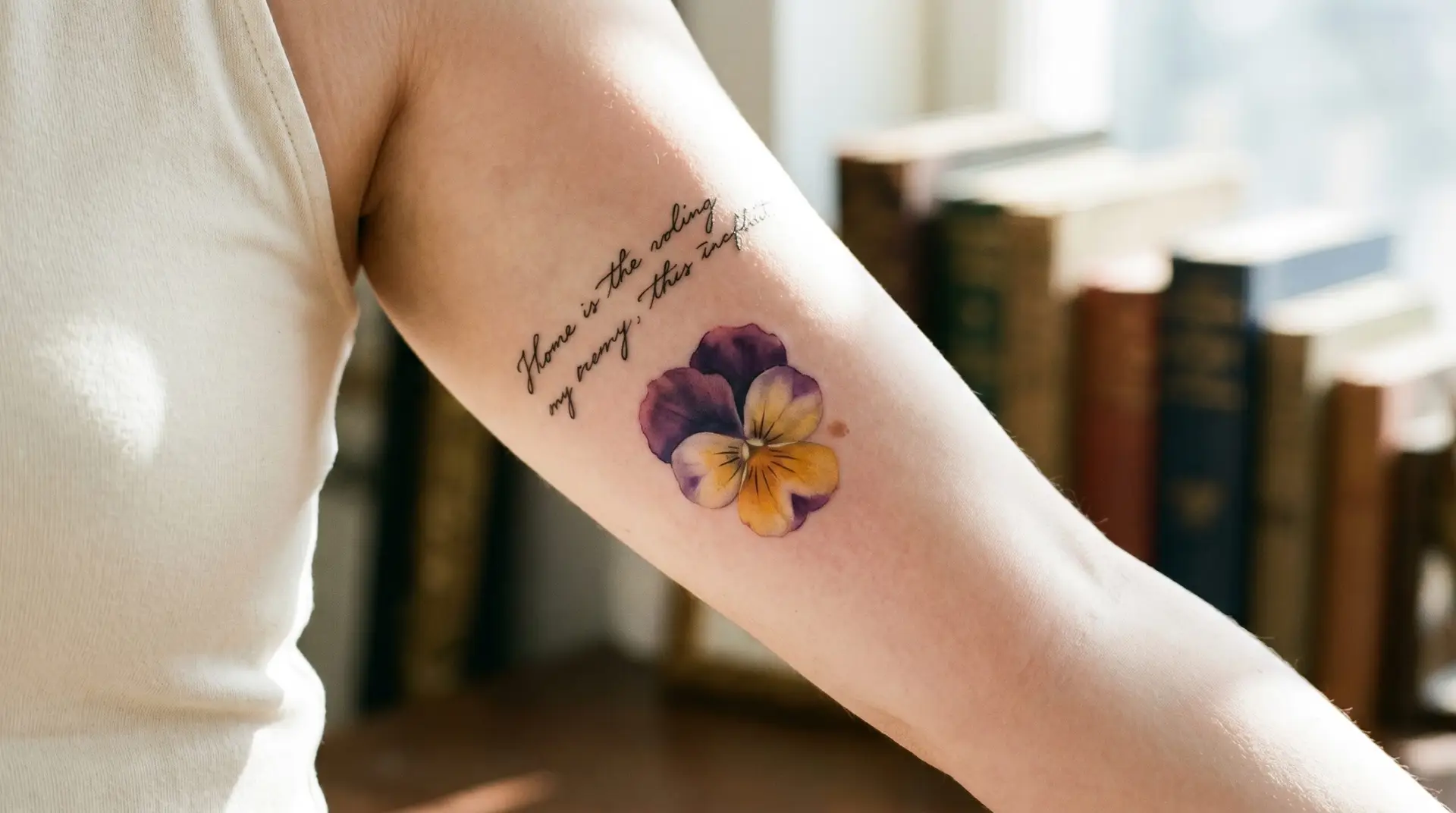
For tattoo integration, the heartsease layer adds literary depth that bookish readers often find meaningful. Common design choices include tricolor heartsease bloom paired with a small Shakespearean quote (“Yet marked I where the bolt of Cupid fell” or “Love looks not with the eyes but with the mind”), or heartsease integrated into a more elaborate Midsummer Night’s Dream themed piece with fairy or forest motifs.
Color choices and symbolism
Color shifts the symbolic reading of the tattoo within the broader violet meaning of modest faithful love. Standard color readings include:
Purple violet tattoo: the most traditional choice. Modesty, faithfulness, watchful love, and Napoleon-era political loyalty. The default purple color reads as the basic February birth flower tattoo for readers who do not want to specify a more detailed symbolic layer.
White violet tattoo: innocence and modesty in the strictest reading. Often chosen for memorial tattoos honoring deceased family members where the symbolism aligns with the wearer’s intention.
Yellow violet tattoo: rural humility and modest happiness. Less common than purple or white; appeals to readers drawn to the more grounded earthy symbolism.
Blue violet tattoo: devotion and faithful watchfulness. Often paired with names or dates for relationship anniversaries.
Multi-color heartsease (tricolor) tattoo: Shakespearean love-potion reference, “you occupy my thoughts” symbolism, and a more visually striking design than monochromatic violet work. The natural purple-yellow-white tricolor pattern of Viola tricolor reads well in tattoo form.
Black-and-grey violet tattoo: versatile, ages well, and pairs with almost any other black-and-grey tattoo work the wearer already has. Suits readers who prefer black tattoo aesthetics or who plan to add more pieces later.
Placement options
Placement choice depends on size, visibility preference, and pain tolerance. Common violet tattoo placements include:
Inner wrist: the most popular violet placement. Small scale fits perfectly (1 to 1.5 inches), pain level is moderate, the placement is easy to show or cover with a watch band, and the tattoo ages well in this location.
Behind ear: very small single violet, fully hideable under hair, slightly more painful due to thin skin over bone. Best for first tattoos because of the discretion factor.
Ankle or foot top: discreet placement, hideable under socks and shoes, low to moderate pain. Foot placements fade slightly faster than wrist due to friction; ankle placements age well.
Inner upper arm: slightly larger scale (2 to 3 inches), intimate visible-to-self placement, low pain. Works well for cluster designs of 3 to 5 violets.
Sternum: small floral piece between the breasts, fully hideable under most clothing, moderate to high pain due to thin skin over bone. Suits delicate fine-line work specifically.
Finger or knuckle: single tiny violet at 0.5 to 1 inch. Note that finger and knuckle tattoos fade fastest due to constant friction from hand use; touch-ups every 2 to 3 years are standard for these placements.
Collarbone: line of 3 to 5 violets following the bone curve, scaled at about 0.5 inch each. Moderate to high pain due to bone proximity; reads as visible art when wearing necklines that show the collarbone.
Hip or lower back: small cluster placement, fully hideable, low to moderate pain. Suits readers who want the tattoo as private personal art rather than visible body decoration.
Forearm: scales up well to cluster of 5 to 7 violets at 4 to 6 inches total. The forearm is the most popular tattoo placement overall in modern Western practice; pain is low and the area heals quickly.
Design pairings
Design pairings extend the violet’s symbolic register through visual context. Common pairings include:
Violet plus name: script-integrated name (a child, a partner, a deceased family member) flowing around or beneath the violet bloom. The most popular pairing for memorial and family tattoos.
Violet plus date: birth date, anniversary date, or memorial date in small Roman numerals or modern numerals beneath the violet. Roman numerals age better than modern numerals due to consistent letterform structure.
Multi-violet cluster: three to five violets representing family members, significant years, or important relationships. Each violet can have a slightly different color or orientation to signal individuation within the cluster.
Violet plus zodiac sign: Aquarius (January 20 to February 18) or Pisces (February 19 to March 20) symbol paired with violet. Suits readers who integrate astrological identity with birth flower symbolism.
Violet plus amethyst: the February birthstone color matches violet’s purple, creating a coherent February tattoo theme. Often rendered as a violet bloom with a small faceted amethyst gemstone in the design.
Violet plus Shakespeare quote: a short line from A Midsummer Night’s Dream or another Shakespeare work, in small script alongside or beneath the violet. Suits literary readers and English-major aesthetics.
Violet plus Napoleon symbol: an oval gilt-frame motif, a small bicorne hat, or a French-Empire-era ornamental flourish paired with the violet. Suits readers drawn to historical romance aesthetics.
Violet plus butterfly: the springtime emergence pairing, often a small butterfly emerging from or resting on the violet bloom. Reads as transformation or new beginnings.
Violet plus greenery: botanical illustration style with stem, leaves, and sometimes a small label below the bloom. Suits readers who like vintage scientific illustration aesthetics.
Aftercare for violet tattoos
Standard tattoo aftercare applies: keep the tattoo clean and moisturized for the first two weeks, avoid direct sunlight and chlorinated water during initial healing, and follow your tattoo artist’s specific recommendations. Full healing takes 4 to 6 weeks for the surface and up to 6 months for the deeper layers. The American Academy of Dermatology aftercare guide (linked in Sources) covers the general protocol in detail.
Violet-specific concerns include the following. Small fine-line work fades faster than large saturated pieces; expect touch-up appointments every 5 to 10 years for fine-line violet tattoos. Single-needle work heals differently than standard tattoo work and is slightly more sensitive to UV exposure in the first 3 to 6 months; use mineral sunscreen daily on the tattooed area during the first summer. Finger and knuckle placements fade fastest due to friction from hand use; readers choosing these placements should accept that touch-ups every 2 to 3 years are part of the long-term maintenance.
Light purple ink fades faster than dark purple due to lower pigment density. Readers who want a violet tattoo to last 15 to 20 years without major touch-ups should request deeper purple hues during the design consultation. The 6-month follow-up touch-up window is standard practice for fine-line and color work; book it at the time of the original appointment so the artist’s schedule accommodates the follow-up.
Frequently asked
What does a violet tattoo mean?
Modesty, faithfulness, and watchful love in basic Western reading. Additional layers include Greek mythology (the Io story, where violets grew for the transformed priestess), French political history (Napoleon’s “Caporal Violette” emblem), and Shakespeare (heartsease as Oberon’s love potion). The flower also serves as the February birth flower in standard birth flower lists.
What does the purple violet tattoo symbolize?
Purple is the most traditional violet color and has the strongest symbolic reading: modesty, watchful love, faithfulness, and the Napoleon-era political loyalty layer. For most readers choosing their first violet tattoo, purple is the default choice that does not require additional explanation.
What’s the difference between violet and pansy tattoos?
Both flowers are in the genus Viola, but violet typically refers to wild species (Viola odorata, Viola sororia, Viola tricolor) while pansy refers to the cultivated hybrid Viola × wittrockiana developed in the nineteenth century. Pansy tattoos are visually larger and more dramatic; violet tattoos are smaller and more delicate. The symbolic reading of pansy emphasizes “thoughts” and “remembrance” while violet emphasizes “modesty” and “faithfulness.”
What size should a violet tattoo be?
Small is recommended. A 1 to 3 inch tattoo works perfectly for single bloom or small cluster designs. The flower’s five-petal symmetry reads correctly at any size from 0.5 inch upward, which makes violet one of the few birth flower tattoos that does not require medium or large scale to look right.
Are violet tattoos good for memorial tattoos?
Yes. The combination of modesty (quiet symbolic register), faithfulness (long-term devotion), and watchful love (continuing care for someone no longer present) matches the typical memorial tattoo intention well. White violet is the traditional memorial color choice; purple violet works as the more general meaningful choice.
Why use heartsease instead of violet in a tattoo?
Heartsease (Viola tricolor) is a specific violet species with a distinctive purple-yellow-white tricolor pattern. The Shakespearean love-potion reference adds literary depth, the multi-color pattern makes the tattoo visually more interesting at small scale, and the “you occupy my thoughts” symbolism shifts the meaning from generic modesty to specific affectionate attention. Heartsease suits readers who want a violet tattoo with a more individualized symbolic layer.
What is “Caporal Violette”?
The nickname Napoleon Bonaparte gained from his Bonapartist supporters during his first exile to Elba in 1814-1815. Violet was the secret recognition symbol for supporters, and “Corporal Violet” became Napoleon’s affectionate code name within this political network. The nickname appears in nineteenth-century French historical sources and continues to be referenced in modern Napoleonic biographies. For violet tattoo wearers, the reference adds a documented historical layer to the flower’s modesty-and-faithfulness symbolism.
How long does a violet tattoo last?
A well-executed fine-line violet tattoo on a stable placement (wrist, ankle, forearm) holds visible detail for 5 to 10 years before requiring touch-up. Traditional bold-line violet tattoos hold detail for 15 to 20 years before touch-up. Finger and knuckle violet tattoos hold detail for 2 to 3 years between touch-ups due to friction fading.
Sources
- Tattoo aftercare · American Academy of Dermatology
- Viola growing guide · Royal Horticultural Society
- Napoleon and the violet, French historical archives · Fondation Napoléon
About this article. > Written and reviewed by the Your Flowers Guide editorial team. Tattoo aftercare references from the American Academy of Dermatology. Botanical content from the Royal Horticultural Society. Napoleonic history from the Fondation Napoléon archives. Shakespeare reference from A Midsummer Night’s Dream Act 2 Scene 1 (Folger Shakespeare Library standard edition).