April birth flower: daisy, sweet pea, and what they mean
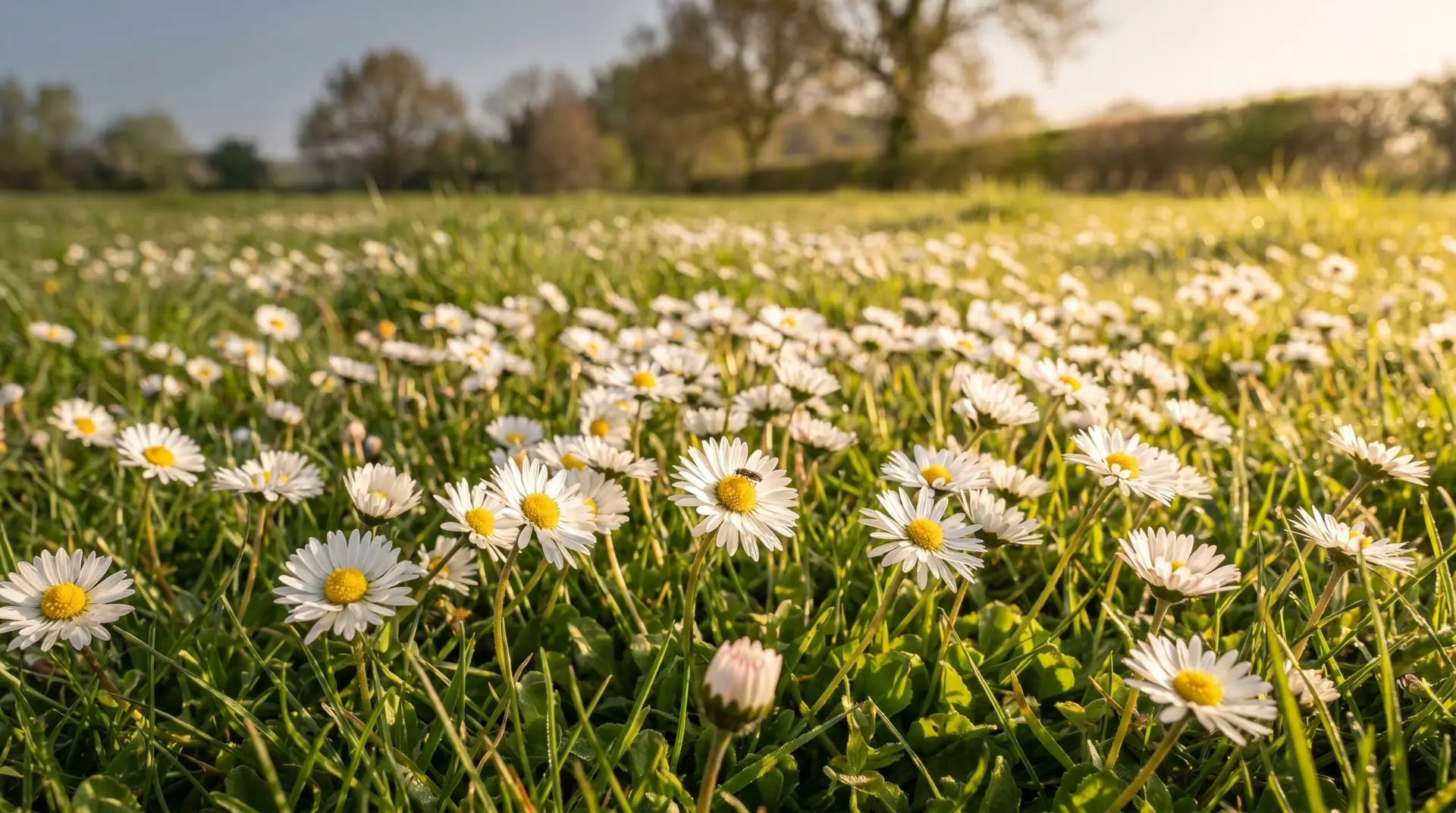
April has two birth flowers in Western tradition: daisy (Bellis perennis, the English daisy) as the primary, and sweet pea (Lathyrus odoratus) as the secondary. Daisy stands for innocence, loyal love, and new beginnings. Sweet pea stands for blissful pleasure, gratitude for a lovely time, and gentle goodbye.
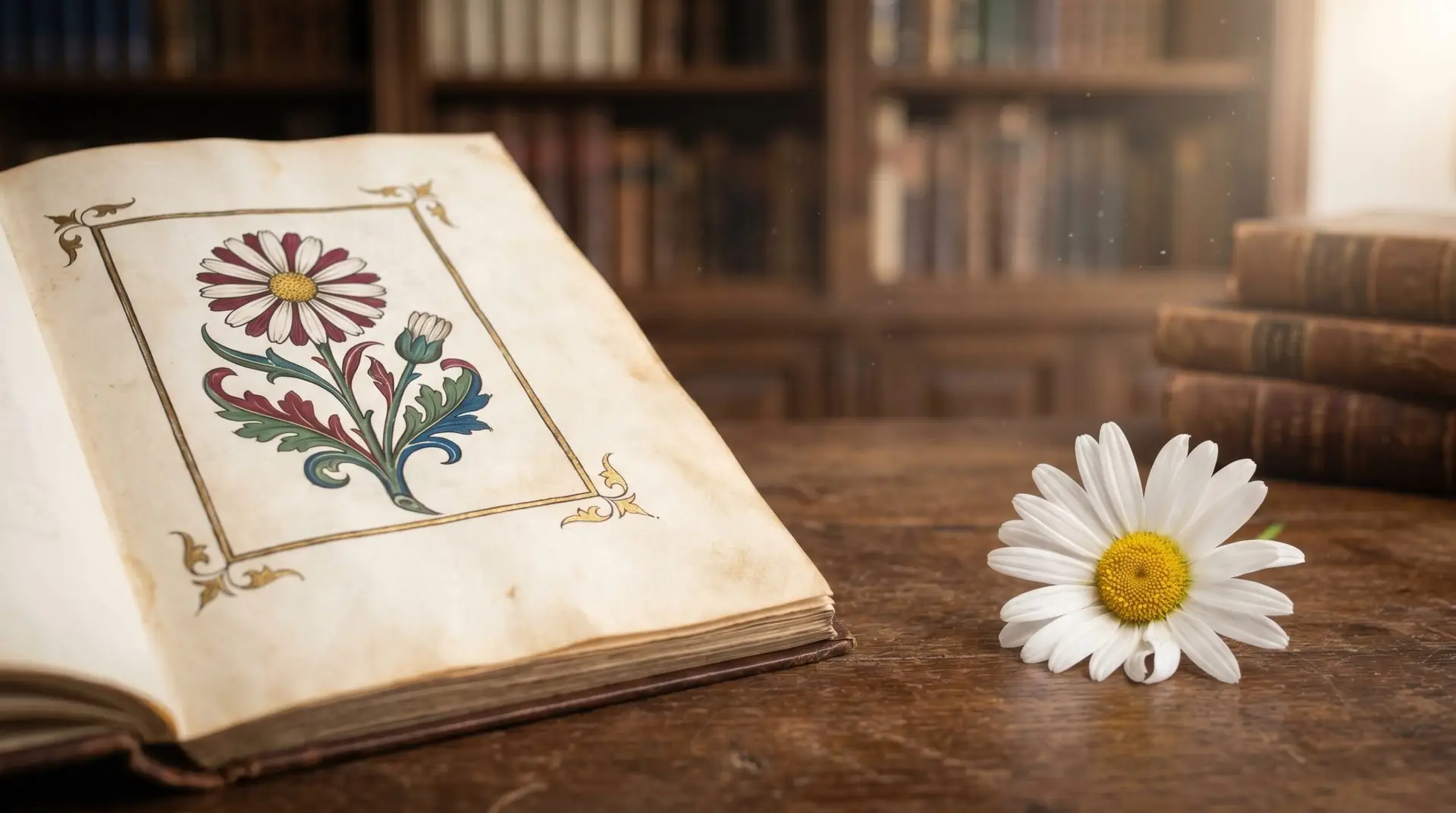
Daisy has unusually deep European cultural roots for a birth flower. The plant appears in pre-Christian Norse folklore as a flower associated with Freya, the goddess of love and beauty. Its English name comes from the Old English “dæges ēage” meaning “day’s eye,” a description of the flower’s habit of closing white petals at night and opening them at dawn. Geoffrey Chaucer dedicated the prologue of his “Legend of Good Women” (1380s) to the daisy, making it one of the most-praised flowers in medieval English literature. Sweet pea has a different cultural register. It rose to peak popularity through the late Victorian and Edwardian eras (roughly 1880 to 1910), when Scottish gardener Henry Eckford transformed it from a small wild Mediterranean plant into the elaborate fragrant garden cultivars that florists still stock today.
Daisy, the main April birth flower
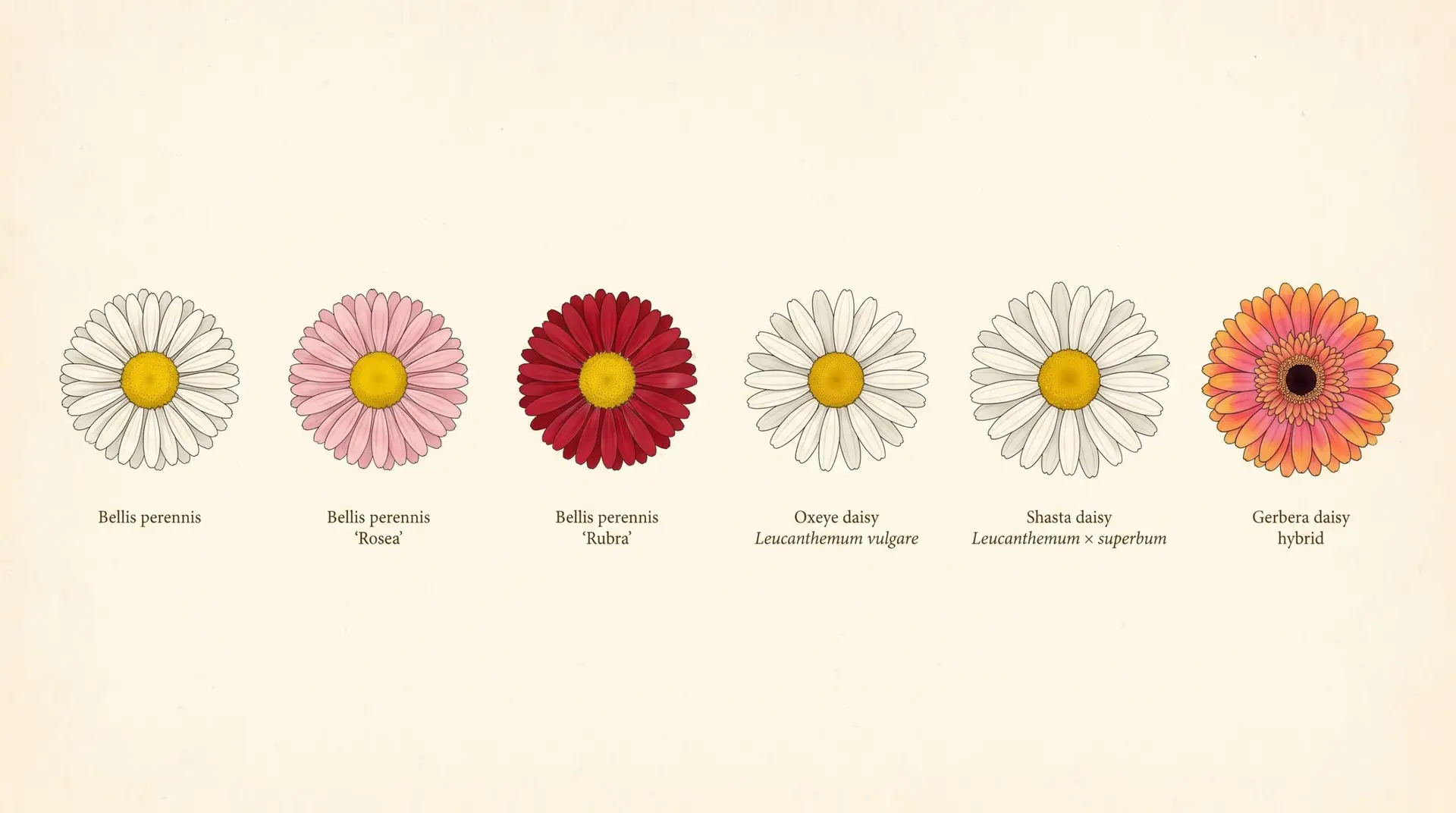
Daisy belongs to the family Asteraceae, one of the largest flowering plant families with over 32,000 species worldwide. Two species share the common name “daisy” in English usage: Bellis perennis (the English daisy or common lawn daisy), native to Europe, and Leucanthemum vulgare (the oxeye daisy), native across Europe and temperate Asia. Bellis perennis is the species most associated with the April birth flower tradition, though some flower writers extend the assignment to the broader daisy family including Leucanthemum and the modern garden Shasta daisy (Leucanthemum × superbum).
The classic daisy flower is botanically a composite head, not a single flower. What appears to be one flower is actually a colony of many tiny flowers grouped together. The white “petals” around the edge are ray florets, each a complete tiny flower with a fused single petal. The yellow center is made up of disc florets, smaller tubular flowers packed tightly together. This composite structure is the defining feature of the Asteraceae family and appears across all true daisies (Bellis, Leucanthemum, Shasta) as well as related plants like sunflowers, asters, and chrysanthemums.
Bellis perennis is a low-growing perennial typically 2 to 4 inches tall, forming small rosettes of green leaves close to the ground with single white flower heads on short stems. The plant grows wild in lawns and grass meadows across northern Europe, persistent enough to survive regular mowing and continue blooming throughout the spring and summer. The flowers open in early morning sunshine and close at dusk or in cloudy weather, the behavior that gave the plant its Old English name. Bloom timing runs from April through October, with peak abundance in April and May in temperate climates.
Modern garden cultivars expand the original simple form considerably. The Shasta daisy (Leucanthemum × superbum), developed by American horticulturist Luther Burbank in the 1890s, gives a larger flower (2 to 3 inches across versus the wild form’s 0.5 to 1 inch) on a taller stem suited to cut-flower use. The gerbera daisy (Gerbera jamesonii and hybrids) is a different genus entirely, native to South Africa, but florists commonly call it “daisy” because of its similar composite-head shape. Gerbera daisies appear in florist trade in a wider color range (orange, pink, red, deep pink, yellow) than wild Bellis perennis, which is essentially white with yellow center.
For more on daisy botany, varieties, and growing practice, see the daisy flower portal.
Sweet pea, the secondary April birth flower
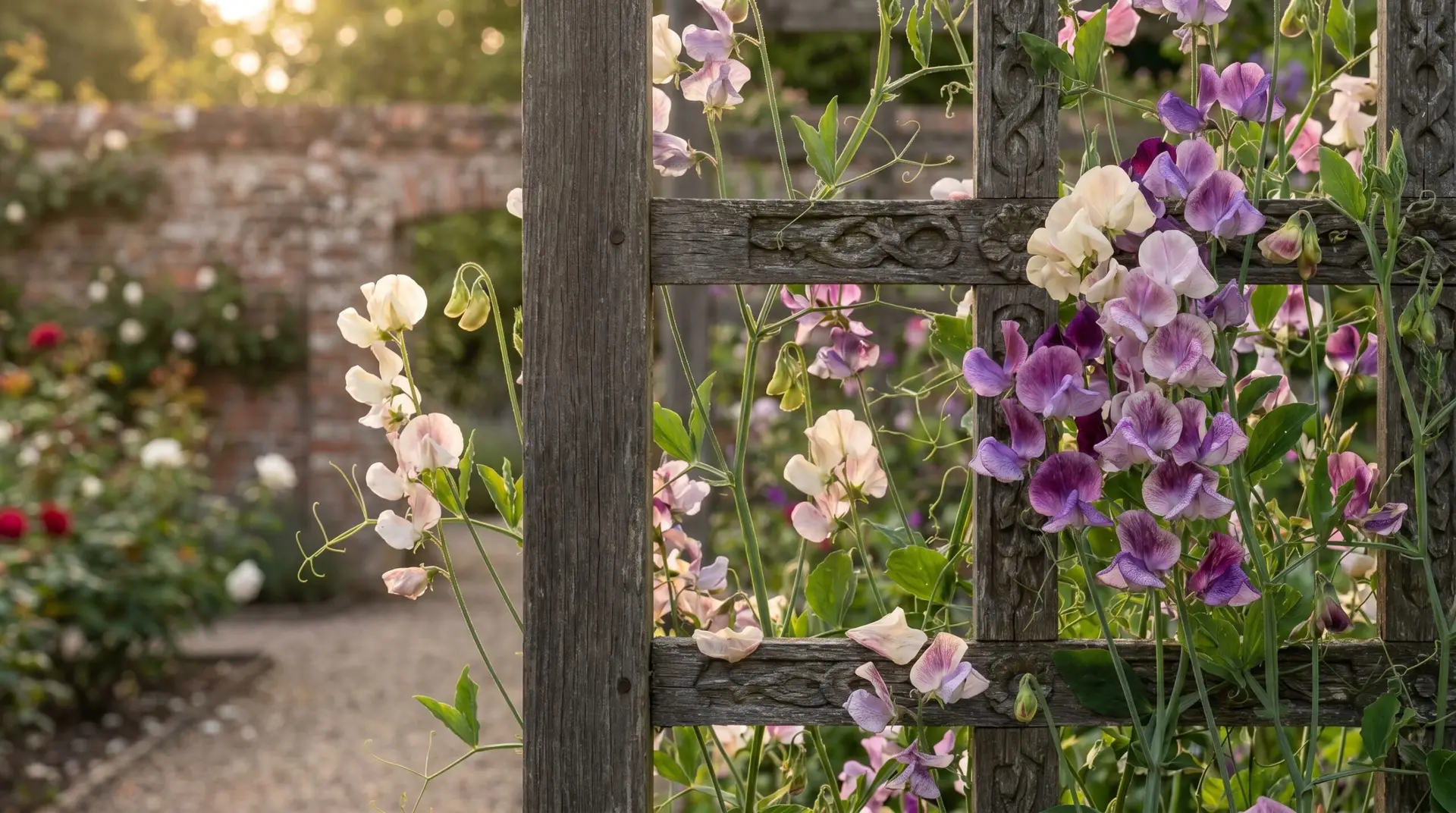
Sweet pea is Lathyrus odoratus, an annual climbing vine in the family Fabaceae (the pea and bean family). The species is native to Sicily, southern Italy, and the eastern Aegean islands, where wild populations still grow in rocky coastal habitats. The plant climbs through tendrils that wrap around supports, reaching 6 to 8 feet on garden trellises, with butterfly-shaped flowers in a loose cluster at the top of each stem.
The original wild sweet pea has small purple-blue flowers with mild fragrance. Modern garden cultivars look nothing like the wild form. Scottish gardener Henry Eckford (1823 to 1905) led the late-Victorian breeding work that transformed sweet pea from a small Mediterranean wildflower into the elaborate fragrant garden cultivars that remain the standard today. Eckford’s nursery in Wem, Shropshire, England, produced cultivars from the 1880s onward with much larger flowers, stronger fragrance, and an expanded color range covering cream, white, pink, mauve, deep purple, red, orange, and many bicolor patterns.
The Edwardian era (1901 to 1910) marked the peak of sweet pea popularity in British gardens. The 1900 Bicentenary Sweet Pea Exhibition in London, marking 200 years since the first cultivated sweet pea seeds came from Sicily to England in about 1699, attracted enormous crowds and elevated sweet pea to fashionable-flower status. By the early twentieth century, sweet pea was the flower most associated with refined Edwardian gardening, appearing in countless garden party photographs, wedding bouquets, and society magazine illustrations.
Modern sweet pea bloom timing runs from late spring through early summer (May through July in temperate climates), making the flower a slightly delayed companion to the April daisy in terms of actual fresh-cut availability. Florists stock sweet peas during the bloom window, but freshness is limited and prices typically exceed common garden flowers due to the short vase life (3 to 5 days after cutting).
For deeper coverage of Lathyrus botany, the Eckford breeding history, and the Edwardian floriography era, see the sweet pea deep dive.
The Norse Freya tradition and the daisy
The daisy has a quiet place in pre-Christian Norse folklore as a flower traditionally associated with Freya, the goddess of love, beauty, fertility, and the dead. Modern Scandinavian folk tradition still treats daisy as Freya’s flower in some local contexts. The connection between daisy and Freya appears in nineteenth and early twentieth century folklore compilations rather than in the surviving primary Norse texts (the Poetic Edda, the Prose Edda, the Icelandic sagas), so the depth of the historical record varies by source.
What is firmly documented: Freya was one of the most important deities in the Norse pantheon, associated with love, beauty, fertility, and the welcoming of fallen warriors to her hall Sessrúmnir (the parallel feminine counterpart to Odin’s Valhalla). Her name appears throughout the Eddas with consistent attributes of love and beauty. She rode in a chariot pulled by cats and possessed the falcon-cloak that allowed flight between worlds.
Documented more loosely: the specific association of daisy with Freya comes through Scandinavian folk tradition rather than through preserved skaldic poetry. The connection rests on the daisy’s symbolic logic. The flower closes white petals at night and opens them at dawn (the behavior that gave the plant its English etymology), which folklore connected with cycles of love and renewal. The flower persists through lawn-mowing, animal grazing, and seasonal changes, which folklore connected with Freya’s role as a goddess of enduring love. Daisy meadows in northern Scandinavia were sometimes called Freyas blomster (Freya’s flowers) in older folk usage.
The Norse association gives daisy a pre-Christian European cultural register that few other birth flowers offer. Where most Western birth flower symbolism comes from Mediterranean or English sources, the daisy holds this Northern European mythological layer alongside its later medieval English literary associations. The combined effect is depth: a flower understood as meaningful across at least 1500 years of Northern European culture.
Modern Scandinavian flower-giving traditions still occasionally reference daisy as a women’s flower with mild Freya associations, though the connection is no longer mainstream in contemporary Nordic gift culture. Folklore festivals, traditional crafts, and heritage tourism in Scandinavia sometimes feature daisy alongside other Freya-associated symbols.
The Anglo-Saxon “day’s eye” etymology
The English word “daisy” comes from the Old English “dæges ēage,” meaning “day’s eye.” The compound describes the flower’s behavior: white petals close at night, protecting the yellow center, and open at dawn to reveal it again. Anglo-Saxon speakers observed the daily cycle and named the flower accordingly, with the description traveling through Middle English (“daisye,” “dayesye”) to the modern English “daisy” by the fifteenth century.
The etymology is firmly documented in the Oxford English Dictionary and standard reference works on Old English. Surviving Old English texts use “dæges ēage” in agricultural and herbal contexts from at least the tenth century. The compound noun construction (dæges = day’s, ēage = eye, in the singular possessive) follows standard Old English grammatical patterns and gives the modern English daisy one of the more poetic etymologies in the flower vocabulary.
Three independent European languages name daisy for the same sun-tracking behavior. Welsh “llygad y dydd” (eye of the day) calques the Anglo-Saxon construction almost word-for-word, suggesting either parallel cultural observation or direct linguistic borrowing across Celtic-Germanic contact. French “marguerite” follows a different etymological path through Greek “margarites” (pearl), naming the daisy for its pearl-white appearance rather than for its daily cycle. Modern Scandinavian languages preserve daisy names that connect to “dag” (day) and “auga” (eye), parallel constructions to the English form.
The persistent observational naming across multiple European traditions reflects the daisy’s cultural prominence. A flower that appears in three separate languages as “day’s eye” or its equivalent has clearly attracted attention beyond its visual presence. The shared etymology connects modern English speakers to medieval Anglo-Saxons, modern Welsh speakers to ancient Brythonic Celts, and modern Scandinavians to Viking-age Norse speakers, all noticing and naming the same daily cycle.
The Greek tradition called the daisy “bellis,” which became the genus name (Bellis perennis = “everlasting pretty one” in approximate translation). The Latin and Greek naming traditions emphasize the flower’s beauty rather than its daily cycle, a different cultural priority than the Anglo-Saxon and Celtic naming.
Chaucer’s daisy poetry
Geoffrey Chaucer (about 1343 to 1400), the most important English-language poet of the medieval period, dedicated the entire prologue of his “Legend of Good Women” to praise of the daisy. The poem is one of two extant prologues that Chaucer wrote (the F-Prologue, dated to about 1386, and the G-Prologue, a slightly later revision), and both versions open with the same extended celebration of the daisy as the poet’s favorite flower.
The F-Prologue opens with the poet describing himself rising early to walk in the meadows specifically to see the daisies open at dawn. The passage praises the flower for its beauty, its loyalty (always returning each spring), and its connection to virtuous love. The most-quoted lines run roughly:
> “Of all the floures in the mede,
> Thanne love I most these floures white and rede,
> Suche as men callen daysies in our toun.”
The Middle English phrasing varies slightly between manuscript versions; the lines above follow standard modern editions of Chaucer’s works. Chaucer’s praise of the daisy continues for nearly two hundred lines before the main “Legend” narrative begins, making the prologue one of the longest sustained flower passages in medieval English poetry.
The “Legend of Good Women” itself is a collection of stories about loyal women from classical mythology and history, framed as a poetic penance commanded by the god of love. The daisy in the prologue becomes a symbol of the women whose loyal love the legends celebrate. Chaucer’s reading of the daisy as loyalty’s flower entered medieval English literary tradition and continued to shape later writers including Edmund Spenser, William Shakespeare (who mentions daisy in several plays), and the Romantic poets of the early nineteenth century.
Modern English-literature curricula commonly include the Legend of Good Women prologue as required reading in medieval studies courses, which has kept the Chaucer-daisy connection alive in the cultural memory of English-speaking readers. A daisy reference in modern poetry, song lyrics, or visual art often draws on the Chaucerian layer implicitly, even when the giver and recipient do not name the medieval source directly.
What daisy colors mean
Daisy color shifts the symbolic reading within the broader theme of innocence and loyal love. Standard Western readings include:
- White daisy: the most iconic. Innocence, purity, and loyal love. The default reading for daisy as a gift flower; matches Chaucer’s medieval reading of daisy as the flower of loyalty in love.
- Yellow-centered daisy (white petals with yellow disc): the wild Bellis perennis form. Joy, cheerfulness, and new beginnings.
- Pink daisy (Bellis perennis ‘Pink’ or ‘Rosea’): playfulness, gentle love, and youthful affection.
- Red daisy (Bellis perennis ‘Rubra’): strong love and ardent affection. Less common in commercial trade than white or pink.
- Multi-color gerbera daisy: celebration, fun, and modern florist aesthetics. Gerbera is a separate genus, but the daisy-family shape extends the broader symbolism.
- Oxeye daisy (Leucanthemum vulgare): country charm and meadow simplicity. The classic wildflower reading.
- Shasta daisy (Leucanthemum × superbum): modern garden classic. Often used in formal bouquets and wedding arrangements where the larger flower size suits the visual scale better than wild Bellis perennis.
The Korean tradition assigns daisy to March 6 with the meaning “playfulness.” The Korean reading aligns with the broader Western theme of joy and innocence, though the playfulness specifically is closer to the pink daisy reading than the white daisy default. The cross-cultural overlap shows that daisy has similar symbolic weight across both major birth flower systems.
Florist usage treats daisy as the accessible cheerful flower for almost any occasion. Daisies work well for birthday bouquets, get-well arrangements, congratulations on new ventures, and friendship gestures. They are less common as romantic-anniversary or memorial choices because the innocence-and-playfulness register reads slightly mismatched to those occasions; rose, lily, or chrysanthemum often suit those contexts better.
April personalities by flower symbolism
Reading personality from a birth flower is closer to a horoscope than to psychology. Take it as a useful lens, not as evidence. The two April flowers offer complementary readings that many April-born readers find recognizable.
The daisy side of April reads as cheerful loyalty: the ability to preserve innocence and openness into adulthood without becoming naive, the resilience that survives setbacks the way wild daisies survive lawn mowing, and the steady loyalty in love that Chaucer celebrated in his prologue. Daisy-profile people are the friends who maintain childhood-style enthusiasm across decades, the partners whose devotion appears in small daily gestures rather than grand declarations, and the family members who keep relationships alive through quiet persistence.
The sweet pea side reads as sensory generosity: blissful pleasure in beautiful things, gratitude expressed openly, and the willingness to share fragrance, beauty, and small pleasures with others. Sweet pea-profile people are the ones who notice the fragrance of a flower garden, who decorate their homes with care, who remember anniversaries with thoughtful small gifts, and who say thank you in ways that the recipient remembers years later.
The combination describes an April personality that pairs steady cheerful loyalty with attentive sensory generosity. April-born readers who describe themselves as both reliably devoted and openly appreciative of small beautiful things will recognize the fit.
Gift ideas for April birthdays
April birthdays fall in peak daisy season across most of the northern hemisphere, which makes daisy bouquets a particularly accessible and seasonal gift. Cut daisies are widely available in supermarkets, florists, and farmers’ markets throughout April and the surrounding weeks.
A simple bouquet of white daisies is the classic April birthday flower. Pairing daisies with tulips, hyacinths, or freesia extends the bouquet without losing the daisy-forward character. Mixed bouquets that include both daisies and sweet peas honor both April birth flowers in a single gift, though sweet pea fresh-cut availability is typically slightly later than daisy (May rather than April in most temperate climates).
A bouquet of fragrant sweet peas is a more special gift register, suiting recipients who appreciate intense fragrance and the late-Victorian Edwardian flower-language tradition. Specialty florists stock sweet peas during the May to July bloom window, and the bouquet works well for anniversary gifts, romantic gestures, and milestone birthdays.
A potted gerbera daisy gives an ongoing presence rather than a single-week bouquet. Gerberas bloom indoors for several weeks with proper care and can be planted outdoors in warm climates. Garden centers stock potted gerberas year-round in a wide color range; prices typically run from about ten dollars for a small pot to thirty dollars for a multi-flower planter.
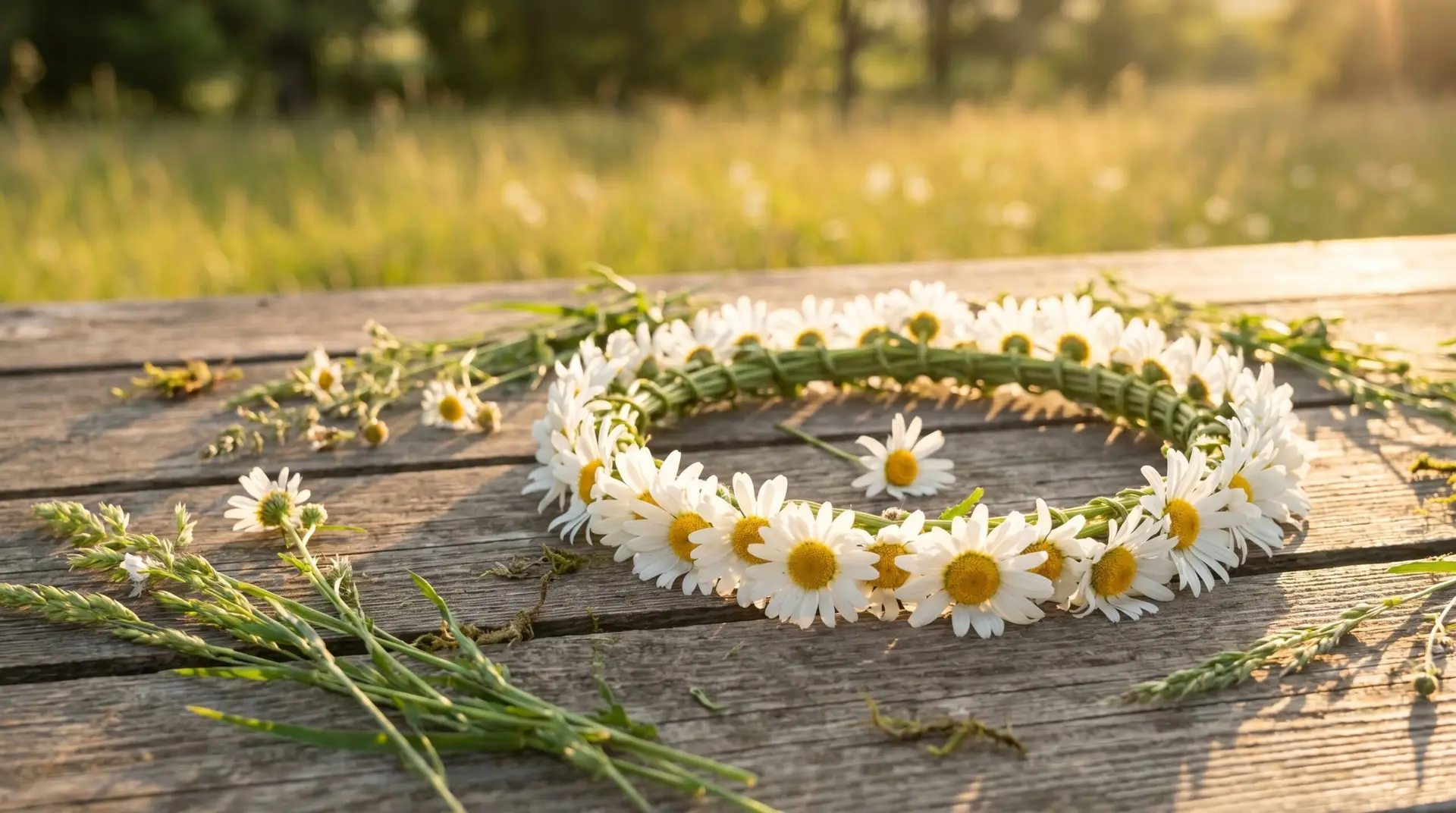
Daisy chain craft sessions are a particularly meaningful gift for parents of young children. Showing a child how to make a daisy chain (slit the stem of one daisy with a thumbnail, thread the next stem through the slit, repeat) extends the gentle tradition of British meadow childhood into family memory. The craft works well for spring birthday parties and outdoor celebrations.
For gardeners, a packet of heritage sweet pea seeds gives the gift of fragrance for the following summer. Specialty seed suppliers offer the classic Eckford-era cultivars (‘Lady Grisel Hamilton,’ ‘Painted Lady,’ ‘Old Spice Mix’) alongside modern hybrids. Price runs from about five dollars for a basic packet to twenty dollars for a heritage collection.
For literary recipients, a small leather-bound copy of Chaucer’s Legend of Good Women paired with a daisy bouquet draws on the cultural connection between April, daisy, and medieval English poetry. Used and antique bookshops carry nineteenth-century Chaucer editions at price points from twenty to two hundred dollars depending on binding and printing condition.
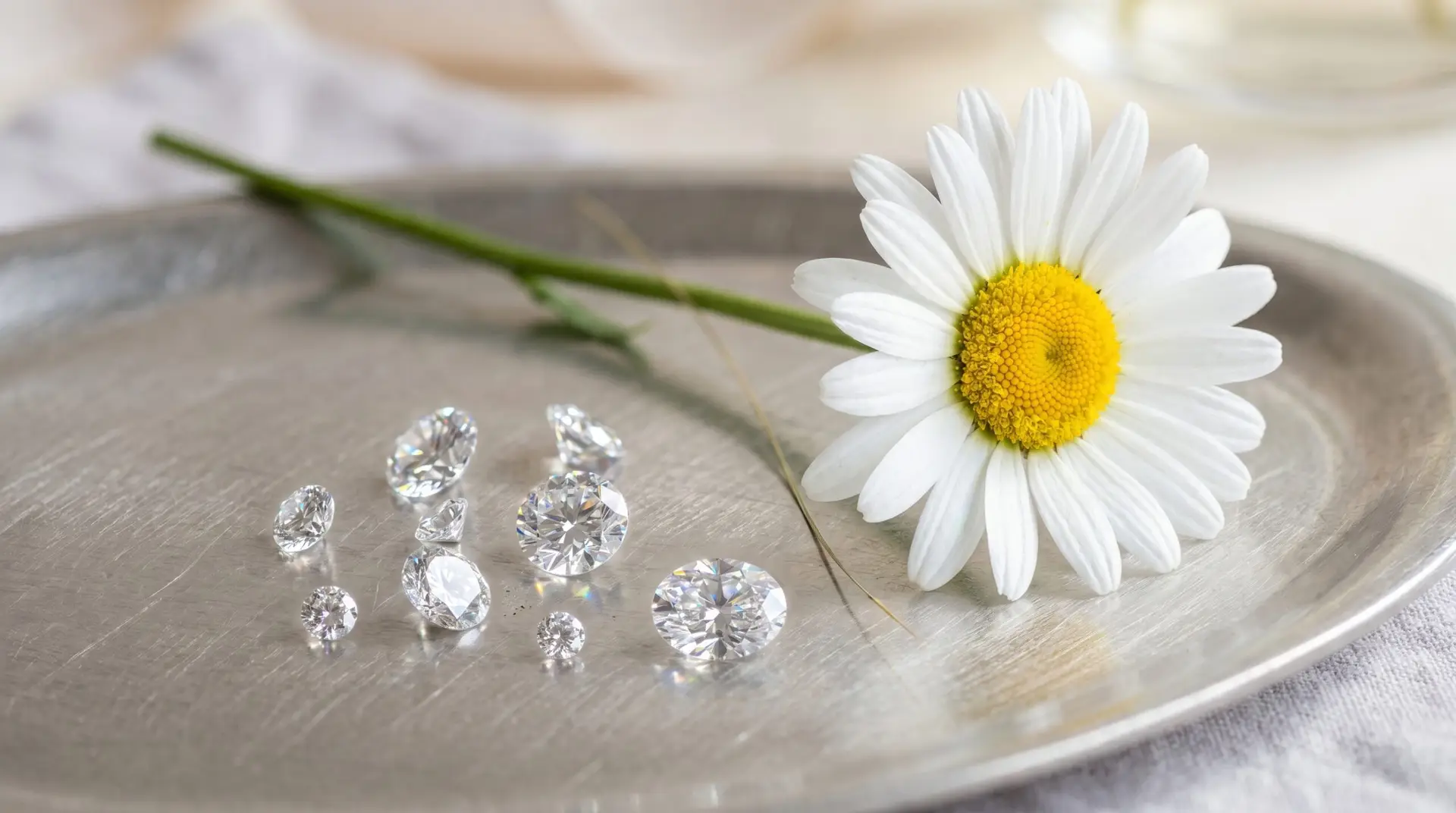
A jewelry piece combining daisy motif work with diamond (the April birthstone) draws on both the birth flower and the birthstone in a single coherent design. The bright clarity of diamond pairs naturally with the white-and-yellow of daisy. Price tiers run from about twenty dollars for simple diamond stud earrings to over five hundred dollars for fine daisy-motif pieces with diamond accents.
Frequently asked
What is April’s birth flower?
Daisy as the primary and sweet pea as the secondary. Daisy is Bellis perennis (English daisy) or related species in the family Asteraceae. Sweet pea is Lathyrus odoratus, a fragrant climbing annual native to Sicily and southern Italy.
Why is daisy April’s birth flower?
Daisy blooms abundantly in April across northern Europe, making it the most visible spring meadow flower in the region where the Western birth flower tradition originated. The flower also has unusually deep European cultural roots, with Norse folklore associations, an Anglo-Saxon etymology dating from the tenth century or earlier, and a medieval English literary tradition anchored by Chaucer’s “Legend of Good Women” prologue.
What does the April daisy mean?
Innocence, loyal love, and new beginnings. The Chaucerian reading emphasizes loyalty in love. The Anglo-Saxon “day’s eye” etymology emphasizes the daily renewal of opening at dawn. The modern Korean tradition assigns daisy to March 6 with the meaning “playfulness,” which aligns with the cheerful side of the broader symbolism.
What is the difference between daisy and gerbera daisy?
Both belong to the family Asteraceae but to different genera. The classic daisy (Bellis perennis) is native to Europe, with small white flowers and yellow centers, growing wild in lawns and meadows. The gerbera daisy (Gerbera jamesonii and hybrids) is native to South Africa, with larger flowers in a wider color range, and is cultivated specifically for florist trade. Florists call both “daisy” because of the similar composite-head shape, but they are separate species with different origins and growing requirements.
Why is the daisy called day’s eye?
The English name “daisy” comes from the Old English “dæges ēage,” meaning “day’s eye.” The compound describes the flower’s behavior: white petals close at night, protecting the yellow center, and open at dawn to reveal it again. Anglo-Saxon speakers from at least the tenth century used this name. Welsh “llygad y dydd” (eye of the day) calques the same construction.
Was daisy sacred to the Norse goddess Freya?
Folk tradition associates daisy with Freya, the Norse goddess of love and beauty. The connection appears in nineteenth and early twentieth century folklore compilations rather than in the surviving primary Norse texts (Poetic Edda, Prose Edda, sagas), so the historical record is mixed. What is firmly documented: Freya was one of the most important Norse goddesses, associated with love, beauty, and fertility. The specific daisy association is folkloric rather than strictly textual.
Did Chaucer write about daisies?
Yes. Geoffrey Chaucer dedicated the prologue of his “Legend of Good Women” (1380s) to praise of the daisy. The opening lines describe the poet rising early to see daisies open at dawn, and the praise continues for nearly two hundred lines before the main legends begin. Chaucer’s daisy passages are required reading in medieval English literature courses and shaped subsequent English literary tradition.
What is sweet pea fragrance like?
Floral honey-sweet with a slight green note, very pronounced and unusual for the size of the flower. Specialty Edwardian-era cultivars have stronger fragrance than modern florist varieties; some twentieth-century hybrid breeding traded fragrance for color variation and stem length. Heritage cultivars like ‘Painted Lady’ and ‘Cupani’ retain the strongest fragrance.
What birthstone goes with April’s birth flower?
Diamond. The clear brightness of diamond pairs naturally with daisy’s white-and-yellow composition. April-themed jewelry that combines daisy motif work with diamond accents draws on both traditions in a single coherent design.
Why was sweet pea so popular in the Edwardian era?
The late-Victorian and Edwardian eras (roughly 1880 to 1910) saw an English gardening obsession with fragrant ornamentals. Scottish gardener Henry Eckford transformed sweet pea from a small wild Mediterranean plant into elaborate fragrant garden cultivars through breeding work from the 1880s onward. The 1900 Bicentenary Sweet Pea Exhibition in London, marking 200 years since the first cultivated sweet pea seeds arrived from Sicily, attracted enormous crowds and elevated sweet pea to fashionable-flower status across British society.
Sources
- Daisy (Bellis perennis) · Encyclopedia Britannica
- Bellis growing guide · Royal Horticultural Society
- Sweet pea growing guide · Royal Horticultural Society
About this article. > Written and reviewed by the Your Flowers Guide editorial team. Botanical content from Britannica and the Royal Horticultural Society. Etymology references from the Oxford English Dictionary. Chaucer references from standard modern editions of “The Legend of Good Women” (Riverside Chaucer, Oxford University Press). Norse folklore references hedged where primary-source documentation is weaker than secondary folkloric tradition.