June birth flowers by day: the Korean 365-day tradition
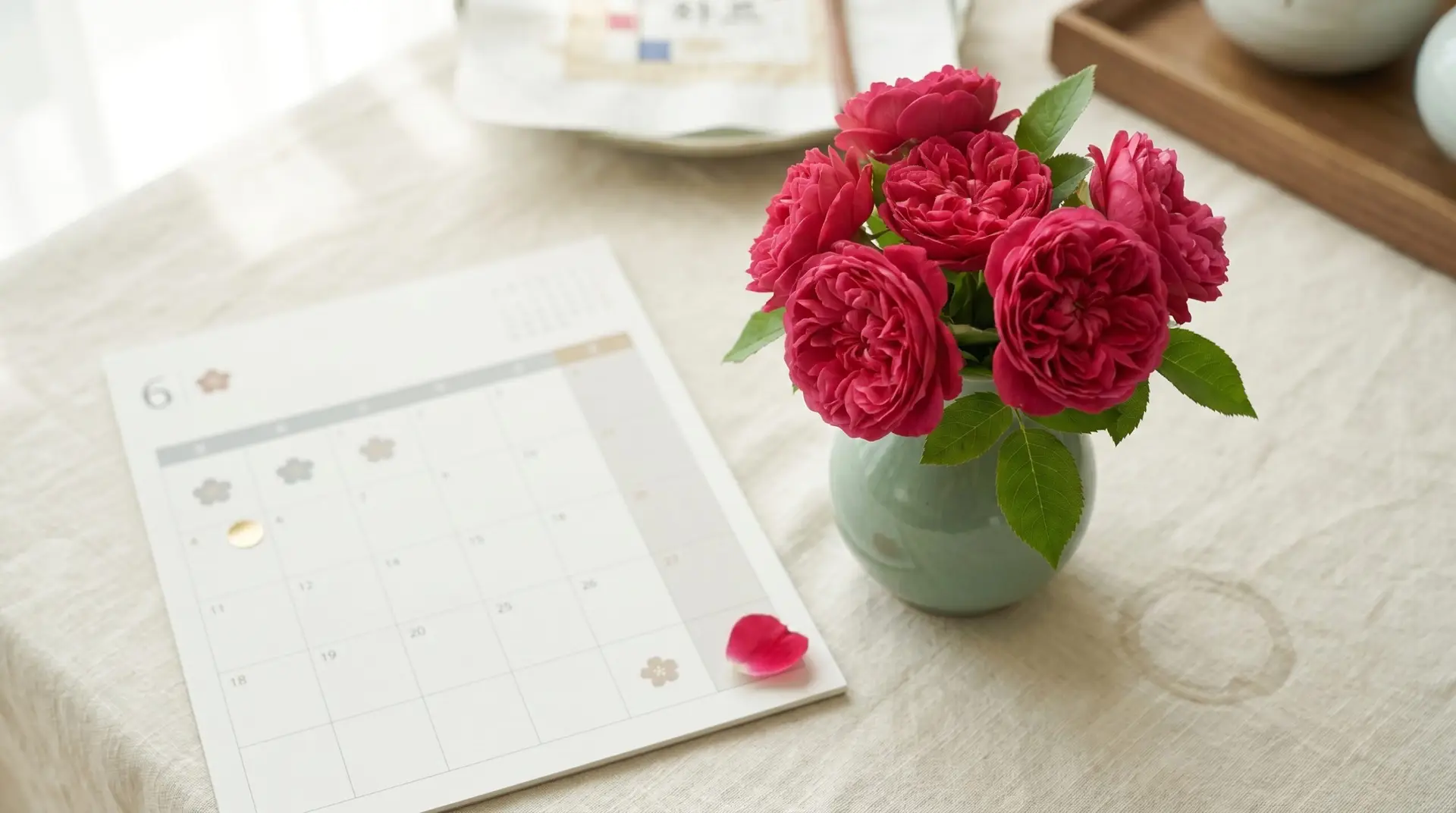
Korean tradition assigns a unique flower to each of June’s 30 days. The system runs parallel to the Western birth flower tradition (which gives all of June to rose and honeysuckle) and offers a more granular reading that ties specific birthdays to specific blooms.
June in the Korean list features two direct cross-cultural alignments with Western tradition: Damask rose on June 4 (matching the Western June primary) and honeysuckle on June 30 (matching the Western June secondary, closing the month with the same flower the Western tradition assigns to the whole month). Two additional cross-month alignments appear: sweet pea on June 9 (the Western April secondary) and carnation on June 15 (the Western January primary). The cluster of cross-cultural alignments reflects June’s status as the peak summer month across both East Asian and Western flowering traditions.
Early June (Jun 1-10): radiance and good memories
The first ten days of June in the Korean tradition feature several rose-family references and good-memory themes.
| Day | Flower | Korean (한국어) | Meaning |
|---|---|---|---|
| Jun 1 | Great maiden’s blush rose | 위대한처녀의홍조 | You’re the only one who understands me |
| Jun 2 | Red columbine | 빨간매발톱꽃 | Straightforward |
| Jun 3 | Flax | 아마 | Destiny |
| Jun 4 | Damask rose | 다마스크장미 | Beautiful radiant face |
| Jun 5 | Marigold | 메리골드 | Poor love |
| Jun 6 | Korean iris | 한국아이리스 | Happiness of believers |
| Jun 7 | Veronica schmidtiana | 슈미트티아나 | Longing heart |
| Jun 8 | Jasmine | 재스민 | Lovely |
| Jun 9 | Sweet pea | 스위트피 | Good memories |
| Jun 10 | Sweet William | 패랭이꽃 | Chivalry |
The early June cluster opens with rose references that directly cross-align with Western tradition. “Great maiden’s blush rose” on June 1 is an old garden rose variety (a Damask-class rose from at least the eighteenth century) with the symbolic reading “you’re the only one who understands me,” giving the month an opening of intimate-relationship emphasis.
Damask rose on June 4 with “beautiful radiant face” gives the most significant cross-cultural alignment of the early cluster. Damask roses are the rose class most associated with the Bulgarian and Turkish rose oil production, the Persian rose-oil tradition, and the broader cultural rose heritage discussed in the june-sub-pillar Persian poetry section. A June 4 birthday has direct connection to this deepest rose tradition.
Sweet pea on June 9 with “good memories” cross-aligns with Western April secondary tradition (sweet pea symbolizing “gentle goodbye” and “gratitude for a lovely time”). Both readings emphasize the affectionate-memory dimension that gives sweet pea its broader symbolic register.
Sweet William (패랭이꽃) on June 10 connects directly to the Western June flower associations through its appearance in Kate Middleton’s 2011 royal wedding bouquet (where sweet william served as the homage to Prince William). The Korean “chivalry” reading aligns with the broader Western chivalric romantic tradition surrounding the flower’s name.
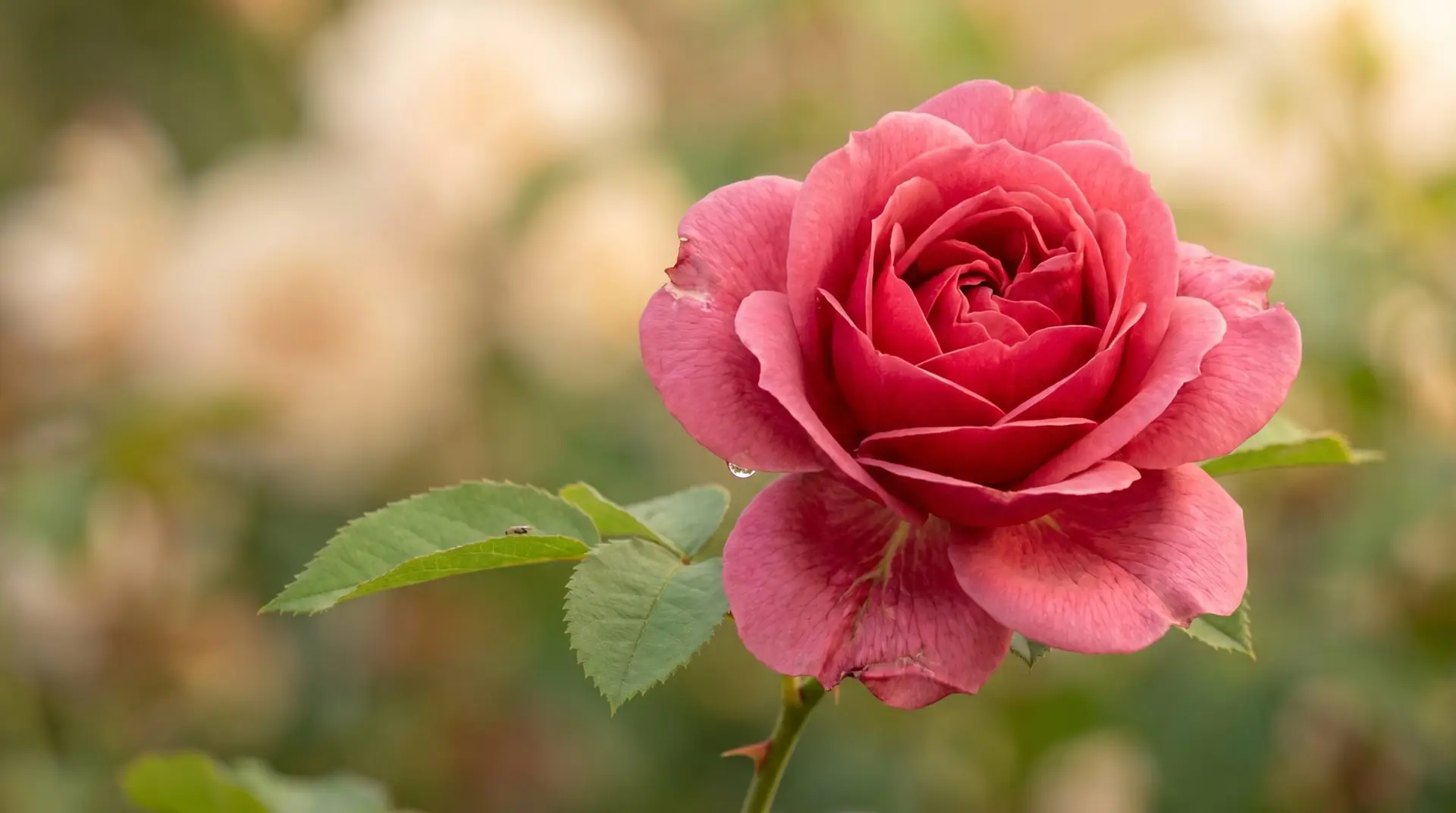
Mid June (Jun 11-20): hidden thoughts and courage
The middle ten days of June feature themes of hidden depths, charm, and bold courage.
| Day | Flower | Korean (한국어) | Meaning |
|---|---|---|---|
| Jun 11 | Fritillaria | 패모 | Nobility |
| Jun 12 | Mignonette | 목서초 | Charm |
| Jun 13 | Foxglove | 디기탈리스 | Hidden thoughts |
| Jun 14 | Pimpernel | 뚜껑별꽃 | Bright memories |
| Jun 15 | Carnation | 카네이션 | Passion |
| Jun 16 | Tube rose | 튜브로즈 | Dangerous joy |
| Jun 17 | Clover | 클로버 | Sensitive |
| Jun 18 | Thyme | 백리향 | Courage |
| Jun 19 | Sweet brier rose | 들장미 | Love |
| Jun 20 | Speedwell | 꼬리풀 | Success |
Carnation (카네이션) on June 15 with “passion” gives a major cross-month alignment with Western tradition where carnation is the January primary. The Korean reading emphasizes the passionate-love dimension rather than the Western mother-and-devotion reading, but both traditions treat carnation as a flower of strong romantic feeling.
Foxglove (디기탈리스) on June 13 with “hidden thoughts” has an interesting symbolic layer. Foxglove is highly toxic (the source of the cardiac medication digitalis), and the “hidden thoughts” reading reflects the plant’s dual character: visually beautiful with elegant tubular bell-flowers, but containing dangerous cardiac glycosides. Korean folk symbolism marks this duality of visible beauty hiding internal complexity.
Tube rose (튜브로즈, polianthes tuberosa) on June 16 with “dangerous joy” reflects the flower’s intense fragrance, which Victorian-era European writers sometimes treated as dangerously seductive. Tuberose was the central note in many late-nineteenth and twentieth-century perfumes (Fracas by Robert Piguet, 1948, being the most iconic tuberose perfume). The “dangerous joy” reading aligns with the broader Western reading of tuberose as a flower of overwhelming pleasure.
Thyme on June 18 with “courage” connects to the medieval European tradition of thyme as the herb of bravery. Medieval knights wore thyme sprigs into battle as good-luck and courage symbols. The Korean assignment of thyme to June 18 aligns with this older European tradition.
Late June (Jun 21-30): love stronger than death
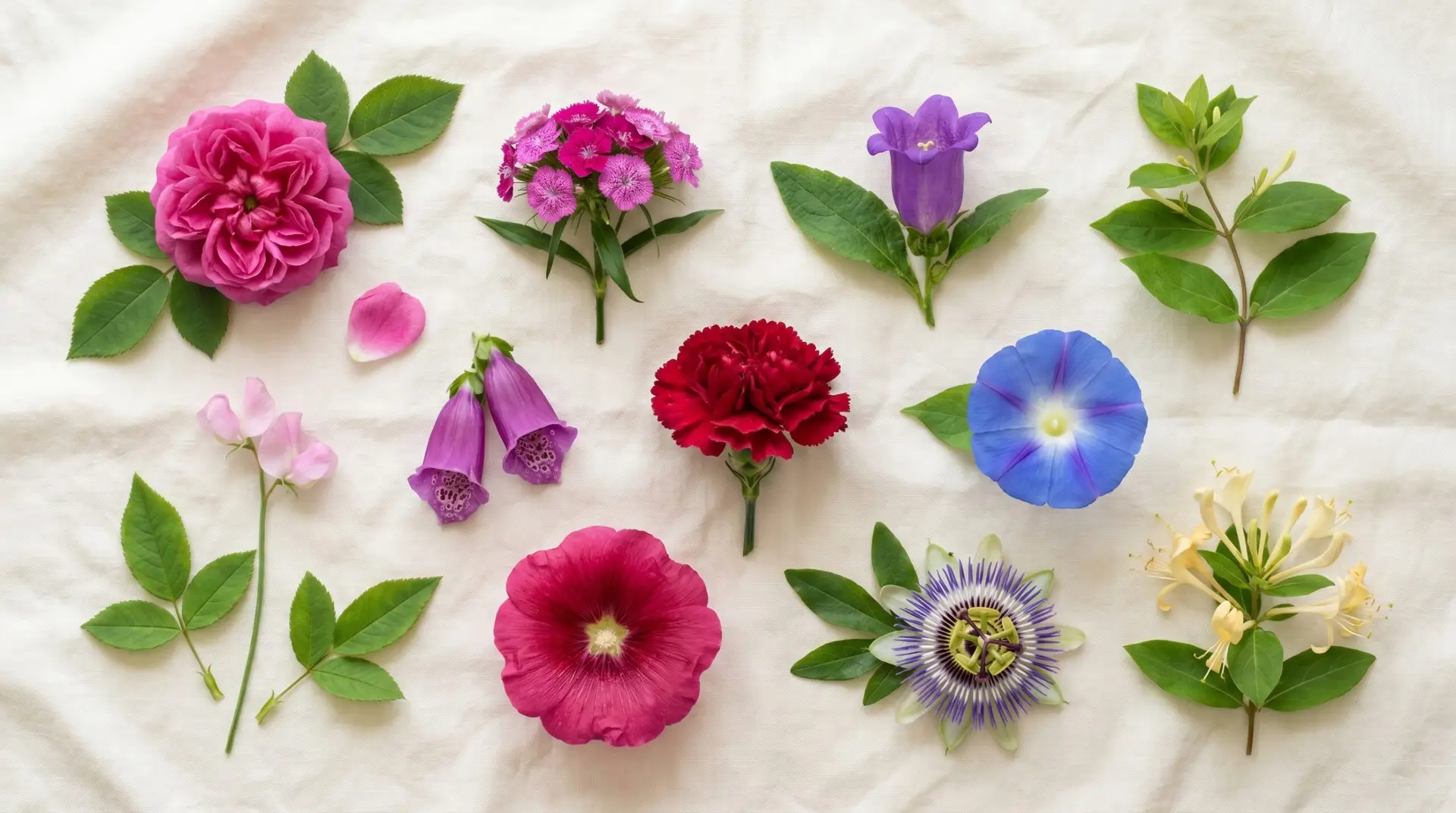
The final ten days of June move through themes of profound love, family unity, and the closing honeysuckle cross-cultural alignment.
| Day | Flower | Korean (한국어) | Meaning |
|---|---|---|---|
| Jun 21 | Evening primrose | 달맞이꽃 | Free heart |
| Jun 22 | Viburnum | 가막살나무 | Love stronger than death |
| Jun 23 | Hollyhock | 접시꽃 | Passionate love |
| Jun 24 | Garden verbena | 정원버베나 | Family unity |
| Jun 25 | Morning glory | 나팔꽃 | Appreciate the moment |
| Jun 26 | White lilac | 흰라일락 | Beautiful oath |
| Jun 27 | Passion flower | 시계초 | Divine love |
| Jun 28 | Geranium | 제라늄 | Because of you, I am happy |
| Jun 29 | Red geranium | 빨간제라늄 | Because of you, I have love |
| Jun 30 | Honeysuckle | 인동덩굴 | Love |
Viburnum on June 22 with “love stronger than death” gives the late June cluster its emotional center. The reading connects to broader European folk tradition where viburnum (the European cranberry bush) held associations with enduring love that survives loss. Several Eastern European folk songs reference viburnum (kalyna in Ukrainian, kalina in Russian, Serbian, and other Slavic languages) as a symbol of romantic faithfulness through hardship.
Hollyhock (접시꽃) on June 23 with “passionate love” appears as a cottage-garden tradition reference. Hollyhocks are tall summer-blooming garden flowers traditionally grown along cottage walls; the height and abundance of bloom gave the flower its passionate-love reading in folk tradition.
Passion flower (시계초) on June 27 with “divine love” connects directly to the Christian symbolism of the flower. The Spanish missionaries in seventeenth-century South America named the flower for the Passion of Christ, with the various floral parts representing crown of thorns, three nails, ten apostles (excluding Peter who denied and Judas who betrayed), and other elements of the crucifixion narrative. The Korean “divine love” reading preserves this Christian-symbolic dimension.
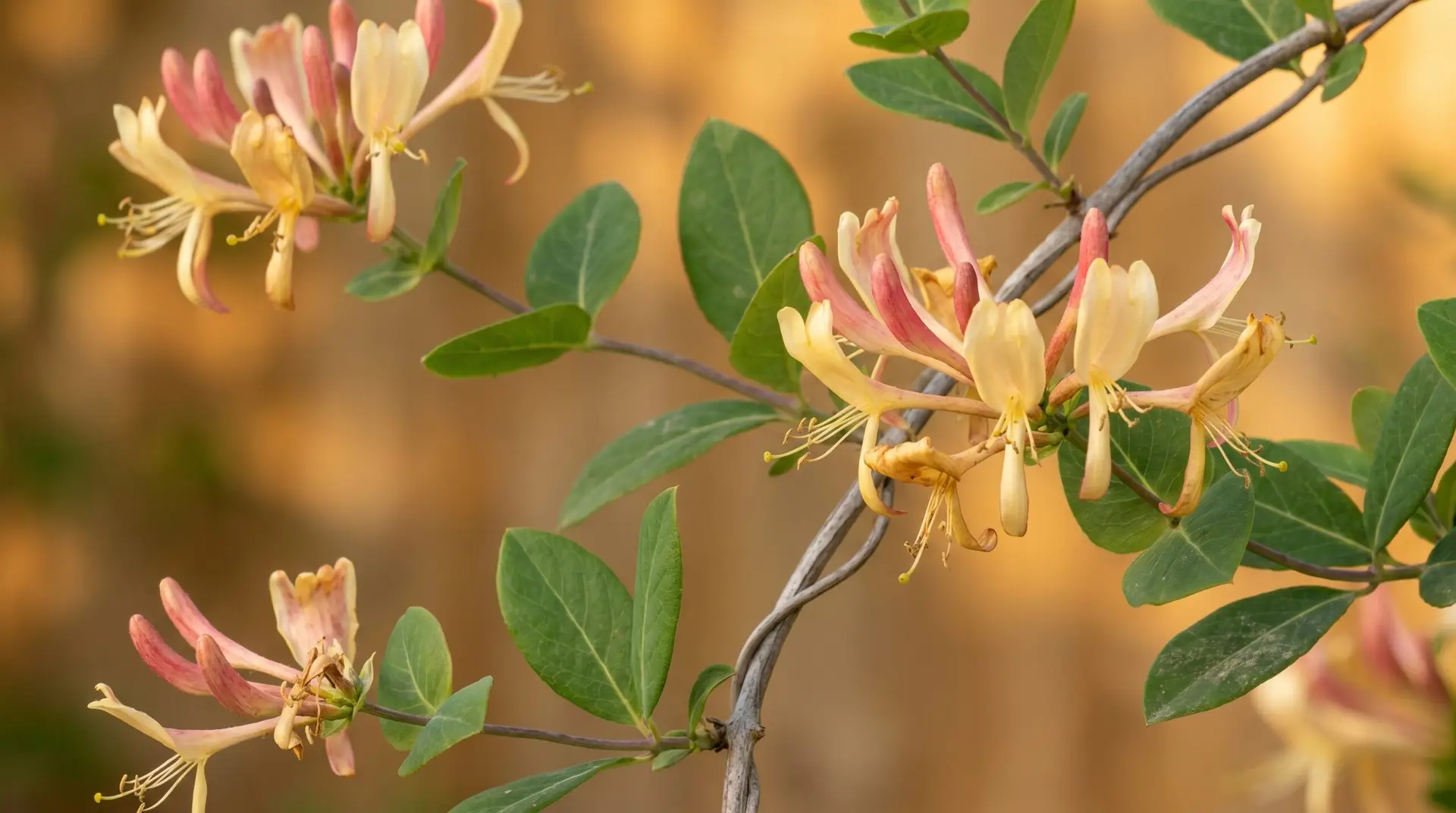
Honeysuckle (인동덩굴) on June 30 with “love” closes the month with direct cross-cultural alignment to Western tradition. Honeysuckle is the Western June secondary birth flower with the “bonds of love” symbolism. Both traditions independently selected honeysuckle for June position, with the Korean reading “love” giving a simpler version of the Western “bonds of love” reading. A June 30 birthday has doubled symbolic weight through this convergence.
How Korea’s June compares to Western tradition
June shows strong cross-cultural alignment between Korean and Western traditions. Four Korean June entries directly cross-reference Western flower assignments:
- June 4: Damask rose. Cross-aligns with Western June primary tradition (rose). Both traditions emphasize the rose’s broader cultural and symbolic primacy.
- June 9: Sweet pea. Cross-aligns with Western April secondary (sweet pea with “gentle goodbye” / “gratitude for a lovely time”). The Korean “good memories” reading parallels the Western affectionate-memory register.
- June 15: Carnation. Cross-aligns with Western January primary (carnation with “devotion, mother’s love”). The Korean “passion” reading emphasizes the romantic-love dimension that complements the Western maternal reading.
- June 30: Honeysuckle. Cross-aligns with Western June secondary (honeysuckle with “bonds of love”). Both traditions independently selected honeysuckle for June position.
The June 4 Damask rose alignment is particularly significant. Damask is the rose class most associated with the Persian rose oil tradition, Bulgarian commercial production, and the broader cultural rose heritage discussed in the june-sub-pillar Persian poetry section. A June 4 birthday connects directly to this deepest rose cultural tradition.
The June 30 honeysuckle alignment closes the month with the second cross-cultural primary match. Two unrelated traditions both selected honeysuckle as a meaningful June flower, reinforcing the symbolic weight that the flower holds across both East Asian and Western birth flower systems.
Frequently asked
What is the Korean birth flower for June 4?
Damask rose (다마스크장미), with the meaning “beautiful radiant face.” This cross-aligns directly with Western June primary tradition (rose). Damask is the rose class most associated with the Persian rose oil tradition and Bulgarian commercial production.
What is the Korean birth flower for June 15?
Carnation (카네이션), with the meaning “passion.” This cross-aligns with Western January primary tradition (carnation with “devotion, mother’s love”). The Korean reading emphasizes romantic-love dimension.
What is the Korean birth flower for June 30?
Honeysuckle (인동덩굴), with the meaning “love.” This cross-aligns directly with Western June secondary tradition (honeysuckle with “bonds of love”). Both traditions independently selected honeysuckle for June position.
Why does the Korean June list have so many roses?
The Korean June features multiple rose varieties (Great maiden’s blush rose June 1, Damask rose June 4, tube rose June 16, sweet brier June 19) reflecting June’s status as peak rose season across both Eastern and Western flowering traditions. The variety acknowledges rose’s cultural primacy in summer symbolism.
What does foxglove mean in Korean tradition?
Foxglove on June 13 has the meaning “hidden thoughts.” The reading reflects the plant’s dual character: visually beautiful with elegant tubular bell-flowers, but containing dangerous cardiac glycosides (the source of digitalis medication). Korean folk symbolism marks this duality of visible beauty hiding internal complexity.
Why is the passion flower assigned to June 27?
Passion flower (시계초) on June 27 has the meaning “divine love.” Spanish missionaries in seventeenth-century South America named the flower for the Passion of Christ, with various floral parts representing elements of the crucifixion narrative. The Korean “divine love” reading preserves this Christian-symbolic dimension.
Which Korean June birth flower is for my birthday?
Find your date in the tables above. The Korean tradition assigns one specific flower to each day from June 1 (Great maiden’s blush rose) through June 30 (honeysuckle). Each daily flower has its own symbolic reading.
Sources
- Korean birth flower 365-day tradition guide · Creatrip Korean culture portal
About this article. > Written and reviewed by the Your Flowers Guide editorial team. Korean 365-day tradition data from Creatrip and Korean Wikipedia (“탄생화” entries). Botanical reference cross-verified with RHS and Britannica.