August birth flowers by day: the Korean 365-day tradition
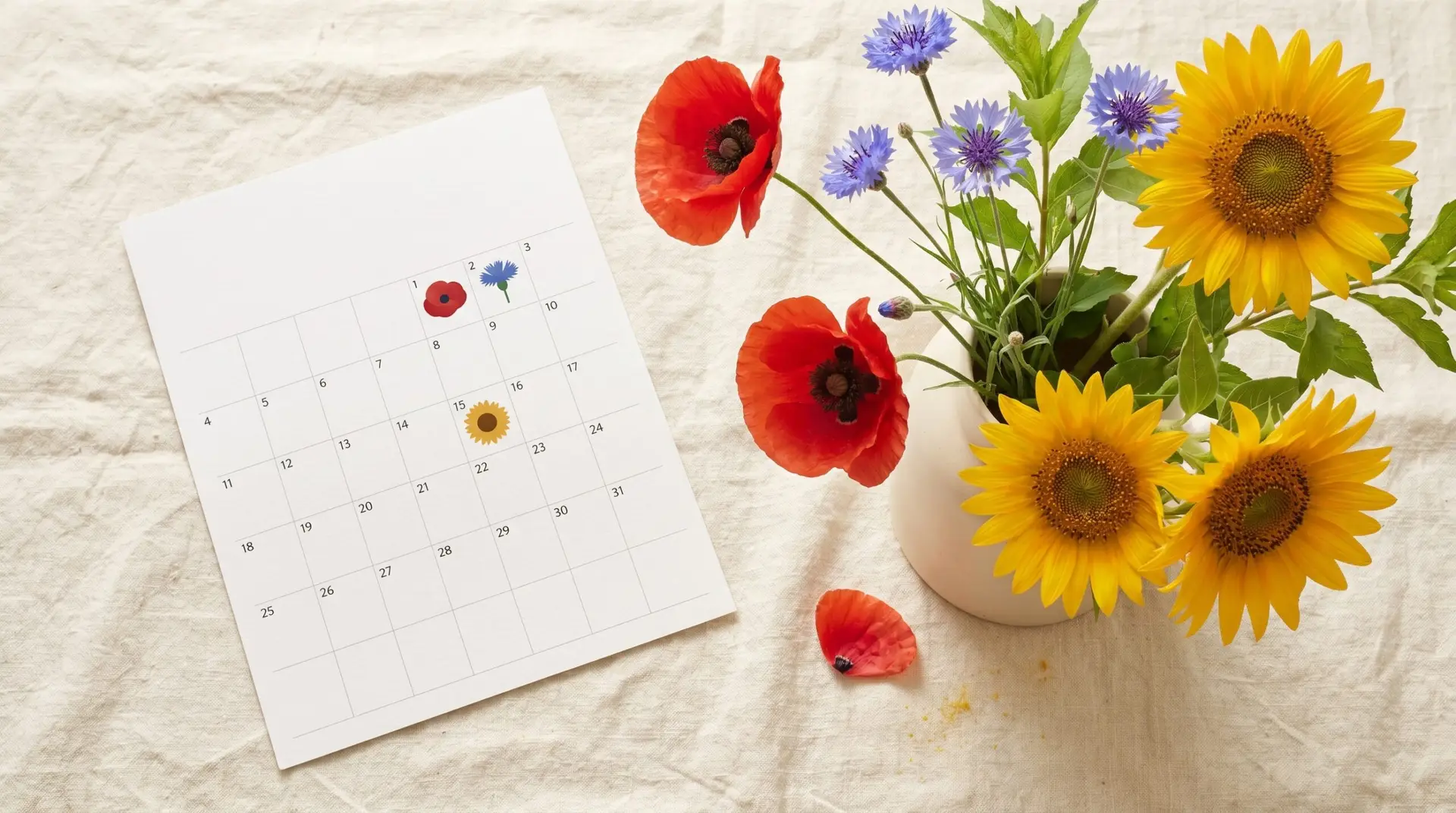
Korean tradition assigns a unique flower to each of August’s 31 days. The system runs parallel to the Western birth flower tradition, which gives all of August to gladiolus and poppy, and offers a more granular reading that ties specific birthdays to specific blooms.
August in the Korean list opens on a flower that the Western calendar also claims. August 1 is red poppy, and poppy is the Western secondary flower for the whole month, so the two traditions agree on the date most strongly tied to remembrance and consolation. From there the Korean month moves through summer-garden flowers such as cornflower, sunflower, freesia, and hollyhock, and closes on quieter botanical entries that point toward the coming autumn. The meanings shift with that arc, from the consolation of the first week to the gratitude and gentle parting of the final days.
Early August (August 1-10): consolation and warmth
The first ten days of August in the Korean tradition center on consolation, honor, and warm summer color.
| Day | Flower | Korean (한국어) | Meaning |
|---|---|---|---|
| August 1 | Red poppy | 양귀비 | Consolation |
| August 2 | Cornflower | 수레국화 | Happiness |
| August 3 | Flower-of-an-hour | 수박풀 | Beauty of a girl |
| August 4 | Corn | 옥수수 | Treasure |
| August 5 | Heath | 에리카 | Loneliness, solitude |
| August 6 | Trumpet creeper | 능소화 | Honor |
| August 7 | Pomegranate | 석류 | Mature beauty |
| August 8 | Azalea | 진달래 | Joy of love |
| August 9 | Cistus | 시스투스 | To be loved |
| August 10 | Moss | 이끼 | Mother’s love |
Red poppy on August 1 with the reading “consolation” gives the month a strong opening that the Western calendar shares. Poppy is the Western secondary flower for August, and its long association with remembrance and comfort runs through both traditions. A birthday on this date carries the same emotional register whether read through the Korean list or the Western one.
Cornflower on August 2 with “happiness” and corn on August 4 with “treasure” reflect the high-summer farm landscape, when cornflower edges the grain fields and the corn itself stands at full height. The pairing reads the season’s abundance as a quiet kind of wealth rather than display.
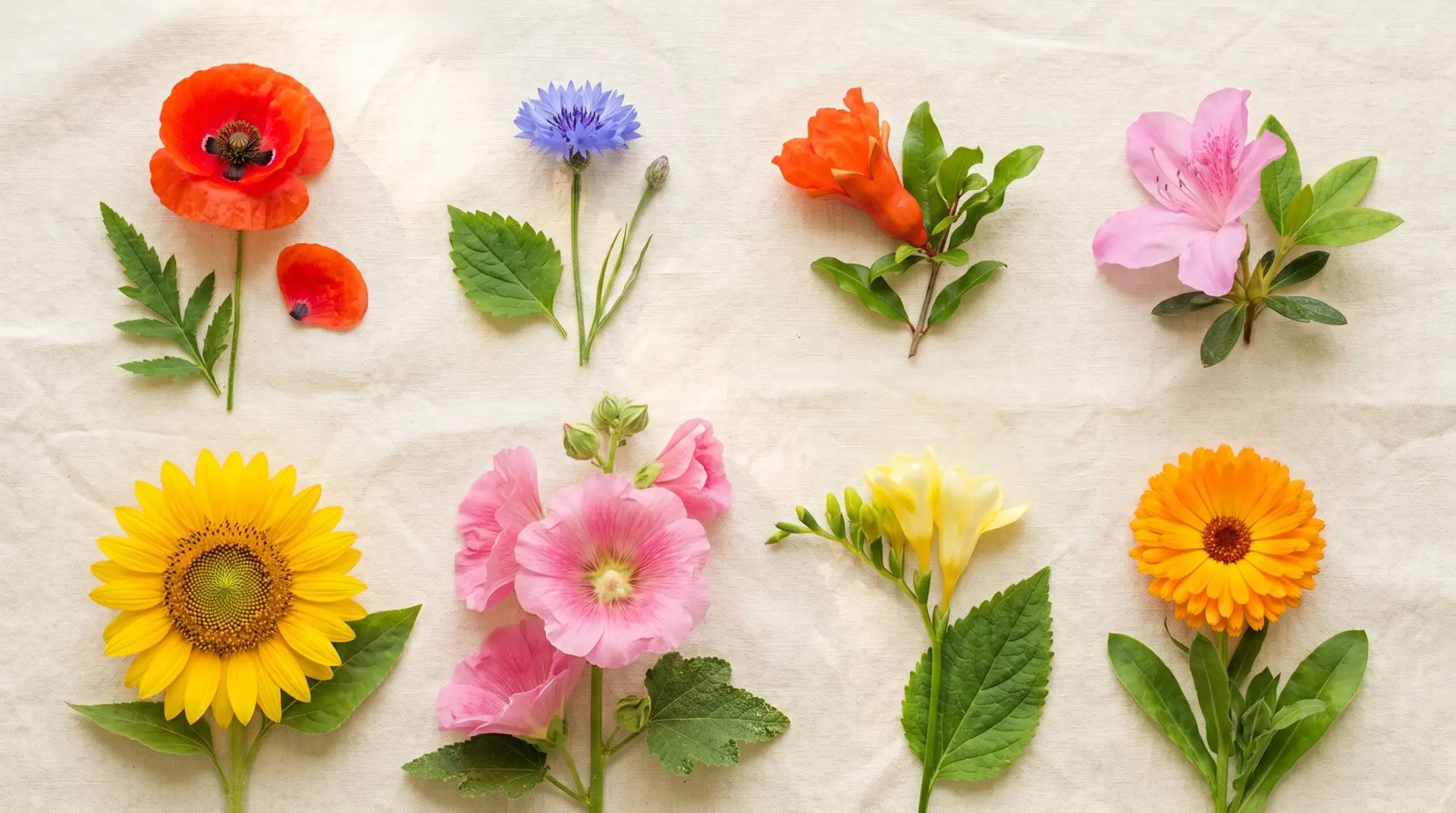
Trumpet creeper on August 6 with “honor” and pomegranate on August 7 with “mature beauty” mark the middle of the early window. Both are late-summer bloomers across East Asian gardens, and the pomegranate in particular carries a long symbolic history tied to fullness and ripening rather than first youth. Azalea on August 8 with “joy of love” returns to a flower more often linked with spring, here read for warmth of feeling rather than season.
Mid August (August 11-20): light and steady feeling
The middle ten days move through themes of light, respect, and steady affection.
| Day | Flower | Korean (한국어) | Meaning |
|---|---|---|---|
| August 11 | Zonal geranium | 제라늄 | Consolation, solace |
| August 12 | Sweet oleander | 협죽도 | Danger |
| August 13 | Goldenrod | 골든로드 | Boundaries |
| August 14 | Wall germander | 저먼더 | Respect |
| August 15 | Sunflower | 해바라기 | Bright light |
| August 16 | Tamarind | 타마린드 | Luxury |
| August 17 | Tulip tree | 튤립나무 | Complete happiness |
| August 18 | Hollyhock | 접시꽃 | Burning love |
| August 19 | Rose campion | 로사 캠피온 | Truthfulness |
| August 20 | Freesia | 프리지아 | Innocent, honest |
Sunflower on August 15 with “bright light” sits at the center of the mid-August window and the center of the month itself. The reading suits a flower that tracks the sun across the day and stands tallest at the peak of summer. This is the second sunflower date in the Korean year, after the July 6 assignment with “admiration, affection,” and the shift from admiration to bright light reads as a deepening of the same warmth.
Sweet oleander on August 12 with “danger” is the unusual entry of the window. The plant is strikingly beautiful and also toxic in every part, and the Korean reading keeps that double nature in view rather than smoothing it over. Wall germander on August 14 with “respect” gives the month one of two germander dates, the second falling on August 30 with a related reading.
Tulip tree on August 17 with “complete happiness” and hollyhock on August 18 with “burning love” carry the warmest readings of the middle window. The tulip tree flowers high in the canopy in early summer and reads here for contentment rather than longing, while the hollyhock, a tall cottage-garden staple, takes the more intense romantic register. Freesia on August 20 with “innocent, honest” closes the window on a note of plain sincerity.
Late August (August 21-31): gratitude and parting
The final eleven days move toward gratitude, secret feeling, and the first signals of autumn.
| Day | Flower | Korean (한국어) | Meaning |
|---|---|---|---|
| August 21 | Agrimony | 짚신나물 | Gratitude |
| August 22 | Spirea | 스피리아 | Effort |
| August 23 | Linden | 보리수 | Love between spouses |
| August 24 | Calendula | 금잔화 | Sadness of separation |
| August 25 | Anthurium | 안스리움 | Happiness in love |
| August 26 | Hypoxis aurea | 하이포시스 오리어 | Looking for the light |
| August 27 | Osmunda | 고비 | Dreaming |
| August 28 | Eryngium | 에린지움 | Secret love |
| August 29 | Flowering tobacco | 꽃담배 | Because of you, I am not lonely |
| August 30 | Wall germander | 저먼더 | Sincerity |
| August 31 | Clover | 토끼풀 | Promise |
Agrimony on August 21 with “gratitude” opens the closing window on a note of thanks. Linden on August 23 with “love between spouses” reads the broad shade tree as a symbol of settled, married affection, a meaning it shares with the late-July linden date in the same list. The repetition across late summer ties the season to long-standing partnership rather than new romance.
Calendula on August 24 with “sadness of separation” introduces the first clearly autumnal note. The marigold-family flower keeps blooming into cooler weather, and the Korean reading turns that persistence toward the ache of parting as the season changes. Eryngium on August 28 with “secret love” and flowering tobacco on August 29 with “because of you, I am not lonely” continue the quieter, more inward register of the month’s end.
Clover on August 31 with “promise” closes August on a forward-looking reading. The same flower appears earlier in the year with a different shade of meaning, and here it carries the sense of a commitment made as one season hands over to the next. Wall germander returns on August 30 with “sincerity,” giving the month its second germander date after August 14.
How Korea’s August compares to Western tradition
August has one direct cross-cultural alignment between the Korean and Western traditions. The Korean August 1 is red poppy, and poppy is the Western secondary flower for the whole month, so both calendars place poppy and its remembrance-and-consolation symbolism at the start of August.
The Korean list does not include gladiolus, the Western primary flower for August. The omission fits the pattern seen across the Korean year, where the daily assignments lean toward East Asian garden and field plants rather than the imported European bulbs that anchor the Western monthly tradition.
Sunflower on August 15 gives the Korean August a strong seasonal center that the Western monthly pairing does not name directly. The flower’s link to peak summer light makes the mid-month date one of the most recognizable in the Korean list.
The two systems are best read as complementary rather than competing. An August birthday can take the broad Western pairing of gladiolus and poppy, or the specific Korean flower for the exact date, and the poppy on August 1 is the point where both readings meet.
Frequently asked
What is the Korean birth flower for August 1?
Red poppy (양귀비), with the meaning “consolation.” Poppy is also the Western secondary flower for August, so this is the date where the Korean and Western traditions align most closely on remembrance and comfort.
What is the Korean birth flower for August 15?
Sunflower (해바라기), with the meaning “bright light.” It is the second sunflower date in the Korean year, after July 6, and sits at the seasonal center of the month.
Does Korean tradition use gladiolus for August?
No. Gladiolus is the Western primary flower for August, but the Korean daily list does not include it. The Korean system leans toward East Asian garden and field plants rather than imported European bulbs.
Why does wall germander appear twice in August?
The Korean August list assigns wall germander (저먼더) to both August 14 (“respect”) and August 30 (“sincerity”). Repeated flowers with shifted meanings appear on several dates across the Korean year.
What is the meaning of the August 24 calendula?
Calendula (금잔화) on August 24 carries “sadness of separation.” The reading marks the first clearly autumnal note in the month, as the season begins to turn.
Which Korean August birth flower is for my birthday?
Find your date in the tables above. The Korean tradition assigns one specific flower to each day from August 1 (red poppy) through August 31 (clover), and each daily flower has its own short meaning.
Sources
- Korean birth flower 365-day tradition guide · Creatrip Korean culture portal
About this article. > Written and reviewed by the Your Flowers Guide editorial team. Korean 365-day tradition data from the Creatrip Korean culture portal. Botanical reference cross-verified with RHS and Britannica.