Contents
Moth Orchid (Phalaenopsis)
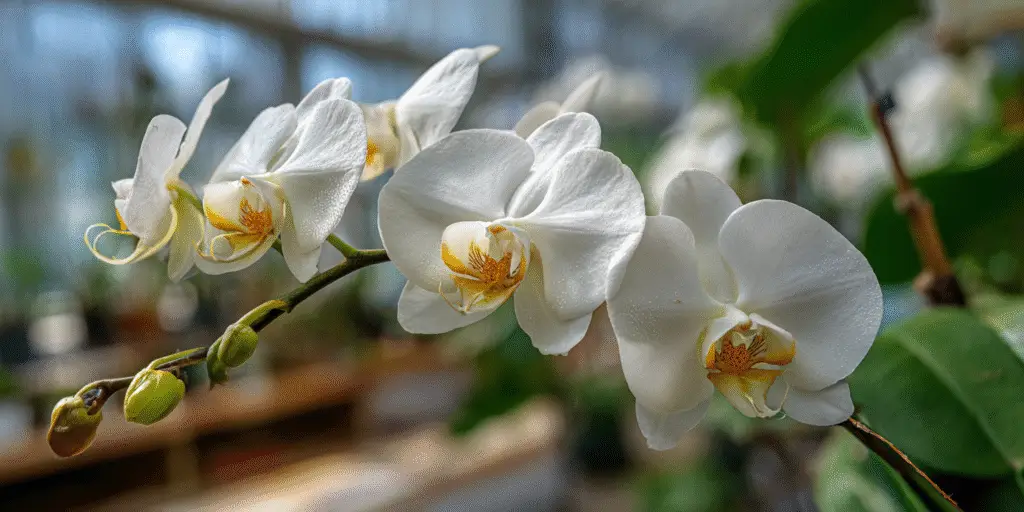
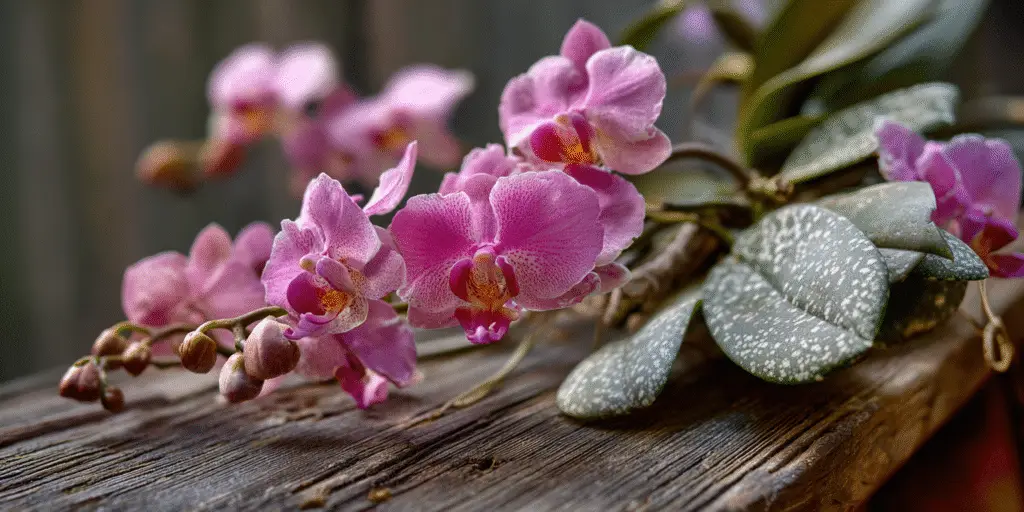
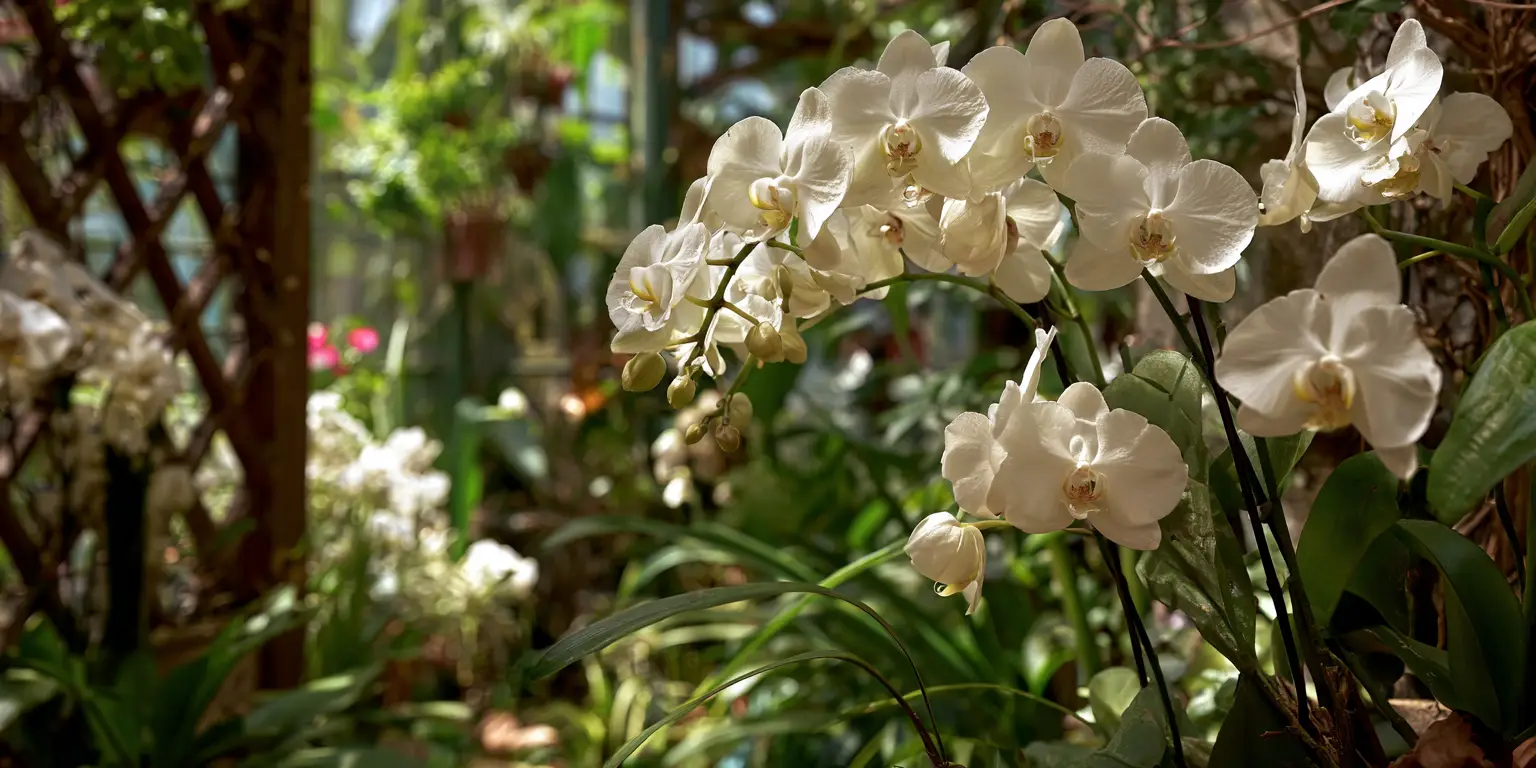
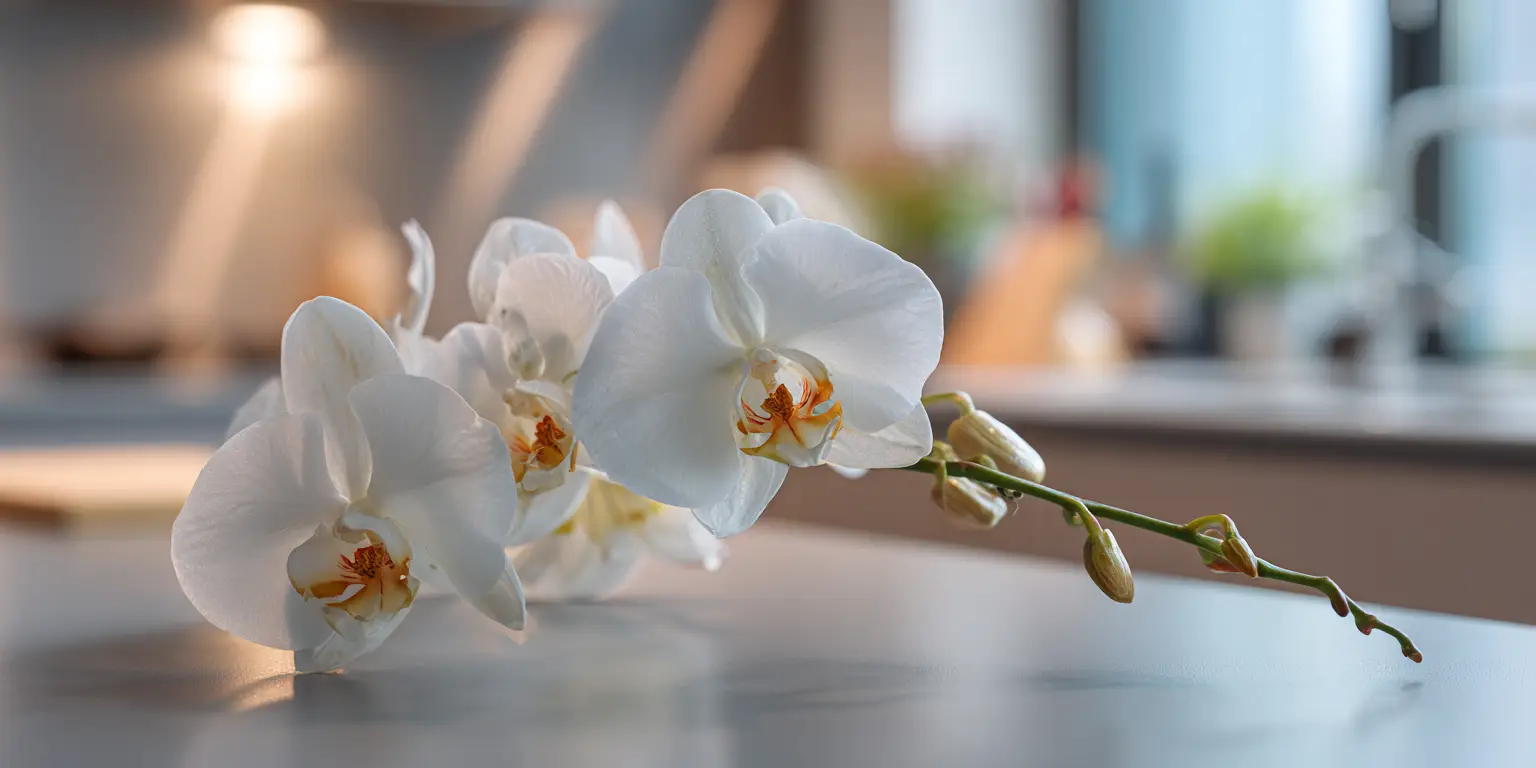
Moth Orchids (Phalaenopsis) are tropical orchids known for their exotic, moth-like blooms that can last for months. They are among the most popular indoor flowers worldwide, prized for their elegant appearance and relatively easy orchid care requirements. These orchids grow as compact plants with a rosette of broad, leathery leaves and tall arching flower spikes. Each spike carries multiple striking blooms that resemble hovering moths or butterflies, hence the common name “moth orchid.” Phalaenopsis are native to warm, humid Asian habitats, but they adapt well to home conditions, making them ideal for novice growers and experienced collectors alike. Unlike many common types of flowers, orchids are epiphytes (tree-dwellers) with unique needs, yet Phalaenopsis stand out as one of the easiest orchids to cultivate indoors.
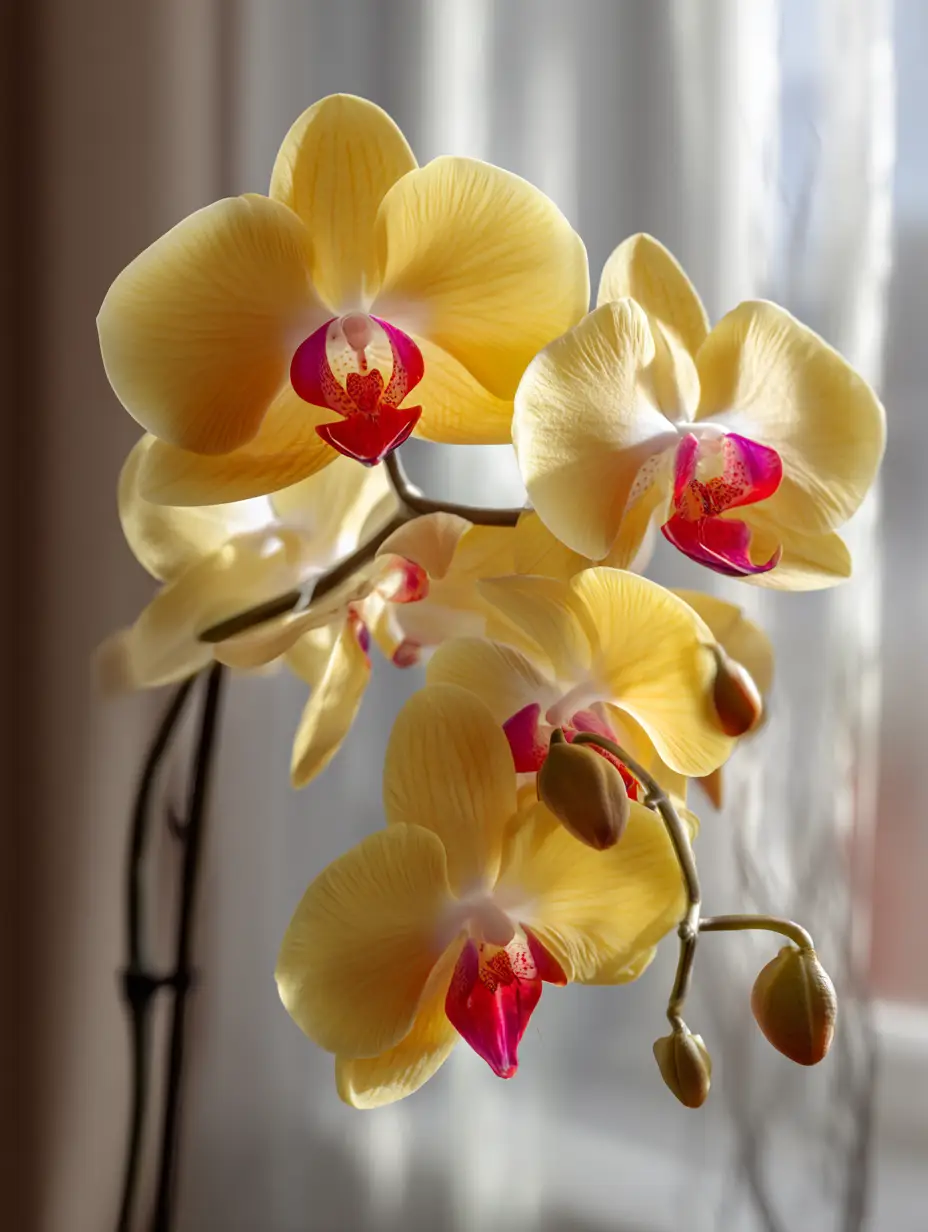
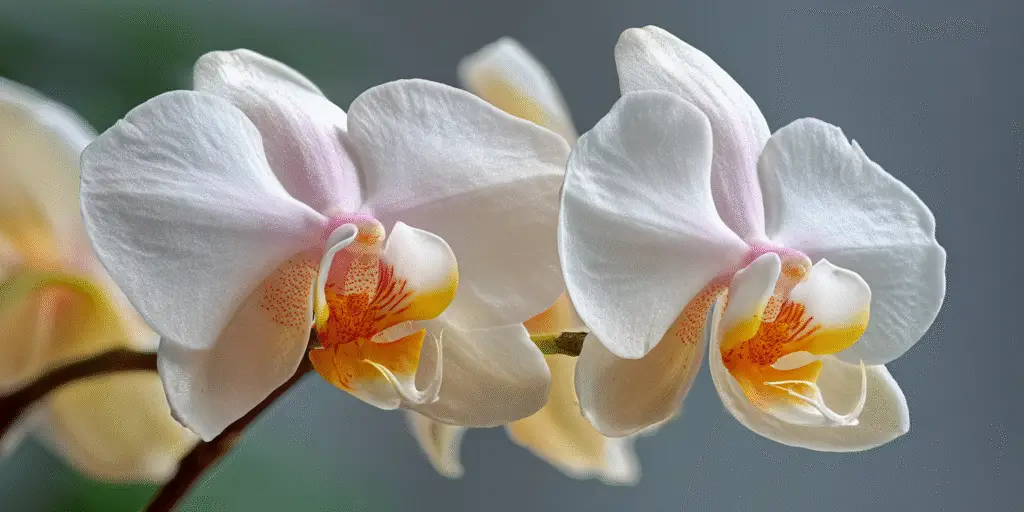
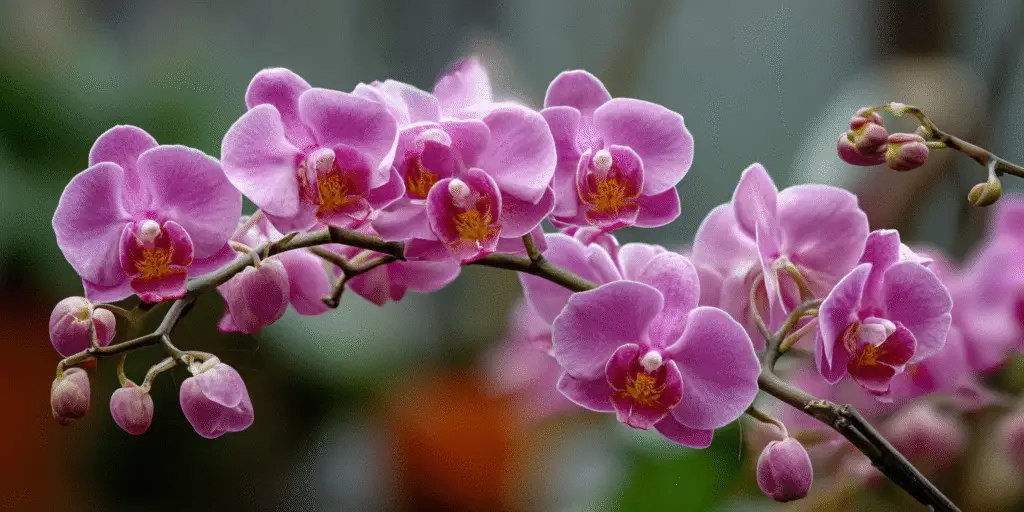
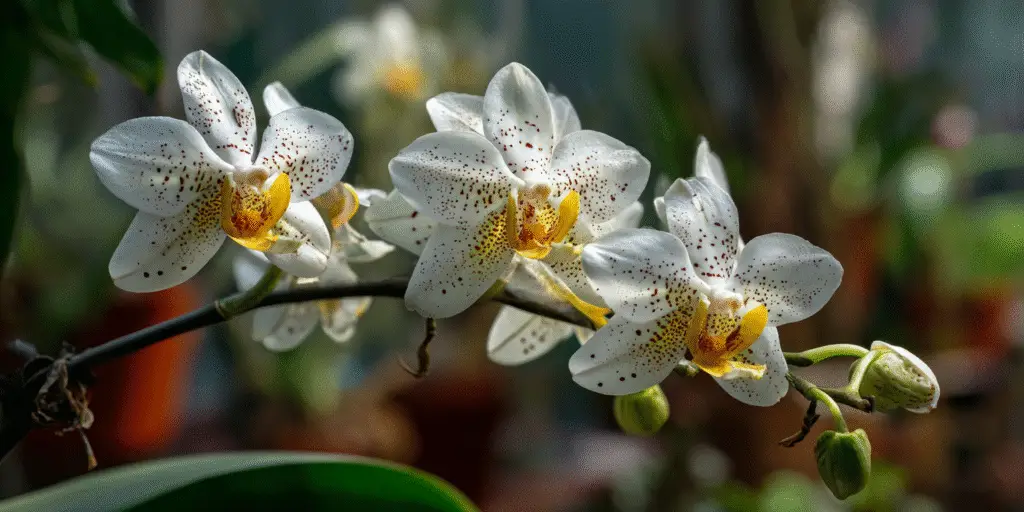
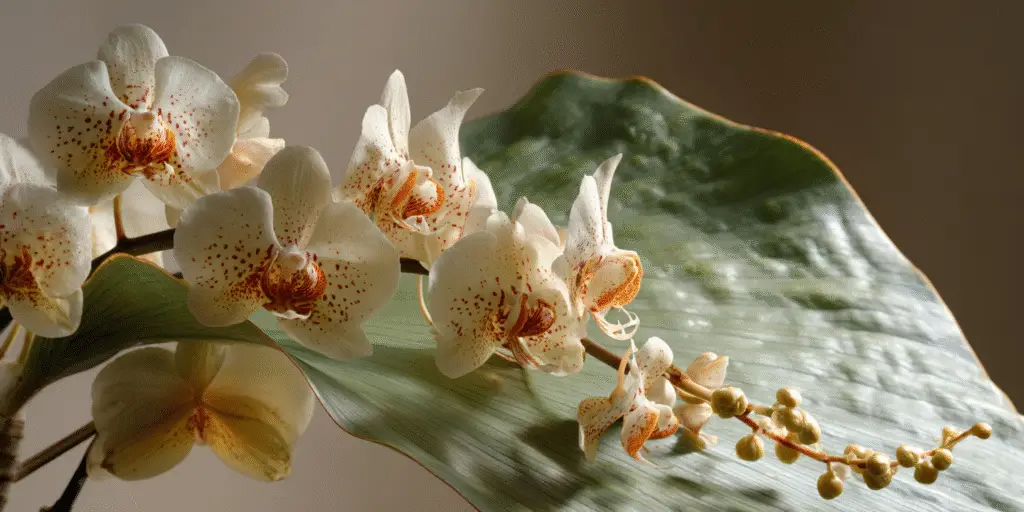
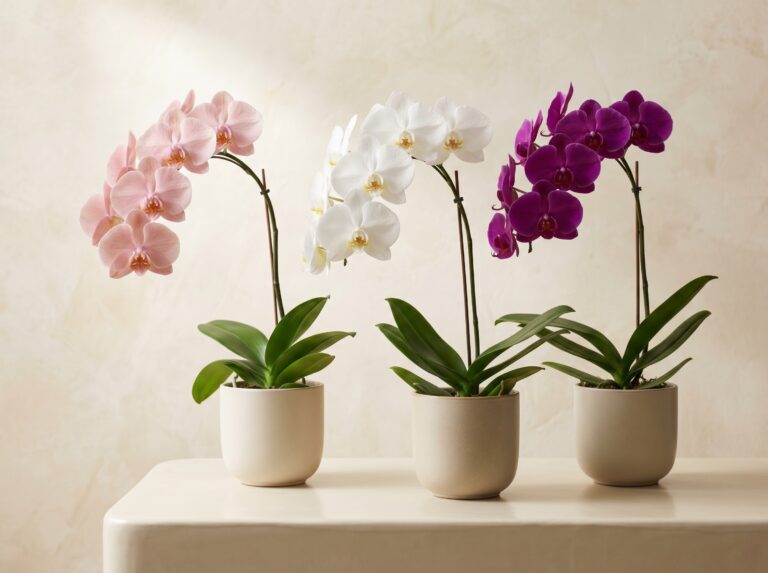
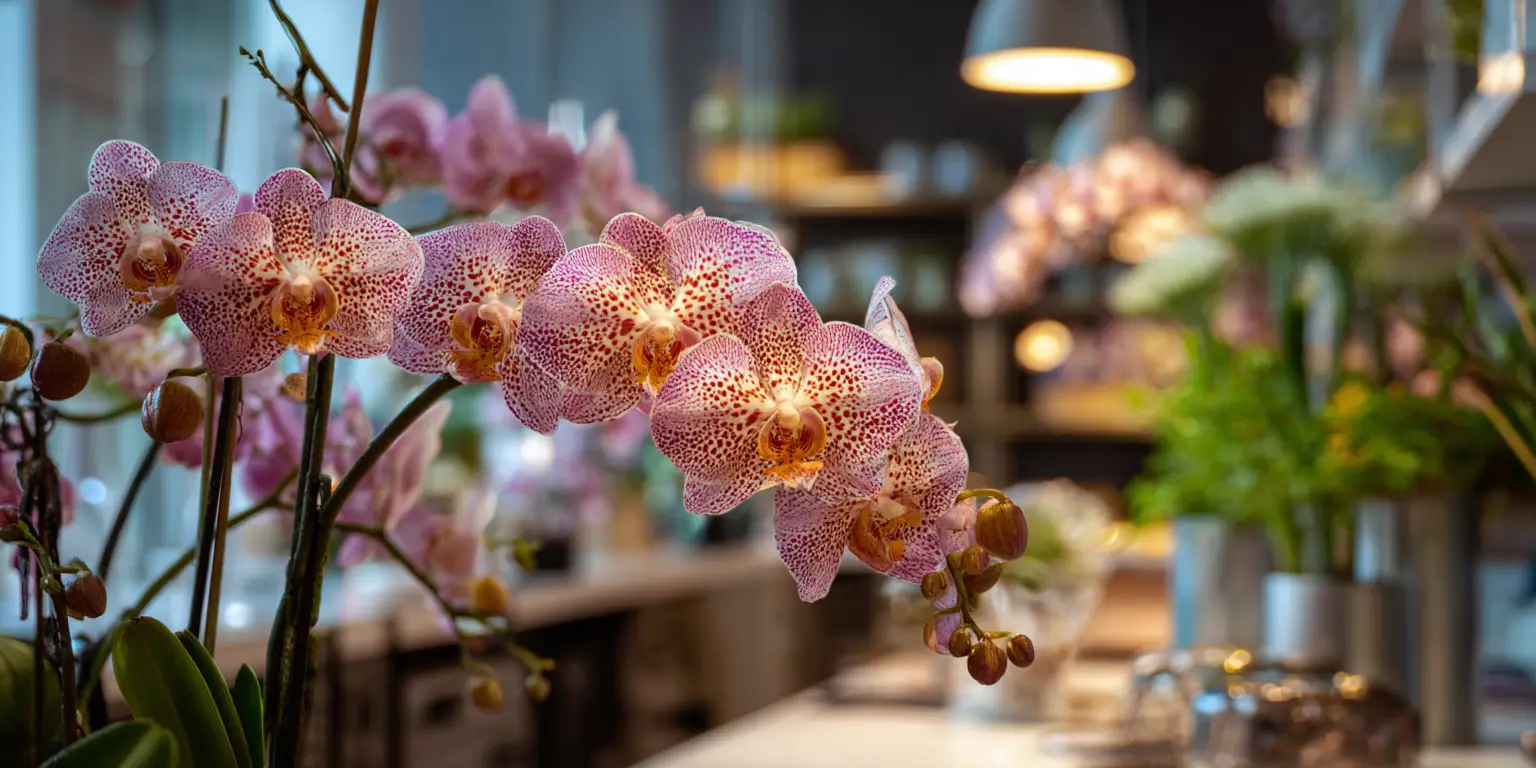
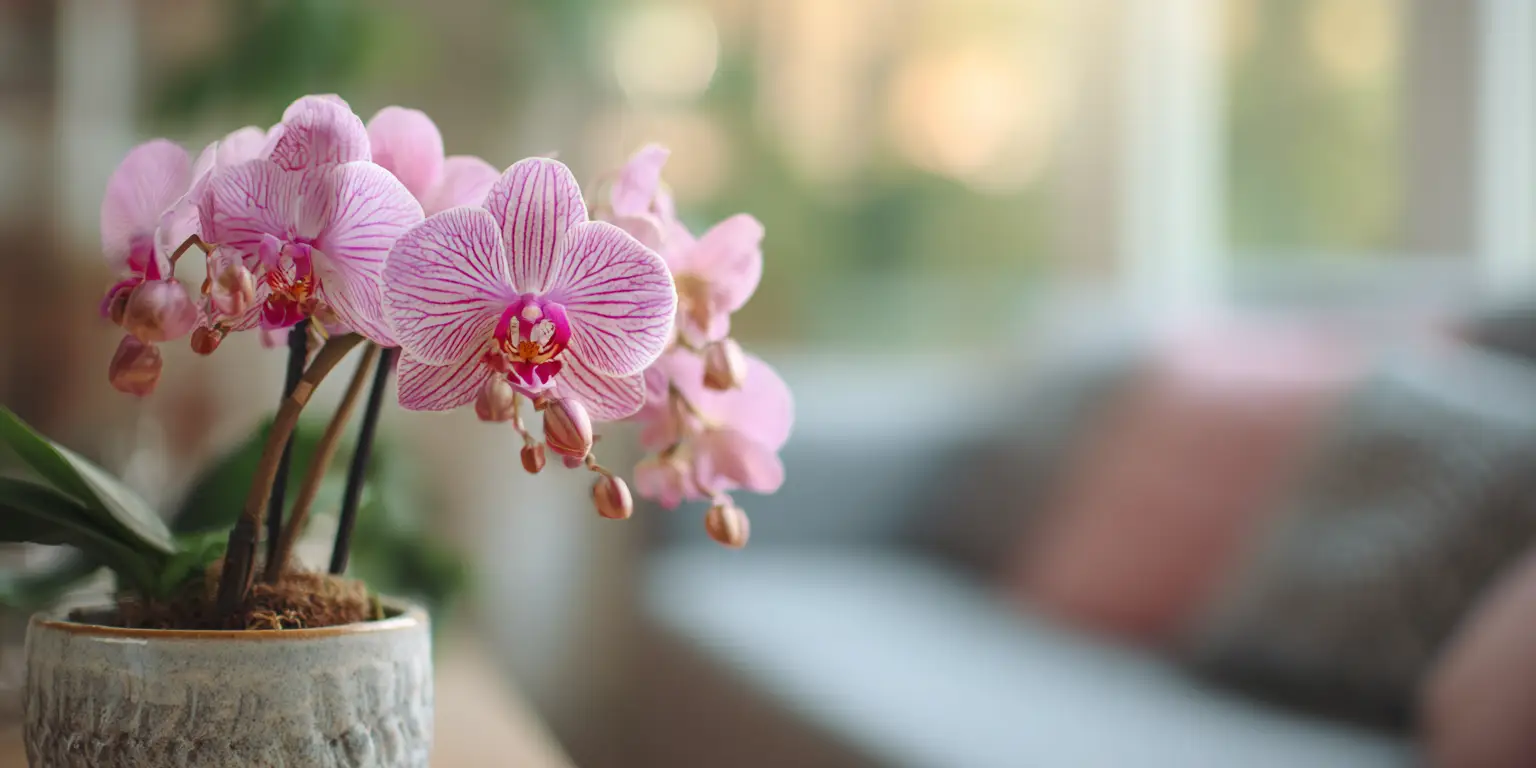
Moth Orchids produce some of the longest-lasting blooms in the plant kingdom, with individual flowers remaining fresh for weeks on the plant. A single plant in full bloom often provides a spectacular display for 2 to 4 months. Flower colors in cultivation range widely – classic white flowers and soft pink flowers were once the norm, but modern hybrids now come in yellow, orange, deep magenta, and rich purple flowers, often with speckles, stripes, or contrasting lips. While not traditionally tied to any birth flower by month, the moth orchid’s timeless beauty makes it a popular gift for birthdays, anniversaries, and special occasions year-round. In all, tropical flowers like Phalaenopsis bring an aura of exotic elegance to homes and offices, rewarding growers with showy blossoms and a touch of the rainforest indoors.
A clear, step-by-step guide to soil, planting, watering, feeding, pruning, and winter care. Includes zone timing, container tips, companions, and quick fixes for common problems.

Bouquet Ideas
Explore simple, beautiful bouquet ideas for the home, gifts, and special occasions from romantic mixes to clean, minimal styles. Each idea includes suggested flower combinations, color palettes, and sizes, with photos for quick inspiration.
Growing orchids in bathrooms and why humidity-loving phalaenopsis thrive near showers
Why your orchid is not blooming and the simple temperature trick that triggers new flowers
Orchid arrangements and centerpieces that make any room feel luxurious and elegant
Orchid meaning, by colour and tradition, honestly explained
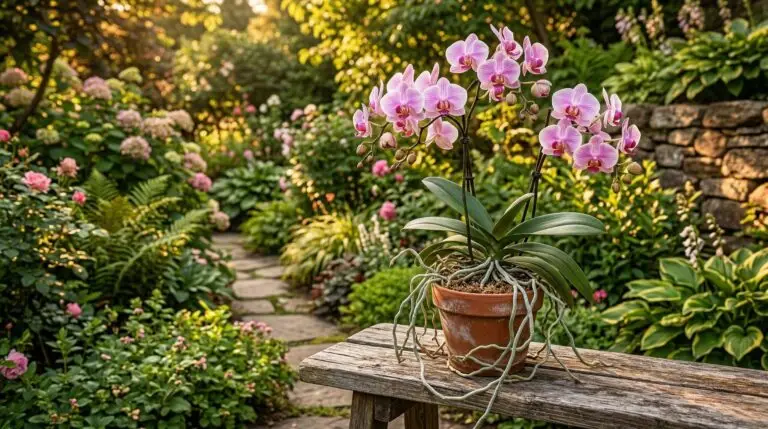
Repotting orchids step by step without killing the plant or damaging aerial roots
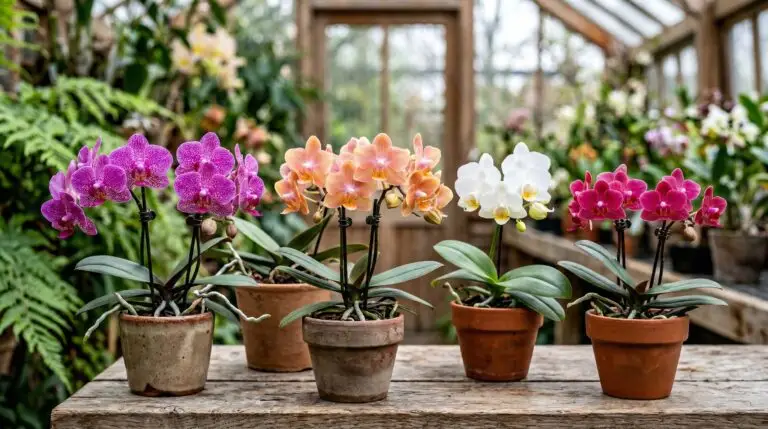
Best moth orchid varieties and the incredible range of phalaenopsis colors and patterns
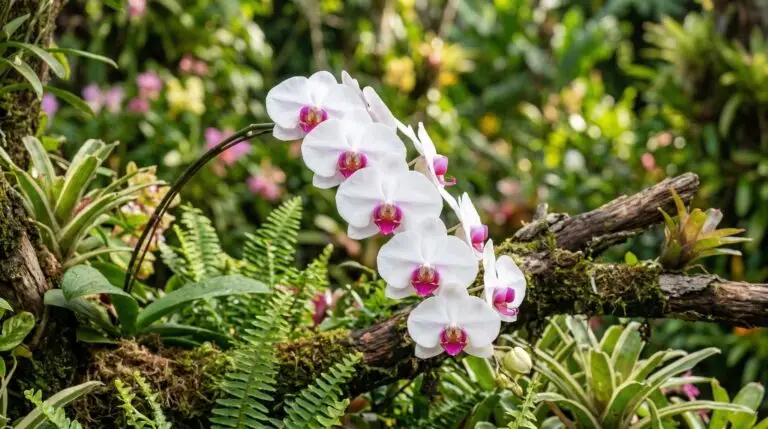
How to care for moth orchids so they bloom again and again for years
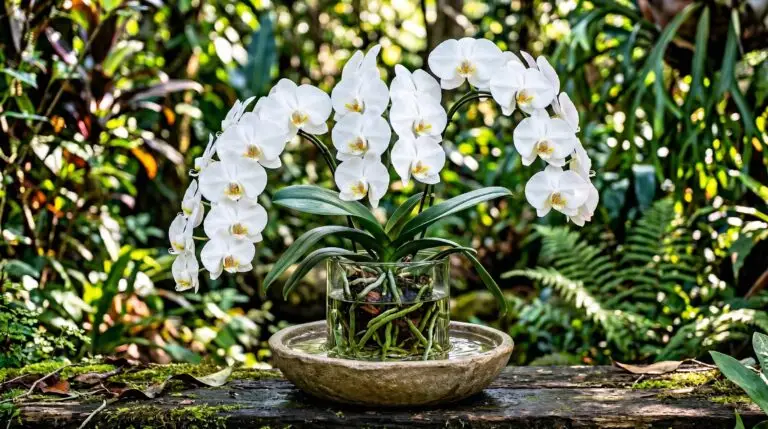
Watering orchids correctly and the ice cube myth versus what actually works
Orchid roots growing out of the pot and why aerial roots are a sign of a healthy plant

What to do when your orchid flower spike turns brown and whether to cut or keep it
🌱 Taxonomy and origin
Phalaenopsis is a genus in the orchid family (Orchidaceae) comprising approximately 60-70 species. It belongs to the subfamily Epidendroideae and is part of the Vandeae tribe of orchids. The genus name Phalaenopsis comes from Greek: phalaina meaning “moth” and opsis meaning “appearance,” referring to the flowers’ resemblance to moths in flight. In horticulture, Phalaenopsis are commonly called moth orchids (or sometimes “moon orchids”). Taxonomically, several formerly separate genera (such as Doritis) have been merged into Phalaenopsis, so older hybrid names may have changed to reflect this unified classification.
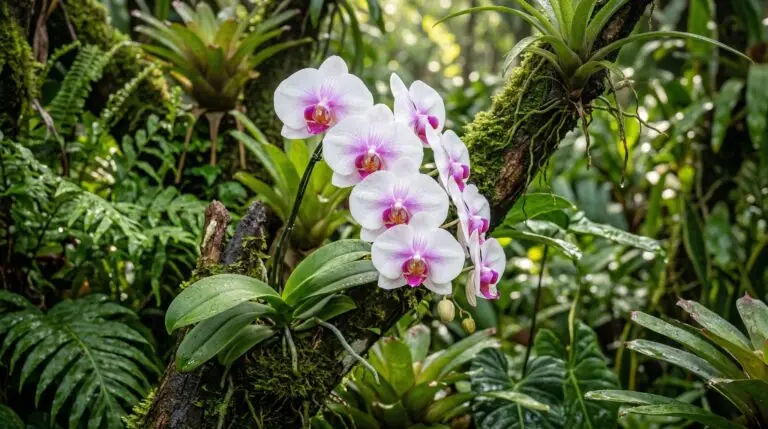
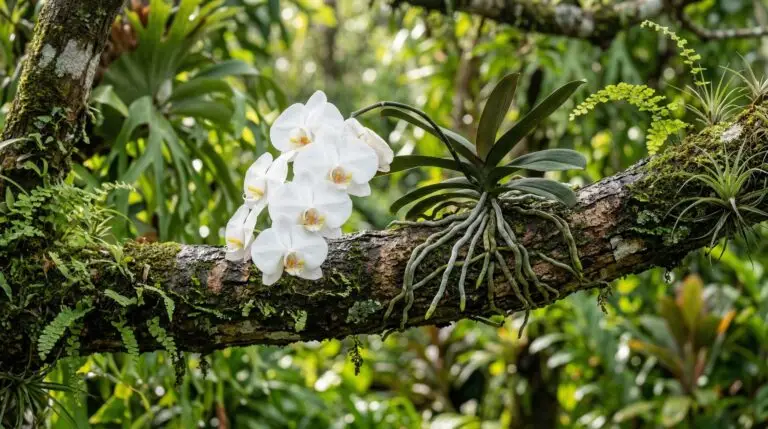
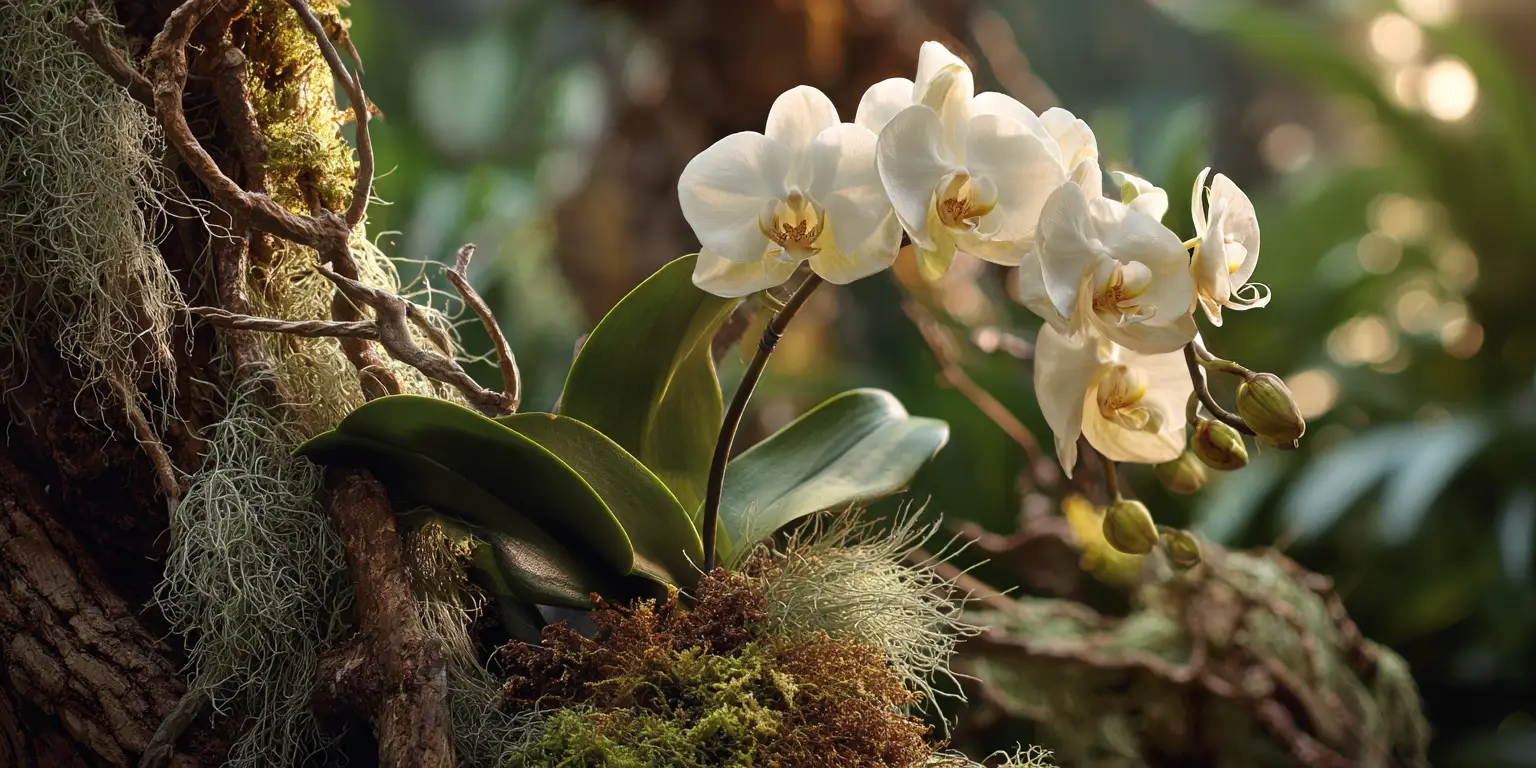
In the wild, moth orchids are native to tropical and subtropical regions of Asia and Australia. Their natural range extends from the Himalayan foothills and southern India through Southeast Asia (including Thailand, Vietnam, and Malaysia), across the Indonesian and Philippine archipelagos, and into New Guinea and northern Australia. These orchids are tropical flowers that inhabit warm, humid lowland forests and mountain jungles. They typically grow as epiphytic plants, clinging to tree trunks or branches with their thick aerial roots. Some species are lithophytic, meaning they can also grow on rocks in mossy, shaded environments. In their native habitat, Phalaenopsis enjoy constant warmth, abundant rainfall or moisture, and dappled light under the forest canopy. The climate of their origin is generally frost-free and humid year-round, with temperatures often ranging from about 70-85 °F (21-29 °C) in the day and rarely dropping below 60 °F (15 °C) at night.
European botanists first described Phalaenopsis orchids in the 19th century. The genus was established in 1825 by the Dutch botanist C.L. Blume, who named it after observing a specimen’s flowers that he mistook for a cluster of moths at dusk. Since then, moth orchids have been cultivated and hybridized extensively. Today’s modern Phalaenopsis hybrids often have complex lineage involving many wild species. Commercial orchid growers in places like Taiwan and the Netherlands have registered tens of thousands of hybrids, resulting in the abundant variety of colors and patterns available to consumers. Despite their exotic origins, these orchids have become commonplace houseplants around the globe, a testament to their adaptability and the success of dedicated breeding programs.
🌸 Bloom time
Under cultivation, moth orchids typically bloom once a year, though the timing can vary with the hybrid and growing conditions. In many cases, Phalaenopsis will initiate a flower spike in the cooler months of fall or early winter. The buds develop slowly and then open in succession, often leading to full bloom in late winter or early spring. Traditionally, the large white and pink Phalaenopsis hybrids (often derived from species like Phalaenopsis amabilis or P. schilleriana) flower in the spring. These types often benefit from a slight drop in night temperature (around 55 °F or 13 °C for a couple of weeks in autumn) to induce spiking. In contrast, some modern miniature and novelty hybrids are bred from summer-blooming species and sunlight requirements that do not need a cool trigger, these may bloom at other times of year, even in summer, given steady warm conditions.
Once in bloom, a healthy moth orchid is notable for the exceptionally long duration of its flowers. Each individual bloom can remain open and attractive for several weeks, and a well-grown spike can continue flowering for 2-3 months or more as new buds open sequentially. It’s not unusual for the entire blooming period to last up to four months from the opening of the first flower to the fading of the last. After the main flowering, if some buds remain or side branches form, the display can extend even longer. Growers often find that their Phalaenopsis provide color through the winter when few other houseplants bloom, and well into spring. With good care, moth orchids will flower repeatedly once a year. After blooming, the plant will enter a rest and growth phase, producing new leaves and roots in preparation for the next bloom cycle. Patience is key – most Phalaenopsis require several months of vegetative growth before they have the energy to set buds again for another round of beautiful blooms.
📏 Height and spread
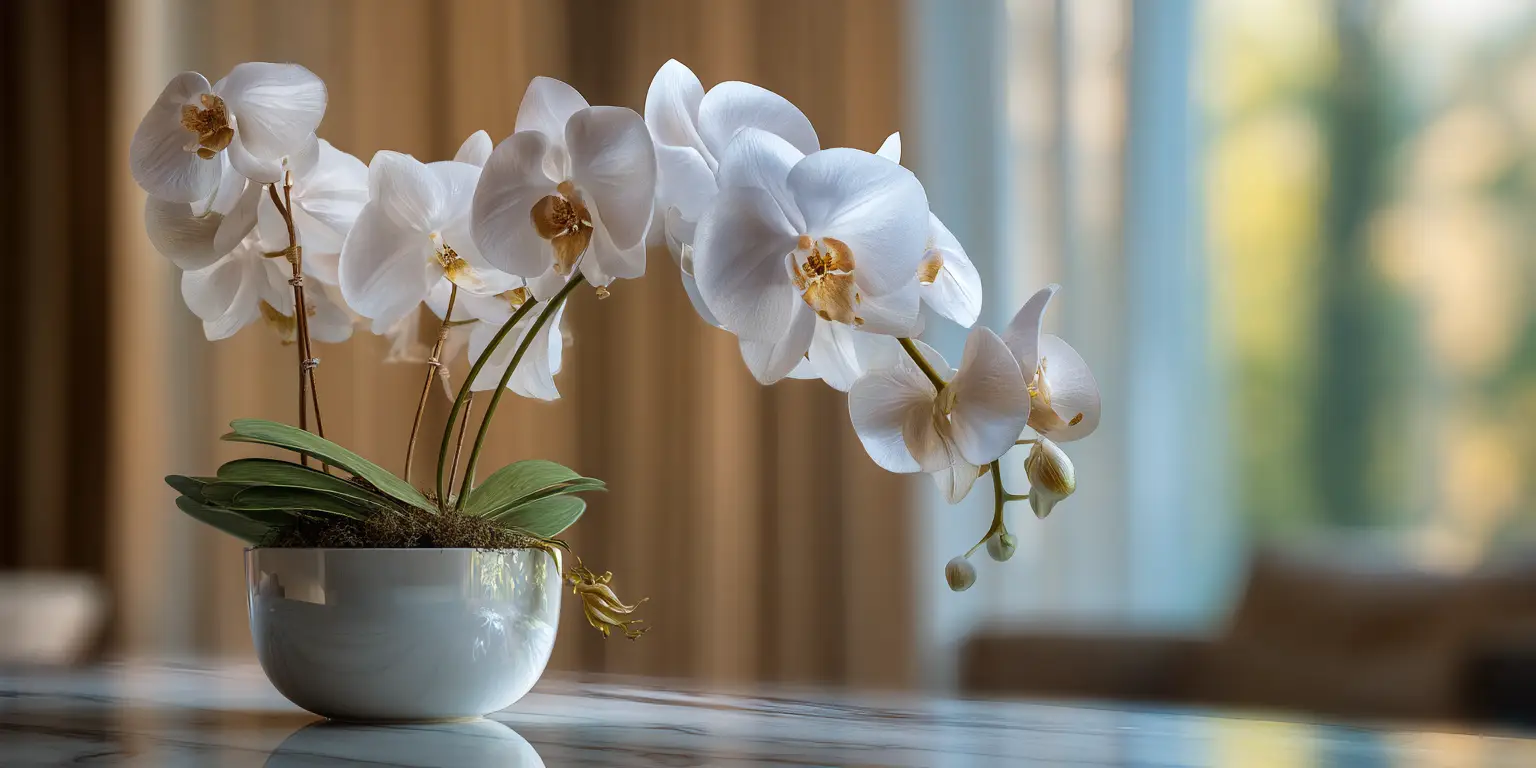
Moth orchids are compact, low-growing epiphytes with a short stem and a small footprint, making them well-suited to indoor cultivation. The plant’s height and spread can vary slightly by hybrid or species, but generally Phalaenopsis have a rosette of a few broad leaves from which the flower spike emerges. A typical mature Phalaenopsis has 4 to 6 fleshy leaves that are arranged in two opposite rows. Each leaf is oblong or elliptic in shape, leathery in texture, and usually 8-12 inches long (20-30 cm) in larger varieties (some species’ leaves can reach 18 inches). The leaves often span horizontally, so the overall leaf spread of an adult plant is usually around 10-12 inches (25-30 cm) across. In some cases, older specimen plants with many leaves can approach 18-24 inches (45-60 cm) in spread, but this is uncommon in standard home conditions.
The upright or arching flower spike adds to the height when the plant is in bloom. A standard Phalaenopsis flower spike typically grows to about 18-24 inches tall (45-60 cm), though some may be a bit shorter or taller. Staked spikes often rise roughly 2 feet above the pot. Each spike carries multiple blooms (commonly 6-20 flowers, depending on hybrid and cultivation). The individual flowers themselves can be large – in traditional large-flowered hybrids, blooms are around 3-5 inches across (7-13 cm). Dwarf or miniature Phalaenopsis, by contrast, have much smaller proportions: their leaves may be only a few inches long, and their flower spikes perhaps 6-12 inches tall, with blooms about 1-2 inches wide. These mini varieties can be as short as 6-8 inches in total height, ideal for limited space. In summary, the moth orchid is a relatively small plant: a broad, leafspan of under 2 feet and a vertical presence of 1.5-2 feet when in flower. This manageable size contributes to its popularity as a houseplant, since it can fit on windowsills, desks, or shelves without difficulty. The plant’s growth habit is monopodial, meaning it grows upward from a single growing point without branching, so it maintains a neat form over time.
☀️ Light
Providing the right light is crucial for Phalaenopsis, as their natural environment is the shaded understory of tropical forests. Moth orchids thrive in bright, indirect light but should be protected from harsh direct sun. In practical terms, an east-facing window is often ideal: it offers gentle morning sun and bright light for several hours, without the intense midday rays that could scorch the leaves. A shaded south or west-facing window can also work, as long as the plant is not in the path of direct noonday sun (sheer curtains or a few feet back from the window can diffuse strong light). The goal is to emulate dappled sunlight, as if under a tree canopy – sometimes described as dappled sunlight or partial shade conditions.
The sunlight requirements for moth orchids translate to roughly 1,000-2,000 foot-candles of light intensity (which is considered medium light for houseplants). In too low light (deep shade or far from any window), a Phalaenopsis may survive but will grow slowly and fail to bloom. Signs of insufficient light include very dark green, limp leaves and no flowering. On the other hand, too much light or direct sun can cause yellowing of the leaves or patches of sunburn (brown, dried spots). The leaves of a well-lit Phalaenopsis are typically medium olive-green, if they turn yellow-green or reddish, the light might be excessive. Indoors, avoid placing moth orchids in direct summer sun, especially behind glass which can amplify heat.
Artificial lighting can supplement or replace natural light for Phalaenopsis. Many growers successfully bloom these orchids under fluorescent grow lights or LED plant lights. Position the lights on a timer for about 12-14 hours a day and keep the plants a suitable distance from the bulbs (usually a foot or two, depending on light strength) to provide a consistent level of illumination. Whether using natural or artificial light, ensure the plant gets a day-night cycle, darkness at night is as important as light by day. In summary, Phalaenopsis prefer bright, filtered light. Meeting their light needs will encourage robust growth and regular blooming, whereas improper light is one of the most common reasons a moth orchid might refuse to flower.
💧 Water
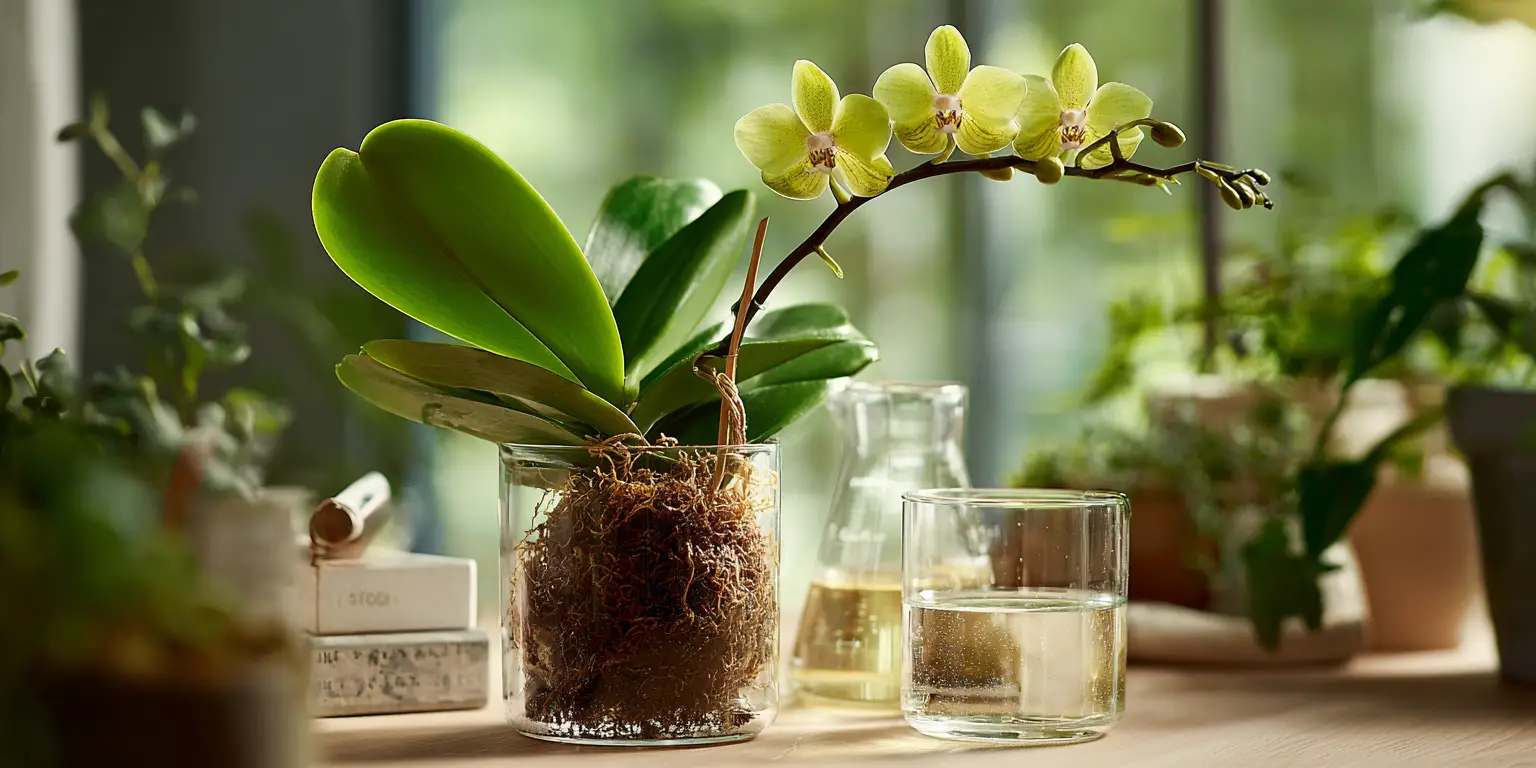
Watering moth orchids correctly is one of the most important aspects of their care. In nature, Phalaenopsis orchids receive frequent rain and abundant humidity, but their roots are exposed to the air, which allows them to dry between showers. In cultivation, the goal is to keep the orchid’s potting medium evenly moist but never waterlogged. The mantra “water thoroughly, then let it dry slightly” applies well to orchid care. When it’s time to water, give the plant a good soak: run lukewarm water through the potting mix until it is fully saturated and water drains out of the pot’s holes. This ensures all roots get moisture. After watering, let the pot drain completely, the plant should not sit in a tray of standing water. Allow the top layer of the potting mix to approach dryness before watering again. Typically, in a moderate home environment, watering once every 7-10 days is sufficient. In warm, dry weather or if the home is heated and dry, watering might be needed every 5-7 days, whereas in cool, humid conditions it could be extended to 10-14 days. It’s best to feel the potting medium with a finger – if it feels barely damp or almost dry, it’s time to water. The thick, silvery-green roots of Phalaenopsis are also an indicator: when dry, they turn silvery-white, when freshly watered, they turn green. This color change (visible if the orchid is in a transparent pot) can guide your watering schedule.
Always use room-temperature or tepid water for watering. Cold water can shock the sensitive roots and cause tissue damage, so avoid using icy water. In fact, a common but misguided practice is the “ice cube” method of watering orchids. Placing ice cubes on the medium to slowly release water has been marketed as a convenient trick, but it is not recommended for tropical orchids like Phalaenopsis – the cold can harm the roots and the constant localized chill is unnatural for a plant that never experiences frost in the wild. It is much better to thoroughly water with tepid water. If using tap water, let it sit out overnight to reach room temperature and to allow chlorine to dissipate, or use filtered water if your tap water is very hard.
Watering should ideally be done in the morning. This allows any moisture that gets on the leaves or in the crown (the center of the leaf rosette) to dry out during the day. Water sitting in the crown overnight can lead to crown rot, a deadly condition. To prevent this, you can use a watering can with a narrow spout to direct water only into the potting media, not over the foliage. If water does splash into the crown, gently blot it out with a paper towel.
Phalaenopsis also appreciate humidity in the air. While they can adapt to typical household humidity (around 30-50%), they truly thrive when humidity is slightly higher, in the range of 50-70%. To increase humidity around your orchid, you can place the pot on a humidity tray (a shallow tray filled with pebbles and water, with the pot sitting on the pebbles but not touching the water) or group orchids and other plants together, which naturally raises the local humidity. Good air circulation is important too – stagnant, damp air can encourage disease, so ensure the area has gentle airflow (a small fan in the room, not blowing directly on the plant, is helpful in very humid setups). By striking the right balance of thorough watering and adequate drying, along with maintaining humidity, you will mimic the moth orchid’s rainforest environment and keep its roots healthy. Consistency is key: try to water on a regular schedule rather than in erratic bursts, and your Phalaenopsis will reward you with strong growth and reoccurring blooms.
🌍 Soil and pH
Unlike typical terrestrial plants, Moth Orchids do not grow in regular soil and will quickly perish if planted in standard potting mix. Phalaenopsis are epiphytes, so their roots are adapted to cling to bark and absorb water from rain and humid air. The proper “soil” for a moth orchid is a special orchid potting mix that provides excellent drainage and airflow to the roots. A classic orchid mix for Phalaenopsis is composed largely of coarse bark chunks (often from fir or pine bark). Bark allows water to flow through freely and mimics the tree surfaces these orchids naturally grow on. Many commercial orchid mixes also include additives like perlite (to hold some moisture and improve aeration), charcoal (to keep the mix sweet and prevent decay), and sometimes chunks of coconut husk or cut sphagnum moss to retain a bit of moisture. The key is that the medium should be open and chunky – it should never compact into a dense mass. In a proper orchid mix, you can usually see air gaps between pieces, and when you water, the water runs out easily. Potting and pH go hand in hand: because many of the components (bark, etc.) are slightly acidic, Phalaenopsis generally experience a mildly acidic root environment. They prefer a soil pH on the acidic side, roughly in the range of pH 5.5 to 6.5. This acidity helps with nutrient availability. However, they are quite tolerant and will also do fine in neutral conditions, orchid mixes that range from pH 5 up to about 7 are generally acceptable. It’s rare to measure pH for an orchid pot, but using a balanced fertilizer and occasionally flushing the pot with distilled water will usually keep the medium’s pH in a healthy range.
Many Phalaenopsis are sold potted in pure sphagnum moss. While sphagnum can be a suitable medium in controlled conditions, it retains water much more than bark does. In inexperienced hands, orchids in moss are often overwatered because the moss feels dry on top but stays very wet around the roots. Constantly wet moss can suffocate roots and cause rot. If you have a moth orchid in sphagnum, be especially careful to let it dry significantly before each watering, or consider repotting it into a bark-based mix for easier care. Repotting should be done every 1 to 2 years for Phalaenopsis. Over time, bark breaks down and becomes water-logged and sour, so refreshing the mix keeps the plant healthy. The best time to repot is shortly after the orchid has finished flowering and as it starts to produce new leaves or roots. Choose a pot only slightly larger than the current one, as Phalaenopsis like to be somewhat snug in their pots. Clear plastic orchid pots with drainage holes are popular because they allow light to reach the roots (Phalaenopsis roots can photosynthesize) and make it easy to monitor root health and moisture. When repotting, gently remove all the old medium from the roots, trim away any dead or rotted roots (which will be brown/mushy, healthy roots are firm and green or silvery), and settle the plant in fresh mix, spreading the roots among the bark pieces. Do not bury the bottom leaves, only the roots should be in the medium, and the base of the plant (crown) should sit at the surface to avoid rot.
Because orchid bark and other soilless media contain little nutritional content, regular feeding is important. Moth orchids benefit from a balanced, water-soluble fertilizer applied at low strength. A common formula among growers is “weakly, weekly” – fertilizing every week with a quarter-strength solution. Alternatively, you can feed at half-strength about twice a month. Use a balanced orchid fertilizer (such as 20-20-20 or a special orchid formulation) that includes micronutrients. During active growth (spring and summer), consistent feeding supports new leaves, roots, and future flower spikes. In the winter, when growth may slow, you can fertilize less often (once a month) or at a weaker concentration. Always apply fertilizer to an already watered root system (never to dry roots, which can be burned by the nutrients). It’s also good practice to flush the pot with plain water occasionally (for example, every fourth watering use just water with no fertilizer) to wash out any accumulated salts. By using a proper orchid medium and managing nutrition and pH, you create optimal conditions for your Phalaenopsis to absorb water and nutrients, leading to a vigorous, blooming plant.
❄️ USDA hardiness
Phalaenopsis are warmth-loving tropical plants and are not cold-hardy in the way garden perennials are. In terms of USDA hardiness, moth orchids can only survive outdoors year-round in the very warmest zones. Generally, they are hardy to about USDA Zone 10b or 11, meaning consistent temperatures that never drop near freezing. In practical terms, this includes tropical climates like parts of south Florida, Hawaii, or Puerto Rico. Even in those areas, growers often keep them in protected shade houses or on lanais, because while the ambient climate is suitable, the orchids still need controlled light and humidity. For most regions, Phalaenopsis orchids are treated strictly as indoor plants or greenhouse specimens. They cannot tolerate frost or temperatures near freezing, exposure to cold (below about 50 °F or 10 °C) will cause damage to the leaves and flowers, and prolonged cold can kill the plant. Tropical flowers like these are built for steady warmth.
The ideal temperature range for moth orchids is roughly 65-85 °F (18-29 °C) during the day, with a nighttime drop to around 60-70 °F (15-21 °C). Typical household temperatures (around 70-75 °F in the day and 60s at night) are quite suitable. They actually prefer a slight drop at night, as this mirrors natural conditions and can help trigger blooming, but the drop need not be extreme. Just avoiding continuous warmth with no nighttime cooling is beneficial. What’s most important is to avoid sudden temperature extremes. Do not expose a Phalaenopsis to drafts of cold air (for instance, right next to an exterior door that opens in winter or under an air conditioning vent). Likewise, avoid placing it near heating vents or radiators that blow hot, dry air, as this can desiccate the plant. If you summer your orchid outdoors (a practice some growers use in climates with gentle summers), be very mindful of temperature. Only put the plant outside when night temperatures reliably stay above 60 °F (16 °C). Place it in a shady, sheltered spot – no direct sun and protected from strong winds. Many growers will bring their orchids outdoors in late spring and then bring them back inside in late summer or early fall, ensuring they are never exposed to chilly nights. This outdoor sojourn can provide increased humidity and airflow, which orchids enjoy, but it also comes with risks (pests or sudden weather changes), so it’s optional.
In summary, outside of true tropical zones, treat your moth orchid as a houseplant. Even in warm climates, remember that they want a warm and humid environment year-round. If you live in Zone 9 or lower, definitely keep the orchid indoors except perhaps for short, controlled outings. The mention of USDA hardiness zones is mostly academic for Phalaenopsis, as their cultivation is predominantly indoors. Instead of winter hardiness, think of them in terms of minimum temperature: never let a Phalaenopsis orchid experience temperatures below ~55 °F (13 °C). Within their comfort range, they will grow happily. Any exposure to cold should be brief and not severe – for example, a quick move from the car to house in winter is fine, but don’t leave the plant in a cold car or outside on a chilly day. By keeping these orchids in their preferred temperature range, you ensure they stay healthy and productive.
🌼 Propagation and longevity
Propagating Phalaenopsis orchids is a slow process, and for most home growers it can be a challenge. In commercial horticulture, moth orchids are propagated either by seed or by cloning in tissue culture labs. Orchid seeds are extremely tiny and require symbiotic fungi or sterile nutrient media to germinate, which is beyond the scope of casual cultivation. Thus, propagation by seed is not practical at home. Instead, the primary vegetative propagation method for Phalaenopsis is through keikis, a Hawaiian term meaning “baby”. A keiki is a small plantlet that is genetically identical to the mother plant. In moth orchids, keikis sometimes form naturally on nodes of the flower spike (after the orchid has finished blooming) or less commonly at the base of the plant. Not all Phalaenopsis will produce keikis, but some hybrids and species do so more readily, especially if conditions are warm and hormones accumulate at a node.
If a healthy green node on a spent flower spike starts to swell and produce leaves and roots, congratulations – that is a keiki developing. To propagate it, allow the keiki to remain on the mother plant until it has at least a couple of small leaves and a cluster of roots about 2-3 inches long. This can take several months. Once the baby orchid is sufficiently grown, it can be removed by cutting the spike a half inch above and below the keiki (to keep a little stem attached) or gently twisting it off if it’s loosely connected. Pot the keiki in a small pot with fresh orchid bark mix, and keep it in a humid, warm environment to encourage it to establish. Young orchids prefer slightly more moisture (but still with good aeration) to stimulate root growth. It may take a few years for a keiki-grown Phalaenopsis to reach blooming size, but essentially you have cloned your orchid. Some growers also use keiki paste (a hormone cytokinin paste) on dormant nodes of a flower spike to encourage a keiki to form artificially. This technique can induce propagation but needs careful application and does not always succeed.
Beyond keikis, Phalaenopsis do not have pseudobulbs or offshoots that can be divided, since they grow from a single stem. You cannot take a cutting from a leaf or break the plant in half to get two, a Phalaenopsis will not branch in that way. Each plant has one growing point at its crown. The only time you might get a “division” is if the plant, over many years, happens to produce a basal offshoot (a secondary crown) near the base – that could theoretically be separated once it has roots of its own, but this is uncommon. Thus, most hobbyist propagation comes down to encouraging keikis on flower spikes.
In terms of longevity, a well-cared-for moth orchid can be a long-lived houseplant. Phalaenopsis are perennials that do not have a fixed lifespan, they can live for many years, often decades. It’s not unusual for enthusiasts to have Phalaenopsis orchids that are 10-15 years old and still healthy. With proper care, there is no reason a Phalaenopsis can’t continue growing indefinitely, as they continually produce new leaves and roots. Over time, the plant may naturally lose its oldest bottom leaves as new ones form at the top, which can give the appearance of a slender “stem” at the base (this is just the old leafless part of the stem). In cultivation, growers sometimes decide to “reset” an older orchid by cutting off the top portion that has all the leaves and roots and replanting it, if the lower stem has become very elongated, however, this risky approach is usually only done by experienced growers.
Most importantly, if you maintain good culture – adequate light, proper watering, periodic repotting, and protection from pests – your Phalaenopsis will continue its yearly cycle of growth and bloom for a very long time. In addition to their beautiful flowers, this longevity makes them rewarding houseplants, they are not throw-away gift plants but living specimens that can accompany you for years. In fact, many people treat moth orchids as heirloom plants, passing particularly special specimens or rare hybrids along to other growers or down to the next generation. In short, while propagation is slow and limited, the effort is compensated by the plant’s long life. Each Phalaenopsis you nurture can provide you with countless bloom seasons over the span of its life.
👃 Fragrance
Fragrance in moth orchids is a feature that varies widely among different species and hybrids. Most of the common Phalaenopsis hybrids sold in garden centers and supermarkets are unfortunately not fragrant – their appeal lies in the size, color, and longevity of the flowers rather than scent. If you sniff a typical large white or pink Phalaenopsis flower, you may detect little to no fragrance. This is because many of the species used to create these hybrids (like Phalaenopsis amabilis or P. aphrodite) are not strongly scented. Over years of hybridization, breeders focused on form and floriferousness, often neglecting fragrance. As a result, the “standard” moth orchid on the market is generally considered fragrance-free to the human nose.
However, Phalaenopsis as a genus is not entirely without fragrance. There are several species known for producing pleasing scents, and these characteristics have started to find their way into some newer hybrids. For example, Phalaenopsis violacea and Phalaenopsis bellina (both from Borneo) have notable fragrances described as sweet, spicy, or citrusy. These are usually more evident in the morning hours, possibly an adaptation to attract specific pollinators at certain times of day. The fragrance of P. bellina, for instance, can be quite delightful – a mix of fruity and floral notes – but one has to be close to the flower to smell it. Phalaenopsis schilleriana, a Philippine species with pink blooms, is another that carries a light rose-like fragrance. When these fragrant species are used in hybridizing, some of their offspring inherit the scent. Specialty orchid growers now offer hybrid Phalaenopsis that advertise fragrance as one of their selling points. These are often termed “novelty Phalaenopsis” and may have smaller, waxy flowers in bright colors along with a nice perfume.
If fragrance is important to you, seek out those particular hybrids or species. Keep in mind that even fragrant Phalaenopsis are not as strongly perfumed as some other orchids or flowers (for example, the intense fragrance of a cattleya orchid or a gardenia). The scent of a moth orchid, when present, is usually subtle and meant to be enjoyed up close. It won’t fill a room like a lily or jasmine might. Some people describe having to put their nose right up to the flower to catch the gentle whiff. Also, temperature and time of day affect orchid fragrance – warmth often intensifies the scent, and morning is a common time for it to peak. In conclusion, while the majority of moth orchids are not fragrant, there are select ones that provide a lovely bonus scent in addition to their visual beauty. As breeding continues, fragrance is becoming a more sought-after trait, so we may see more sweet-smelling Phalaenopsis in the future. For the average grower, though, expect your moth orchid to be grown for looks rather than smell, and consider any hint of fragrance a pleasant extra.
⚠️ Toxicity and pet safety
Good news for pet owners and parents – moth orchids are considered pet-safe plants. Unlike some flowering houseplants that can be poisonous if chewed or ingested, Phalaenopsis orchids are non-toxic to cats and dogs (and also to people). The ASPCA (American Society for the Prevention of Cruelty to Animals) lists Phalaenopsis orchids as safe, meaning they do not contain known harmful substances that would cause organ damage or serious illness in animals. If a curious cat takes a bite out of an orchid leaf or a dog mouths a fallen flower, it is unlikely to experience any poisoning symptoms. This safety factor has made moth orchids even more popular as a home indoor flowers choice, since one doesn’t have to worry about severe consequences if a pet interacts with the plant.
That said, “non-toxic” does not mean “edible” or completely free of any ill effects. If a cat or dog were to eat a large amount of orchid plant material, it might get an upset stomach simply because its digestive system isn’t used to processing that kind of material. You might see mild vomiting or diarrhea in such a case, which usually resolves on its own. But this is a far cry from the life-threatening reactions that truly poisonous plants (like lilies or oleander) can cause. In general, pets tend to ignore orchids, as the plants don’t have strong odors or flavors that attract attention. Sometimes cats are tempted by the movement of the long flower spikes or the dangling blooms and may paw at or snap the spikes – this is more of a mechanical issue (broken stems) than a toxicity issue. If you have a very playful cat, you might need to position your orchid out of reach to protect the blooms from being knocked over or batted.
Moth orchids are also safe for humans. There are no irritants in the sap that would cause skin rashes (unlike, say, some euphorbias), and touching or handling the plant is harmless. Orchid blooms are even used as cake decorations or in salads at times, indicating their general safety (though ensure no pesticides are on them if ever using for food garnish!). Importantly, Phalaenopsis do not belong to the few orchid genera that are noted for causing contact dermatitis in rare cases – those are mostly dendrobiums with certain compounds on the canes. So from a toxicity standpoint, you can place a Phalaenopsis in any room without worry. They are often recommended as one of the top pet-safe houseplants, along with others like spider plants and African violets, for households with animals. In summary, if you’re looking for a beautiful flowering plant and you share your home with pets or children, the moth orchid is a smart and safe choice. Just be sure any mischievous chewers don’t uproot the plant or make too much of a salad out of it, for the plant’s sake!
🌿 Vase life
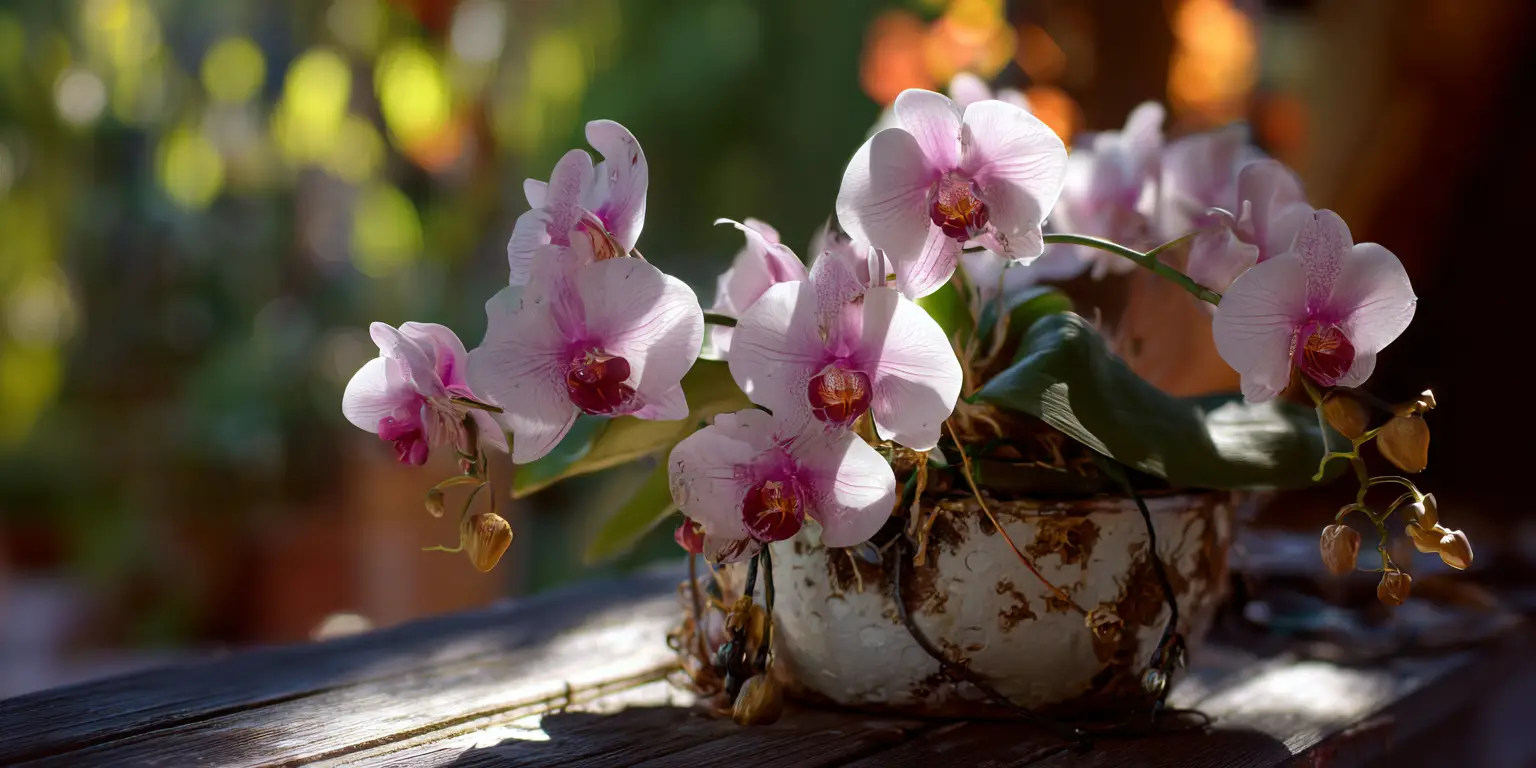
Phalaenopsis orchids are beloved as potted plants, but they can also be used as cut flowers in arrangements and bouquets. The vase life of cut moth orchid blooms is generally quite good, though not as extraordinary as when they are on the live plant. If you cut an entire flower spike (inflorescence) from a healthy Phalaenopsis and place it in water, the flowers can last around 1 to 2 weeks in a vase. Some florists manage to extend this to about 3 weeks under ideal conditions, while a few report even longer for certain robust varieties. On average, however, expecting about 10-14 days of display from cut Phalaenopsis flowers is reasonable. This is longer than many typical cut flowers (roses, for instance, often last only a week), which is why orchids are highly valued in the floral industry despite their higher cost.
To maximize the vase life of Phalaenopsis blooms, a few steps are helpful. First, cut the flower spike early in the day using a sharp, clean knife or scissors. Immediately place the cut end in water. If the spike is very long, you can trim it down to a convenient length, always cut at an angle to increase the surface area for water uptake. Remove any spent blooms or buds that are wilted, and strip off any small bracts or leaves on the lower portion of the spike that would sit below the water line (to prevent rot in the water). Use a clean vase with fresh water, ideally adding a floral preservative (the packets that often come with bouquets) which contains sugars and bacteria inhibitors. Phalaenopsis flowers are sensitive to ethylene gas, which is naturally emitted by aging flowers and ripening fruit. To prevent premature aging (also known as petal shattering or bud drop), keep the vase of orchids away from ripening bananas, apples, or other fruits, and out of direct heat or drafts. Place the arrangement in a cool location with moderate light but no harsh sun on the blooms. Change the water and re-cut the stem end every few days to keep bacteria levels low and hydration high. If done properly, you may notice that the lower flowers on the spike last longest, and if there were unopened buds when cut, some may continue to open in the vase.
One consideration is that when a Phalaenopsis flower spike is cut for a vase, those blooms are no longer being supported by the plant and thus won’t last as long as they would if left on the orchid. On the live plant, as noted, blooms can last for months, nourished continuously by the orchid. In a vase, the orchid’s blooms are severed from that nutrient and water source, so their life is naturally shorter. Still, orchid blooms make stunning cut flowers for special occasions. Moth orchid sprays are often used in weddings (cascading bridal bouquets or centerpieces) because of their elegant form and decent vase life. Individual blossoms can even be used as decorative accents – for example, a single Phalaenopsis flower can float in a bowl of water as a table centerpiece, lasting several days in that state. If you’re cutting blooms from your own plant, keep in mind that you are sacrificing that flower spike (it won’t regrow more buds once cut). Some people choose to enjoy the blooms on the plant for a month or two, then, if the flowers are still in good shape and they want to change up their display, cut the remaining spike to use in a vase. In any case, whether on the plant or in a vase, the long-lasting nature of Phalaenopsis flowers is one of their star qualities, contributing to their reputation as a flower with excellent endurance.
🐛 Pests and diseases
Moth orchids, when grown indoors under good conditions, are relatively hardy and not frequently plagued by pests. However, they are not completely immune to problems. A few common pests can infest Phalaenopsis, especially if you have other plants or if new plants are introduced to your collection. The most frequent insect pests are mealybugs and scale insects. Mealybugs are small, soft-bodied insects that appear as white, cottony masses often in the nooks and crannies of the plant (like where leaves meet the stem, or on the flower spike). They suck sap and excrete sticky honeydew, which can lead to sooty mold. Scale insects can be harder to spot at first, they often look like tiny brown or translucent bumps stuck on the underside of leaves or on the stems. Both these pests weaken the plant by sucking its juices and need to be controlled promptly. At the first sign of mealybugs or scale, isolate the affected orchid from others to prevent spread. They can be treated by swabbing the insects with cotton swabs dipped in isopropyl alcohol (which dissolves their protective coating). Insecticidal soap or horticultural oil, applied carefully to coat the pests, can also be effective – ensure to cover all surfaces, and avoid getting these solutions into the potting mix in large quantities. Because orchids have sensitive leaves, always test any treatment on a small area first. Repeat treatments weekly until you see no further signs of the pests. Another occasional pest is spider mites, which are tiny arachnids that thrive in dry conditions, they cause a fine stippling or silvery speckling on leaves and sometimes fine webbing. Increasing humidity and wiping leaves, plus using mite-specific sprays, can control spider mites. Thrips are very small insects that can infest flowers and buds, causing them to become blemished or to drop. They are less common but can be an issue, often requiring an insecticidal treatment due to their small size and mobility.
Apart from insects, orchids might face other problems like snails or slugs (if kept in greenhouse or outdoors, these can chew on roots or flowers at night) or even False spider mites (sometimes called flat mites) which affect orchids in greenhouse conditions. Vigilance is key: regularly inspect the underside of leaves, around the leaf bases, and along the flower spike for any unusual dots, fluff, or residue. Sticky honeydew on leaves or nearby surfaces is a telltale sign of sap-sucking pests.
Diseases in Phalaenopsis often arise from fungal or bacterial infections, frequently linked to improper cultural conditions, especially too much moisture without enough air movement. Root rot is a common affliction if an orchid is overwatered or sitting in a soggy medium. This is caused by fungi (such as Phytophthora or Pythium) that thrive in waterlogged soil and attack the roots. The symptoms are yellowing, floppy leaves and black, mushy roots. To address root rot, the plant should be unpotted, all infected roots removed, and then repotted into fresh, dry medium, with watering greatly reduced until new healthy roots grow. Crown rot is another serious issue – it’s a bacterial or fungal rot (often Erwinia bacteria for example) that sets into the crown of the plant, typically when water has been trapped between the leaves at the center. It appears as a black, mushy decay and often has a foul smell. Unfortunately, crown rot is usually fatal because it destroys the only growing point of a monopodial orchid. Prevention is crucial: never let water sit in the crown for extended periods. If caught extremely early, some growers try to save the plant by applying bactericide/fungicide or cinnamon powder (a natural antifungal) to dry out the rot, but odds of recovery are low if the rot has progressed.
Leaf spotting diseases can occur, such as fungal leaf spots or Botrytis on the flowers. Botrytis cinerea is a fungus that causes tiny brown spots on orchid petals, often seen in conditions that are cool and damp, especially if water sits on petals or there’s poor air circulation. While Botrytis won’t typically kill the plant, it ruins the appearance of the blooms. The best action if you notice a few blossoms with small brown freckles is to remove those affected flowers and improve the environment (increase temperature slightly, reduce humidity or improve airflow, and avoid misting or wetting the flowers). Ensure you are not keeping flowering orchids in overly chilly rooms at night.
Another category of problems are viruses. Orchids are known to suffer from certain viruses like Cymbidium Mosaic Virus (CymMV) or Odontoglossum Ringspot Virus (ORSV), which can also infect Phalaenopsis. Virus symptoms can include streaks or discoloration on flowers (color break), distorted leaves, or a plant that just fails to thrive despite good care. Unfortunately, orchid viruses have no cure. If an orchid is confirmed to have a virus (usually through testing), the best practice is to isolate or discard it to prevent transmission to other orchids, which can happen via sap on pruning tools or even handling. Hobbyists rarely encounter virus issues unless they have large collections or frequently trade cuttings, but it is something to be aware of if an orchid shows unexplained chronic issues.
Lastly, physiological problems can mimic disease: for instance, bud blast (when buds shrivel and drop before opening) is often due to environmental stress like sudden temperature change, ethylene exposure (from fruits or cigarette smoke), or even a change in location or light. If your orchid’s buds drop, think about any recent changes – moving it, drafts, cold nights, or fumes – rather than disease. Similarly, wrinkled or pleated new leaves indicate a period of inadequate water to the roots (either underwatering or roots rotted and not functioning). Addressing the care issue will solve these problems over time.
In summary, pest and disease management for moth orchids is largely about prevention: provide good airflow, correct watering, and keep the plant clean. Quarantine new orchids before placing them near others to avoid introducing pests. Clean your pruning tools with alcohol or flame sterilize them between plants to avoid spreading sap and potential viruses. If an issue does arise, respond promptly – a minor mealybug infestation can be eradicated if caught early, but if allowed to explode it can seriously weaken the plant. With attentive care, Phalaenopsis orchids are generally robust in indoor conditions and will remain pest-free and disease-free, rewarding you with healthy growth and flowers year after year.
FAQ
How can I get my Moth Orchid to bloom again?
A healthy Moth Orchid will generally bloom once per year, but getting it to rebloom requires proper care and a bit of patience. After your orchid’s flowers finish, cut the flower spike down to just above a visible node (if the spike is still green). Sometimes this node can produce a side branch with a few more flowers, though often the plant will rest instead. Continue providing bright, indirect light, correct watering, and regular feeding during the growth phase. Many Phalaenopsis need a slight drop in night temperature for a few weeks (around 60 °F/16 °C nights) to initiate a new flower spike. In the fall, you can allow the plant to experience slightly cooler nights (avoiding anything below 55 °F) to encourage spiking. Once a new spike emerges, return the plant to warm temperatures. Ensuring your orchid gets enough light is crucial – insufficient light is the top reason for failure to rebloom. By maintaining proper light, feeding, and a minor cool period, your Moth Orchid should grow a new spike and bloom again, typically about a year after the previous flowering.
How long do Moth Orchid flowers last?
Phalaenopsis flowers are famous for their longevity. On the plant, the blooms can last for an extraordinarily long time – often 2 to 3 months, and sometimes up to 4 months under ideal conditions. Each individual flower usually remains in good condition for several weeks, and since they don’t all open at once, the display is extended. If you cut the flower spike for use in a vase, the vase life is shorter, typically around 1 to 2 weeks (sometimes up to 3 weeks with excellent care). The longevity can depend on factors like room temperature (cooler rooms prolong bloom life), humidity, and handling. In any case, compared to most other types of flowers, Moth Orchid blooms last significantly longer, which is one reason they are considered such good value as potted flowering plants.
What is the best potting mix for a Moth Orchid?
The best potting mix for a Phalaenopsis orchid is a coarse, well-draining orchid mix that replicates its natural growing conditions on tree bark. Typically, a mix based on fir bark or pine bark chunks is ideal. It can be pure bark or bark blended with other components like perlite (for aeration), charcoal, and a bit of sphagnum moss or coconut husk chips (to retain some moisture). The key is that the medium should allow plenty of air around the roots and not stay waterlogged. Regular houseplant soil is completely unsuitable because it’s too dense and wet for orchid roots. If you buy a Phalaenopsis potted in pure sphagnum moss (a common practice by growers), you might consider repotting it into a bark mix once you bring it home or soon after flowering. Bark-based mix makes watering easier to manage and keeps the roots healthier long term. Always use a pot with drainage holes, and when repotting, choose a slightly small pot – orchids like to be a bit snug. Refresh the potting mix every 1-2 years as the bark breaks down.
Should I cut off the flower spike after it finishes blooming?
It depends on the condition of the spike and your goals. Once all the flowers have fallen, examine the flower spike (the green stem). If it is turning brown or yellow, that means it’s dying back – in this case, it’s best to cut it off near the base of the plant, since it won’t produce more blooms. If the spike remains green and healthy, you have a couple of options: you can leave it as is, or you can trim it to a lower node. Sometimes a green spike will branch or produce a secondary flush of smaller blooms from one of the nodes under the old bloom cluster. To attempt this, locate a plump node on the spike (usually a few inches below where the last flower was) and cut the spike about half an inch above that node. Not every orchid will rebloom from an old spike, but some do. Keep in mind, forcing a secondary bloom this way can slightly stress the plant, as energy that could go to new growth is spent on flowering again. Many growers prefer to cut the spike entirely after blooms drop, to let the orchid focus on growing new leaves and roots, and then a completely new spike in the next season. Both approaches are valid. If you do cut a spike off, use clean, sterilized shears and you might dab a bit of cinnamon on the cut stub as a natural disinfectant.
Are Moth Orchids safe for cats and dogs?
Yes, Phalaenopsis orchids are non-toxic to cats and dogs. You can confidently grow a moth orchid in a home with pets – if a pet chews on a leaf or flower, it should not suffer poisoning. This has been confirmed by organizations like the ASPCA. Many people specifically choose orchids as pet-friendly houseplants. While the plant won’t poison your animal, it’s still wise to discourage pets from gnawing on any houseplant. Ingesting a lot of orchid material could give a cat or dog a mild stomach upset (mainly because of the fibrous plant matter, not any toxin). Also, you’ll likely want to protect the orchid from damage, as a playful cat can break the flower stem or uproot the pot. But strictly in terms of toxicity, moth orchids are safe and pose no known hazard to pets. They’re also safe for children, making them a great choice for households looking for pet-safe plants with beautiful flowers.
Can Moth Orchids grow outside?
Moth orchids can be grown outside only under specific conditions, and in most climates they are better off indoors. They are tropical plants that cannot tolerate cold or frost, so outdoor growth is feasible year-round only in tropical or subtropical regions (roughly USDA Zone 10b and warmer). In those climates, some people mount Phalaenopsis on trees or keep them on shaded patios. However, even in warm areas, these orchids need protection from direct sun and heavy rain. Outdoors they must be in deep shade (like under a porch or tree canopy) and in an environment where humidity is high. In temperate climates, you can summer your orchid outdoors from late spring to early fall, but only if the temperatures are consistently warm (above ~60 °F at night) and you keep the orchid in a sheltered, shaded spot. Moving orchids outside for a few months can give them access to higher humidity and good airflow which they enjoy, but you have to be careful about pests (snails, slugs, insects) and be ready to bring them back inside if it gets too cool. Most growers find it simpler to keep Phalaenopsis indoors year-round, providing conditions with indirect light and controlled temperature. If you do try putting a moth orchid outside in summer, avoid sunburn by keeping it in shade, acclimate it gradually, and check it frequently for pests. Always bring it in before the weather turns cold. Remember, these orchids are not hardy in the way garden plants are – they are fundamentally houseplants in any region that experiences chilly weather.
Interesting tips
- Use clear pots to monitor roots: Phalaenopsis roots are green when healthy and exposed to light, because they can photosynthesize. Growing your moth orchid in a transparent pot makes it easy to check root health and moisture levels. You’ll know when to water by observing root color (silver means dry, green means recently watered), and you can spot any problems like rot early on.
- Avoid the ice cube watering trick: You might hear advice to water orchids with ice cubes, but this is not ideal for a tropical plant. Moth orchids prefer lukewarm water. Ice can shock the roots and cause damage. It’s better to thoroughly water the potting mix under a faucet or by drenching the medium, then let it drain. Consistent, evenly moist conditions (without cold shocks) will keep your orchid happier than the slow melt of ice.
- Provide extra humidity with a pebble tray: If your home is dry, especially in winter with heating, boost humidity around your orchid by placing the pot on a tray filled with pebbles and water. Ensure the pot sits on the pebbles above the water line (not in the water) – this way, as the water evaporates, it creates a humid micro-climate around the plant. Grouping orchids or other plants together can similarly raise local humidity. This mimics their natural environment and can lead to better growth and bloom quality.
- Stake and support flower spikes: When a new flower spike emerges, insert a slender stake (bamboo or plastic) into the potting mix and loosely tie the spike to it with soft ties or clips. As the spike grows, periodically adjust the ties. This support prevents the weight of blooms from bending or snapping the spike. You can decide whether to train it upright or allow a gentle arch. In displays, a gracefully arched spike with blooms looks elegant, many growers let spikes arch naturally or use curved supports for a waterfall effect. Just avoid sudden repositioning of a spike, as they can be brittle – gentle guiding over time works best.
- Keep blooms away from fruit and drafts: Phalaenopsis flowers can be sensitive to ethylene gas, which is emitted by ripening fruits (like apples or bananas). Ethylene can cause blooms and buds to age and drop prematurely. To make the blooms last, don’t display your flowering orchid near a fruit bowl. Also keep the plant out of cold drafts (from open doors or air conditioning vents) – sudden chills can lead to bud blast (buds falling off). A stable, slightly cool room with no cold breeze will let you enjoy the flowers for the longest possible time.
- Encourage a secondary bloom (if desired): If your orchid has finished its main blooming and the spike is still green, you can try to coax a second set of blooms. Trim the spike about half an inch above a lower node on the stem. With continued care, that node might sprout a side branch and produce a few additional flowers after a month or two. This doesn’t always work, and it can depend on the orchid’s energy reserves and the season. It’s an interesting experiment that sometimes yields bonus blooms. Remember to continue providing good light and feeding during this period to support the plant.
Related Guides & Flowers
- Oncidium Orchid (Dancing Lady) – Another epiphytic orchid with arching sprays of blooms.
- Begonia – Popular indoor flowering plant with continuous color; useful alternative for bright indirect light conditions similar to Phalaenopsis.
- Hydrangea macrophylla – A classic gift plant for indoor display that prefers consistent moisture, making a good “non-orchid” comparison.
- Camellia – Glossy evergreen with elegant blooms; overlaps with orchid readers interested in cool-season indoor or patio displays.
- Azaleas – Florist azaleas are common indoor gifts; link as a seasonal alternative to orchids.
- Hibiscus – Tropical houseplant vibe and showy flowers; attracts the same audience looking for bold blooms indoors.
- Gerbera Daisy – A florist favorite for containers and indoor color; good companion read for gift and décor plants.
- Lily – Iconic, large-flowered option for interiors and arrangements; a common “orchid vs lily” comparison.
References
- University of Maryland Extension – Care of Phalaenopsis Orchids – Practical guidance on light, temperature, watering, and why leaves wrinkle if humidity is too low.
- NC State Extension Plants Database – Phalaenopsis – Concise profile with indoor placement tips, humidity needs, and media suggestions.
- Penn State Extension – Orchids as Houseplants – Temperature ranges for Phalaenopsis and simple home-care benchmarks.
- Iowa State University Extension – Growing Moth Orchids at Home – Reblooming essentials: bright indirect light, fertilizer cadence, humidity, and night-day temperature drop.
- ASPCA – Phalaenopsis Orchid – Toxicity reference confirming non-toxic to cats, dogs, and horses. Ideal for your safety note.
Written by: Your Flowers Guide editorial team
We are a small independent group of flower lovers who research and review each guide using trusted horticultural and educational sources. Learn more about us