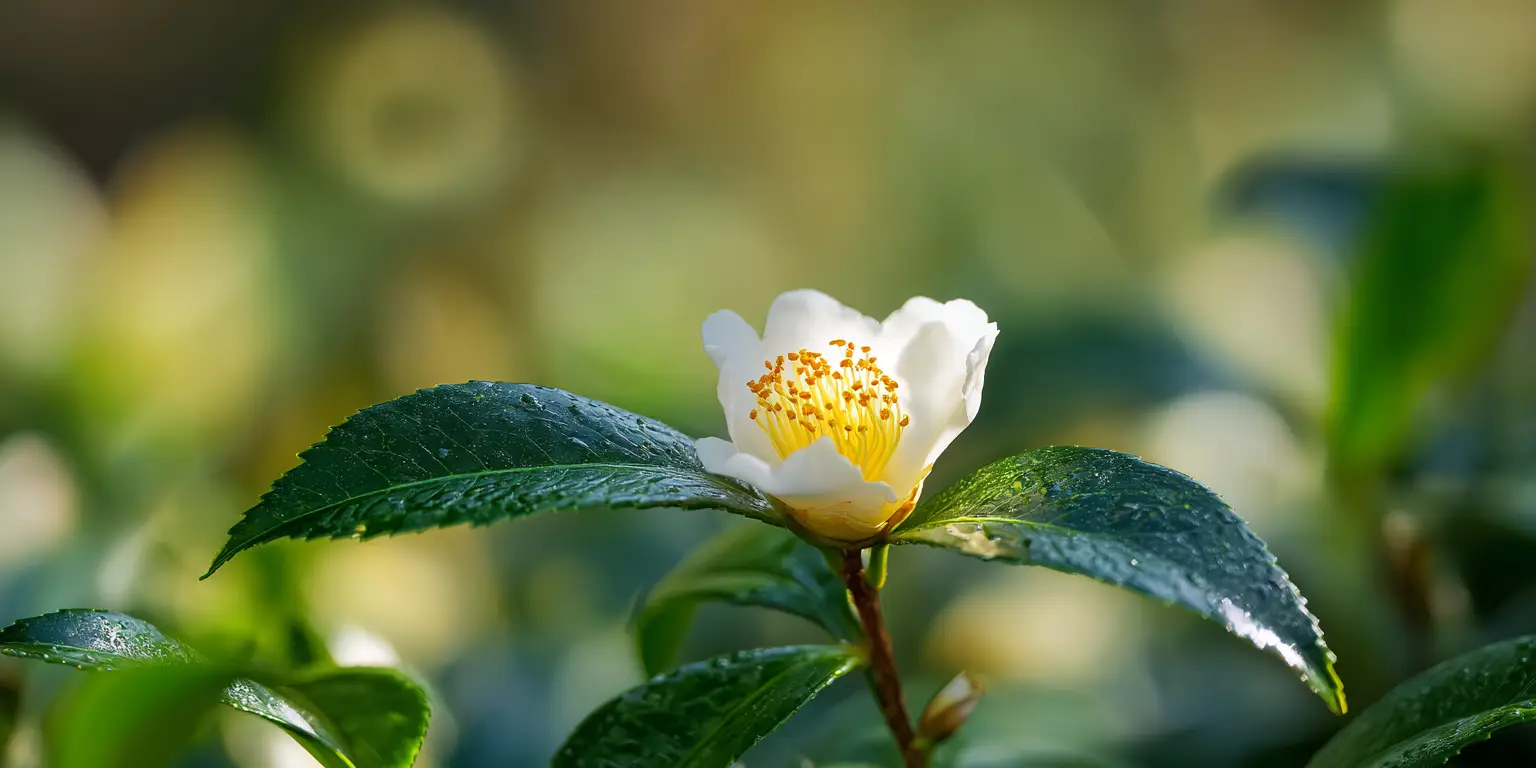
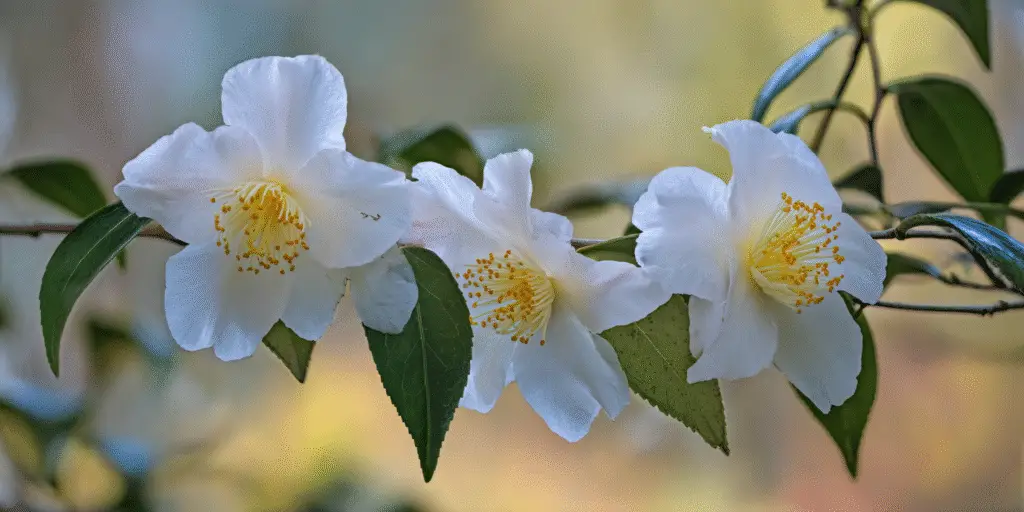
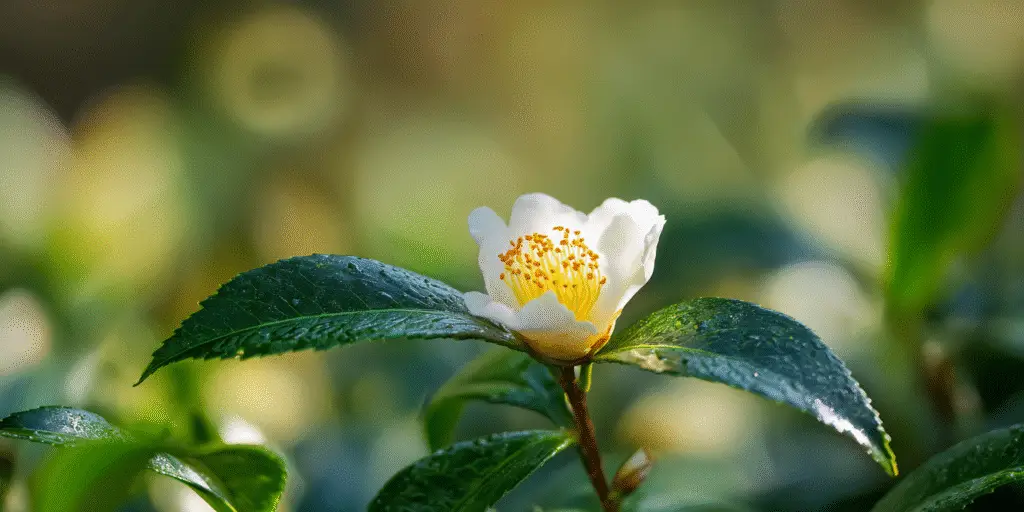
Camellia sinensis is the tea plant, an evergreen shrub valued for young leaves used to make green, oolong, and black teas. It stands out for small, fragrant white fall flowers and for tolerating regular clipping for leaf harvest. It performs best in sun to part shade with acidic, well‑drained soil and steady moisture. Typical hardiness is USDA zones 7 to 9.
At‑a‑glance
Group/Class: Species
Height × spread: 10–15 ft (3.0–4.6 m) × 6–10 ft (1.8–3.0 m)
Bloom window: October to December
Color & flower form: white, single, yellow stamens
Fragrance: 2 noticeable
USDA hardiness: zones 7–9
Breeder / Year / Origin: unknown, unknown, China
Cut‑flower notes: small stems and blooms; short vase life; better as foliage accent or floating blooms
Pet safety: sources differ; leaves contain caffeine – avoid pet ingestion
How it differs
Grown mainly for edible leaves rather than large flowers.
Smaller flowers than ornamental camellias but noticeably fragrant.
Tolerates and benefits from regular clipping for harvest.
Useful as an edible hedge in mild climates.
Strengths
Edible leaves for tea making.
Fragrant fall bloom for seasonal interest.
Dense, manageable shrub with glossy evergreen foliage.
Care in one minute
Light: sun to part shade; shelter from drying winter winds where possible.
Soil: acidic and organic with excellent drainage; maintain mulch.
Water: steady moisture through summer when buds and new leaves form.
Feeding: light, balanced fertilizer in spring if needed.
Pruning: maintain 3–5 ft (0.9–1.5 m) for harvest; clip after flowering.
Watch‑outs
Tea leaves contain caffeine, which is toxic to pets; keep prunings away from animals.
Leaf spots, root rot, and scale in stressful or wet conditions.
Written by: Your Flowers Guide editorial team We are a small independent group of flower lovers who research and review each guide using trusted horticultural and educational sources. Learn more about us