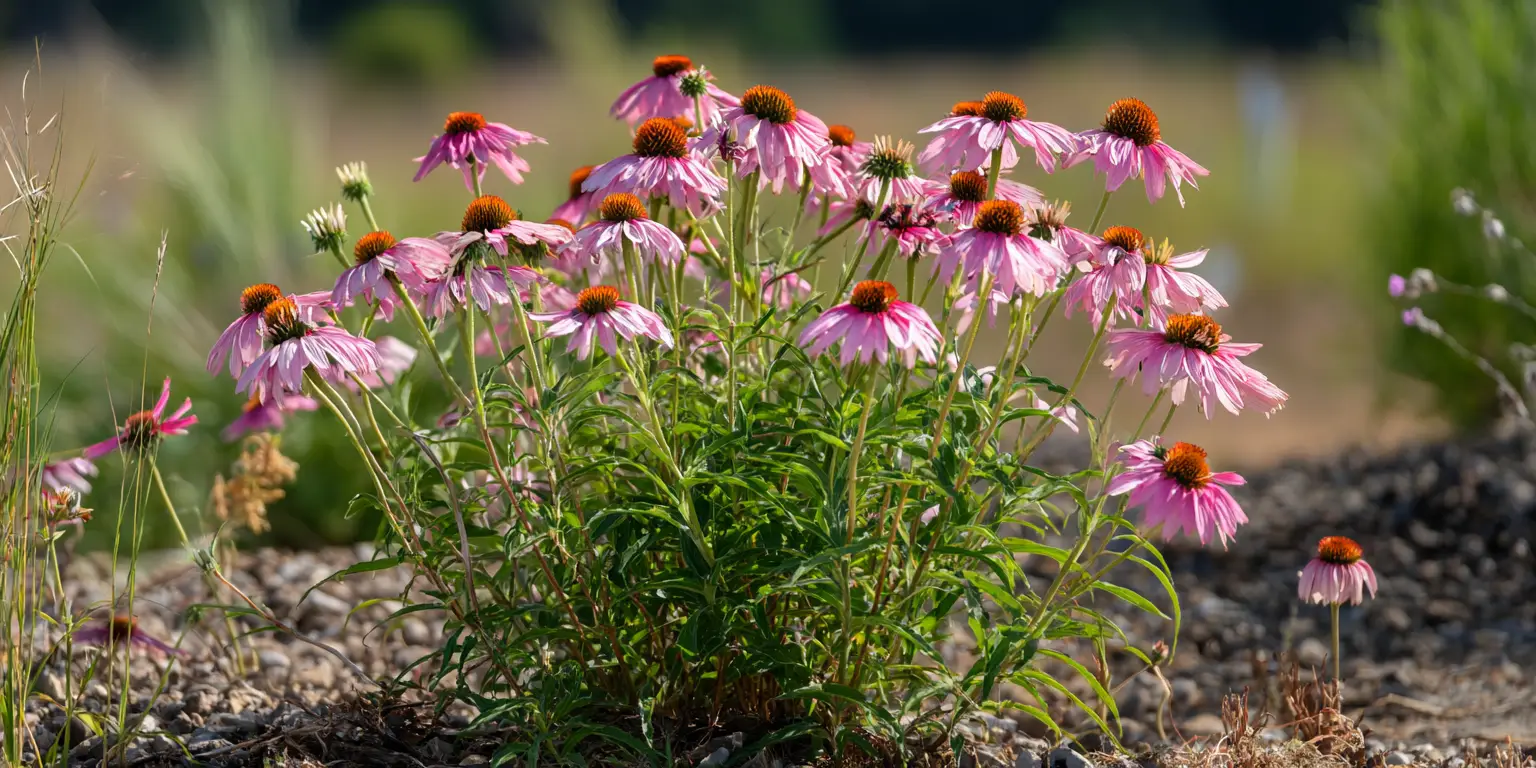
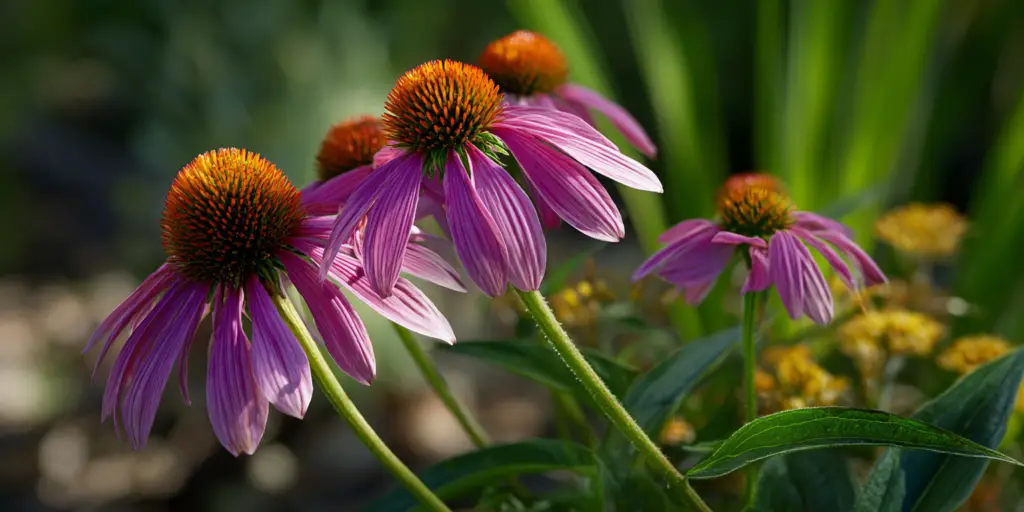
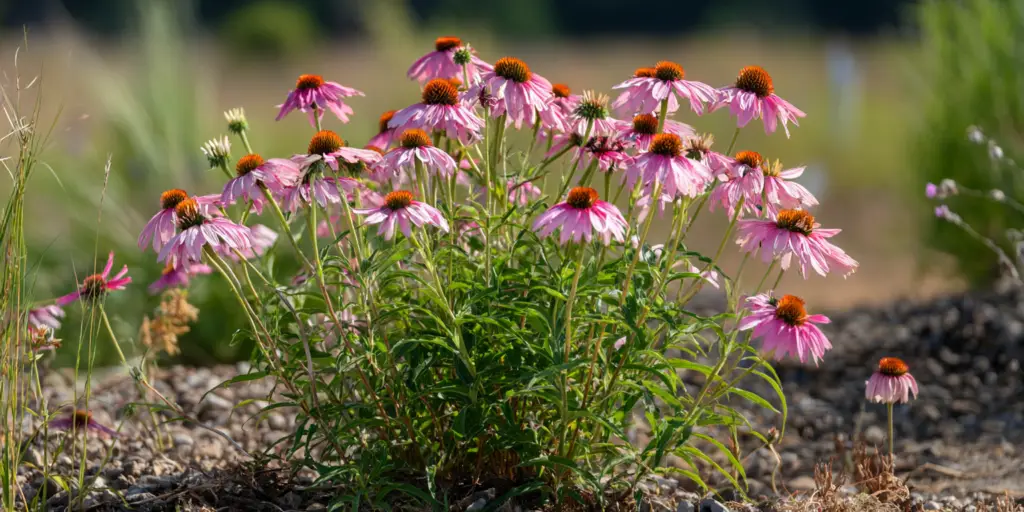
Echinacea angustifolia is the Great Plains narrow-leaf coneflower. It stands out for a compact 12 to 24 inch habit and narrow leaves. It performs best in full sun on lean, well-drained soils. It excels in dry sites and open prairie plantings. It is hardy across cold winters in Zones 3 to 8. It offers earlier summer bloom than many garden selections.
At‑a‑glance
Group/Class: species; herbaceous perennial
Height × spread: 12 to 24 in × 9 to 18 in (30 to 60 cm × 23 to 45 cm)
Bloom window: June to July
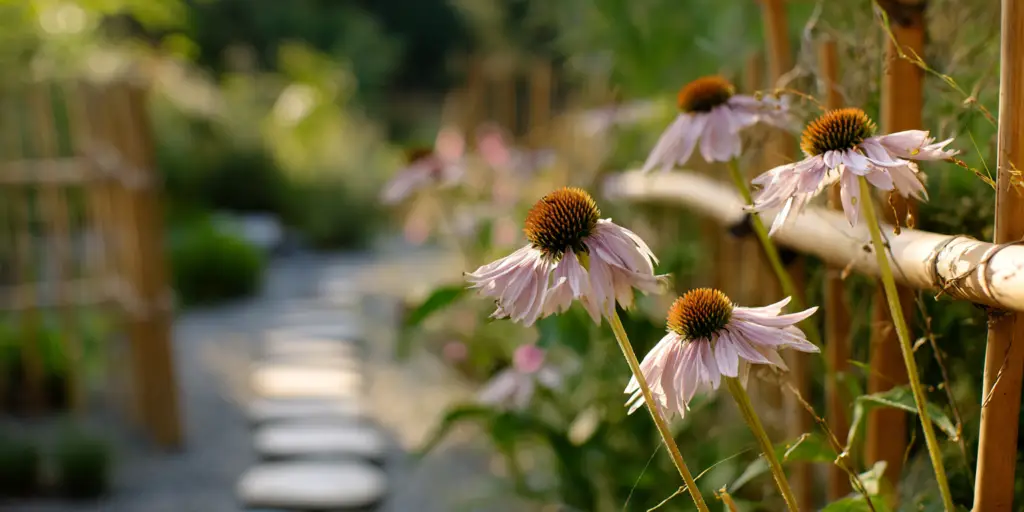
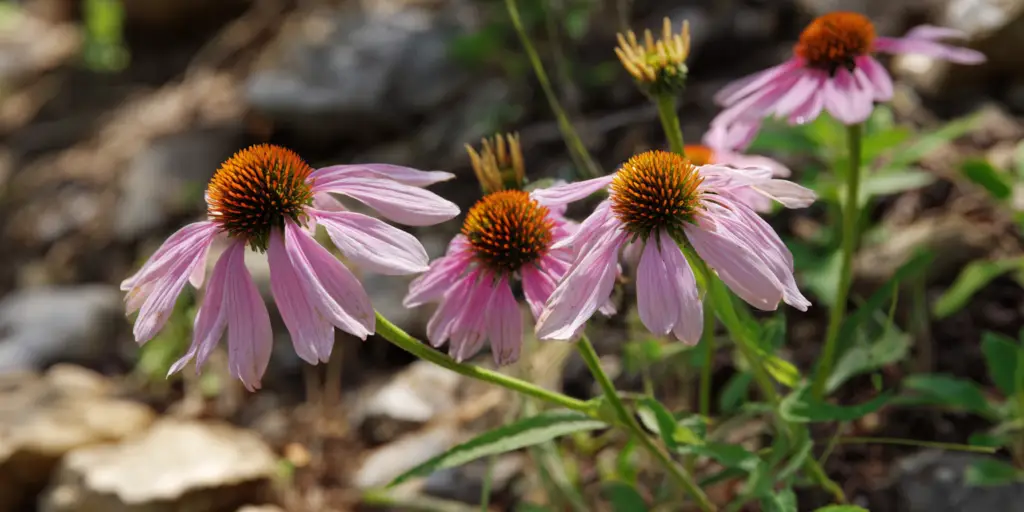
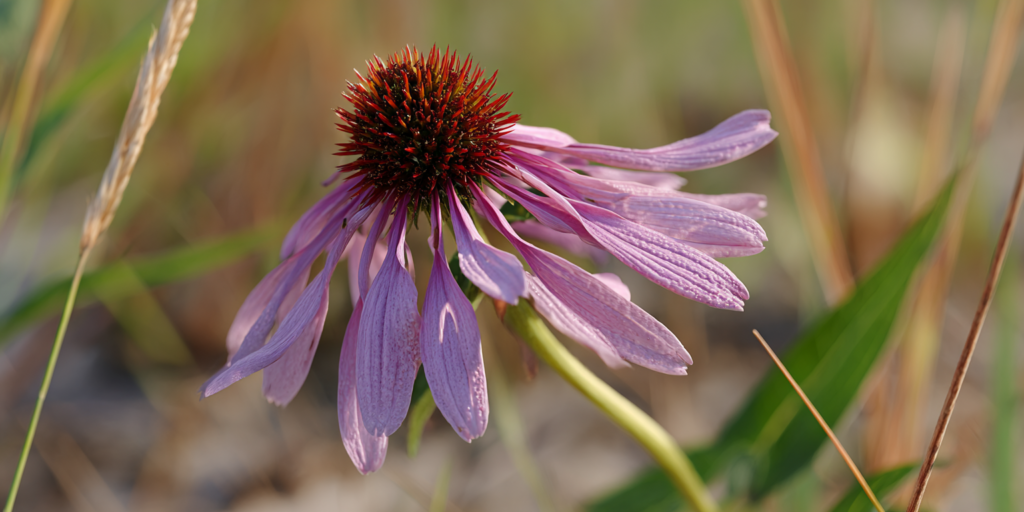
Color & flower form: light pink to pale purple rays; cone orange-brown; rays often slightly drooping
Fragrance: 0 none
USDA hardiness: zones 3 to 8
Breeder / Year / Origin: wild species, unknown, USA and Canada
Cut-flower notes: stems sturdy for size; typical vase life 5 to 8 days with cool conditioning
Pet safety: safe
How it differs
Shorter and narrower-leafed than typical purple coneflower.
More drought-adapted and suited to lean, rocky soils.
Smaller flower heads with rays that may droop modestly.
Earlier peak bloom compared with many garden forms.
Strengths
Compact habit for small gardens and prairie edges.
High drought tolerance after establishment.
Low fertilizer needs and good heat tolerance.
Supports pollinators in open, sunny sites.
Care in one minute
Choose full sun with free drainage; raised beds help on clay.
Maintain slightly dry to medium moisture; avoid overwatering.
No rich feeding is needed; a thin spring compost layer is enough.
Deadhead to tidy or leave some seedheads for wildlife.
Divide or transplant in early spring if clumps become crowded.
Watch‑outs
Can struggle in heavy, wet soils.
Shade reduces flowering and encourages flop.
Aster yellows can occur in warm, leafhopper-active periods.
Best uses (tags)
borders, pollinators, prairie, xeric, cutting
Provenance note
Native to upland prairies and plains of central North America with a long history in dry grassland communities.
Written by: Your Flowers Guide editorial team We are a small independent group of flower lovers who research and review each guide using trusted horticultural and educational sources. Learn more about us