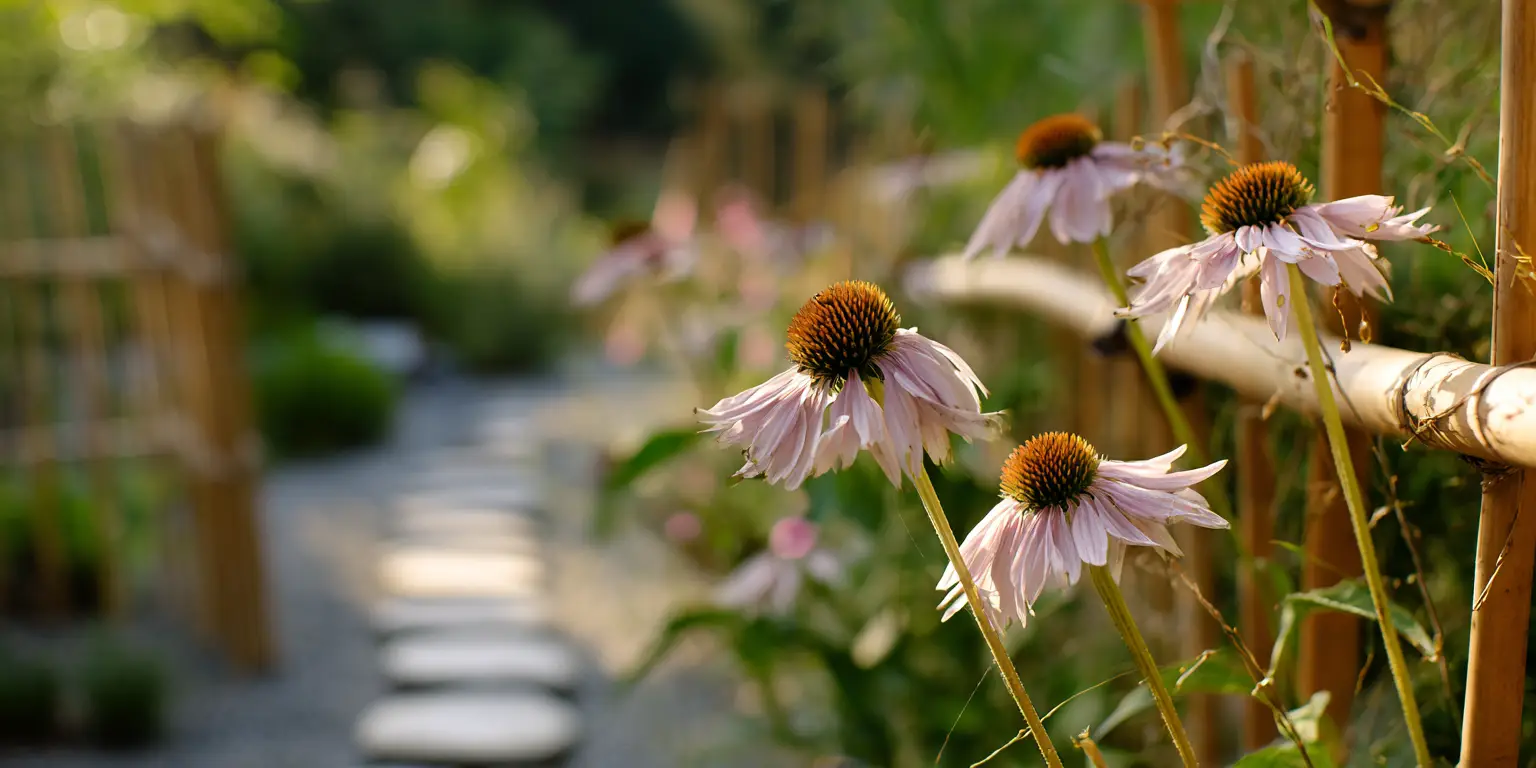
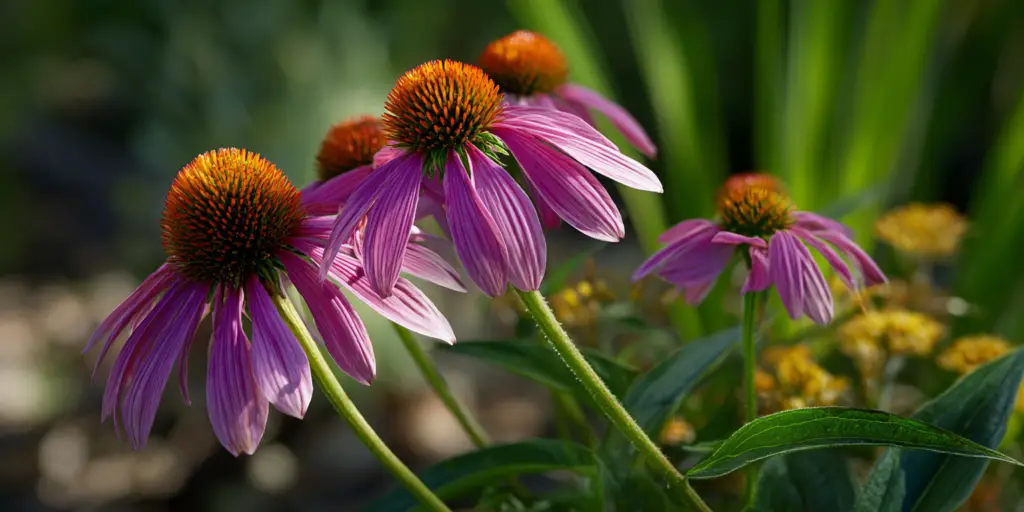
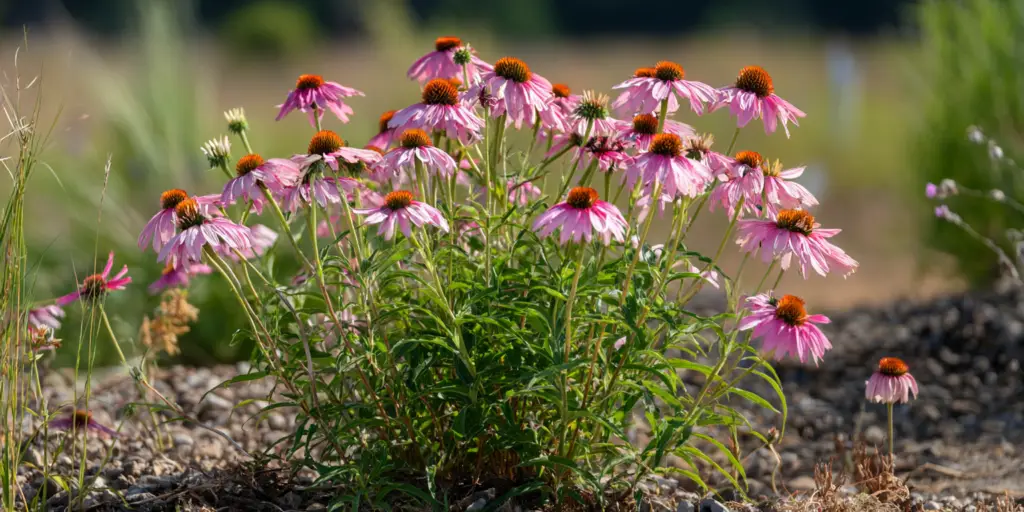
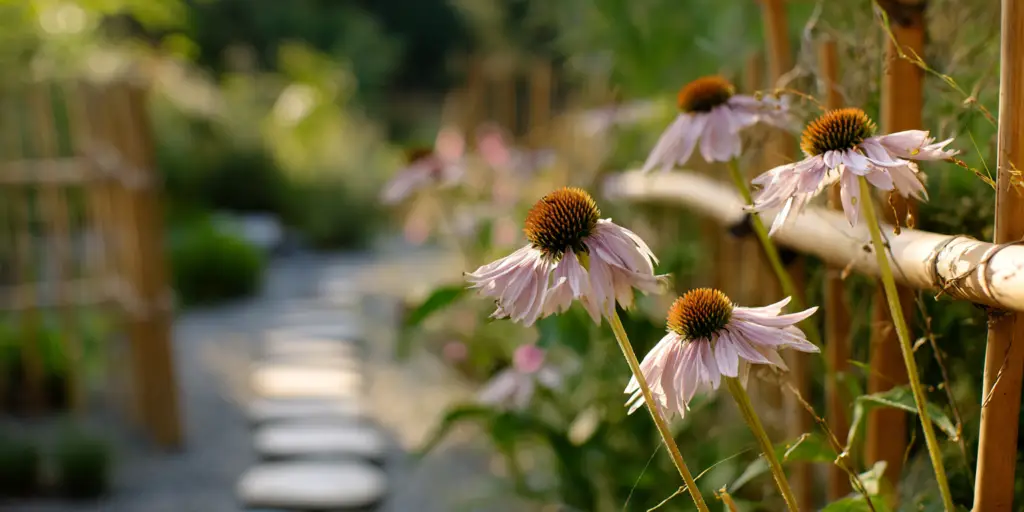
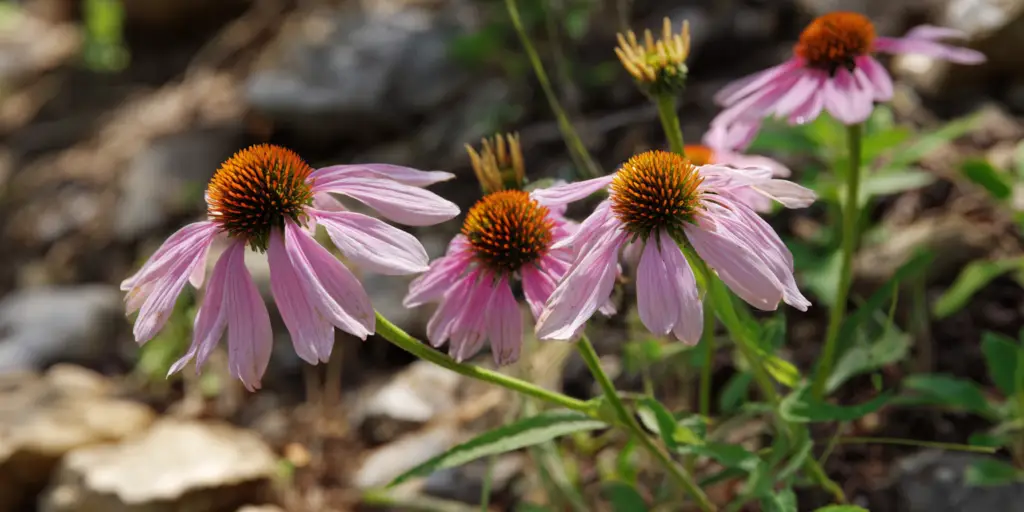
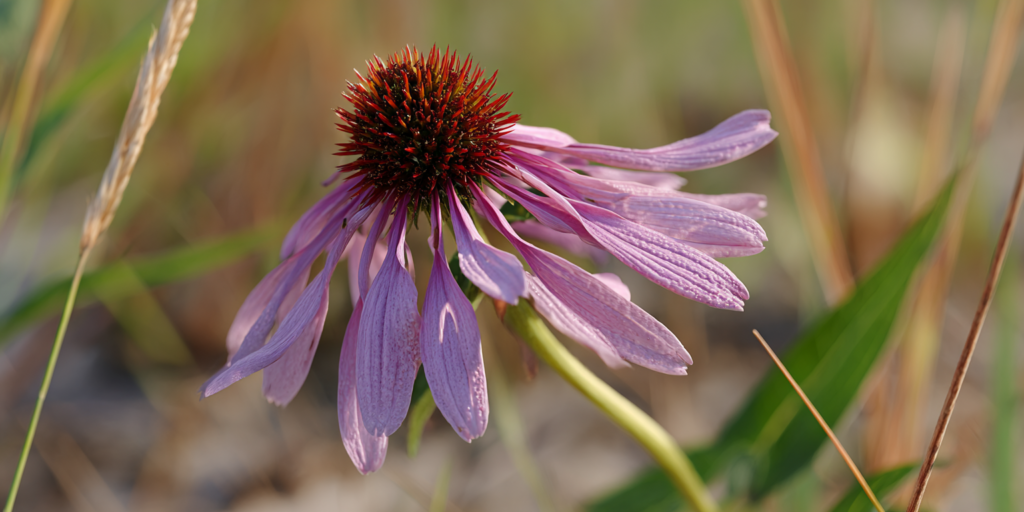
Echinacea pallida is the pale purple coneflower with gracefully drooping rays. It stands out for narrow leaves and early summer bloom. It performs best in full sun with dry to medium, well-drained soils. It tolerates drought, heat, and thin, rocky sites once established. It is hardy from Zone 3 into warmer regions where soils are free-draining. It supports pollinators and provides seed for birds later in the season.
At‑a‑glance
Group/Class: species; herbaceous perennial
Height × spread: 24 to 36 in × 12 to 18 in (60 to 90 cm × 30 to 45 cm)
Bloom window: June to July
Color & flower form: pale pinkish-purple rays that droop strongly; coppery-orange cone
Fragrance: 1 trace
USDA hardiness: zones 3 to 10
Breeder / Year / Origin: wild species, unknown, USA
Cut-flower notes: good for fresh or dried; typical vase life 5 to 8 days with cool conditioning
Pet safety: safe
How it differs
Rays are thin and strongly reflexed compared with typical garden coneflower.
Leaves are narrower and parallel-veined.
Often blooms slightly earlier than common purple coneflower.
Thrives in dry, open sites with excellent drainage.
Strengths
Performs in lean and rocky soils.
Handles drought and summer heat.
Elegant, airy look for meadows and naturalized plantings.
Good seedheads for wildlife interest.
Care in one minute
Plant in full sun with dry to medium, well-drained soil.
Water to establish; allow soil to dry between deep soakings thereafter.
Avoid heavy mulches that trap winter moisture around crowns.
Deadhead to tidy or leave seedheads to feed finches.
Divide only if clumps decline or crowd.
Watch‑outs
Wet or heavy soils can stunt plants or cause crown rot.
Written by: Your Flowers Guide editorial team We are a small independent group of flower lovers who research and review each guide using trusted horticultural and educational sources. Learn more about us