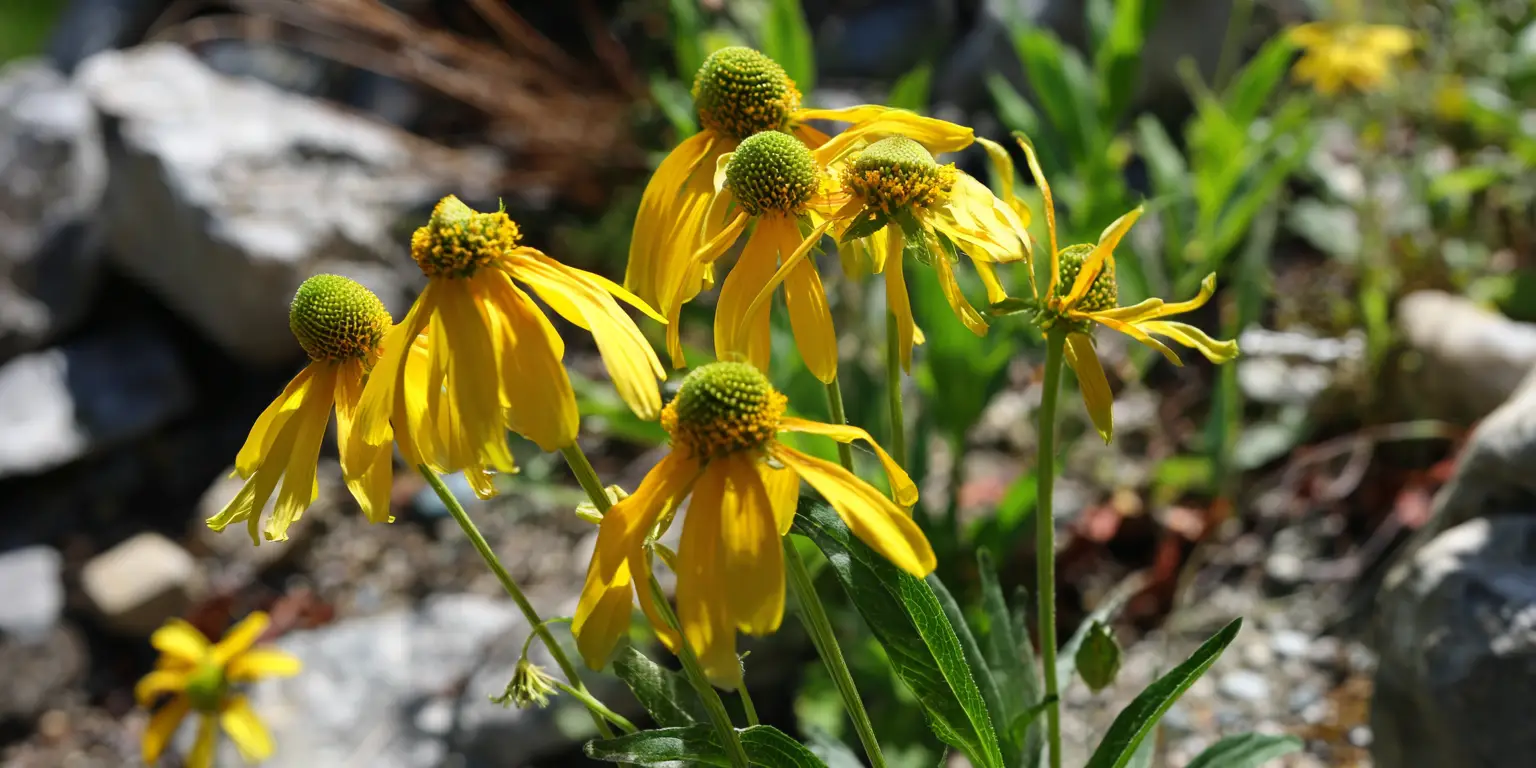
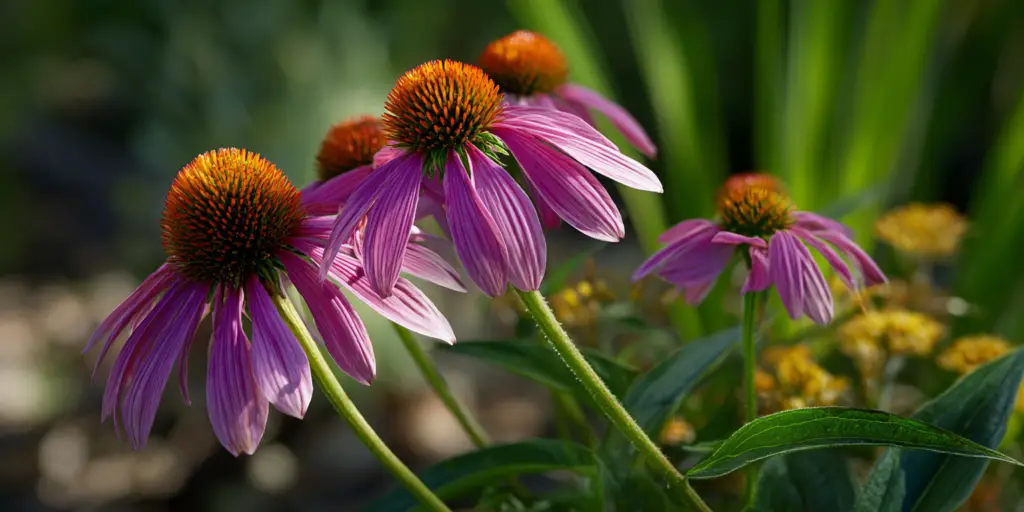
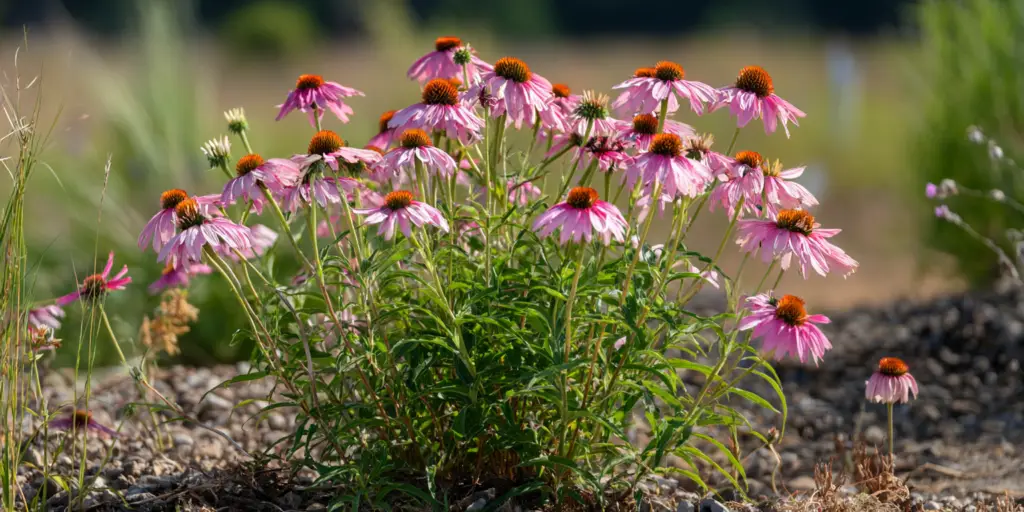
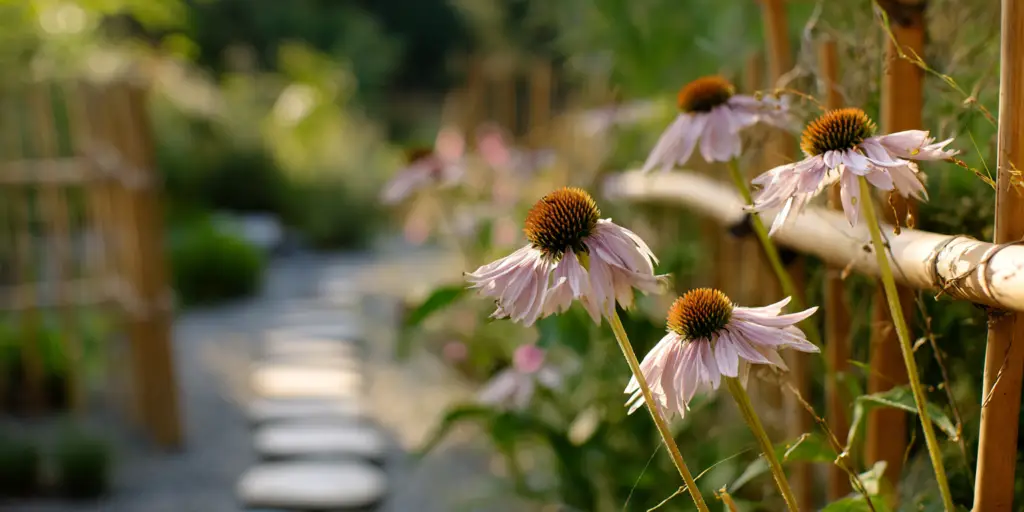
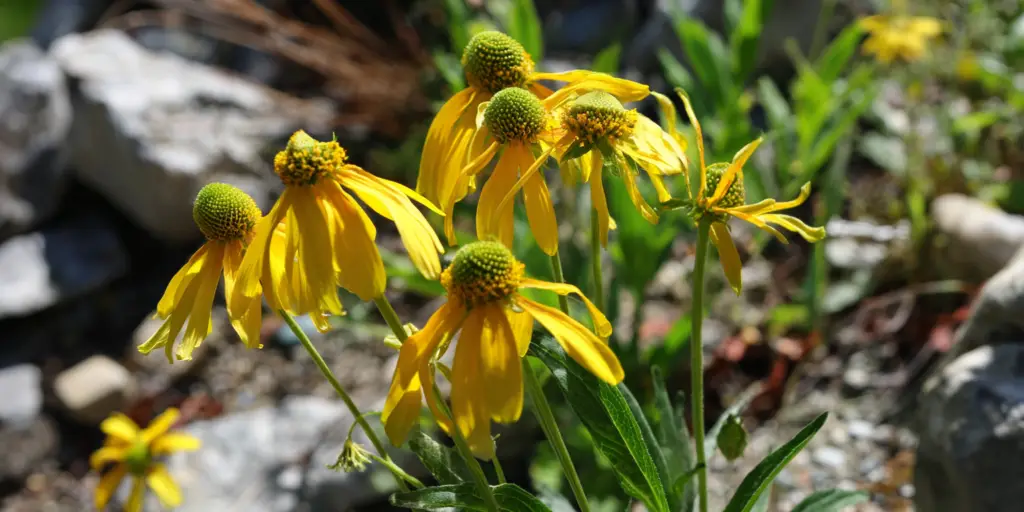
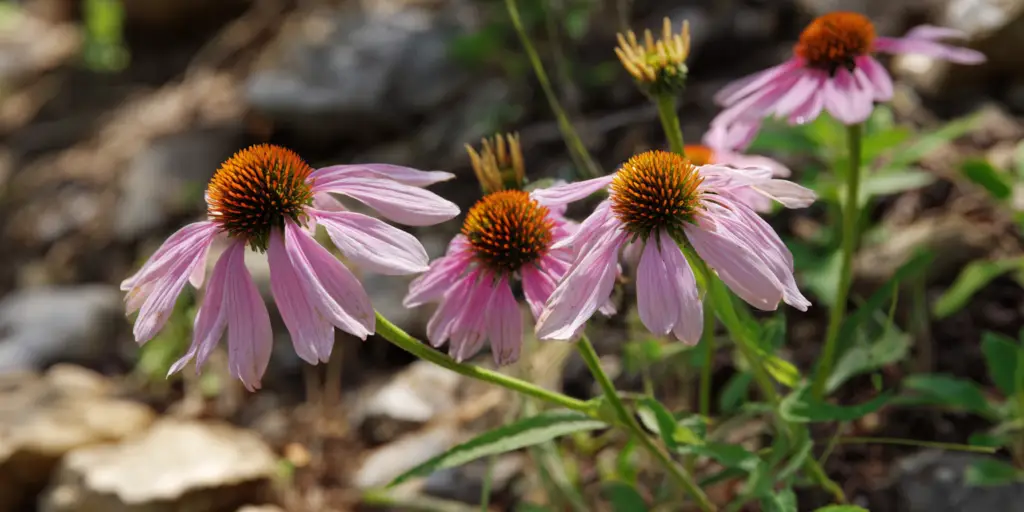
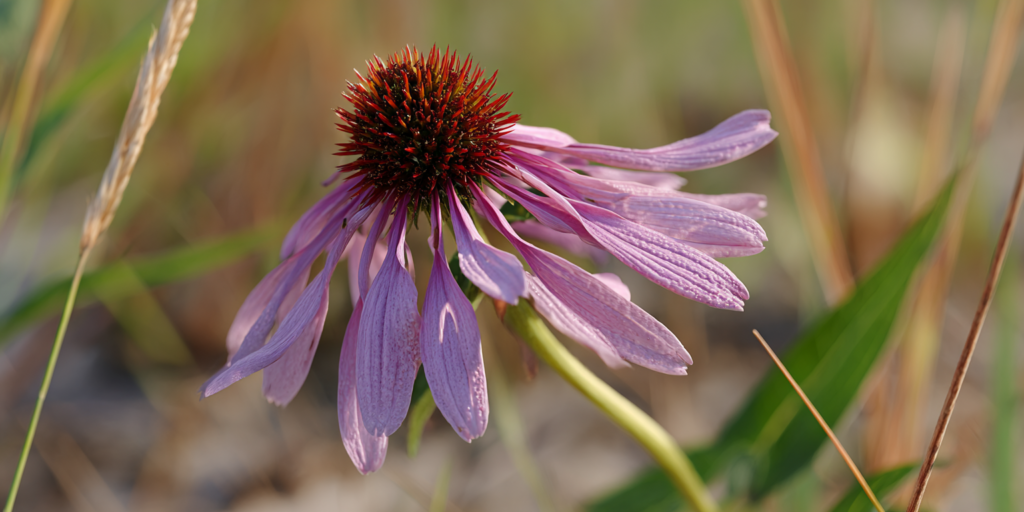
Echinacea paradoxa is the yellow coneflower that breaks the purple color rule in this genus. It stands out for bright yellow rays and a bold cone that show well in full sun. It performs best in well-drained, lean soils with regular sun and summer heat. It is hardy in Zones 5 to 8 and dislikes winter-wet conditions. It works in native plantings, meadow borders, and mixed sunny beds. It attracts pollinators and leaves ornamental seedheads for birds.
At‑a‑glance
Group/Class: species; herbaceous perennial
Height × spread: 24 to 36 in × 12 to 18 in (60 to 90 cm × 30 to 45 cm)
Bloom window: June to August
Color & flower form: yellow to orange-yellow rays with a large coppery-brown cone
Fragrance: 1 trace
USDA hardiness: zones 5 to 8
Breeder / Year / Origin: wild species, unknown, USA
Cut-flower notes: stems sturdy; typical vase life 5 to 8 days with cool conditioning
Pet safety: safe
How it differs
Only Echinacea species with naturally yellow rays.
Prefers hotter, glade and prairie conditions of the Ozarks.
Similar height to many purple forms but with a brighter color impact.
Less cold-hardy than some purple species in Zone 3 to 4 climates.
Strengths
Striking color contrast in mixed sun borders.
Tolerates drought once established.
Low maintenance in lean, well-drained soils.
Seedheads add fall and winter structure.
Care in one minute
Grow in full sun on well-drained soil; avoid soggy sites.
Water to establish; then water deeply only during extended drought.
Do not overfertilize; excess nitrogen softens growth.
Deadhead to tidy or leave some seedheads for birds.
Mulch lightly and pull back from the crown going into winter.
Watch‑outs
Winter-wet soils can cause crown loss.
Partial shade reduces flowering and color intensity.
Standard coneflower issues include aster yellows and leaf spots.
Written by: Your Flowers Guide editorial team We are a small independent group of flower lovers who research and review each guide using trusted horticultural and educational sources. Learn more about us