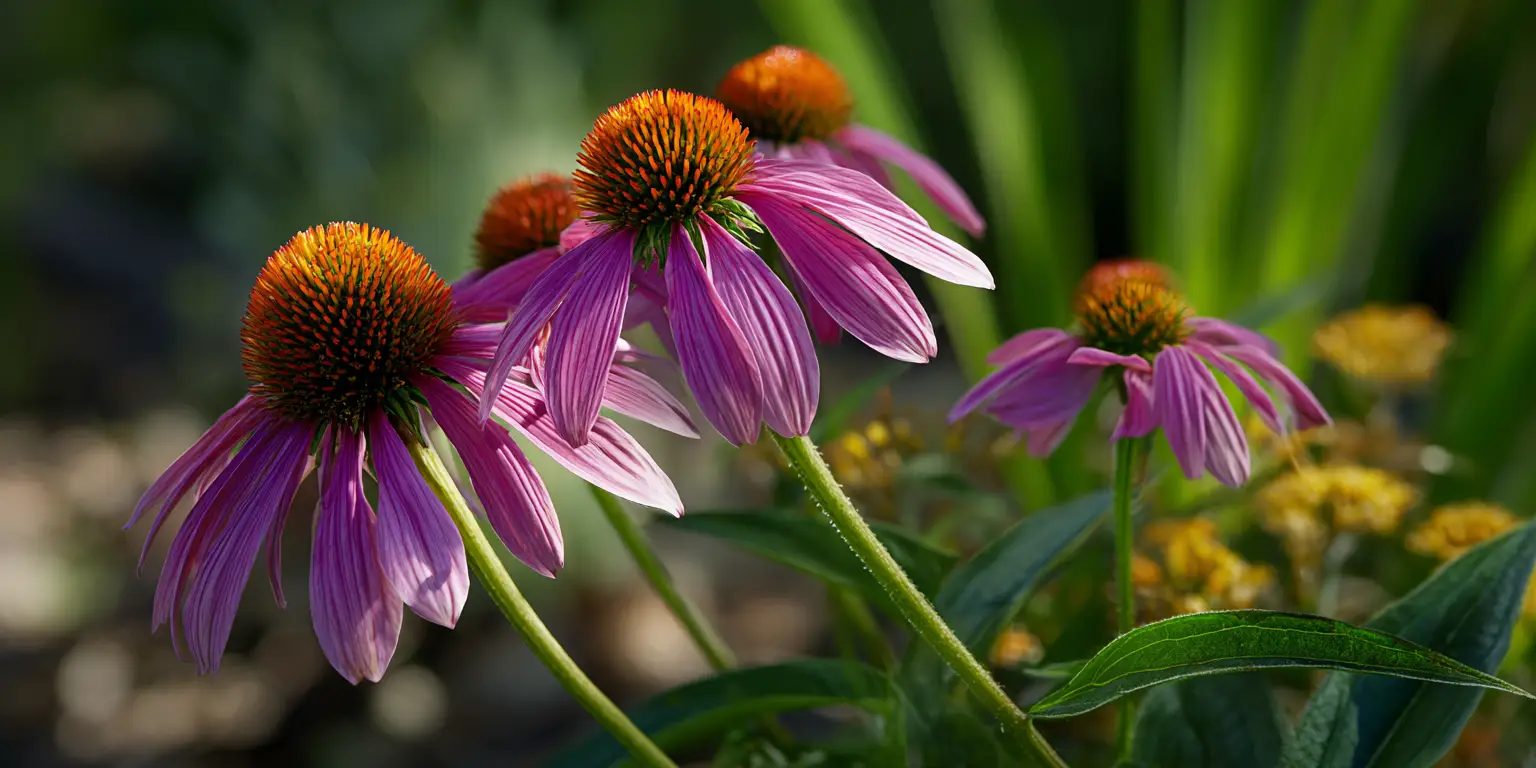
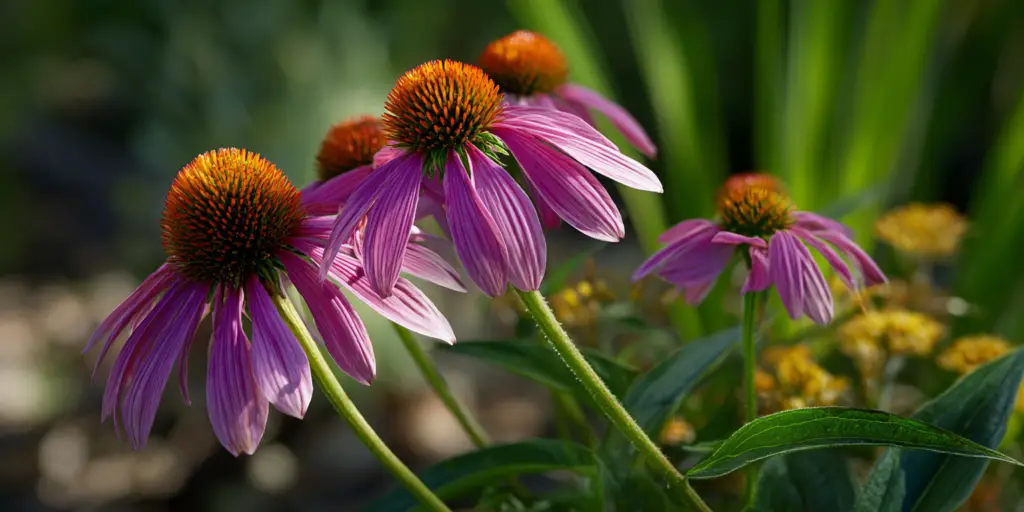
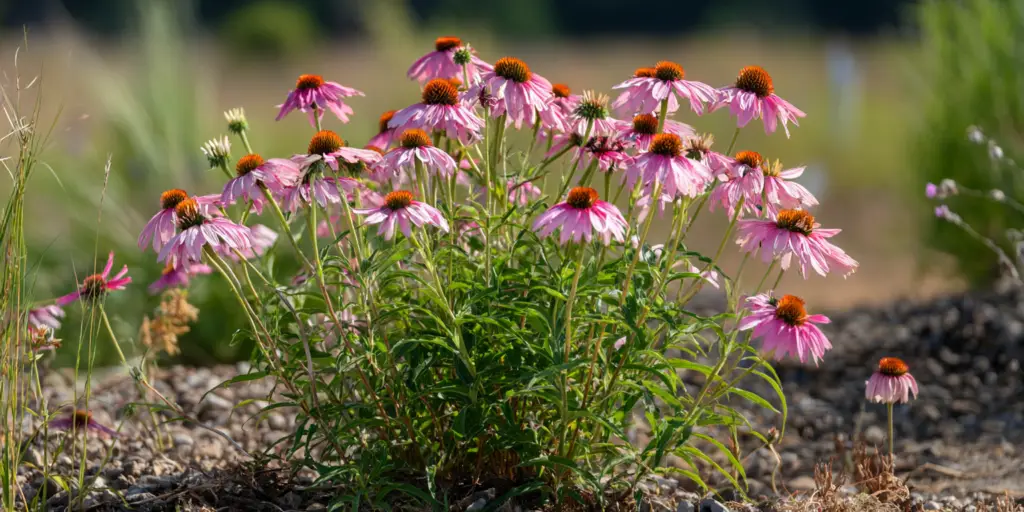
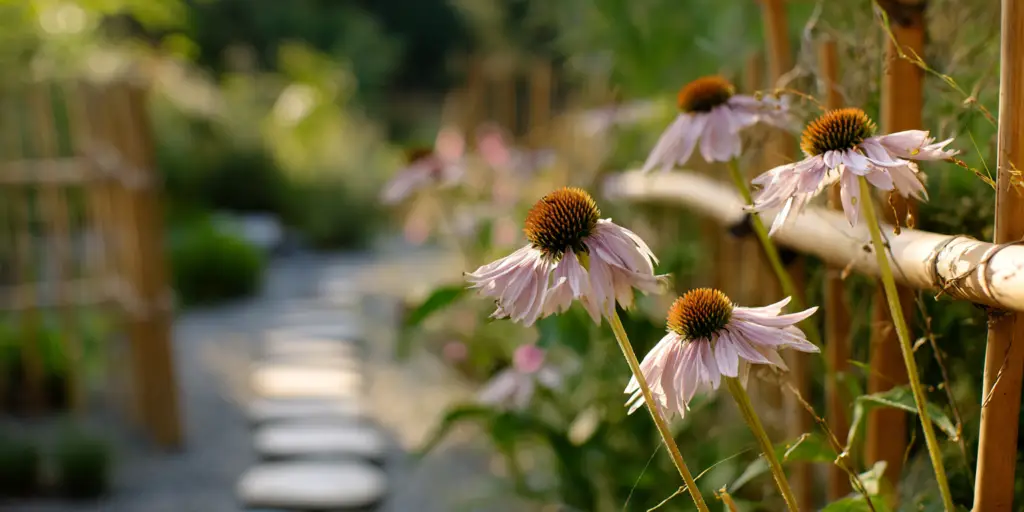
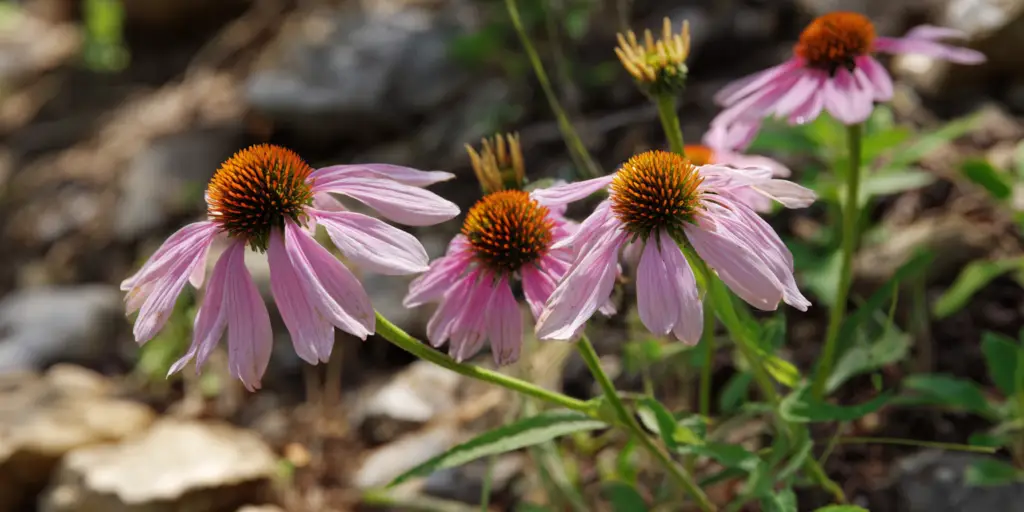
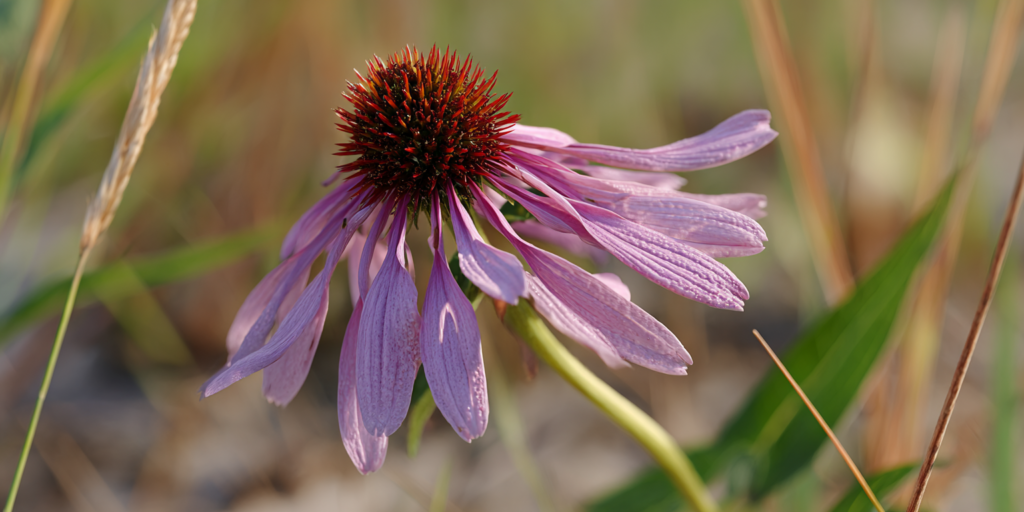
Echinacea purpurea is the widely grown purple coneflower used as the baseline garden species. It stands out for a long summer bloom and dependable, upright stems. It performs best in full sun and in average, well-drained soil. It tolerates heat and short dry spells once established. It grows across much of North America in USDA Zones 3 to 8. It suits borders, meadows, and pollinator plantings where birds also take winter seedheads.
At‑a‑glance
Group/Class: species; herbaceous perennial
Height × spread: 24 to 60 in × 18 to 24 in (60 to 150 cm × 45 to 60 cm)
Bloom window: June to August
Color & flower form: purplish pink rays with a raised orange-brown cone; rays mostly horizontal
Fragrance: 0 none
USDA hardiness: zones 3 to 8
Breeder / Year / Origin: wild species, unknown, USA
Cut-flower notes: stems sturdy; typical vase life 5 to 8 days with cool conditioning
Pet safety: safe
How it differs
Broader leaves and fuller habit than narrow-leaf coneflower types.
Rays are less drooping than in pale purple species.
Taller average stature than many wild species in the genus.
More tolerant of richer garden soils and light part shade.
Strengths
Long bloom period in summer.
Handles heat and brief drought once established.
Good garden and cutting performance.
Attracts pollinators and provides winter seed for birds.
Care in one minute
Site in full sun for strongest stems and most bloom.
Provide average, well-drained soil; pH near neutral is fine.
Water regularly the first year; reduce to deep, occasional soaks after establishment.
Feed lightly in spring; avoid high-nitrogen fertilizers.
Deadhead for tidiness or leave some seedheads for birds; no staking usually needed.
Divide clumps only when crowded and replant promptly.
Watch‑outs
Susceptible to aster yellows spread by leafhoppers.
Written by: Your Flowers Guide editorial team We are a small independent group of flower lovers who research and review each guide using trusted horticultural and educational sources. Learn more about us