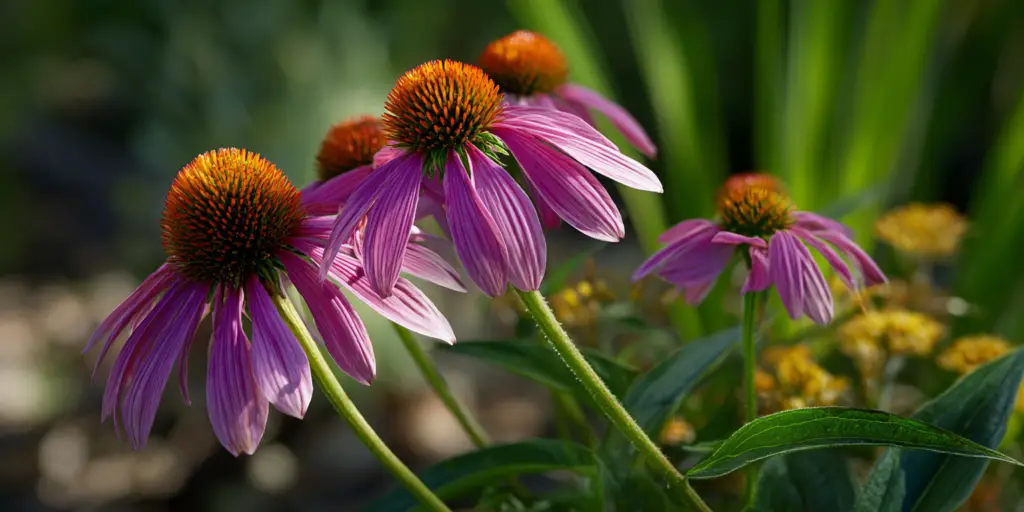
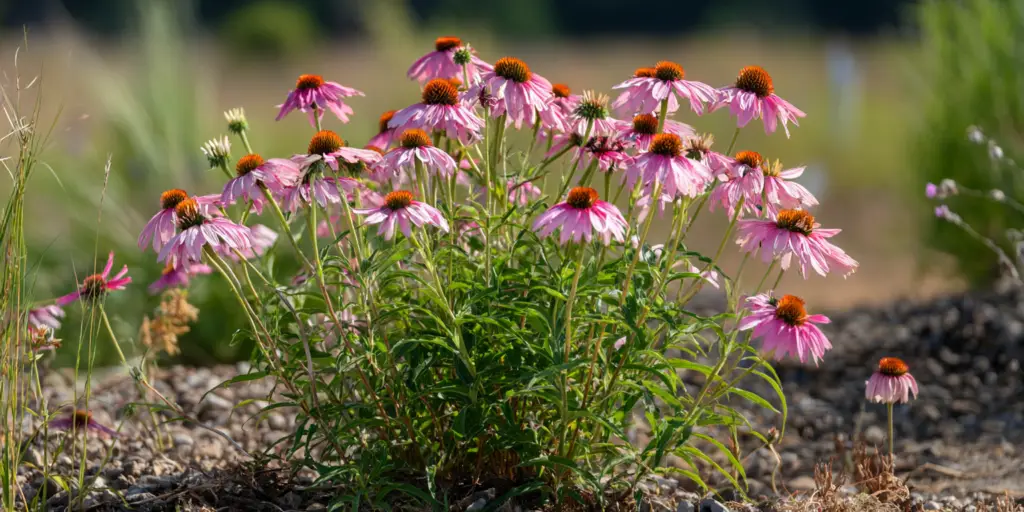
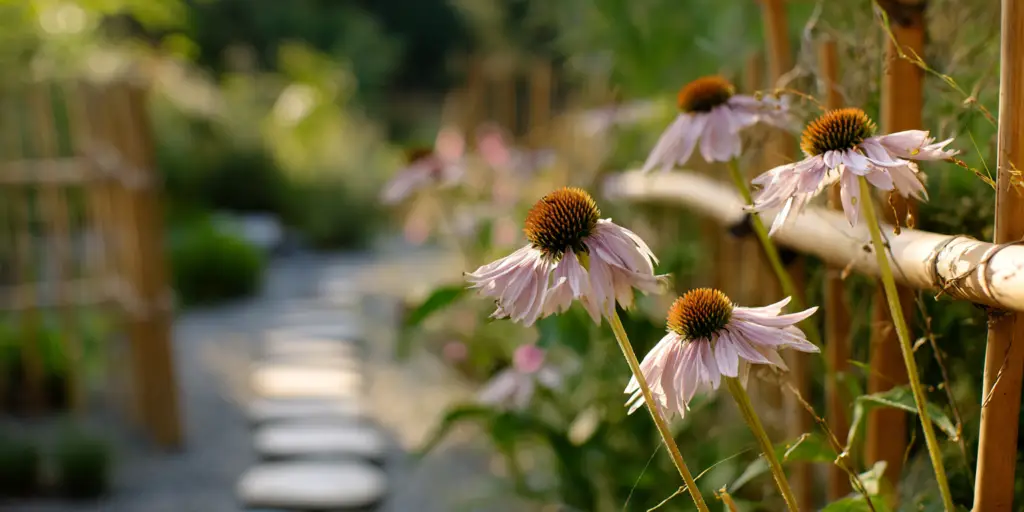
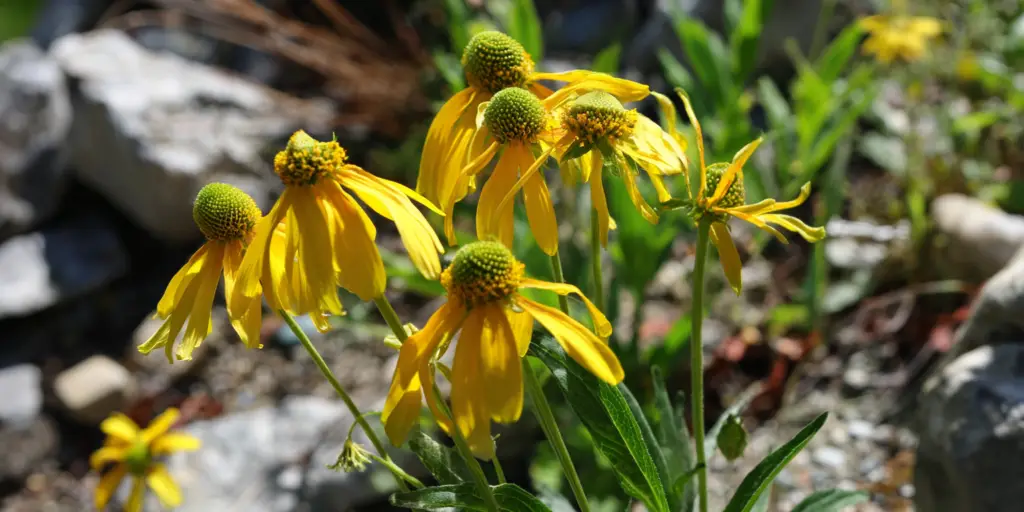
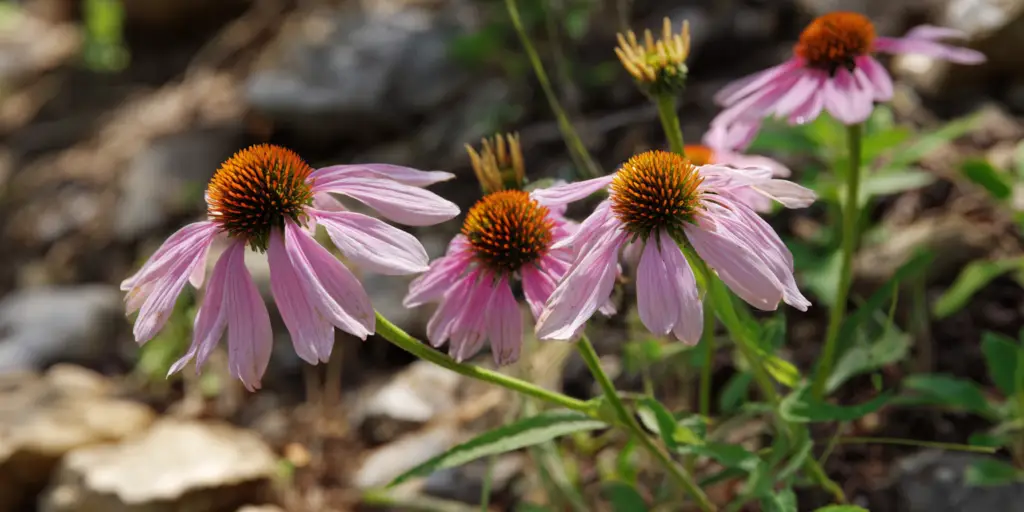
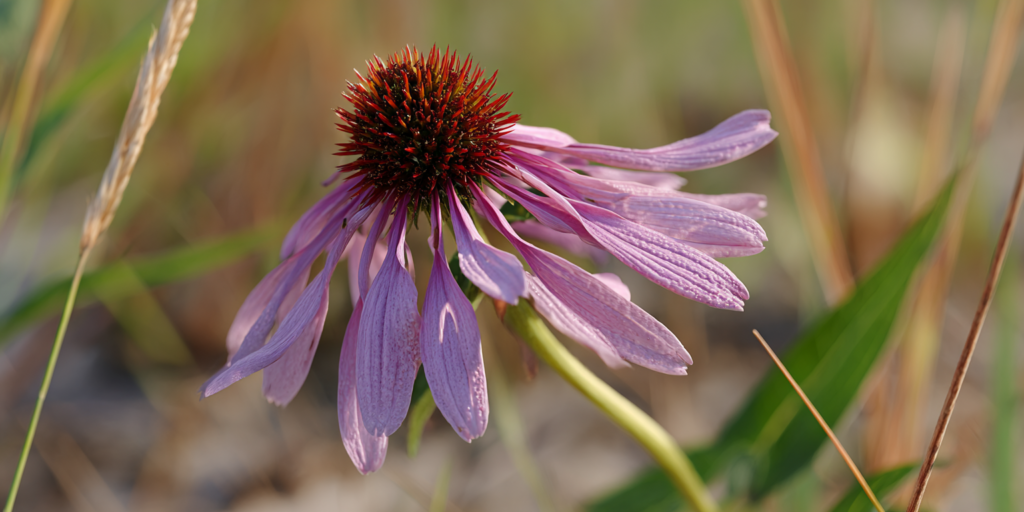
Echinacea simulata is the glade or wavyleaf purple coneflower of the Ozarks and nearby states. It stands out for drooping pale-purple rays and yellow pollen that distinguish it from similar species. It performs best in sunny, well-drained, often rocky soils with low to medium fertility. It is hardy in Zones 5 to 8 and tolerates heat and humidity once established. It blooms mainly in late June and July with occasional later flowers.
It supports pollinators and leaves upright seedheads for birds.
At‑a‑glance
Group/Class: species; herbaceous perennial
Height × spread: 24 to 36 in × 12 to 24 in (60 to 90 cm × 30 to 60 cm)
Bloom window: June to July
Color & flower form: pale pinkish-purple rays that droop; coppery-orange cone; yellow pollen
Fragrance: 0 none
USDA hardiness: zones 5 to 8
Breeder / Year / Origin: wild species, unknown, USA
Cut-flower notes: stems sturdy; typical vase life 5 to 8 days with cool conditioning
Pet safety: safe
How it differs
Similar to pale purple coneflower but with yellow pollen rather than white.
Prefers glades and rocky openings with excellent drainage.
Habit and size are moderate with strong, unbranched stems.
Best performance occurs in full sun and lean soils.
Strengths
Good drought and heat tolerance once established.
Distinctive wildflower look in native or meadow plantings.
Low maintenance in well-drained sites.
Seedheads offer wildlife value and winter texture.
Care in one minute
Grow in full sun on dry to medium, well-drained soil; rocky or gravelly sites suit it.
Irrigate to establish; then water deeply only during extended droughts.
Do not overfeed; excess fertility reduces flower display.
Deadhead to tidy or leave some seedheads for birds.
Divide or move only in early spring if needed.
Watch‑outs
Poor drainage or heavy mulch can cause crown rot.
Shade leads to stretched stems and fewer blooms.
Standard coneflower pests and aster yellows may occur.
Native primarily to the Ozark region with disjunct populations from Illinois and Indiana south through Kentucky and Tennessee to northern Alabama and Georgia.
Written by: Your Flowers Guide editorial team We are a small independent group of flower lovers who research and review each guide using trusted horticultural and educational sources. Learn more about us