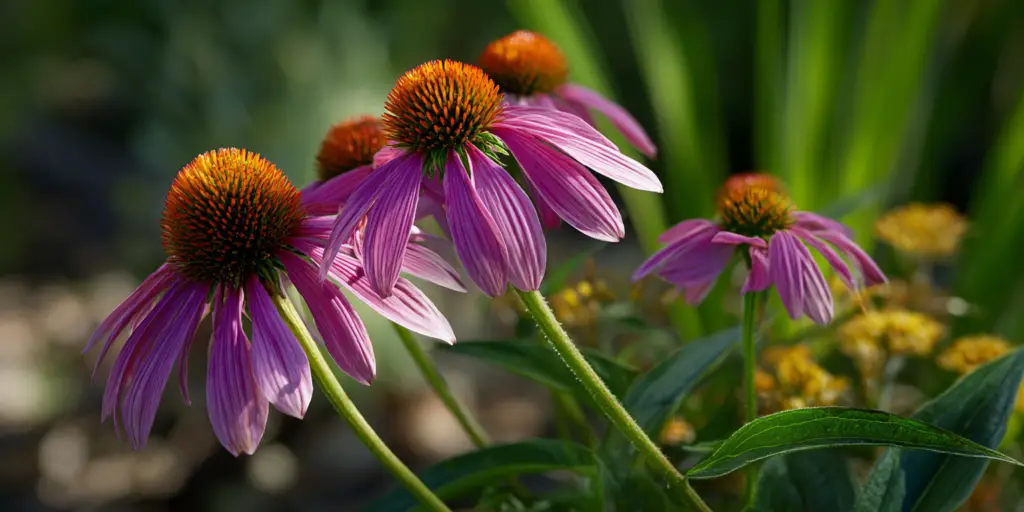
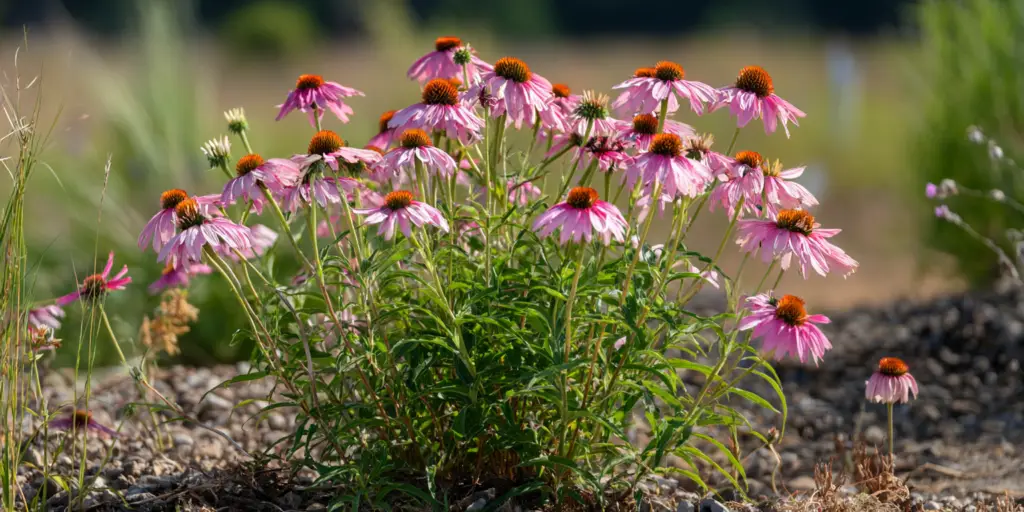
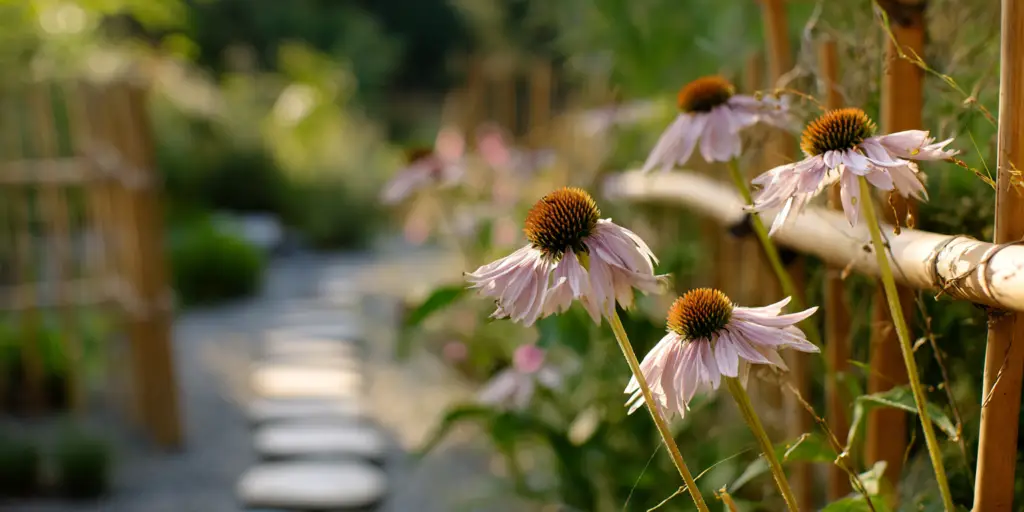
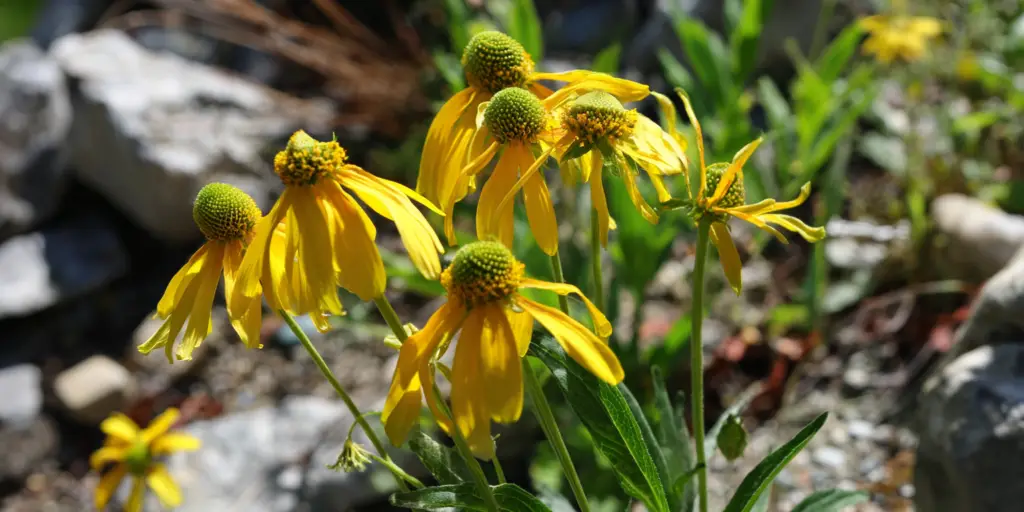
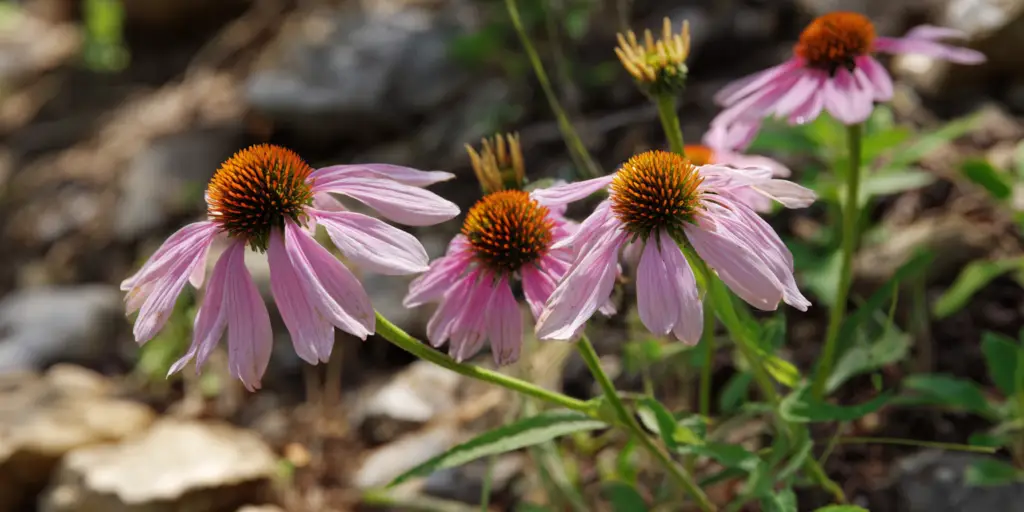
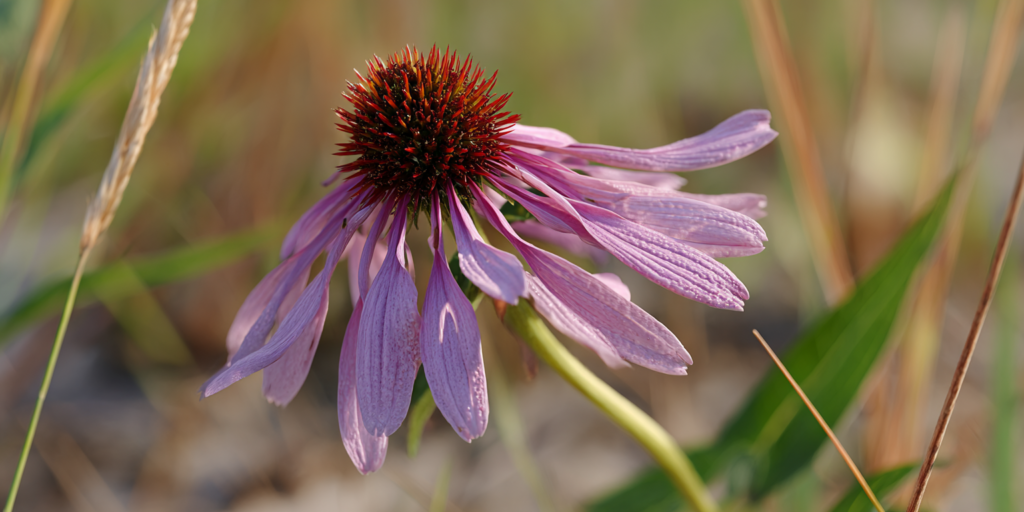
Echinacea tennesseensis is the Tennessee coneflower native to cedar glades near Nashville. It stands out for upturned, east-facing rays around a coppery cone. It performs best in full sun and thin, calcareous, well-drained soils. It is hardy mainly in Zones 5 to 6 and prefers drier winters. It blooms from June into August and brings a compact habit to beds and borders. It has recovered in the wild and was removed from the U.S. endangered list in 2011.
At‑a‑glance
Group/Class: species; herbaceous perennial
Height × spread: 12 to 24 in × 12 to 24 in (30 to 60 cm × 30 to 60 cm)
Bloom window: June to August
Color & flower form: rose-purple rays held more upright; coppery-orange cone
Fragrance: 0 none
USDA hardiness: zones 5 to 6
Breeder / Year / Origin: wild species, unknown, USA
Cut-flower notes: compact stems; typical vase life 5 to 8 days with cool conditioning
Pet safety: safe
How it differs
Rays tend to face upward and often orient east in the garden.
More compact habit than many purple coneflowers.
Prefers very well-drained, limey soils typical of cedar glades.
Hardiness range is narrower than common purple coneflower.
Strengths
Distinctive flower posture for design contrast.
Tidy size for smaller beds and front-of-border use.
Good heat tolerance in sunny, well-drained sites.
Supports pollinators and provides seed for birds.
Care in one minute
Site in full sun with excellent drainage; gravelly or rocky soils suit it.
Water to establish; then water deeply only during extended dry spells.
Avoid heavy mulches and winter-wet conditions around crowns.
Deadhead to tidy or leave seedheads to feed finches.
Do not overfertilize; lean soils keep stems upright.
Watch‑outs
Overly rich or wet soils can cause flop or decline.
Aster yellows can affect growth in mid-summer.
Not reliably hardy where winters are very cold and wet.
Written by: Your Flowers Guide editorial team We are a small independent group of flower lovers who research and review each guide using trusted horticultural and educational sources. Learn more about us